
We didn’t have to think that long about whether we wanted to rent a car in Crete after booking our trip to the Greek island.
We generally like to see as much as we can in the time we have in a place, and knew that getting around Crete would be much more efficient with a rental of our own.
Whether that’s true for you really depends. Not everyone is comfortable driving in a new place, and not everyone’s travel style is the same as ours.
This guide will get into all of the reasons why it can make sense to book a rental car in Crete, tips for driving in Crete, and when you may not need a car at all.
Quick Tips for Your Crete Visit
Your Flight: Fly directly to Crete from Athens or major European cities. You can also take a ferry from Athens, but flights are less expensive and much faster.
Find deals to Crete on Skyscanner. If you love deals, subscribe to Going.
Your Accommodations: We stayed at the Archontiki City Hotel in Chania for most of our trip, and I’d recommend it as a budget-friendly option.
Browse Booking.com or Hotels.com for more options on Crete. Vrbo is my Airbnb alternative.
Your Ride: If you take my advice on seeing Crete from the road, book a rental car ahead of time.
Top Spots: See Katholiko Bay, taste wine at the Agia Triada Monastery, and learn about legends at Knossos Palace in Heraklion.
Disclosure: Travel on the Reg uses affiliate links to keep things running around here. At no additional cost to you, I earn a lil’ commission if you make a purchase. Any income earned supports the upkeep of this site. I appreciate you!
Should you rent a car in Crete?
Renting a car in Crete can be one of the best ways to explore the island, but it’s not always necessary for every type of traveler. Whether it’s worth it depends on your itinerary, travel style, and comfort level behind the wheel.
Here’s a look at the main pros and cons to help you decide, with some reasons why we decided to book a ride for our own visit to the island.
Freedom to Explore at Your Own Pace
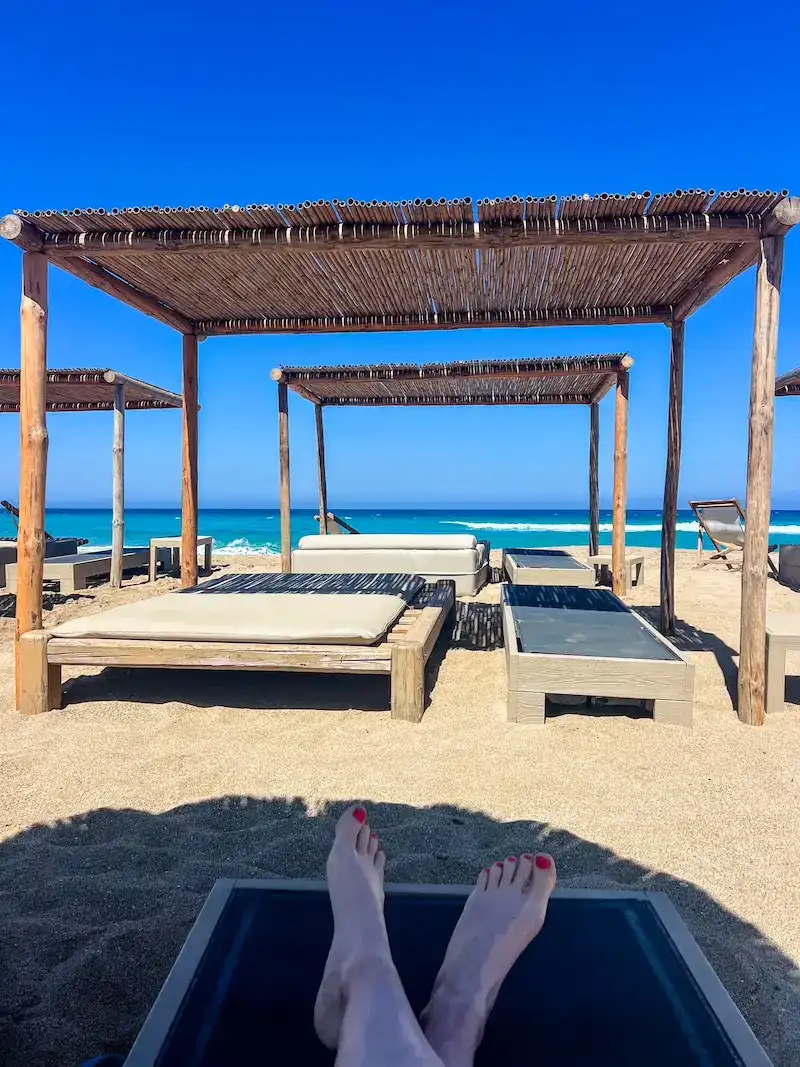
Unlike destinations like Malta, Crete is a big island, stretching over 260 kilometers from east to west. There are countless beaches, villages, and historical sites scattered across that terrain.
With a car, you can visit more remote areas without relying on bus schedules, expensive cab rides, or guided tours. You can plan drives based on your personal preferences and make spontaneous stops along the way.
Renting a car on a trip to Crete doesn’t just mean you’re seeing more of the island, though. It’s easier to see the island in a way that fits your ideal trip with a car.
Access to Remote Hiking Trails and Nature Spots

Crete is full of hidden gorges, mountain trails, and olive groves that are hard to reach by public transport. A car allows the hikers and nature lovers out there to reach trailheads early in the morning, maximizing their day and avoiding much of the foot traffic.
If you’re planning a hike to Katholiko Bay, for example, guided tours will get you there, but then you’re stuck hiking with a big group. I’m all for tours when it makes sense, but hiking is something we like to do solo or as a pair.
READ MORE: Learning how to road trip as a couple has been a process. Check out all of the things we’ve learned!
It allows you to get your own pace and stop whenever you need a breather, which may not match up with Susan’s break schedule. Check out my detailed guide to Katholiko Bay if you’re interested in adding that to your itinerary.
Convenience vs. Public Transport
While buses connect major cities and towns on Crete, schedules can be limited, especially in rural areas. A car lets you move between destinations on your own timeline and avoid waiting for buses or coordinating multiple transfers.
Having a car is better if you like getting up early or staying out late, too. Buses and taxis may not run early in the morning or late at night. With a car, you can start your day at sunrise or return after a late dinner without worrying about transport availability.
Ideal for Families and Groups
We were just traveling as a couple, but if you’re traveling with family or friends, renting a car can be more cost-effective than paying for multiple taxis or bus tickets. You also have the flexibility to carry more luggage, picnic supplies, or beach gear.
If you’ve ever tried to navigate a crowded public bus with oversized luggage, you’ll feel this point deeply.
How to Rent a Car in Crete
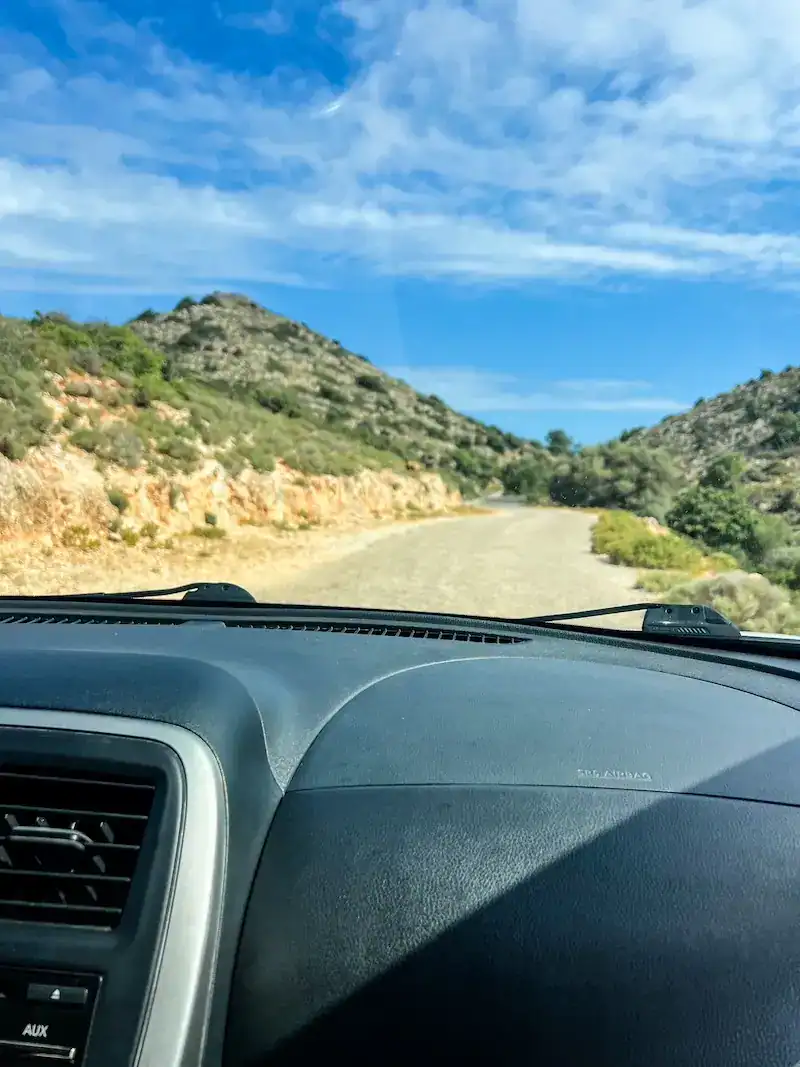
If you agree with us that renting a car in Crete is the best way to explore the island, here’s a step-by-step guide to make the process smooth, safe, and cost-effective.
Step 1: Choose a rental company.
International rental car companies like Hertz or Avis generally offer predictable service and insurance options, but local agencies can be cheaper and sometimes more flexible.
After looking through reviews online, we decided to go with Go Car Rental, an agency with a really high Google rating.
We liked that they offered unlimited mileage (or kilometers), free cancellation, and no deposit at the time of booking.
While I wouldn’t give them a perfect rating, especially for those dropping off at a location different than their pick-up spot, they were easy to work with, if a little too casual.
Step 2: Choose the right vehicle.
We got a small passenger vehicle that did the job, but if your plans involve anything a little more rugged, consider a car that can handle those plans.
Note: The car we got was enough for getting to places like Katholiko Bay and driving between towns around the island, but we didn’t take it into the mountains.
Many rental cars in Crete are manual, which means I was a passenger princess on this road trip again. If you need an automatic, book your car well in advance. They sell out quickly, and often cost more if they are available.
Step 3: Book your car.
Most car rental locations, even the smaller, local ones, will allow you to book a car ahead of time online.
We made a reservation in advance for our trip at the end of May, something I’d recommend that you do in the busy season. But we also saw several people stroll in for last-minute reservations.
I’m not suggesting you do this, as it could mean you’re out of luck for a preferred vehicle or for a car altogether, but it’s something to consider if you’re a last-minute person.
Step 4: Pick up and inspect the car.
Check for scratches, dents, and tire conditions before you drive that thing off the lot. Take photos to avoid being blamed for pre-existing damage.
Our car wasn’t in the most pristine condition, and the inspection process seemed more relaxed than with the bigger agencies.
Don’t take even a more relaxed approach as a sign that you should be super chill on your end, though. We still documented all of the little dings and things we saw on the car, no matter how small. We’ve been suckered enough to be cautious!
Step 5: Return the car.
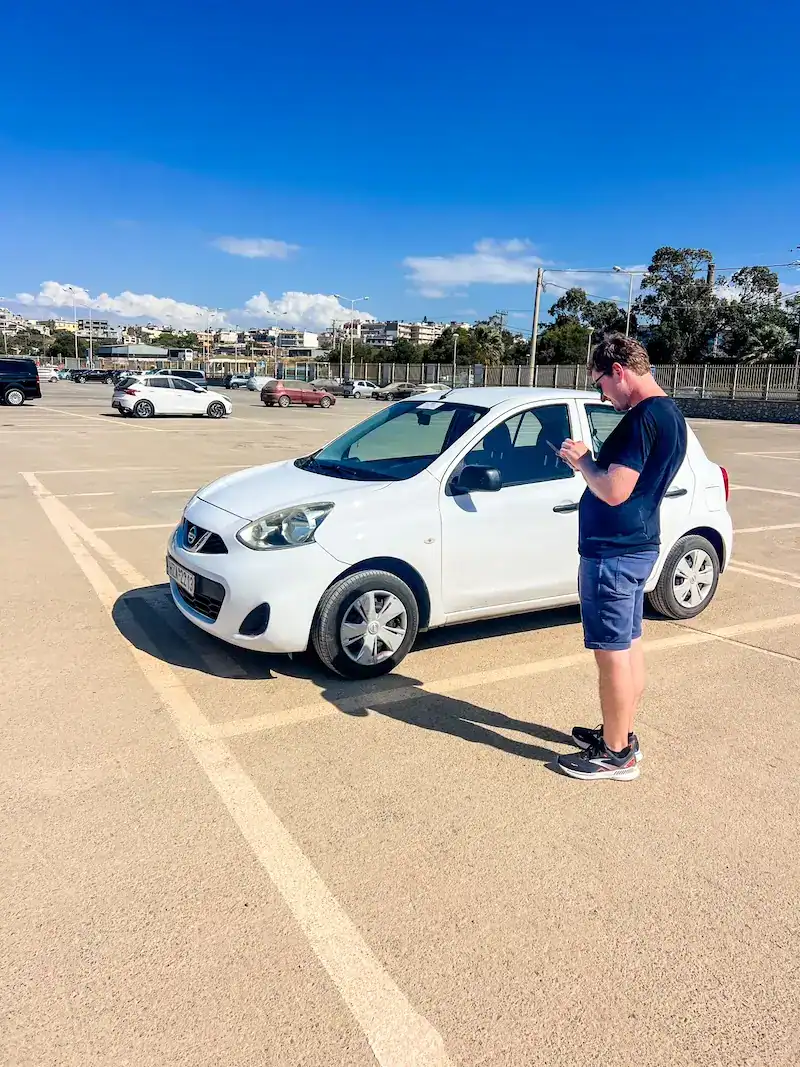
Returning car rentals should be straightforward, but it’s also where people are most likely to get hit with surprise fees if they’re not paying attention.
If your rental has a full-to-full fuel policy, refuel close to the drop-off location and keep the receipt, just in case. Gas stations aren’t always conveniently located near airports or ports, so plan a little buffer time.
Try to return the car during staffed hours if possible. That way, an employee can do a quick walk-around with you and confirm everything looks good.
If you’re returning the car after hours, take clear photos of the exterior, interior, and fuel gauge before handing over the keys.
Be especially mindful of drop-off location fees. Returning a car in a different city than where you picked it up can come with a hefty surcharge. That’s something we learned the hard way when dropping ours off near Heraklion airport after picking it up in Chania.
Finally, make sure you receive written or digital confirmation that the car was returned, and a final receipt. Monitor your credit card for a few weeks after the fact for any surprise charges.
We’ve had some cases of unexplained charges on cars in the past, but we were able to get those removed by customer service thanks to our due diligence. Well, it was mostly Brian, as he’s our money guy, but he was on it.
What documents do you need to hire a car in Crete?
To rent a car in Crete, you typically need a valid driver’s license and a credit card in your name. EU licenses are fine. Some non-EU licenses may need an International Driving Permit, but licenses from the United States are fine, too.
Some agencies ask that you carry an additional proof of identity, like a passport. Ours did. You’ll need to provide any additional driver’s licenses at pick-up if there will be more than one driver.
At what age can you rent a car in Crete?
Most rental agencies in Crete require drivers to be at least 21 years old, and some may charge an extra “young driver” fee for drivers under 25.
Certain vehicle types, like SUVs or luxury cars, may have higher minimum ages. Always check the agency’s rules before booking.Add Image
Costs of Renting a Car in Crete
Expect the cost of renting a car in Crete to average around €20-€25 per day for a small economy car in low season. Larger vehicles can cost you upwards of €50 per day.
If you need GPS, child seats, or an additional driver on your reservation, add between €5-€15 per day.
Gasoline prices in Crete are slightly higher than in mainland Europe. A full tank usually costs €50-€70, depending on the car size and the kind of fuel it takes.
Fun fact: There are no toll roads to worry about on Crete, so you’re good there.
Full-to-full policies are usually the most common, but an agency may also ask that you return a car with as much gas as it had when you picked it up. If you ignore their fuel policy, they can charge you quite a bit on the backend. Don’t do this.
Any agency will ask if you’d like to purchase supplemental car insurance on your rental. Make sure you understand what your insurance covers and what the rental insurance covers, whether that’s collision damage, theft, or third-party liability.
Seasonal Considerations
June through September is high season on the island. Prices for rentals and even fuel are higher, and availability is limited, especially if you need an automatic vehicle. Booking in advance is strongly recommended during this period of time.
Low season, which is from about October until early May, means fewer tourists and lower rates, easier booking, and less busy roads. Some car rental agencies may even offer discounted winter deals.
Winter driving conditions are a thing, though, despite the sunshine you’ve been promised. Roads in the mountains can be slippery, so it’s important that you’re not some fair-weather driver if you’re here in the winter.
Strong winds and occasional sandstorms can also affect driving conditions at certain times of year. While it’s not constant and rarely dangerous, it can affect visibility, coat roads with fine dust, and make driving feel more intense.
If conditions look hazy or windy, slow down, increase your following distance, and avoid unnecessary long drives until visibility improves. Keeping your windshield fluid topped up helps more than you’d expect.
Watch this clip to see a sandstorm in action on our trip:
When You Might Not Need a Car in Crete
Renting a car in Crete gives you the most freedom, but it’s not essential for every type of trip. Depending on where you’re staying and how you plan to explore, you may be able to get by without one.
Using Buses on Crete
Crete has an intercity bus system operated by KTEL, which connects major cities and many popular towns across the island.
Buses run frequently between places like Chania, Rethymno, Heraklion, and Agios Nikolaos, making them a solid option if your itinerary is focused on urban areas. Tickets are inexpensive, and buses are generally clean and air-conditioned.
That said, buses don’t reach every beach, village, or trailhead. Routes can be limited outside major corridors, and schedules may not align well with early mornings or late evenings.
We thought they were a little too restrictive for what we wanted to do, but that might not be you!
Taxis and Private Transfers
Taxis are widely available in Crete’s major cities, around airports, and near tourist areas, and they’re easy to use for short distances or airport transfers. For travelers staying in one place and venturing out periodically, taxis can be more convenient than renting a car.
Note: Rideshare services like Uber or Bolt aren’t widely available in Crete in the way they are in larger European cities.
Private transfers are another popular option, especially for airport pickups, hotel transfers, or day trips. They’re more expensive than taxis but can be a good solution if you’re traveling with luggage or in a small group.
The costs of all of that can add up quickly, though, especially for longer distances or multiple trips per day.
Alternative Transport Options
Scooters and motorbikes are popular in coastal towns and resort areas. They’re affordable and easy to park, but best suited for confident riders and shorter distances.
Fun fact: That’s not me, as I’m much too reliant on my intrusive thoughts in my day-to-day life.
Bikes can work well in flatter areas or for casual rides, though Crete’s heat and hills make long cycling trips challenging.
Organized tours and guided excursions are a great alternative if you don’t want to drive. Many tours include transportation and take you to beaches, historical sites like Knossos, and natural attractions that are difficult to reach by bus.
If you plan to rely on tours, it’s worth booking them in advance, particularly at busier times of the year. Here are a few that looked fun to me:
Driving Tips for Crete
Driving in Crete is generally manageable, at least that’s what it seemed like with Brian behind the wheel. The locals didn’t seem that aggressive, although they drove with a little more confidence than we’d gotten used to in France.
Here are some more things to know:
- Road conditions vary widely. Highways between major cities are generally in good shape. Once you leave them, narrow roads, sharp turns, and uneven pavement are more common, especially in rural areas.
- Mountain roads require confidence. We mostly avoided them. If you’re not comfortable with mountain driving, stick to coastal routes or plan guided excursions instead.
- Know your gears. Downshifting helps control speed on descents and keeps the car steady on tight curves, reducing wear on your brakes. This is something I don’t have a handle on, so make sure you do before you head out.
- Speed limits aren’t always posted clearly. Speed limits can change quickly and aren’t always well-marked. Generally, on open roads, the limit is 90 km/h; it’s 30 km/h in cities. Drive conservatively, especially through rural villages.
- Parking in cities can be challenging. In places like Chania and Heraklion, parking is limited in historic centers. Look for designated parking lots or street parking outside the busiest areas.
- Gas stations aren’t always 24/7. In rural areas, stations may close early or have limited hours, so it’s smart to refuel before long drives. Make sure you know where to fuel up before you drop your car off, too.
- Watch for animals on the road. Goats, sheep, and stray cats are common, particularly in rural and mountainous areas. Seriously, I’ve never seen more stray cats than we did in Crete. Drive carefully, especially at night.
- Night driving requires extra caution. Roads may be poorly lit outside of cities, and unexpected obstacles are more common after dark. I’m mostly talking about the cats again.

READ MORE: Planning a road trip in France? I’ve got a guide to driving in France, too!
Is it safe to rent a car in Crete?
Yes, renting a car in Crete is generally safe. The roads are well-maintained between major cities, and traffic is usually predictable.
Most risks come from narrow mountain roads, unfamiliar driving conditions, or not following local driving rules. Staying alert and choosing a vehicle suited to your route and your abilities as a driver are good things to do.
Renting a car in Crete is worth it…for most.
For most visitors, a rental car is the best way to see Crete. You’ll be able to do so on your own time, plan all of the stops that you want, and make some spontaneous memories if you’re lucky.
That said, if driving around Crete makes you anxious or you’re only here for a quick city break in Chania, you may be able to get away without a car. Booking a tour or two is always a good idea in that case.
Planning more travel in Greece? Check out these guides:
- Plan an Epic Hike From Oia to Fira
- Should You Visit Santorini, Greece?
- Things I Didn’t Like About Seeing Santorini
More European destinations worthy of a road trip:
- Top Castles to Visit in the Loire Valley
- Spend Two Weeks on the Road in Brittany
- Plan a Bucket List Trip to Iceland
- How to Plan Your Next Trip to Poland
- Visiting Scotland’s Doune Castle

Want to see more?
Subscribe to my biweekly newsletter for hot travel tips I come across, weird stories you won’t see elsewhere and perhaps lifelong friendship.
Too much, or just enough?
