
Madeira was always one of those “one day we’ll go” destinations for us. We’d just been to Lisbon and Porto when the opportunity came up to visit the island as guests of Savoy Signature.
Admittedly, we figured it would be fun, but assumed it might feel like a tropical extension of the Portugal we already knew.
While we were there to do the hotel thing, we quickly realized Madeira was so much more than a pretty island with luxury accommodations. Yes, it’s Portuguese, but it’s also very Madeiran, with its own traditions, flavors, landscapes, and personality.
And, perhaps most importantly, we made it through the entire trip without crapping our pants. After our last visit to Portugal ended with a memorable case of food poisoning thanks to some questionable meat, this felt like a major win.
So, is Madeira worth visiting? After nearly a week exploring beyond the resort walls, we have the answer for you!
Quick Tips for Your Madeira Visit
Your Flight: Fly into Cristiano Ronaldo Madeira International Airport (FNC) near Funchal. There are direct flights from many European cities, including Lisbon, London, and Paris. Find deals to Madeira on Skyscanner. Love deals? Subscribe to Going.
Your Accommodations: We stayed at Saccharum and Savoy Palace during our visit as guests of Savoy Signature. Both offer excellent bases for exploring the island, but Madeira has options for every budget. Browse Booking.com or Hotels.com. Vrbo is my Airbnb alternative.
Your Ride: You can explore Madeira without a car, especially if you base yourself in Funchal and book tours to the island’s highlights. If you want a car for more flexibility, book a rental car ahead of time.
Top Spots: Ride the cable car to Monte, wander through the Monte Palace Tropical Garden, and taste Madeira wine in Funchal.
Disclosure: Travel on the Reg uses affiliate links to keep things running around here. At no additional cost to you, I earn a lil’ commission if you make a purchase. Any income earned supports the upkeep of this site. I appreciate you!
Is Madeira worth visiting?
Yes! Between its volcanic landscapes, year-round spring weather, tasty food, and range of comfortable accommodations, it feels much more diverse than its size suggests.
We expected beautiful scenery, but we were surprised by just how much there was to do. While on the island, you can ride a cable car above Funchal, taste centuries-old Madeira wine, relax at your oceanfront resort, or watch the sunset over the Atlantic.
It’s an excellent vibe.
The scenery makes you feel like you’re not in Europe.
Before visiting Madeira, I was skeptical of the Instagram photos I’d seen online of its cliffs and lush forests, but the island is just as good in person.
One moment, you might be winding through mist-covered trails that look more like Jurassic Park than Portugal.
Many visitors tackle the hike to Pico Ruivo, Madeira’s highest peak. Others explore the island’s ancient UNESCO World Heritage-listed Laurisilva Forest, one of the largest surviving laurel forests in the world.
The next, you’re standing on volcanic cliffs overlooking the Atlantic. Madeira just doesn’t resemble most of Europe.
You won’t find rolling vineyards or medieval towns here. Instead, the island feels almost tropical. And despite covering just 286 square miles (741 square kilometers), Madeira packs an incredible variety of landscapes into a relatively small space.
You can visit Madeira year-round.
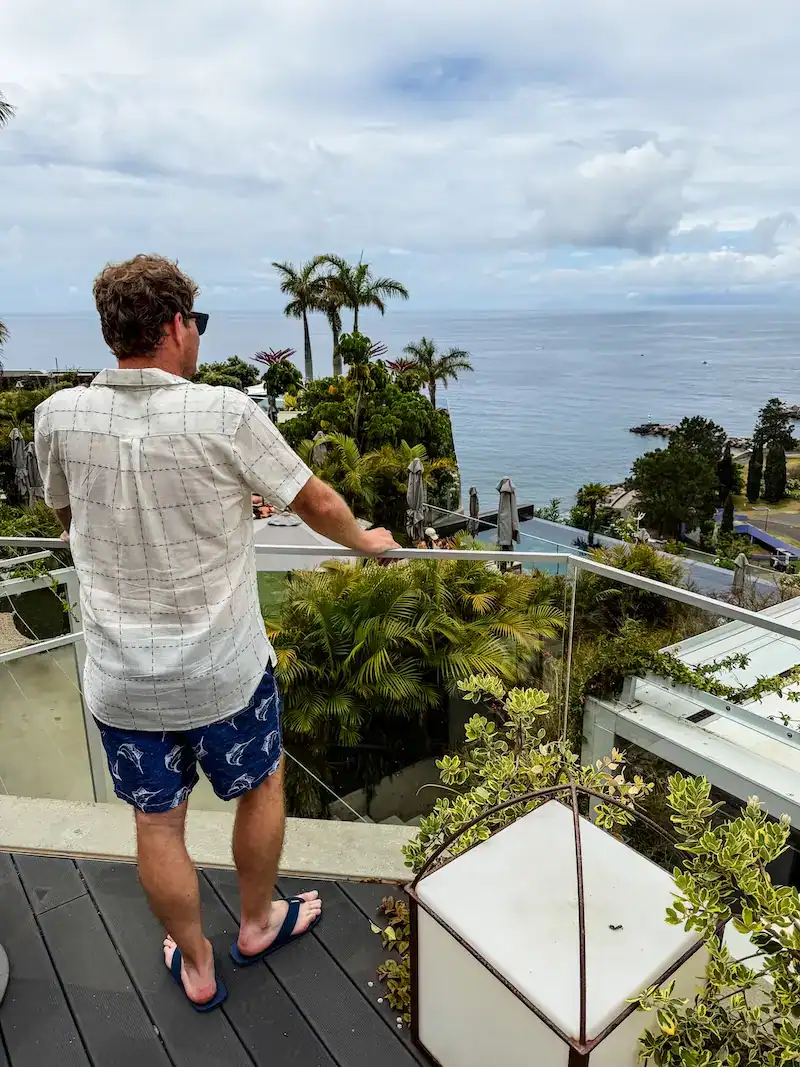
One of Madeira’s biggest advantages is that there’s really no bad time to visit. Nicknamed the “Island of Eternal Spring,” Madeira enjoys mild temperatures throughout the year, making it nice for a winter escape or a summer holiday.
We visited in June and were greeted with warm, sunny days that were ideal for sightseeing. For comparison’s sake, Madeira was an escape from the heat wave happening in France at that time. It was much cooler on the island.
Even when we spent hours wandering Funchal at midday, the Atlantic breeze kept things comfortable.
Of course, every season has its trade-offs. Summer is generally drier and busier, while winter brings a greater chance of rain, especially in the mountains.
Unless you’re hoping for a classic beach vacation, Madeira is one of the few European destinations where you can comfortably hike, sightsee, and dine outdoors all year.
READ MORE: Would I say the same about Tenerife? See my guide to Tenerife in the winter.
Funchal is one of Portugal’s most underrated cities.


The island’s capital strikes a great balance between historic charm and modern comforts.
You can spend the morning wandering the colorful streets of the Old Town, stopping to admire the painted doors along Rua de Santa Maria. After that, you can hop aboard the cable car to Monte for what feels like a completely different city.
Fun fact: Cristiano Ronaldo’s bronze statue in Funchal has become famous for how shiny his shorts have gotten in one particular spot. Years of visitors have rubbed the footballer’s bronze nethers for good luck, leaving it polished to a bright gold. We skipped that tradition!
Funchal also makes an excellent base for exploring the rest of Madeira. Many of the island’s biggest attractions are less than an hour away. You can spend the day hiking mountain trails or tasting Madeira wine before returning to the city for dinner.
The luxury hotels offer incredible value.
If you’ve ever priced five-star hotels in destinations like Santorini, the Amalfi Coast, or even parts of mainland Portugal, Madeira may come as a pleasant surprise.
We stayed at Saccharum and Savoy Palace during our visit, and both offered the kind of amenities you’d expect from significantly more expensive resorts.
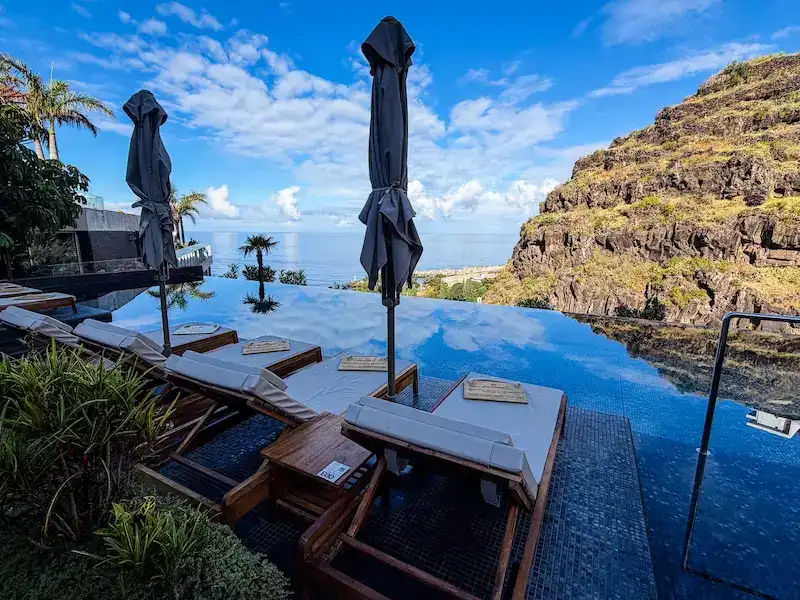
Infinity pools overlooking the Atlantic Ocean, expansive spas, and rooms overlooking the best of the island are attainable compared to other luxury destinations in Europe.
Saccharum stood out to us for its design, which draws inspiration from Madeira’s sugar cane heritage. The rooftop infinity pool and oceanfront fire pit dinners made it obvious that the hotel has embraced a strong sense of place.
Savoy Palace offered a completely different experience. Located in the heart of Funchal, it felt grander but more urban, with sweeping ocean views and multiple restaurants on-site.
Even if luxury accommodations aren’t your usual travel style, Madeira offers a level of value that’s increasingly difficult to find elsewhere in Europe. Check out the map below to see what I mean:
Madeira’s food surprised us.
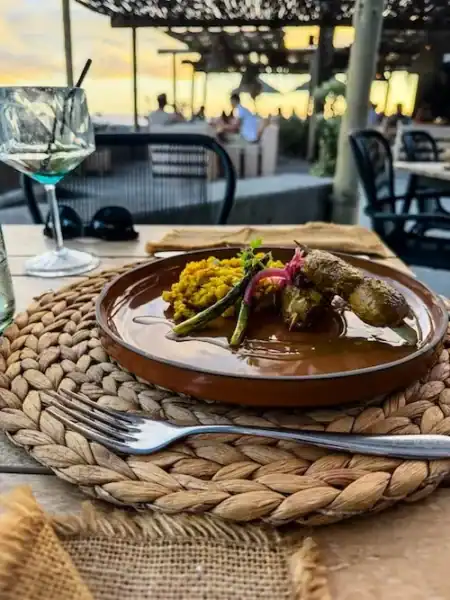
We generally enjoy Portuguese food, but had a bad bout of food poisoning on a visit to the country just a few months before this trip to Madeira. I’m glad we arrived with open minds (and bellies), as Madeira has a culinary identity all its own.
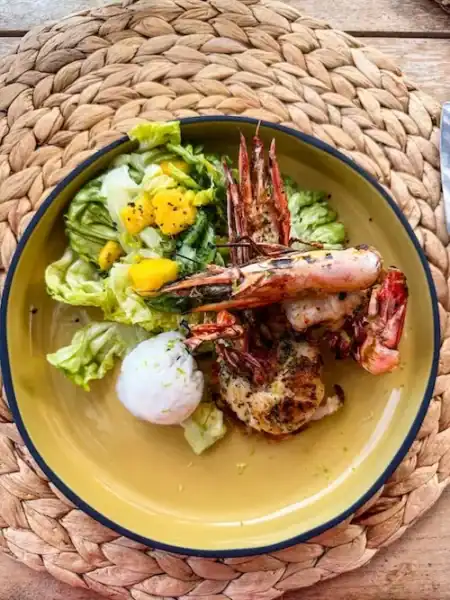
Fresh seafood is on menus everywhere, and it’s often caught the same day in the surrounding waters. Local specialties like black scabbardfish, grilled limpets, and passion fruit grown on the island give Madeira’s cuisine a distinctly local character.
We appreciated how often restaurants highlighted local ingredients. If you opt for something fancy while you’re here, you’ll find that chefs typically incorporate produce grown on their own farms and gardens into many of the dishes.
Needless to say, we never had a bad meal on the island.
Madeira wine is worth discovering.

Even if you don’t typically love fortified wine, Madeira deserves a chance.
That’s me, by the way. I’m not a huge fan. But when in Madeira, I had to try Madeira wine.
The island’s namesake wine has been produced here since the 15th century, originally gaining fame because it actually improved during long sea voyages. Today, it’s one of Madeira’s defining cultural traditions.
We toured Blandy’s Wine Lodge in Funchal and came away with a greater appreciation for both the craftsmanship and the history behind each bottle.
Madeira wine is aged quite differently from most wines, with heat playing an essential role in developing its distinctive flavors.
Depending on the style, you’ll find everything from lighter, drier wines to rich, caramel-like dessert wines. I found that it still leans quite sweet, but it did taste a little different knowing about its deep connection to the island.
Fun fact: America’s Founding Fathers were big fans of Madeira wine. Legend has it that the signing of the Declaration of Independence in 1776 was celebrated with glasses of Madeira. Yay!
Its rum culture is interesting, too.
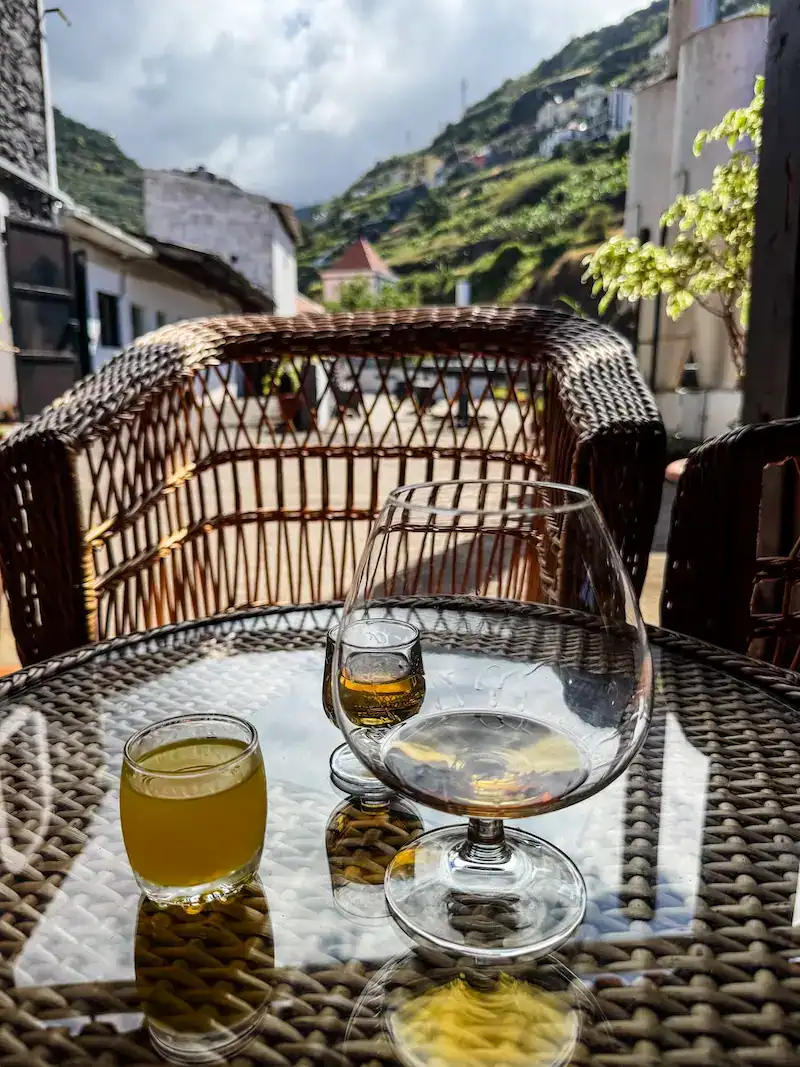
Madeira wine gets most of the attention, but the island’s rum culture deserves some love, too.
Madeiran rum differs from many Caribbean rums because it’s distilled directly from fresh sugar cane juice rather than molasses. That gives it a fresher flavor that reflects the sugar cane itself.
We visited Engenhos da Calheta, one of the island’s traditional distilleries, where generations of the same family have helped preserve this centuries-old craft.
It was fascinating to learn how sugar cane must be processed within 48 hours of harvesting and how nearly every part of the plant is reused. And the distillery continues producing rum using many of the same methods despite modern upgrades.
The visit also highlighted some of the challenges facing the industry today. Sugar cane farming is incredibly labor-intensive. Production has declined, and many younger generations simply aren’t continuing the tradition.
It made us appreciate every sip of poncha, Madeira’s famous rum-based cocktail, that much more.
Note: Don’t overdo it on poncha while you’re here. The locals make it look harmless, but this sweet, citrusy cocktail has a way of sneaking up on unsuspecting visitors.
Madeira is home to one of the world’s most beautiful gardens.
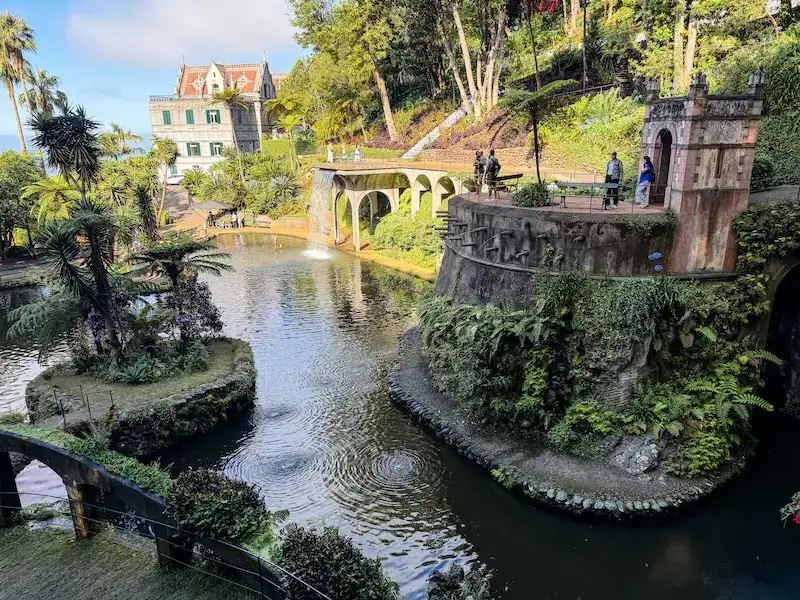
The Monte Palace Tropical Garden is often ranked among the most beautiful gardens in the world, and I’m gonna go ahead and say it’s well-deserved.
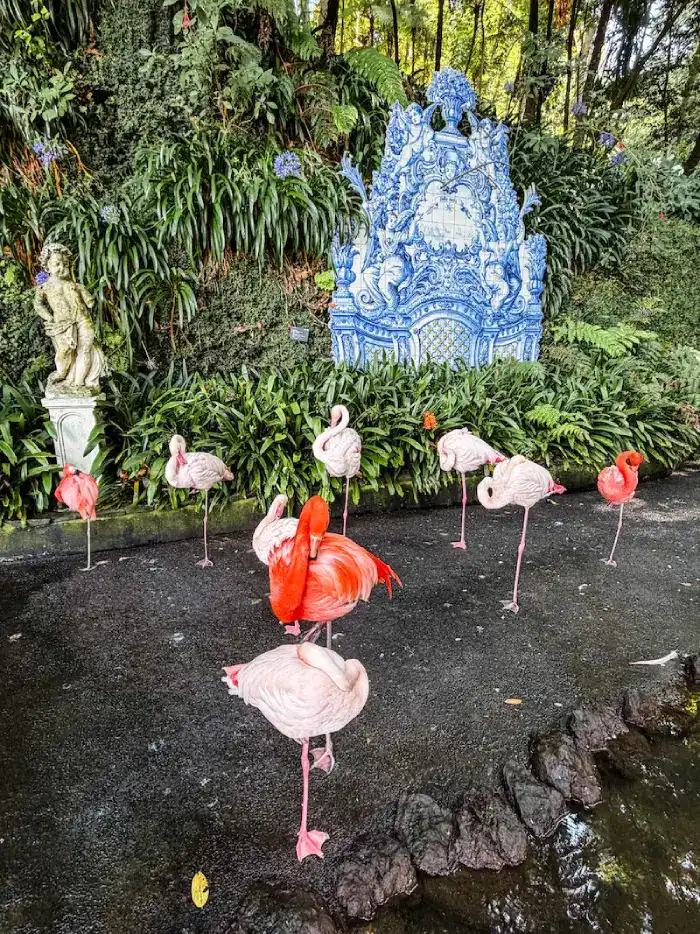
This botanical paradise combines exotic plants, Japanese-inspired landscapes, koi ponds, and an impressive collection of art and artifacts from around the globe.
You can spend hours here, winding your way through 70,000 square meters of subtropical vegetation from Africa, Asia, and the Americas alongside Madeiran flora.
Beyond its natural beauty, Monte Palace is also home to several cultural collections. Museums within the gardens cover Portuguese tile panels, African sculptures, and collections of minerals, just in case the flora isn’t exciting enough for you.
Oh, and there are flamingoes.
If you want to return to the city in a hilarious fashion, take the famous Monte toboggan ride. The wicker sled experience has been part of Madeira’s culture for more than a century.
You can feel like a kid again on a toboggan ride.
Speaking of doing it for the silliness of it all, the Monte toboggan ride takes you downhill from the gardens via a wicker sled. You’ll zoom through the streets with two “carreiros” steering and braking from behind.
Is it touristy? Yup.
Is it expensive for what amounts to a 10-minute ride? Also yes.
Would we do it again? Probably not.
Are we still glad we did it? Definitely.
It’s one of those classic travel experiences that’s difficult to compare to anything else. There’s something undeniably fun about flying downhill in a wicker basket while two men in straw hats guide you through the streets.
Just know what you’re signing up for. The ride ends well before the city center, where taxi drivers wait to offer rides back into town. By offer, I mean they will pressure the sh*t out of you, which isn’t fun after the fun you just had.
If you’re comfortable with a fairly steep downhill walk, you can save yourself some money by walking instead.
READ MORE: Are Venice gondolas, another touristy experience, worth the cost? See my honest thoughts!
It’s easy to explore.
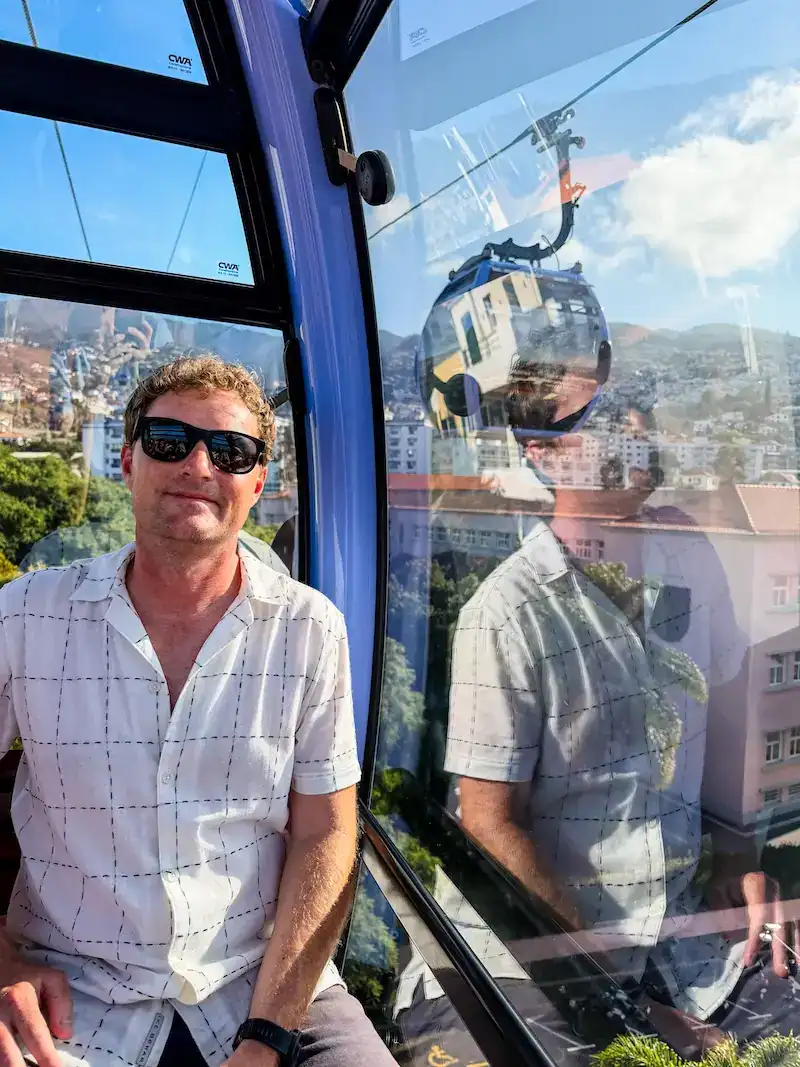
The island itself isn’t particularly large, but the scenery changes dramatically from one area to the next. You can base yourself in Funchal and easily take day trips to wineries, mountain viewpoints, botanical gardens, hiking trails, and coastal villages.
If you like road trips, renting a car offers the most flexibility. Whether you’re heading west to the natural volcanic pools of Porto Moniz or east to the dramatic cliffs of Ponta de São Lourenço, the drives are scenic AF.
If driving on steep mountain roads isn’t your thing, organized tours can reach many of the island’s highlights, making Madeira easy to explore without a car.
Here are a few options to do just that:
We didn’t feel like we missed out by not having a car, but might book one for a return trip to get to see more of the island’s jungles. You can definitely have a fun time without one, though. We did!
Madeira is perfect for slow travel.
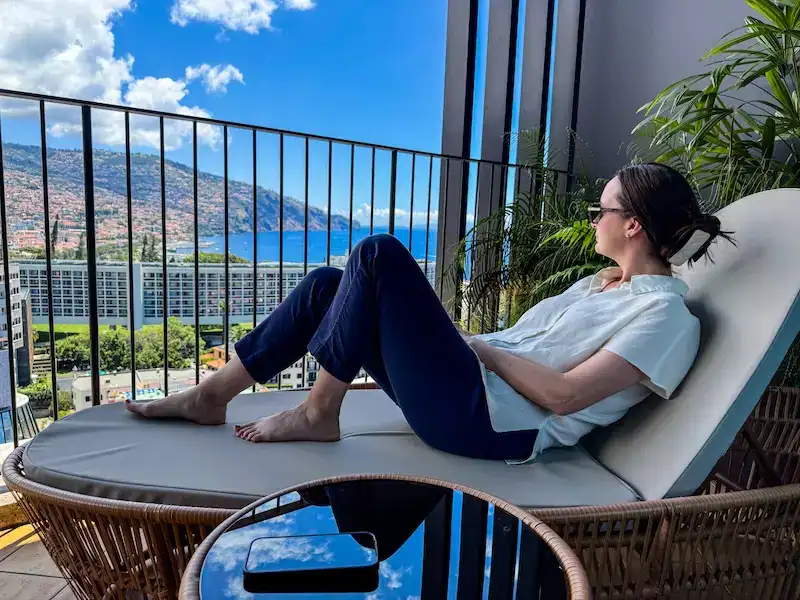
Not every destination needs a packed itinerary, even though that’s generally how I move through the world. One of our favorite parts of Madeira was (finally) slowing down enough to enjoy the island itself.
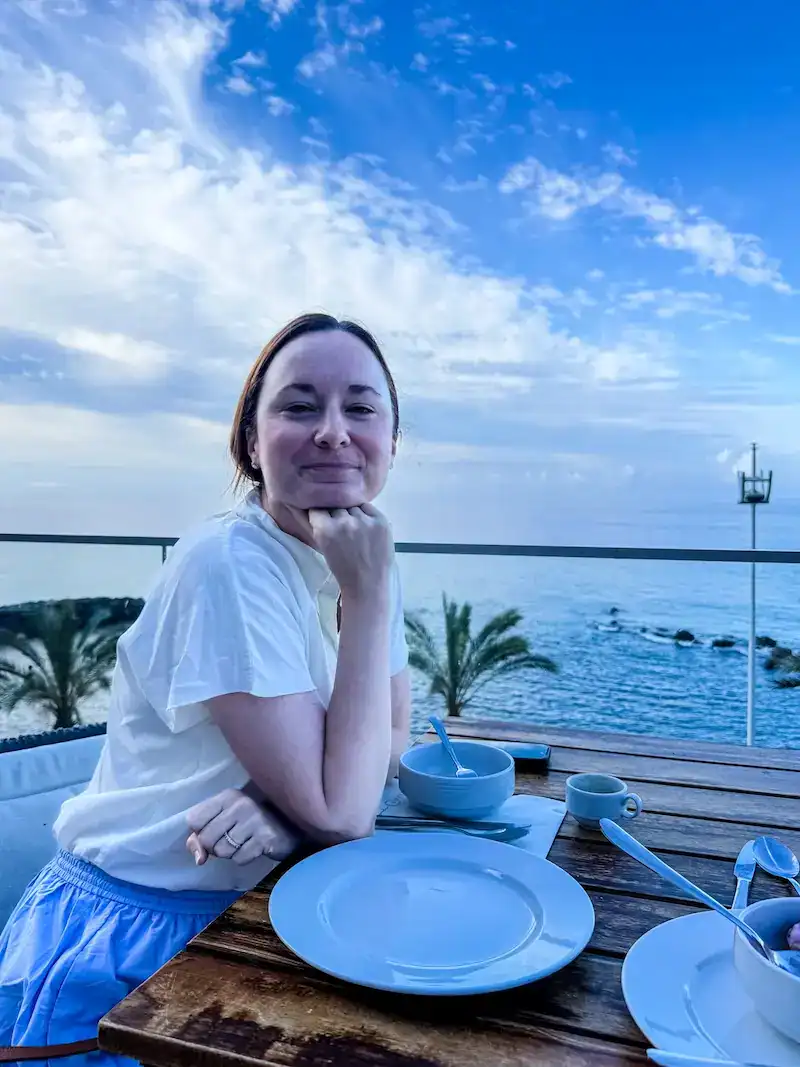
That meant morning yoga overlooking the Atlantic before breakfast, or lingering over long dinners as waves crashed against the rocks. One night, we watched the fireworks from our hotel balcony.
Note: If you’re visiting Madeira in June as we did, you might be treated to fireworks displays throughout the month for various summer festivities. You can either watch them in town or be introverted like us and watch them from your hotel room’s balcony.
Madeira encourages a slower pace, even if you’re like me and it doesn’t come naturally to you.
Whether you’re wandering through Monte Palace’s gardens or lingering over a glass of Madeira wine after dinner, it never feels like you need to rush to the next thing.
I mean, if you’ve ignored my advice and have had too much poncha, it’ll be hard for you to rush anywhere anyway.
It’s one of Europe’s best island escapes.
Europe has no shortage of beautiful islands, from Sicily and Sardinia to Malta, Crete, and the Azores. But Madeira still stands apart.
You get the drama with its natural scenery, excellent food, quirky local traditions, and year-round appeal in one compact destination. If you have extra time, you can even hop over to nearby Porto Santo for a completely different island experience.
This isn’t the kind of place where you’ll spend every day stretched out on a sandy beach. Instead, it’s a destination for travelers who like discovering local culture, eating well, and enjoying a more rugged approach to the sea.
We arrived expecting beautiful landscapes, but we left knowing that we’ll be back here someday, as cheesy as that sounds.
Who Madeira Is Best For
Madeira is an excellent fit for travelers who like nature, great food, and a destination that’s big on variety.
Hikers will find hundreds of miles of scenic trails, from levada walks to mountain summits. Food lovers can sample everything from fresh seafood to local rum. Luxury travelers will discover five-star resorts that often cost less than elsewhere in Europe.
It’s also an ideal destination for couples. The dramatic sunsets, oceanfront restaurants, spa resorts, and breathtaking viewpoints made us feel a certain way for sure.
Perhaps most importantly, Madeira suits travelers who want variety. In one day, you can wander Funchal, ride a cable car into the mountains, tour a winery, relax at an infinity pool, and finish up with seafood overlooking the Atlantic.
When Madeira Might Not Be Worth Visiting
As much as we loved Madeira, it won’t be the right destination for everyone.
If your dream island vacation revolves around lounging on long sandy beaches every day, there are better options. Madeira’s coastline is rocky, with natural pools replacing the wide beaches you’d find elsewhere.
The island can also be challenging to drive. Road trippers will find steep, winding, and mountainous roads, so nervous drivers may prefer joining guided tours or relying on car hires instead.
Finally, if you’re looking for nonstop nightlife or a party atmosphere, Madeira probably isn’t your bag.
While Funchal has more of that scene, especially during summer festivals, the island’s main appeal is rooted in its scenery, outdoor adventures, and relaxed pace.
Is Madeira better than the Azores?
It depends on the kind of trip you’re looking for. The Azores feel more remote. They’re ideal if your priorities are crater lakes, geothermal landscapes, whale watching, and a destination that still feels a little less discovered.
The tourism infrastructure in Madeira is more developed, and there are more luxury hotels and restaurants to choose from if that’s what you’re after.
Scenery-wise, both are spectacular. The Azores are greener and more pastoral, while Madeira feels more dramatic, with its sea cliffs, rugged peaks, and sweeping Atlantic vistas.
If we had just one week and wanted a mix of relaxation, sightseeing, and food, we’d probably choose Madeira. If we wanted to disconnect completely and spend most of our time outdoors, we’d lean toward the Azores.
Honestly, you can’t go wrong with either. Do it all if you can!
Is Madeira expensive to visit?

Madeira is more affordable than many travelers expect.
Flights can sometimes be pricey depending on where you’re coming from, but once you’re on the island, costs are reasonable compared to popular European islands.
Meals at local restaurants are fairly priced, especially if you order regional specialties. Attractions like botanical gardens and wine tastings are generally a good value for the experience.
Accommodations span nearly every budget. Backpackers can find hostels and guesthouses.
Travelers looking to splurge will still have access to luxury resorts, just at lower prices than comparable properties in destinations like Santorini, Capri, or the Amalfi Coast.
Of course, it’s possible to spend a lot of money here if you try, but Madeira is lovely on a budget, too.
Madeira is worth visiting, even if it’s not the “Hawaii of Europe.”
You’ll often hear Madeira described as the “Hawaii of Europe,” but after visiting, I don’t think that fits.
Sure, both are volcanic islands with lush landscapes. But Hawaii has world-famous sandy beaches, a distinctly Polynesian culture, and a much broader range of climates and ecosystems spread across multiple islands.
Madeira feels smaller, more European, despite the island vibes, and boasts centuries-old traditions.
Honestly, Madeira doesn’t need to be Europe’s version of anywhere else, though. It has an identity all its own, and the comparisons are generally influencer-driven. (You won’t get that nonsense here.)
So, is Madeira worth visiting? Absolutely. Just don’t visit expecting a miniature Hawaii. Visit Madeira for Madeira, and I know you’ll love it!
Traveling elsewhere in Europe? Check these out next:
- Why Visit Doune Castle in Scotland
- Should You Plan a Trip to Utrecht?
- A Guide to Lovely Évian-les-Bains
- Engstligenalp and Engstligen Falls in Summer
- Top Things to Do While in Bologna
More island destinations to fuel your wanderlust:
- Do You Need a Car to Explore Tenerife?
- How to Go Whale-Watching in Tenerife
- How to Plan Three Days in Malta
- Planning a Road Trip in Malta
- Is Crete Worth Visiting on a Greece Trip?

Want to see more?
Subscribe to my biweekly newsletter for hot travel tips I come across, weird stories you won’t see elsewhere and perhaps lifelong friendship.
Too much, or just enough?
