
Before visiting Sarajevo, we weren’t entirely sure what to expect. I’d read it was a little alternative, and my Instagram was full of people calling it one of the most beautiful cities in Europe. Would I call it the prettiest city I’ve ever visited? Nope. But Sarajevo did leave a big impression on me.
Beyond its cool mix of Ottoman and Austro-Hungarian architecture and old town, the visible reminders of its more recent history make it an impactful place to explore. Its resilience is beautiful in its own way, but it’s also complicated and full of stories.
If you’re still deciding whether to visit, I’ve also written a separate guide on whether Sarajevo is worth visiting, with more about what makes the city so special.
If you’ve already decided and have one day in Sarajevo, you can still see a lot. This Sarajevo itinerary covers the historic center, some of the city’s most important landmarks, and a few places that offer a deeper understanding of its history.
I’ll also share the tours, restaurants, and stops we enjoyed along the way, plus a few alternatives depending on your interests. We were here for three full days, but I’ll help you prioritize!
Quick Tips for Your Sarajevo Visit
Your Flight: Sarajevo International Airport (SJJ) is a 20- 30-minute drive from the city center, depending on traffic. Find deals to Sarajevo on Skyscanner. Love deals? Subscribe to Going.
Your Accommodations: Browse Booking.com, Expedia, or Hotels.com for your options in Sarajevo. Vrbo is my Airbnb alternative. I’d suggest looking near Baščaršija, Sarajevo’s Old Town, to be within walking distance of the city’s main sights.
Your Ride: You don’t need a car for Sarajevo. If you’re planning a road trip through Bosnia and Herzegovina or the wider Balkans, book a rental car ahead of time.
Top Spots: Stroll through Baščaršija and its Ottoman-era bazaar, see the Latin Bridge, and take your photo at the Sarajevo Meeting of Cultures marker.
Disclosure: Travel on the Reg uses affiliate links to keep things running around here. At no additional cost to you, I earn a lil’ commission if you make a purchase. Any income earned supports the upkeep of this site. I appreciate you!
Is one day in Sarajevo enough?
One day in Sarajevo is enough for a good introduction to the city, especially if you focus on the historic center and its fascinating (and difficult) history. You can explore Baščaršija, visit some of the city’s landmarks, learn about the assassination that helped spark World War I, and get a better understanding of the Siege of Sarajevo.
If you can spare it, Sarajevo is a city that deserves more than a passing visit. We spent three days here and still found plenty to see and do, from exploring its museums and memorials to wandering beyond the old town and taking in some of the surrounding mountain scenery.
If one day is all you have, though, don’t let that stop you. With our help, you can experience quite a lot of Sarajevo in 24 hours. I’ll walk you through how I’d prioritize limited time here, including a few options depending on whether you’re more interested in the city’s general history or its more recent past.
Want to watch more from our visit? Check out our video below:
Is it safe to visit Sarajevo?
Yes! We felt comfortable exploring Sarajevo, including walking around the city center and old town during the day and in the evening. As with any city, it’s smart to keep an eye on your belongings and take normal precautions, but we had no issues during our visit.
For a more detailed look at safety, including what to know before your trip, check out my full guide to whether Sarajevo is safe to visit.
How to Spend One Day in Sarajevo
You can spend one day in Sarajevo like this:
- Start with a free walking tour.
- Stop for a traditional Bosnian lunch.
- Explore Baščaršija.
- Visit a war museum.
- Look for the Sarajevo Roses.
- Enjoy a glass of Bosnian wine.
- Finish with a traditional Bosnian dinner.
One Day in Sarajevo Itinerary
Here’s how I’d organize your day, based on our own experience exploring Sarajevo. We actually spent three days in the city, including a morning on the Siege of Sarajevo tour, so I’ve included that as an alternative to the standard walking tour. Choose whichever experience interests you most, then follow the rest of the itinerary.
I really urge you not to skip a tour, even with just a day in Sarajevo. You’ll get context you wouldn’t otherwise, as tours are typically led by people with deep personal connections to important events in this city.
Stop 1: Free Walking Tour
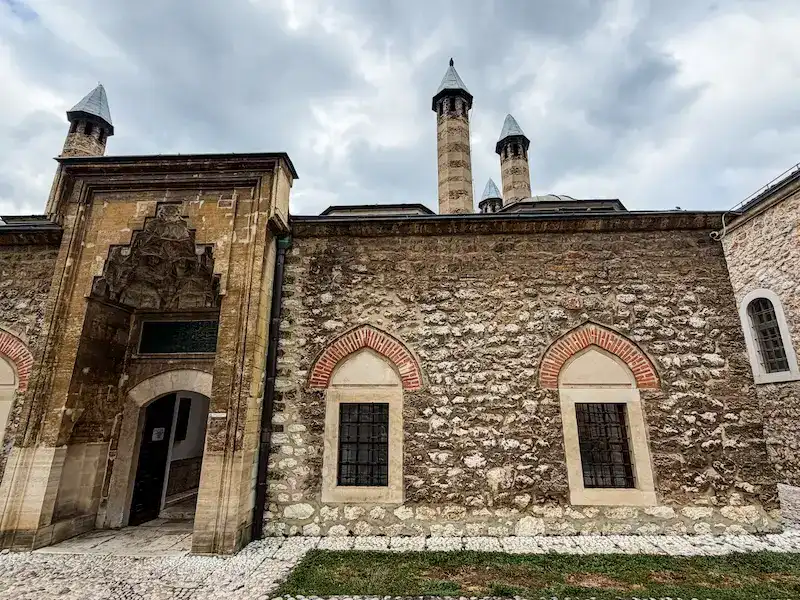
Sarajevo has a fascinating, complicated history, and having a local guide explain how the city developed and all that it’s been through makes a big difference when you’re exploring on your own afterward. We booked our tour with Neno & Friends, but there are several other options around the city.
Note: These tours are “free” but generally tip-based, so bring some cash to compensate your guide at the end. Seriously, don’t be that tourist who does otherwise.
Our tour started outside the National Theatre, Sarajevo’s oldest professional theater. Over the next few hours, we covered a lot of ground. Here are some of the highlights:
- Liberation Square: We stopped to admire the square’s unusual nude sculpture, an Italian-made work that has occasionally been dressed up to cover its prominent anatomy. The Orthodox Cathedral provides a lovely backdrop.
- Sarajevo Synagogue: We learned about Sarajevo’s Jewish community and visited the area around the city’s remaining historic synagogue.
- Papagajka (Parrot Building): This apartment complex is often called the ugliest building in Sarajevo, but we kinda liked it. It’s definitely brighter than anything else we saw in the city, and it’s covered in graffiti, but the place has pizzazz.
- Latin Bridge: This is where Gavrilo Princip assassinated Archduke Franz Ferdinand in 1914, an event that helped trigger World War I. Our guide explained how views of Princip and the assassination have changed over the years.
- Gazi Husrev-beg Mosque: We explored the old town and learned about the influential Ottoman governor for whom the mosque is named, along with the city’s historic educational institutions.
- Sacred Heart Cathedral: We stopped outside the Catholic cathedral, where my mom posed with a statue of Pope John Paul II, a beloved figure in Sarajevo. You can also spot one of the city’s Sarajevo Roses nearby. I’ll get into those later.
- Sarajevo City Hall: We finished at this impressive Austro-Hungarian-era building, known as the city’s most beautiful. It was particularly pretty from across the river.
When we arrived in Sarajevo, we had some time to ourselves before our tour. We popped into the Museum of Sarajevo 1878-1918 near the Latin Bridge, thinking it’d give us some base knowledge about what happened there, and honestly, I’d skip it if you’re short on time.
The museum has the gun used in the assassination of Archduke Ferdinand, but it’s otherwise just a small room. It comes with a cash-only admission fee, too, and I wasn’t particularly impressed with the value.
The walking tour is a much better way to learn about that event and understand the different influences that shaped Sarajevo.
Alternative Stop 1: Siege of Sarajevo Tour
If you’d prefer a tour covering the Bosnian War and the Siege of Sarajevo in more detail, swap the free walking tour for a dedicated Siege of Sarajevo tour. We booked with Meet Bosnia Tours.
Unlike the walking tour, which focuses on Sarajevo’s broader history, this excursion takes you outside the historic center to places that played a significant role during the siege. It’s also a good way to reach some sights that would be hard to visit on your own in a single day.
Our tour started at the Yellow Fortress, where we got a better understanding of Sarajevo’s geography and how the surrounding hills gave attacking forces a vantage point over the city. Yugoslav and Bosnian Serb forces encircled Sarajevo, making the city’s position in the valley particularly significant.
From there, we travelled by minibus to several important sites:
- Sarajevo Clinics Center: We passed by this hospital complex, which was heavily affected during the siege. It served as a critical medical facility while Sarajevo was under attack, with staff treating wounded civilians despite the constant threat of shelling.
- Groblje Lav (Lion Cemetery): This cemetery is the final resting place of Admira Ismić and Boško Brkić, often called “Sarajevo’s Romeo and Juliet.” The couple, who came from different ethnic backgrounds, were killed at Vrbanja Bridge in May 1993 while attempting to leave the city.
- Sniper Alley: We drove along this notorious stretch of road, where civilians risked being shot by snipers positioned in surrounding buildings. Seeing the width of the street in person really brings home how exposed people were when trying to cross it.
Perhaps the most important stop was the Tunnel of Hope, which provided a lifeline to Sarajevo during the siege.
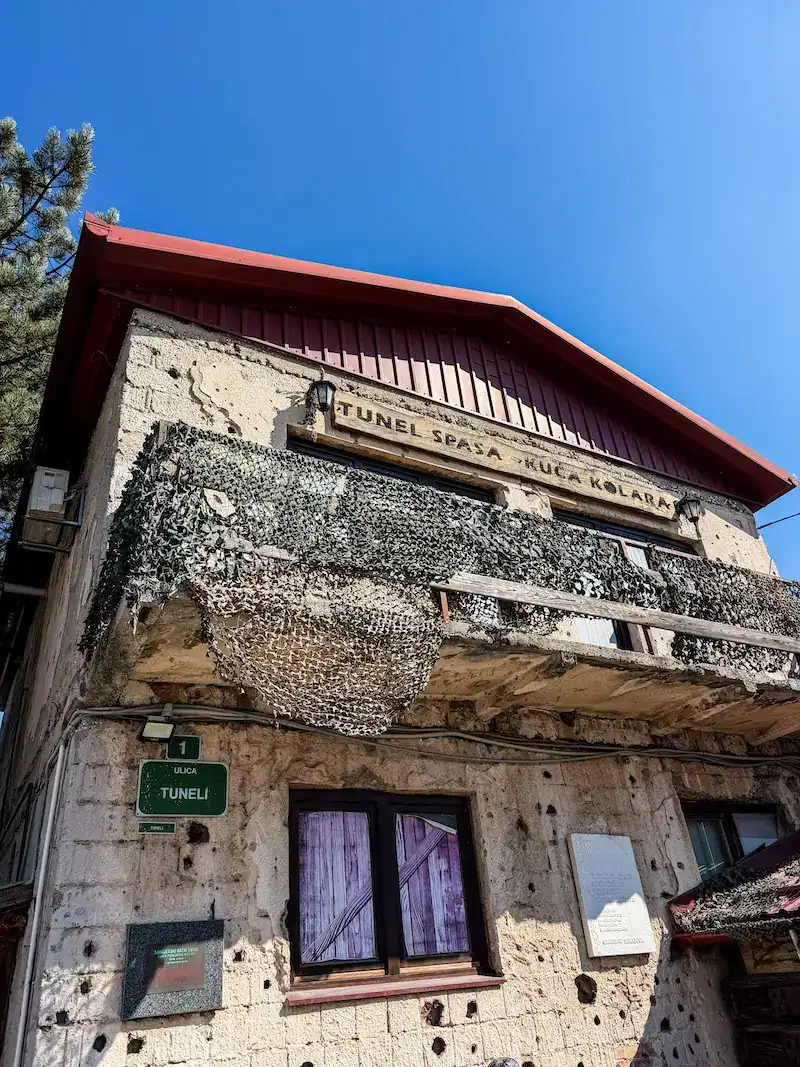
We got background upon arrival from a survivor of the siege. He had been training to become an Islamic religious leader when the war began, and he was called up to fight. He even showed us some of his scars.
We watched a short introductory film before walking through a recreated section of the tunnel. The original Tunnel of Hope was dug beneath the airport runway, connecting besieged Sarajevo with territory outside the city. The tunnel provided a vital lifeline for bringing food, supplies, and people in and out of the city during the siege
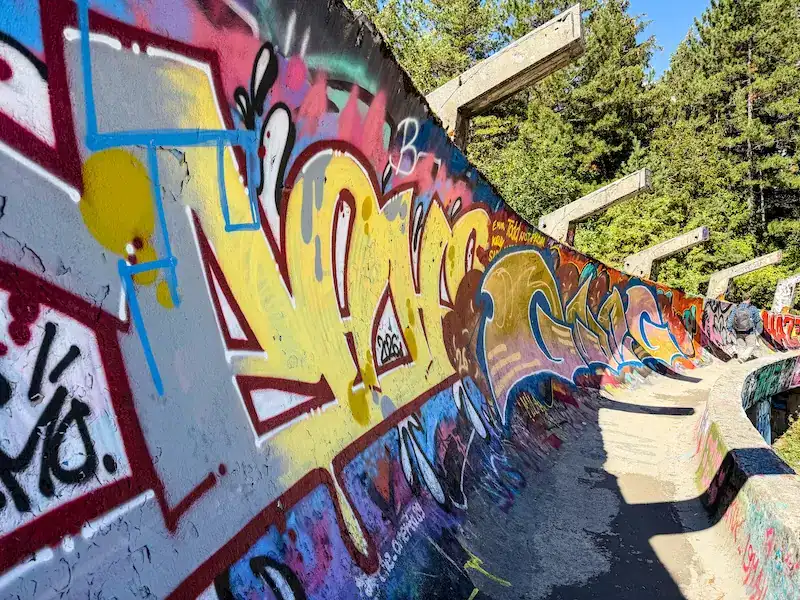
We finished our tour at the abandoned Olympic bobsled track on Mount Trebević. The track is covered in graffiti and slowly being reclaimed by nature, so it’s a pretty surreal place to explore. There isn’t a ton to see, but it was interesting to see the history of the 1984 Winter Olympics combined with the legacy of the war.
Note: Getting here independently takes more planning. You can hike up, take the cable car and walk a ways, or arrange private transportation. The tour was perfect for this!
Interested in checking out more tours during your Sarajevo trip? Here are some more highly-rated options:
Stop 2: Lunch
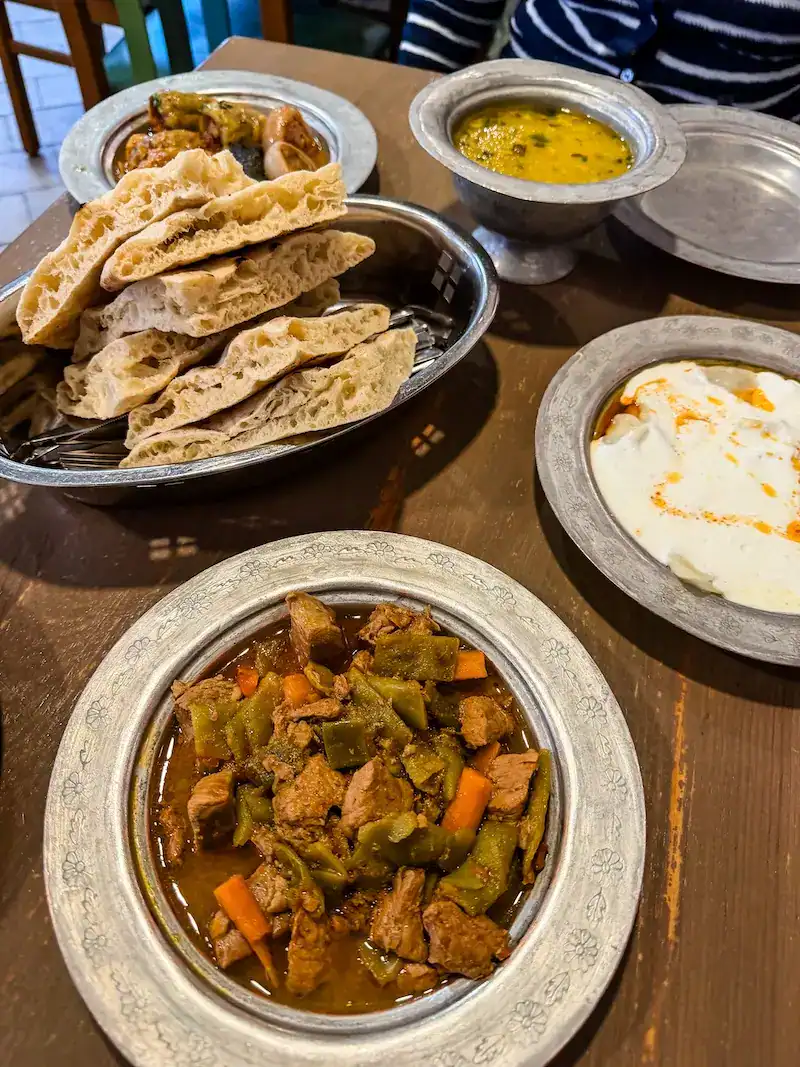
After your morning tour, it’s time for a proper Bosnian lunch. Our guide on our free walking tour had left us with several recommendations.
For a little bit of everything, we liked ASDŽ Aščinica, a traditional Bosnian restaurant serving home-style food cafeteria-style. If you’ve ever eaten at a Polish bar mleczny, the concept will feel familiar.
You pick out a few dishes from what’s available, or just trust the folks in charge to give you a sampling. We tried several things, including their Bosnian ravioli (klepe), before essentially telling the man serving us to surprise us with the rest.
Other recommendations for this kind of experience from our walking tour guide included Aščinica Stari Grad and Aščinica Hadžibajrić F. Namika.
If you’d rather try one of the country’s most famous dishes, head to Ćevabdžinica Željo in the old town. There are several locations with the same name, but this one was always busy when we walked past.
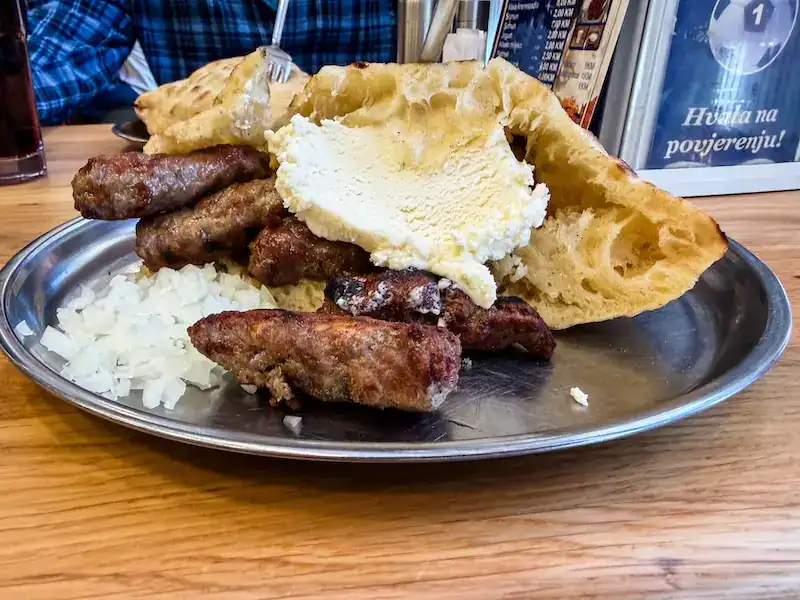
The menu is simple: ćevapi, small, medium, or large. These little grilled minced-meat sausages are served in a soft somun flatbread, typically with chopped onions. That’s pretty much the whole experience.
Our server was memorable, too. She was smoking while taking orders, which felt like a very Sarajevo experience. No, they can’t smoke indoors anymore. That doesn’t mean they’re rule-followers. Change is hard!
Stop 3: Baščaršija
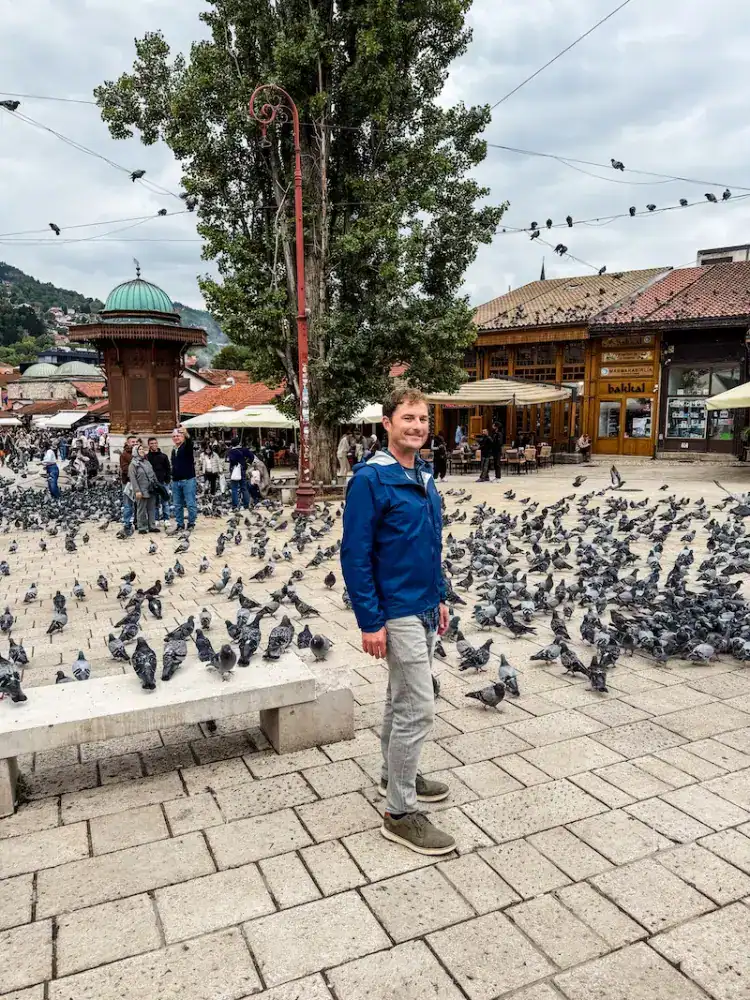
After lunch, you’re well-situated to wander around Baščaršija, Sarajevo’s historic Ottoman-era bazaar. We passed through during our walking tour, but we wanted to explore at our own pace, too.
My mom liked looking at all the coppersmith shops and workshops. She’s more into the souvenirs than we are, but everyone enjoyed the atmosphere. There’s some great people-watching here, too, with lots of folks gossiping over Bosnian coffee.
Make sure to stop at the Sebilj Fountain in the middle of the square. There’s a local legend that if you drink its water, you’ll return to Sarajevo. Naturally, we all took a sip, as by then we were quite intrigued indeed by the city. This is also where you’ll find every pigeon in Europe, or at least that’s what it felt like.
You’ll also spot several mosques around the bazaar, along with the Sarajevo Clock Tower. This one follows lunar time, with the hands indicating the time of sunset rather than conventional clock time.
While wandering, we picked up some treats from Baklava Dućan to take home. We went for traditional Sarajevo baklava, along with three different varieties of rolled baklava. Baklava is generally VERY sweet, which isn’t usually a compliment by Polish standards, but it hit the spot with some tea at the end of the day.
Optional Stop 4: Groblje Alifakovac
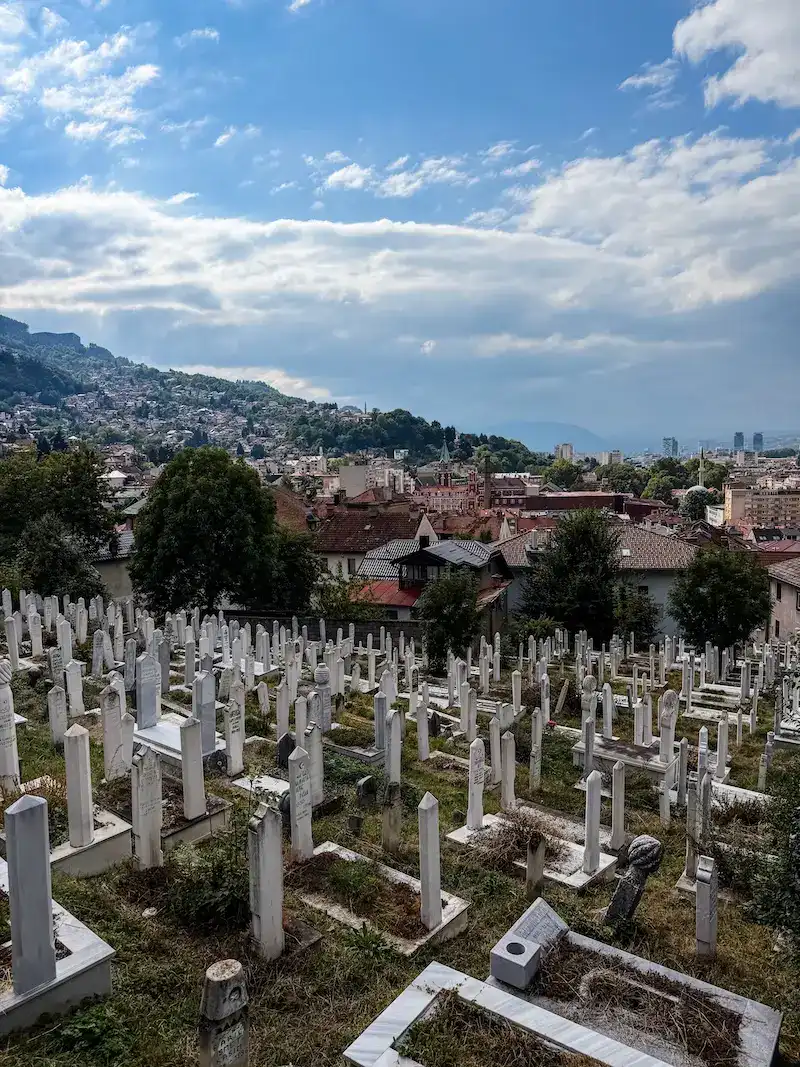
If you’re up for some hill-walking, head to Groblje Alifakovac, a historic Muslim cemetery on a hillside overlooking Sarajevo.
The cemetery itself is interesting, with its rows of white Ottoman-style gravestones, but the views are what motivated us to come up here. You’ll get a nice panorama across the city, and the walk isn’t super hard from the bottom if you don’t mind stairs.
We also encountered quite a few cats along the way, which is always a bonus. If you’re not interested in the walk, this is a good point to substitute another museum visit instead.
Stop 5: War Museum
Sarajevo’s recent history is an essential part of understanding the city. In addition to kicking your day off with a tour, adding a museum to your Sarajevo itinerary is a great way to learn more about the Siege of Sarajevo and the Bosnian War. These were two that stood out to us.
Option 1: Ratni Muzej 1992 Sarajevo (War Museum)
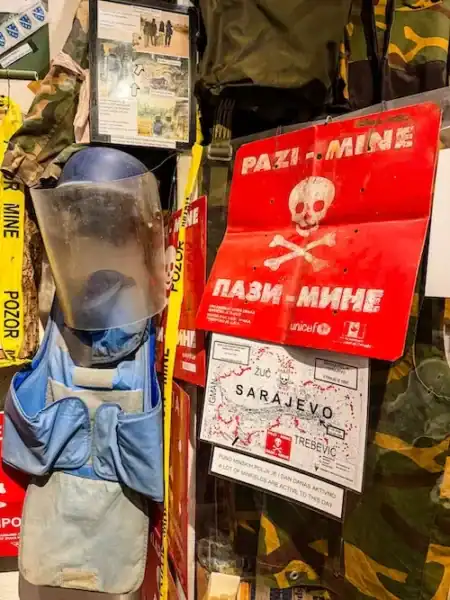
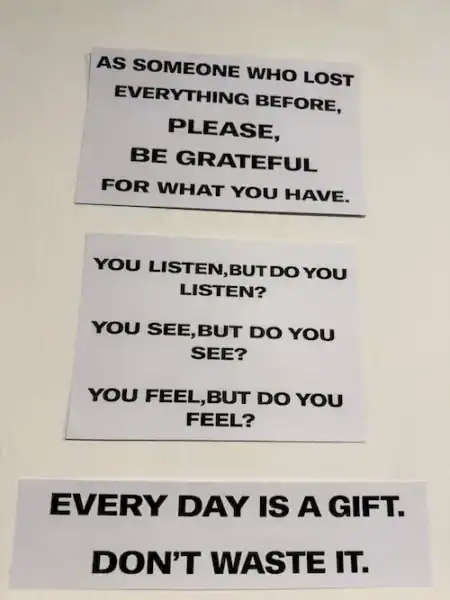
This small museum is run by survivors of the siege. It’s not a particularly polished museum, and much of it feels DIY, with personal belongings, photographs, and stories documenting what happened during the war.
What stayed with me most was a conversation about how people deal with trauma. The owner explained that some people channel their experiences into peace work and art, as he has done with the museum, while others turn to drinking, smoking, or simply refuse to talk about what happened. Everyone processes trauma differently.
The message throughout the museum is a simple but important one: war is never the answer.
I found the experience moving, particularly because you’re hearing these stories from people who lived through them. You can pay upon entry, and there were only a handful of other visitors during our time there.
Option 2: Gallery 11/07/95
Gallery 11/07/95 is a sobering museum dedicated to the Srebrenica genocide, when more than 8,000 Bosniak men and boys were murdered in July 1995.
After Bosnian Serb forces captured the UN-declared safe area of Srebrenica, they systematically separated men and boys from women and children before carrying out mass executions and forcibly displacing the surviving population.
I thought admission was reasonably priced for what was included. There are rotating films, including documentaries connected to the genocide, an audio guide you can access on your phone, and personal testimonies from survivors and witnesses.
This isn’t a light museum visit. Some of the exhibits include graphic photographs of victims and human remains, so I wouldn’t suggest this one for younger children.
If neither of these sounds like quite the right fit, you could also visit the Museum of Crimes Against Humanity and Genocide, the War Childhood Museum, or the Siege of Sarajevo Museum. Each approaches the city’s recent history from a different perspective. The two above are the ones we chose, though.
Stop 6: Sarajevo Roses
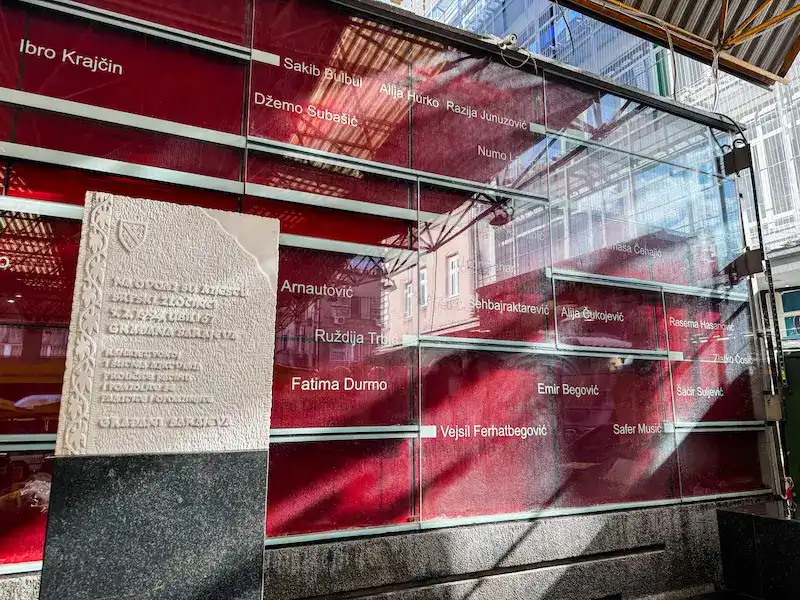
As you continue walking around the city, keep an eye out for Sarajevo Roses. These are distinctive markings found on pavements and streets where mortar shells exploded during the siege, killing civilians.
The impact craters were later filled with red resin, creating flower-like patterns that serve as memorials to those who lost their lives.
You can find the roses on your map apps. We visited the Sarajevo Rose on Vase Miskina Street and another near the Markale Market. The second has a large plaque inside the market, and the original impact site is still visible, surrounded by the everyday activity of fruit and vegetable sellers.
The contrast between daily life and the city’s dark history is striking.
Stop 7: Wine Stop
After a day of sightseeing, take a break and enjoy a glass of local wine. We stopped at Wine Not, tucked into the old town bazaar area.
We ordered a local red wine, partly out of curiosity. Bosnia and Herzegovina has its own indigenous grape varieties, and it’s not something we come across very often back home in France. It was a nice opportunity to try something a little different from the usual European wine list, and it was pretty good.
I wouldn’t necessarily plan your entire evening around a wine bar, but I know we’re always in the mood for one by this point in the day.
Fun fact: If you’d rather have a beer, stop by the historic Sarajevo Brewery, which dates back to 1864. There’s also a small museum if you’d like to learn more about its history, but reviews suggest the adjoining bar is the best way to spend your time. (We didn’t visit this one.)
Stop 8: Dinner
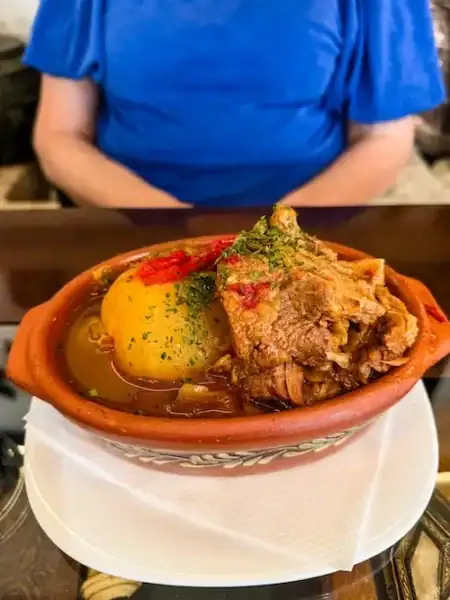
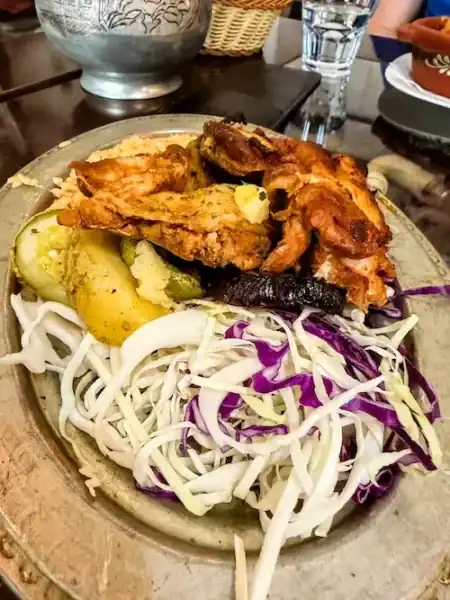
Finish your day with one more meal of Bosnian comfort food. We had dinner at Inat Kuća (House of Spite), a restaurant with a quirky history.
When the Austro-Hungarian authorities decided to build Sarajevo’s City Hall in the 1890s, one little obstacle stood in their way: a local man’s house. The owner, Avdaga Benderlić, refused to give it up unless the authorities agreed to dismantle it and rebuild it on the opposite bank of the Miljacka River.
They agreed, moving the house piece by piece. The owner reportedly watched the entire relocation from a nearby bridge, smoking his pipe as workers moved his house across the river.
Fun fact: That’s how the restaurant got its name, by the way. Inat means spite or defiance in Bosnian.
If the weather cooperates, try to get a table on the terrace, which has lovely views across the river toward City Hall. It was too cold for that during our visit, but the interior is fun, too.
We ordered several traditional Bosnian stews featuring beef, veal, and chicken. Everything was tasty. One little thing to watch for is that we were given tap water but still had it charged on the bill. I’d double-check whether water is complimentary before assuming it is. It should be free here!
If you’d prefer something quicker or haven’t had burek in the Balkans yet, head to Buregdžinica Bosna. It’s one of Sarajevo’s best-known spots for this traditional pastry, and our pick for our final meal in the city.
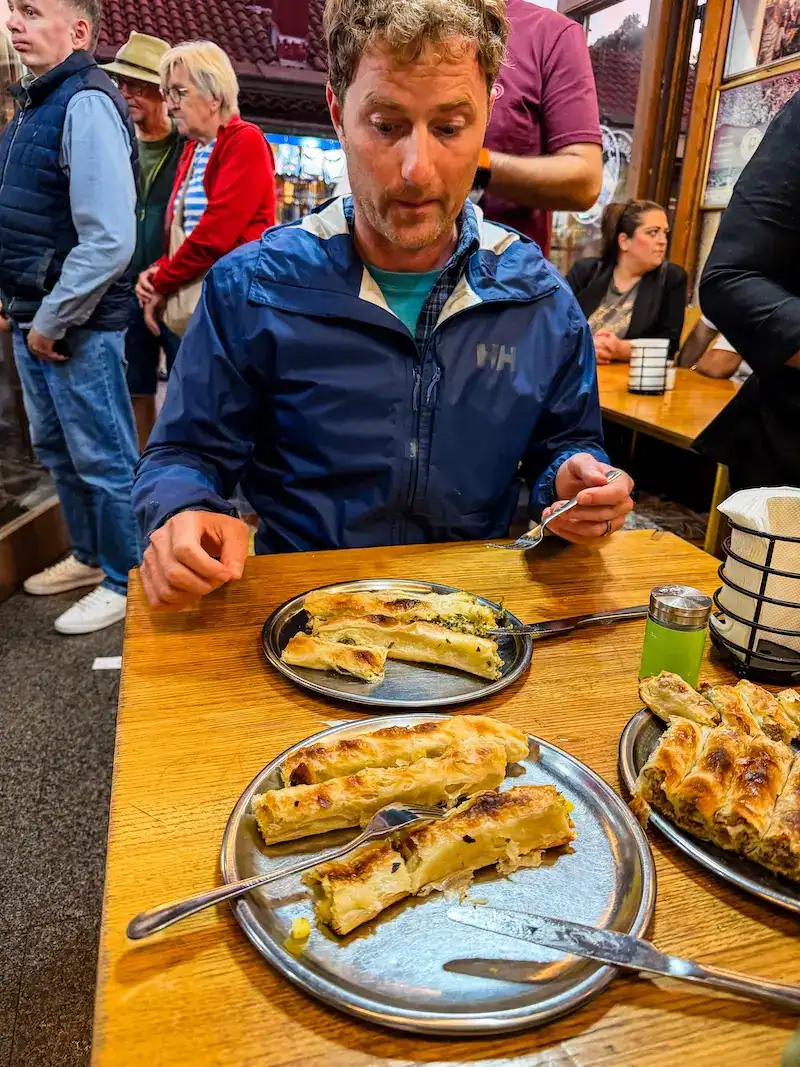
Burek is made with thin, flaky layers of dough (similar to phyllo), wrapped around a savory filling and baked until golden and crisp. The classic Bosnian version is filled with minced meat, but you’ll find shops selling it with potatoes, spinach, and cheese.
We tried the potato and spinach versions alongside the classic meat-filled burek. Everything was delicious and cheap. The place got increasingly busy as the evening went on, with lines forming at the counter.
With More Time in Sarajevo
We were lucky enough to spend three days in Sarajevo, but you’re here for the one-day itinerary. If you have more time, here are some ideas:
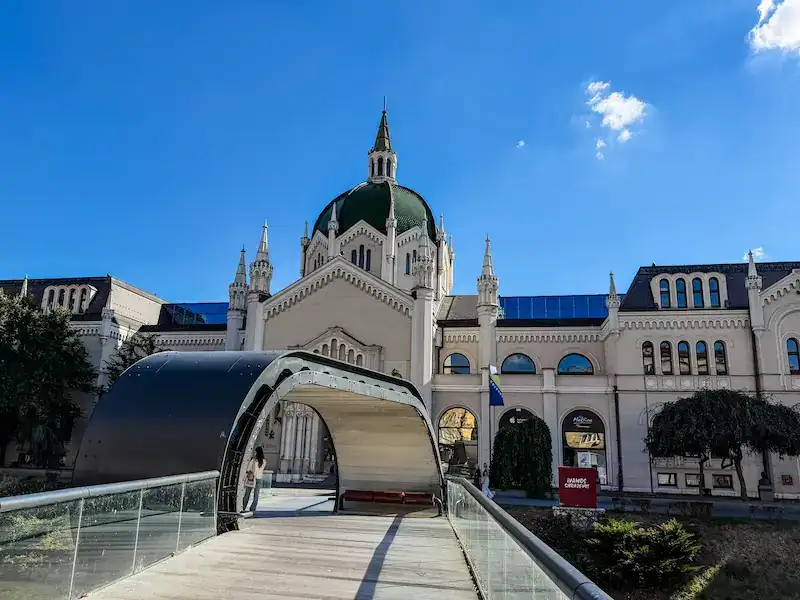
- Take a walk across the river to admire the impressive Academy of Fine Arts, housed in a beautiful Neo-Renaissance building that originally served as an Evangelical church.
- Just outside the building above, you’ll find the modern Festina Lente Bridge with its fun loop design.
- Visit Veliki Park and the Children’s Memorial, which commemorates the children killed during the Siege of Sarajevo.
- Stop at the Eternal Flame on Ferhadija Street, dedicated to the military and civilian victims of World War II in Sarajevo.
- Visit Svrzo’s House, a traditional Ottoman-era house, to get a glimpse of how a wealthy Muslim family lived in Sarajevo during the 18th and 19th centuries.
- Combine the above with the Despić House, a historic merchant’s home, to see how an affluent Serbian Orthodox family lived in Sarajevo.
- Learn about the city’s older history at the National Museum of Bosnia and Herzegovina or the Historical Museum of Bosnia and Herzegovina.
- Grab a drink at Café Tito, a quirky spot dedicated to former Yugoslav leader Josip Broz Tito, with communist-era memorabilia and photographs decorating the place.
- Enjoy a change of scenery at the Goat’s Bridge (Kozija Ćuprija), a historic Ottoman bridge along the Miljacka River.
- Catch a sunset at the White Fortress (Bijela Tabija), a historic fortification overlooking the city.
Best Time to Visit Sarajevo
Sarajevo is a year-round destination, but the experience varies depending on when you visit. Spring (April-May) is a lovely time to explore, with milder temperatures and all the blooming stuff.
Summer (June-August) brings the warmest weather and longest days. While Sarajevo isn’t the most touristy city in the Balkans, this is when most people visit.
Autumn (September-October) is another excellent option. Temperatures are still comfortable for sightseeing and the surrounding mountains take on beautiful autumn colours. This is when we visited. While it was a little brisk for September, we were fine with light jackets.
Sarajevo can get very cold in winter (November-March). Snow is common in the surrounding mountains, and the city itself starts getting powder by late November. Be prepared for shorter days and chilly temps.
For a first visit, I’d lean toward late spring or early autumn, when you can comfortably spend most of the day exploring on foot.
How to Get to Sarajevo
Sarajevo is served by Sarajevo International Airport (SJJ), about 12 km (7.5 mi) from the city center. It’s the easiest option if you’re flying in from elsewhere in Europe or beyond.
Once you land, you have a few options for getting into town:
- Airport shuttle: Centrotrans operates a shuttle between the airport and Baščaršija, near the old town. Tickets currently cost 5 KM one way, and the journey takes 35-50 minutes.
- Taxi: Taxis are available outside the arrivals terminal. Expect to pay approximately 25-35 KM for a ride into the city centre, depending on your destination and the meter.
- Private transfer: You can also arrange an airport pickup through your accommodation or a local transfer company. This is what we did to get to the airport on the return side of things.
Sarajevo is also connected to other cities in Bosnia and Herzegovina and neighbouring Balkan countries by intercity bus. There are train connections to a limited number of destinations, including Mostar, but bus services generally offer more flexibility for regional travel.
We traveled to Sarajevo from Mostar on a day trip with Daytrip, stopping in Konjic along the way. It was a super comfortable way to make the journey, particularly with my mom traveling with us.
A private transfer is more expensive than taking a bus, but the price starts to feel more reasonable when you split it between passengers and factor in the time saved.
We also got to make a stop along the way without having to organize separate transportation. I imagine the smells were better, too.
Where to Stay in Sarajevo
There are plenty of accommodation options in central Sarajevo, from hotels and guesthouses to private apartments. I’d recommend staying near the Old Town or Latin Bridge for easy walking distance to many of the city’s main sights, restaurants, and cafes.
We stayed in an apartment near Latin Bridge that had enough room for the three of us. The building itself was rough, but the inside was nice.
Browse accommodation options on the map below to find a place that works for your budget and travel style:
Ready to visit Sarajevo?
We didn’t expect to say this, but Sarajevo was one of the most memorable stops on our trip through the Balkans. Even with just one day, you can get a feel for the city’s incredible history, explore its old town, and enjoy some delicious (and well-priced) Bosnian food.
Stay longer if you can, but if one day is all you have, this Sarajevo itinerary offers a crash course in the best of the city.
European destinations with intriguing histories:
- How to Spend the Day in Amsterdam
- Spend the Day in Medieval Chartres
- An Itinerary for the Perfect Normandy Trip
- Why You Should Consider Dubrovnik
- Plan a Trip to Charming Edinburgh
More European cities we’ve loved visiting:
- Why You Need to See Warsaw
- Plan a Weekend in Barcelona
- A Guide to Underrated Rotterdam
- Spend a Day in Lucca From Florence
- A Guide to Getting Around Rome

Want to see more?
Subscribe to my biweekly newsletter for hot travel tips I come across, weird stories you won’t see elsewhere and perhaps lifelong friendship.
Too much, or just enough?
