
Sarajevo was never at the top of our list for must-see destinations in the Balkans. When we were planning a multi-week trip with my mom through the region, it only came up because it had a direct connection back to Paris, our home base at the time.
Expectations weren’t exactly low, but underestimating the city was still a mistake. Sarajevo’s old town, a fascinating mix of Ottoman and Austro-Hungarian influences, and more recent history resulted in a trip that has stuck with us.
We spent several days exploring Sarajevo, eating our way through the city, and learning about its history. While it’s not the most conventionally beautiful European city I’ve visited, not by a long shot, I know our trip to Sarajevo will be one of the most memorable.
So, is Sarajevo worth visiting? Absolutely. Here’s why I think it deserves a place on your Balkans itinerary.
Quick Tips for Your Sarajevo Visit
Your Flight: Sarajevo International Airport (SJJ) is about 20-30 minutes by car from the city center, depending on traffic. Find deals to Sarajevo on Skyscanner. Love deals? Subscribe to Going.
Your Accommodations: Staying in or near Baščaršija, Sarajevo’s Old Town, puts you within easy walking distance of many of the city’s main sights. Browse Booking.com, Expedia, or Hotels.com for more options. Vrbo is my Airbnb alternative.
Your Ride: You don’t need a car to explore Sarajevo. If you’re planning a road trip through Bosnia and Herzegovina or the wider Balkans, book a rental car ahead of time.
Top Spots: Explore Baščaršija and its Ottoman-era bazaar, visit the Latin Bridge, and see the Sarajevo Meeting of Cultures marker.
Disclosure: Travel on the Reg uses affiliate links to keep things running around here. At no additional cost to you, I earn a lil’ commission if you make a purchase. Any income earned supports the upkeep of this site. I appreciate you!
Is Sarajevo worth visiting?
Yes, Sarajevo is absolutely worth visiting. Bosnia and Herzegovina’s capital is one of the Balkans’ most fascinating cities, with a complex history, a unique blend of cultures, and an excellent food scene. It’s also surprisingly affordable and easy to explore.
It’s not the picture-perfect European city some travelers expect, which may bum out some travelers, but I think that’s part of its appeal. From its Ottoman-era bazaar to visible reminders of the Siege of Sarajevo, there’s a lot here that you won’t find elsewhere.
For the visual learners out there, you can walk and explore Sarajevo with us in our video below:
Here are the reasons I’d encourage you to add Sarajevo to your Balkans itinerary.
Sarajevo is a resilient city with a moving history.
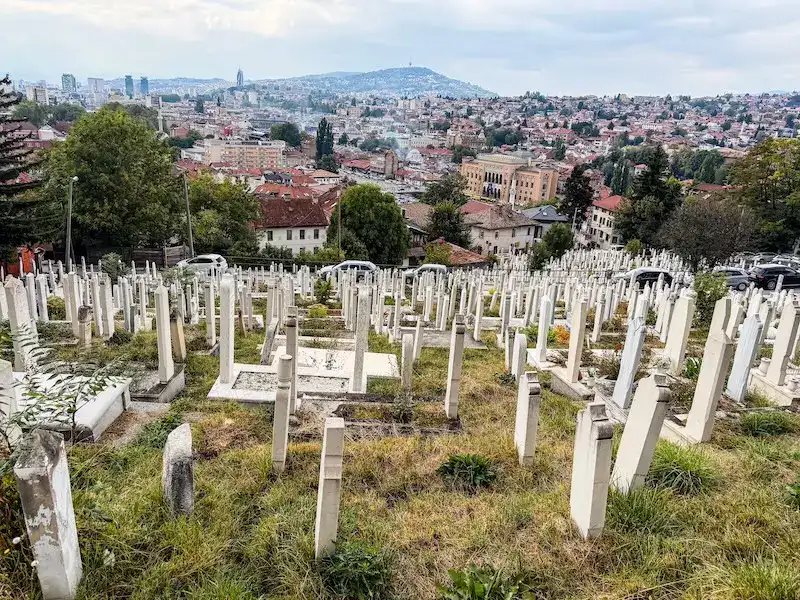
It’s impossible to talk about Sarajevo without discussing its history. The Bosnian capital has been shaped by centuries of different empires, cultures, and conflicts, but it’s the Bosnian War that has left some of the most visible marks on the city.
Sarajevo endured the longest siege of a capital city in modern history between 1992 and 1996.
For nearly four years, residents lived under constant threat of shelling and sniper fire, with limited access to food, water, electricity, and other necessities. The city was surrounded by Bosnian Serb forces, and ordinary daily activities became incredibly dangerous.
To understand why, it helps to look at what was happening across the former Yugoslavia at the time. Yugoslavia was a socialist federation made up of six republics, including Bosnia and Herzegovina.
Following the death of longtime leader Josip Broz Tito in 1980, the country experienced growing instability and a rise in nationalist movements. By the early 1990s, several republics were moving toward independence. Yugoslavia was breaking apart.
Bosnia and Herzegovina was particularly complicated because its population was made up primarily of three ethnic groups: Bosniaks (Bosnian Muslims), Bosnian Serbs, and Bosnian Croats.
When Bosnia voted for independence in March 1992, most Bosniaks and Croats supported it. Most Bosnian Serbs opposed it. Many wanted to remain part of a Serb-dominated state or join territory controlled by Serbia.
Eventually, Bosnian Serb forces, backed by Serbia and the Yugoslav military, launched a campaign to seize territory. Sarajevo was under siege.
I knew some of this history before arriving, but I definitely didn’t fully appreciate what the people of Sarajevo had endured until we started exploring the city.
READ MORE: If you’re only here for a short amount of time, steal my Sarajevo itinerary for one day in the city.
We took two tours to understand the city’s past: a free walking tour with Neno & Friends and the Fall of Yugoslavia | Sarajevo Siege Tour with Meet Bosnia. I’d highly recommend a tour upon arrival in Sarajevo for more context, as every guide we met had some connection to the war. That’s just not something that happens most places.
Here are a few more tours to consider on your Sarajevo trip:
Sarajevo also has an important place in the history of World War I. Archduke Franz Ferdinand was assassinated near the Latin Bridge in June 1914, an event that became the immediate catalyst for the war. You’ll see the bridge mentioned frequently when exploring the city.
You can still see the scars of the Siege of Sarajevo.
Some travelers might see this as a downside to visiting Sarajevo. If you’re expecting a European city filled with perfectly restored historic buildings, pretty squares, and cute cobblestone streets to snap pics of, you’ll be disappointed.
Sarajevo has some cool architecture, particularly around its historic center, but it also has plenty of buildings that bear visible scars from the war. Bullet holes, damaged facades, and buildings that look as though they’ve seen better days (because they have) are part of the landscape.
We stayed in an apartment that, from the outside, looked like a remnant of the war. Thankfully, the inside was nice, but it was jarring to step over broken concrete to get inside after exploring the city all day.
We’d visited plenty of places with complicated histories, but I don’t think we’d ever been somewhere where the physical reminders of such a recent conflict were so present in everyday life.
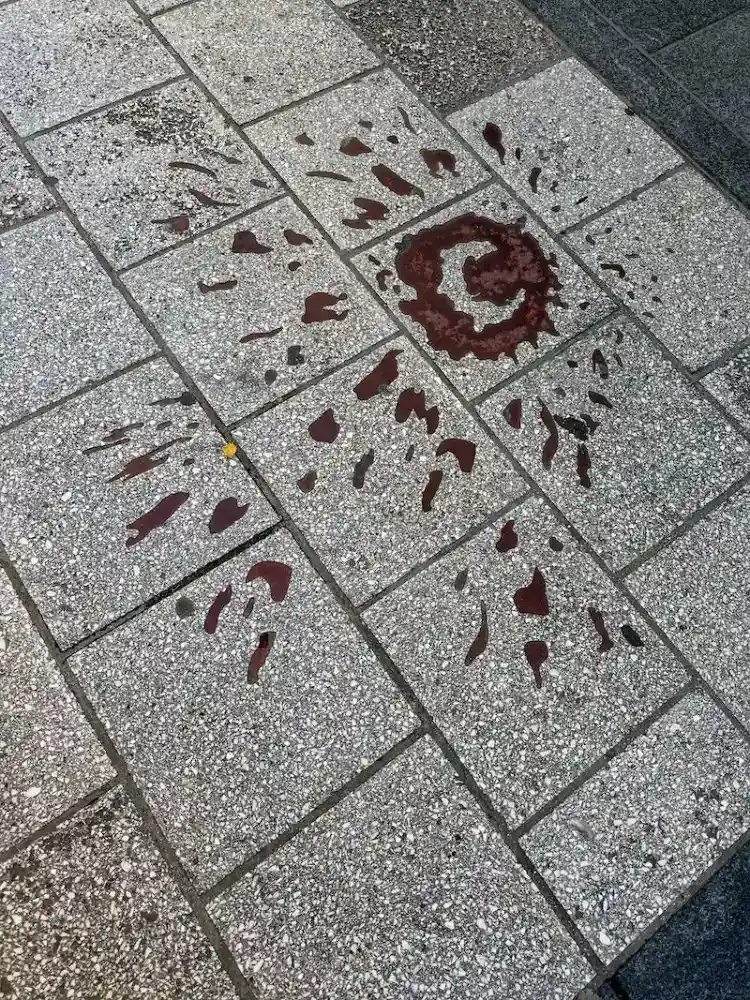
Beyond the physical state of the infrastructure here, the Sarajevo roses are the most moving example of this. These are markings in the pavement where mortar shells struck and killed, leaving distinctive patterns that have since been filled with red resin. They’re intended as memorials to those lost during the siege.
All of this is worth considering when deciding whether Sarajevo is right for you. It isn’t a city that has erased its past or polished away every reminder of what happened. That’s part of what makes visiting so meaningful for us.
Sarajevo is affordable.
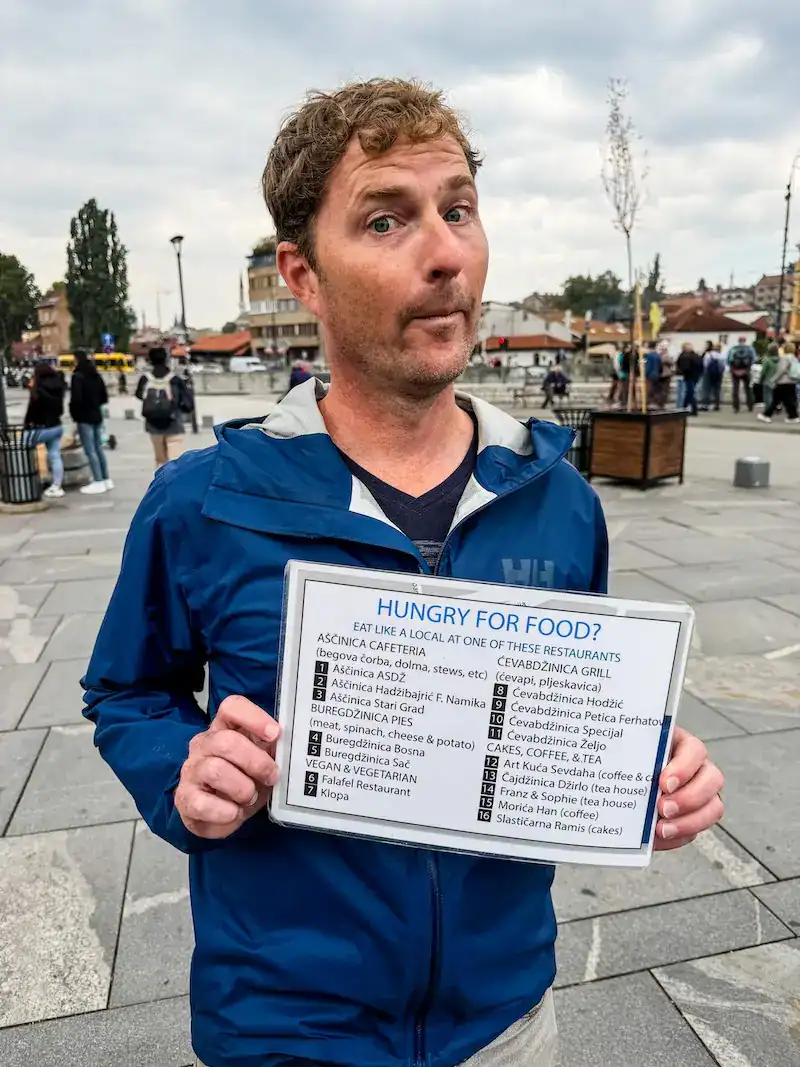
Sarajevo is easily the cheapest European capital we’ve visited. Even in the more touristy parts of the city, particularly around Baščaršija and the Old Town, you don’t have to go far for inexpensive food.
A plate of ćevapi can keep you full for hours for under $10. You can pick up a plate of burek for even less. We never felt like we were paying the inflated prices you sometimes encounter in popular European tourist destinations because this just isn’t one of those destinations.
Accommodations, coffee, and getting around are all relatively inexpensive here compared with many other European cities, too. If you’re looking to stretch your travel budget a little further without sacrificing good food or interesting experiences, Sarajevo is a great option.
The city epitomizes East meets West.
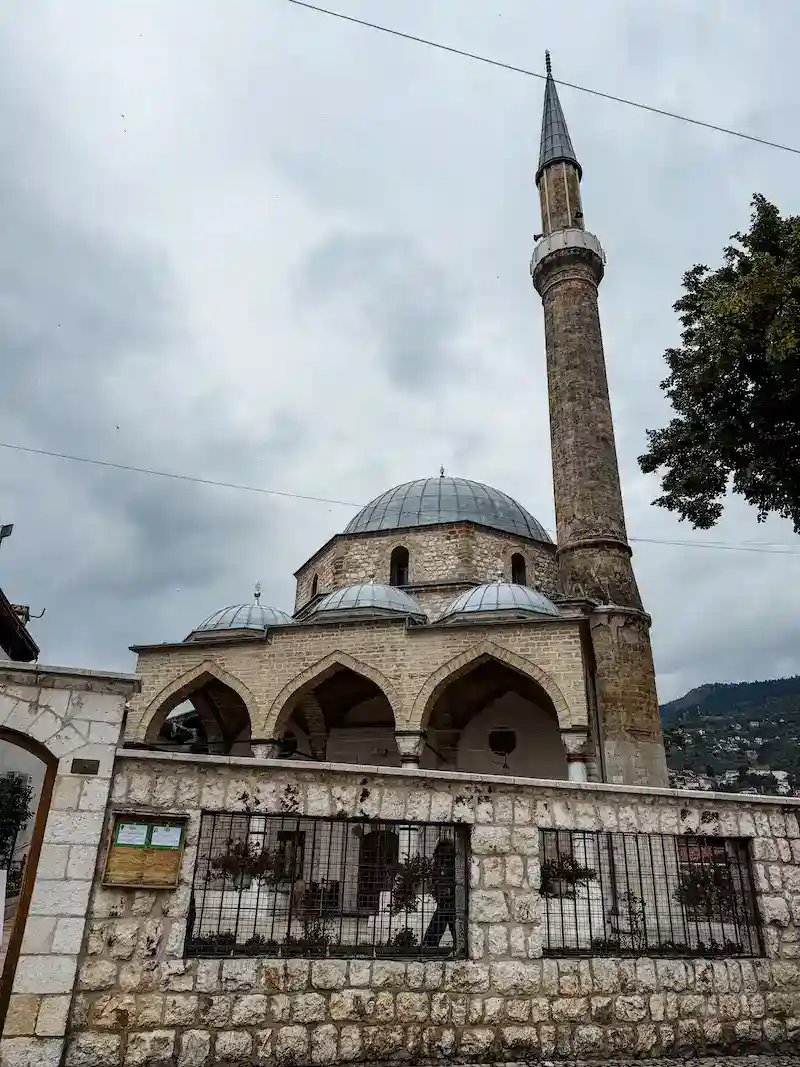
Sarajevo has been shaped by centuries of Ottoman and Austro-Hungarian rule. You can see that contrast in an obvious way as you explore the historic center.
There’s a spot called the Sarajevo Meeting of Cultures, marked by a line in the pavement along Ferhadija Street. Stand on one side, and you’re looking toward the Austro-Hungarian-influenced part of the city. Turn around, and you’re heading toward the Ottoman-influenced Baščaršija, with its narrow lanes and mosques.
We found the Ottoman side much more intriguing. (My mom agreed, to my surprise. She usually loves an old-school European city.)
Fun fact: One of the most prominent examples of the city’s Ottoman heritage is Gazi Husrev-beg Mosque, a 16th-century mosque in the heart of the Old Town.
I loved wandering through the bazaar, taking in the atmosphere. It felt livelier. The Austro-Hungarian side is beautiful, too, but it feels much more familiar if you’ve spent time in other Central European cities.
Sarajevo doesn’t feel like the rest of Europe.
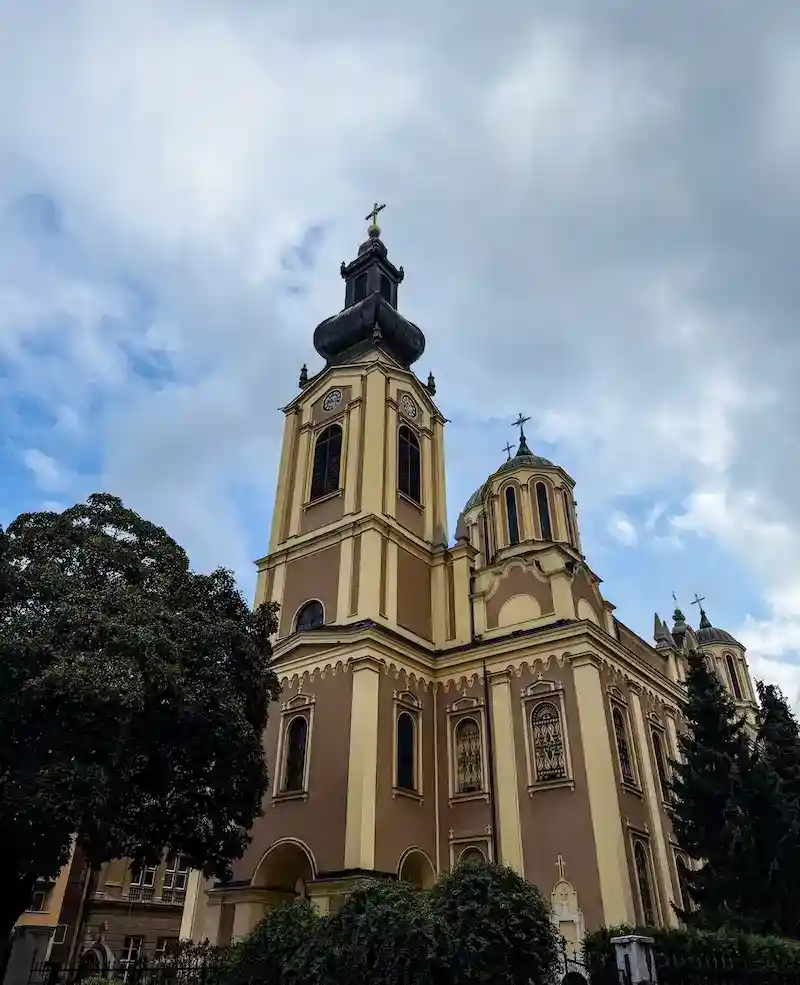
We’ve visited a lot of European cities, and Sarajevo felt different from anywhere else I’ve been. I mean that literally. It’s not like any other city we’ve seen on the continent, and I mean that as a compliment.
Part of it is the city’s Ottoman influence, which gives the historic center a different feel from the Western and Central European cities most tourists are used to.
You’ll hear the call to prayer throughout the day, carried by speakers attached to minarets rising above the rooftops. Traditional coffee houses sit alongside shops selling Turkish-style sweets and copperware.
Fun fact: For a look at a more modern side of the city, the Avaz Twist Tower is a striking skyscraper that’s very different from the historic architecture around Baščaršija.
Sarajevo also has a different rhythm to it. There’s a strong café culture, the lively bazaar, and a mix in there of everyday life and tourism. You’ll see people going about their routines alongside visitors learning about a dark history that really isn’t all that old. It’s hard to explain what that’s like until you’re here.
Anyway, if you’ve spent most of your European travels visiting Paris, Rome, or Amsterdam, Sarajevo offers a very different experience. It’s cool to get out of your bubble sometimes.
Sarajevo has a delicious food scene.
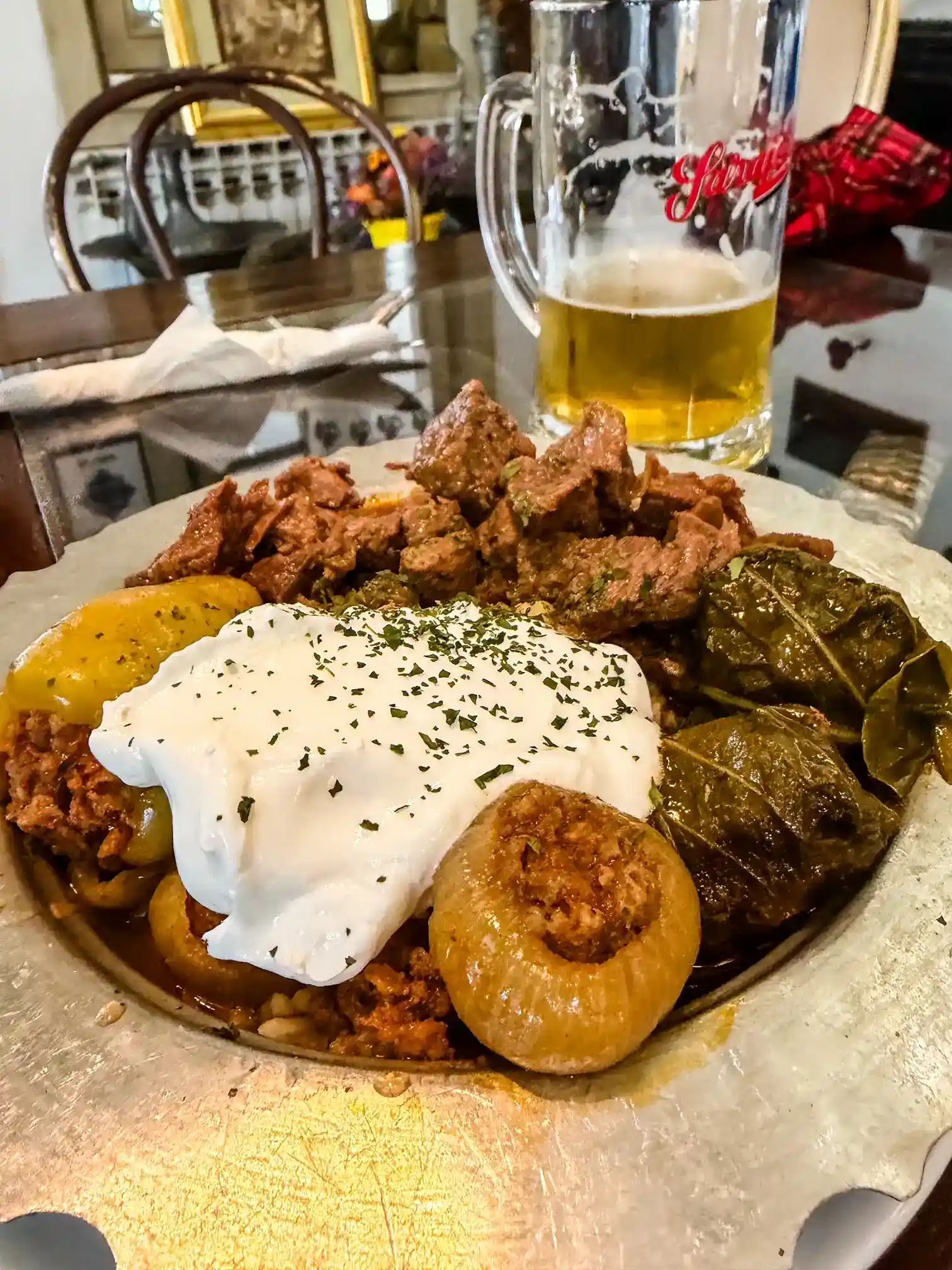
Bosnian cuisine isn’t generally how we eat. It’s SO much meat! But I’d be lying if I said we didn’t indulge while we were in Sarajevo.
Ćevapi, grilled minced meat sausages served with flatbread and usually chopped onions, are practically a must. You’ll find ćevabdžinicas all over the city, including several popular spots in the Old Town like Ćevabdžinica Željo, our pick.
Our server was undeterred by indoor smoking bans, as she was lighting up between serving platters of the little sausages to customers, but it was friggin’ delicious.
Burek is another staple. This is a flaky, savory pastry traditionally filled with meat, though you can also find versions with potato, cheese, and spinach. Buregdznicia Bosna lives up to the hype.
You’ll also find plenty of traditional Bosnian stews, stuffed vegetables, and dishes like klepe, a type of Bosnian ravioli. We had some excellent home-style food at ASDŽ Aščinica, a traditional aščinica. That’s a cafeteria-style restaurant where you can choose from a selection of prepared dishes.
Sarajevo is a fantastic city for food lovers, especially if you like trying local specialties rather than sticking to familiar restaurant menus. If you’re a picky eater, maybe hit pause on your quirks for this trip and live a little.
The coffee culture is great.
Bosnian coffee is very similar to Turkish coffee, but what I loved about the coffee culture in Sarajevo is how much it’s woven into everyday life. Coffee is a social ritual here. The guide on our free walking tour described how coffee (often with a cigarette in your other hand) is an excuse to gossip, catch up, and reconnect with people here.
You’ll see cafés filled with people chatting over a traditional coffee and taking their time. It sounds innocuous, but once you learn about what these people have been through, simple pleasures take on new meaning. Make time for Bosnian coffee is what I’m saying. I know I love a good gossip sesh.
Sarajevo is walkable.
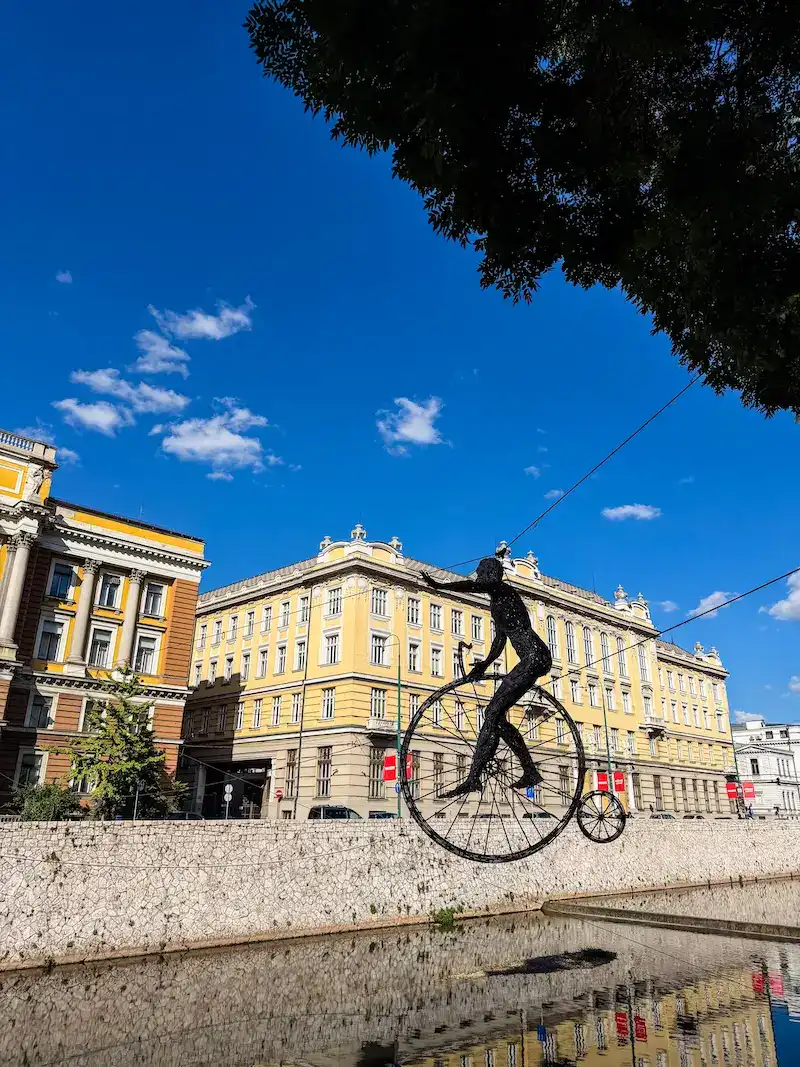
Much of what you’ll want to see in Sarajevo is concentrated in and around the city center. You can walk between the Ottoman-era bazaar, the Austro-Hungarian part of town, the banks of the Miljacka River, and landmarks like the Eternal Flame without needing more than your feet.
As Brian loves getting his steps in, we spent most of our time exploring this way. One minute we’d be wandering through the narrow lanes of Baščaršija, and the next we were climbing up a steep set of stairs to a viewpoint.
Note: The Yellow Fortress is another popular spot for panoramic views over Sarajevo, although getting there involves an even steeper uphill walk.
There are some spots that you’ll need some wheels or a tour to get to, like the Tunnel of Hope (also known as the Sarajevo Tunnel or Tunnel of Salvation) or the Sarajevo Olympic Bobsleigh and Luge Track, an abandoned bobsled track on Mount Trebević. A cable car will get you there, too, but there’s still quite a walk on the other end of it.
For the most part, though, Sarajevo is easy to explore on foot.
Sarajevo is a great base for exploring more of Bosnia and Herzegovina.
Sarajevo is worth visiting even if that’s the main reason for your visit to the region, but if you have a few extra days, there are interesting places to see beyond the capital.
You could head to Travnik, a historic town known for its Ottoman architecture and colorful mosque, or Jajce, with its impressive waterfall right in the middle of town. Nature lovers can visit Vrelo Bosne, a beautiful spring and park just outside Sarajevo.
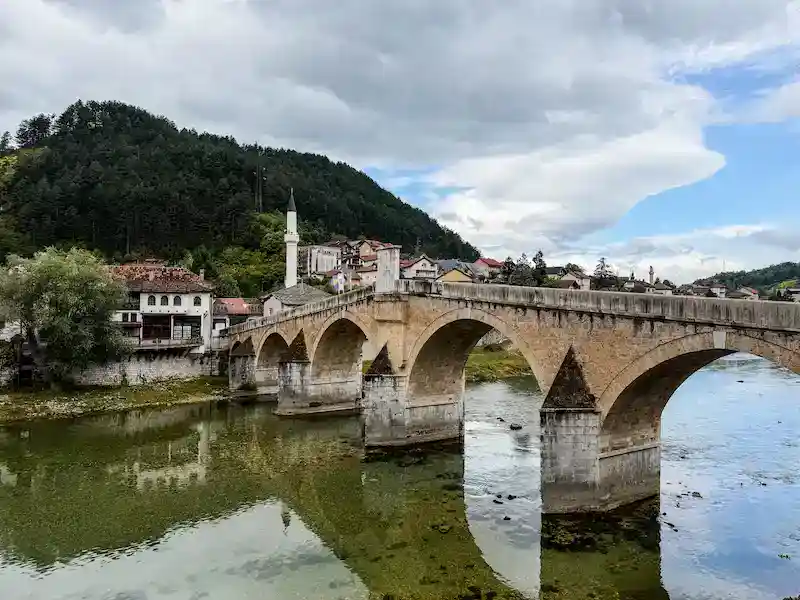
Konjic is another easy one, particularly if you’d like to see its famous Ottoman-era bridge. We stopped there on our way to Sarajevo from Mostar. Mostar is also an option for a longer day trip.
Note: We spent three full days in Mostar, too. It’s a great base for exploration on that side of the country, too, so I’d urge you to treat the two destinations separately!
I wouldn’t recommend trying to squeeze the entire country into a few day trips, but Sarajevo gives you a great starting point for seeing more of Bosnia and Herzegovina.
Sarajevo is a safe city.
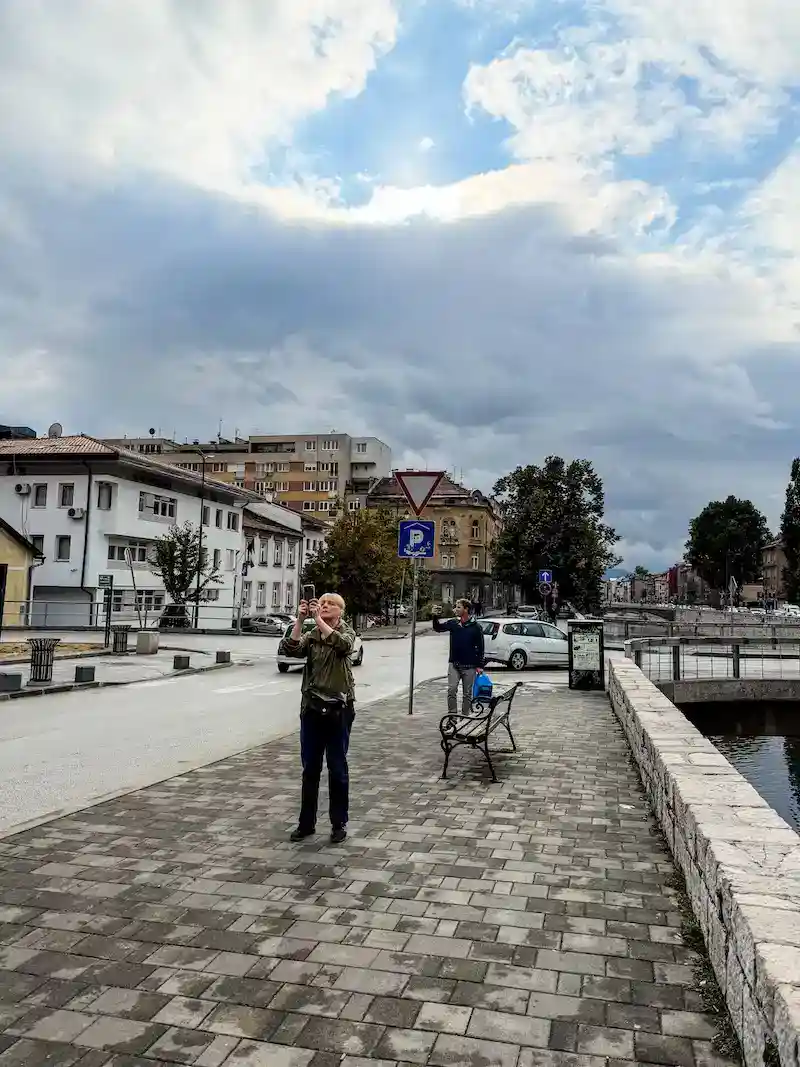
When I was reading travel tips about what other travelers had to say about visiting Sarajevo, the “is Sarajevo safe?” question kept coming up. It’s understandable. People often associate the Bosnian capital with images of war, destruction, and the siege of the 1990s.
Sarajevo today isn’t that, and its past shouldn’t make you wary about visiting. We felt comfortable exploring the city, and didn’t experience any issues during our stay. Crime here overall is lower than in many other big European cities.
READ MORE: I have a full guide to whether Sarajevo is safe if you’d like to dig into this topic a little more.
It’s also worth remembering that graffiti, neglected buildings, and crumbling infrastructure don’t automatically mean a place is unsafe. Sarajevo has a lot of all three, but they’re not indicators of a threat to visitors.
This is a city that stays with you.
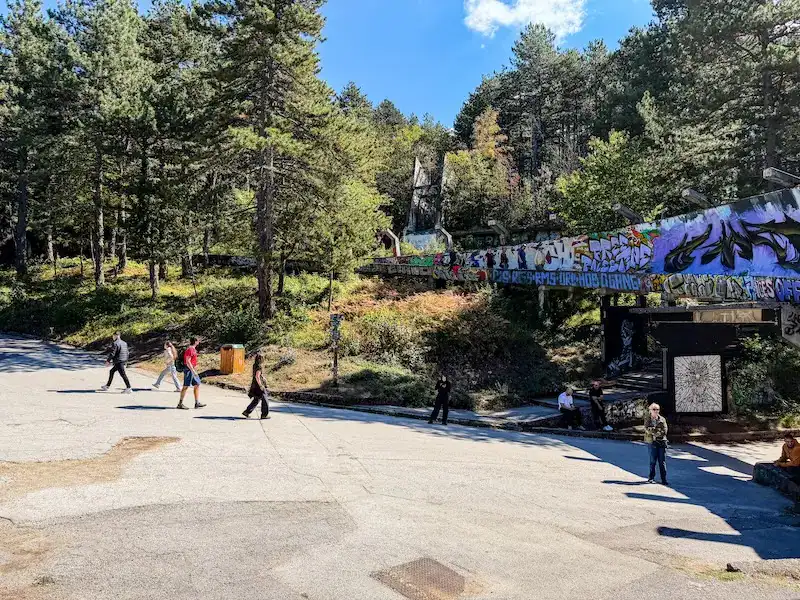
Some cities are memorable because of their architecture, famous landmarks, or natural scenery. Sarajevo has some of those things, but you need to look beyond the surface to understand this place, as cheesy as that sounds.
Sarajevo is a city where you can wander through an Ottoman-era bazaar, admire Austro-Hungarian architecture, stop for traditional Bosnian coffee, and learn about one of the most devastating conflicts in recent European history in the same afternoon.
It’s not super pretty, and it’s not easy to have a recent conflict in your face on vacation. But Sarajevo makes you think, reflect, and want to understand more. I came away with a much greater appreciation for Bosnia and Herzegovina, and have learned so much more about the country’s history since. The more you know, seriously!
Who Sarajevo Is Best For
Sarajevo appeals to quite a range of travelers, but I think these are the people who’d get the most out of a visit:
- History enthusiasts: Sarajevo has a complicated past, from centuries of Ottoman and Austro-Hungarian rule to the breakup of Yugoslavia. If you like learning about the history behind places you visit, you’ll be psyched to be here.
- Travelers interested in different cultures: The combo of Ottoman, Austro-Hungarian, and Balkan influences makes Sarajevo pretty unique. It’s a cool destination if you enjoy seeing how different cultures shape a place.
- Food lovers: From ćevapi and burek to traditional Bosnian stews and coffee, Sarajevo is a great place to discover Bosnian cuisine. It’s also budget-friendly, so you can try plenty of local specialties without spending all your fun money.
- Budget-conscious travelers: Again, Sarajevo offers a lot of bang for your buck. Accommodation, meals, coffee, and sightseeing are much less expensive than in many of Europe’s more popular destinations.
- Travelers looking for something different: If you’ve already visited the likes of Paris and Prague, Sarajevo offers a very different kind of European city break. It’s not as polished, but that’s what I liked about it.
- Travelers exploring the Balkans: Sarajevo is a great addition to a wider Balkans itinerary, particularly if you’re combining Bosnia with Croatia, Montenegro, North Macedonia, or Serbia. The airport offers good connections.
When Sarajevo Might Not Be Worth Visiting
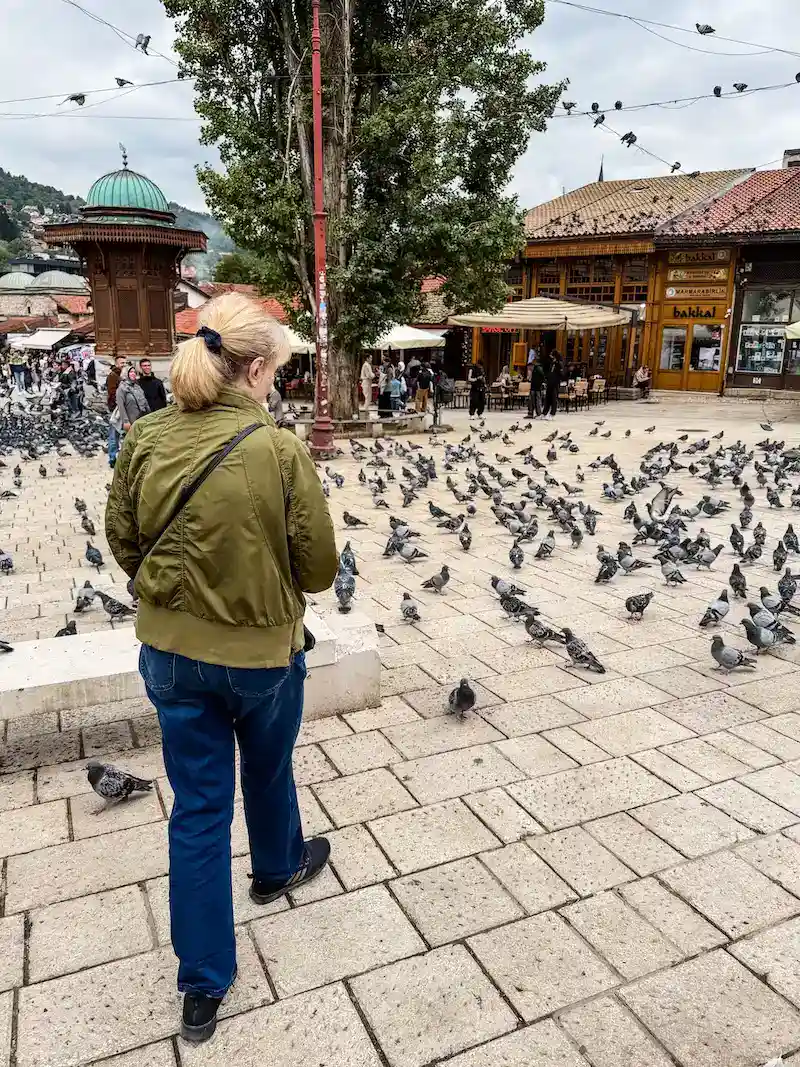
Sarajevo is fascinating, but that doesn’t mean it’s going to be everyone’s cup of tea. There are a few reasons it might not be the right fit.
If you’re looking for a picture-perfect European city, Sarajevo might disappoint. There are beautiful corners, particularly around the Old Town, but you’ll also encounter graffiti, neglected buildings, and visible reminders of the war. You’ll want to set expectations before visiting. This isn’t Vienna.
If you’re not particularly interested in history, you might not get as much out of Sarajevo as someone who is. The city’s past is such a significant part of its identity. I’d argue that this kind of travel is most enriching, but maybe that’s not you.
If you’re short on time and primarily interested in Bosnia and Herzegovina’s natural attractions, you might prefer to spend more of your trip exploring the countryside and smaller towns instead.
Sarajevo deserves more than a quick stop, but it isn’t the only reason to visit the country.
Is it better to stay in Sarajevo or Mostar?
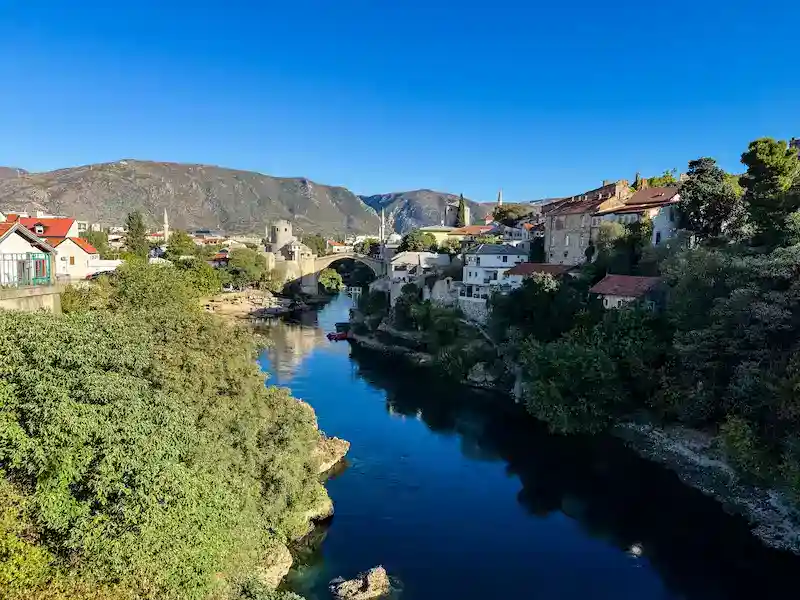
If you have time, I’d visit both! Sarajevo and Mostar offer quite different experiences, and I wouldn’t want to choose one over the other.
Sarajevo is larger, with a mix of cultures, a more complex history, and plenty to explore over several days. Mostar is smaller and more immediately picturesque, with its famous Old Bridge, charming Old Town, and beautiful riverside setting. It’s also a popular stop for travelers exploring the Herzegovina region.
If you’re really pressed for time, your interests will probably determine which one you prefer. But if you can fit both into your Bosnia and Herzegovina itinerary, I would.
Is Sarajevo an expensive city to visit?
Sarajevo is one of the more affordable European cities we’ve been to, especially when you compare it with popular destinations in Western and Central Europe.
You can eat well without spending much, even in the touristy parts of the Old Town, and accommodation and transportation are affordable.
Of course, your overall costs will depend on where you stay, how many guided tours you take, and how often you eat at sit-down restaurants. But if you’re looking for a European city break that doesn’t require a huge budget, Sarajevo is a great option, even if you treat yourself.
Looking for somewhere to stay in Sarajevo? Browse the map below to compare accommodation options, prices, and locations around the city:
Sarajevo is worth it on your next Balkans trip.
Seeing Sarajevo on social media doesn’t do it justice. I don’t mean that it’s not more beautiful in person. I think what you see online is too pretty. This isn’t the most beautiful city in Europe, and it shouldn’t be presented that way.
This is a city that’s seen and been through a lot. For travelers who don’t need (or want) a sanitized version of a region, it doesn’t feel more real than Sarajevo. Our trip to Sarajevo was certainly one that will linger with us for some time.
European destinations with rich histories:
- Should You Plan a Trip to Dubrovnik?
- See the Gallo-Roman City of Rouen
- Exploring the History of Vatican City
- How to Spend the Day in Pompeii
- Things to See in Valletta, Malta
More European cities we love:
- How to Plan a Visit to Tasty Lyon
- Spend the Perfect Day in Lille
- A Guide to the Best of Reykjavik
- Planning Three Days in Florence
- Why Bologna Should Be on Your List

Want to see more?
Subscribe to my biweekly newsletter for hot travel tips I come across, weird stories you won’t see elsewhere and perhaps lifelong friendship.
Too much, or just enough?
