
I’ve visited Barcelona twice now, and both trips remind me why it’s such a popular destination for tourists.
There’s Gaudí everywhere, the atmospheric Gothic Quarter, green spaces, beaches, and a fun tapas and cocktail scene. With two days in Barcelona, you don’t have too much time to mess around, unless that’s the kind of trip you want.
This two-day Barcelona itinerary combines my favorite stops from both of my trips. I include the major sights you shouldn’t miss, some of my favorite neighborhoods, where I’d actually stop for food, and a few things I’d skip.
It’s busy, but doable, and you won’t spend the entire two days running from attraction to attraction like you’re being chased by locals with water guns. (That’s a thing.)
Quick Tips for Your Barcelona Visit
Your Flight: You’ll start at Josep Tarradellas Barcelona–El Prat Airport for this trip. Use Skyscanner to explore your options. Love those deals? Subscribe to Going.
Your Accommodations: We stayed at the Hotel Rec Barcelona and I’d recommend it. I liked the location for getting around the city, and it’s easy to reach the Gothic Quarter and other major sights.
Browse Booking.com or Hotels.com for more options. Vrbo is my Airbnb alternative.
Your Ride: You don’t need a car for this Barcelona itinerary. The metro and bus system make it easy to get around, and driving in the city would mostly be an unnecessary headache.
If you’re planning to explore beyond Barcelona, though, you can book a rental car for that.
Top Spots: Visit the Sagrada Família, tour Park Güell, and relax in Barceloneta.
Disclosure: Travel on the Reg uses affiliate links to keep things running around here. At no additional cost to you, I earn a lil’ commission if you make a purchase. Any income earned supports the upkeep of this site. I appreciate you!
Two-Day Barcelona Itinerary at a Glance
Day 1: Gothic Quarter + El Born
Arc de Triomf, Parc de la Ciutadella, La Boqueria, Barcelona Cathedral, El Born, Santa Maria del Mar, rooftop drinks
Day 2: Gaudí + Barceloneta
Park Güell, Casa Amatller, Plaça de Catalunya, Sagrada Família, Barceloneta, beach bars
Are two days in Barcelona enough?
Yes, two days in Barcelona is enough for a decent first visit, especially if you’re focused on the city’s biggest highlights. You’ll need to make some choices, though. I’ve been twice and still have things on my return trip list.
With two days, you can fit in the Gothic Quarter, Park Güell, Sagrada Familia, some of Antoni Gaudí’s other architecture, and plenty of time for tapas and wandering.
You’ll leave with a good taste of Barcelona, and I mean that literally, but you’ll probably start planning your return trip.
Two Days in Barcelona: Day 1
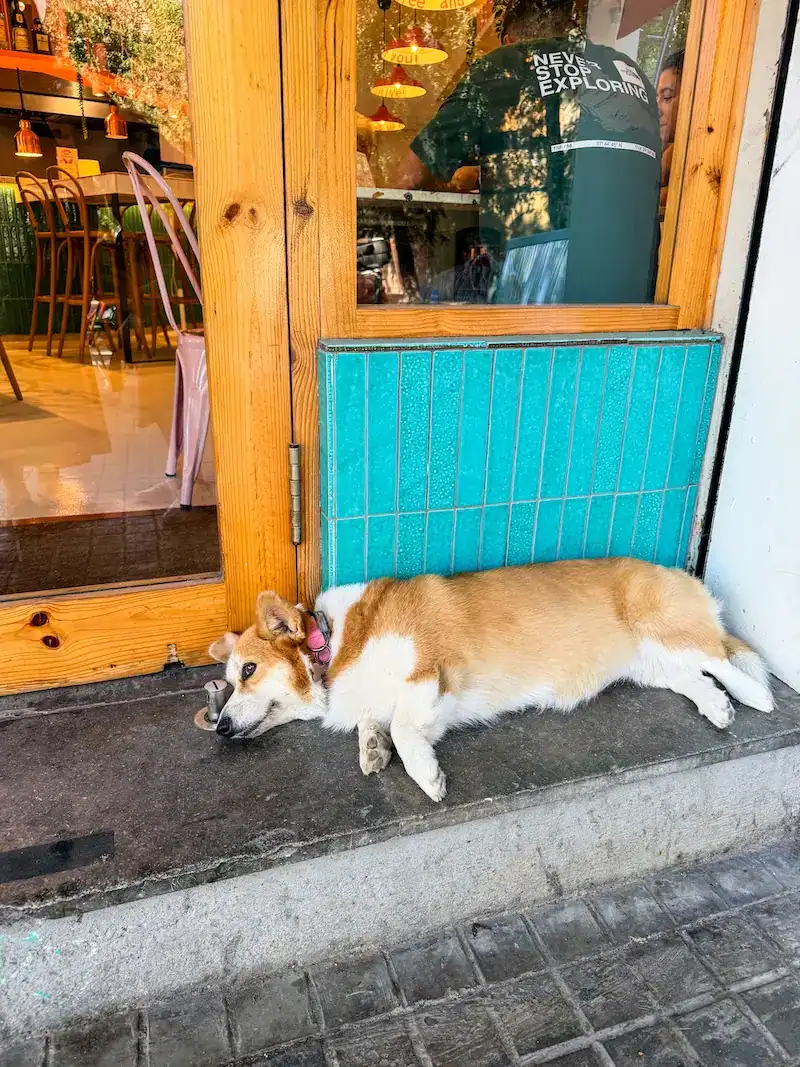
While taking it easy is definitely a vibe in Spain, you don’t have that luxury with just two days in Barcelona. If you’re into breakfast, there’s a Corgi Cafe near your first stop that is exactly as it sounds: a cafe with a corgi.
The corgi on our visit was very unimpressed, but maybe you’ll have better luck on your first day.
If dogs aren’t your thing, I’m sorry your life isn’t as full as mine. (I’m mostly kidding.) There are plenty of other cafes around Arc de Triomf and El Born. The point is to fuel up or caffeinate if you need to.
Stop 1: Arc de Triomf
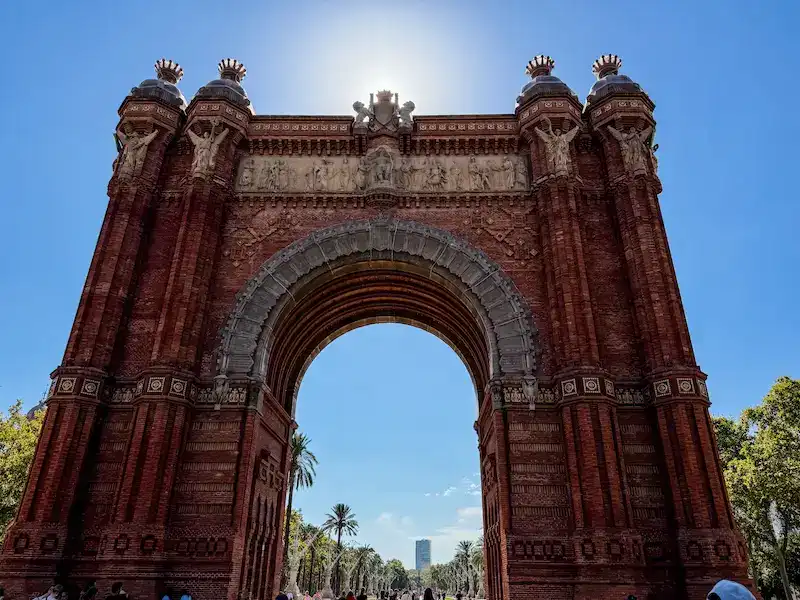
My hotel on my second visit was minutes away from this beauty, so it was a natural starting point for our first full day. It’s also the gateway to your next stop, so it’s a natural starting point for you, too.
The red-brick arch was built as the entrance to Barcelona’s 1888 Universal Exhibition. It’s a quick stop, but it’s super photogenic, and the wide pedestrian promenade leading away from it makes for a lovely little walk.
From here, keep walking toward Parc de la Ciutadella.
Stop 2: Parc de la Ciutadella
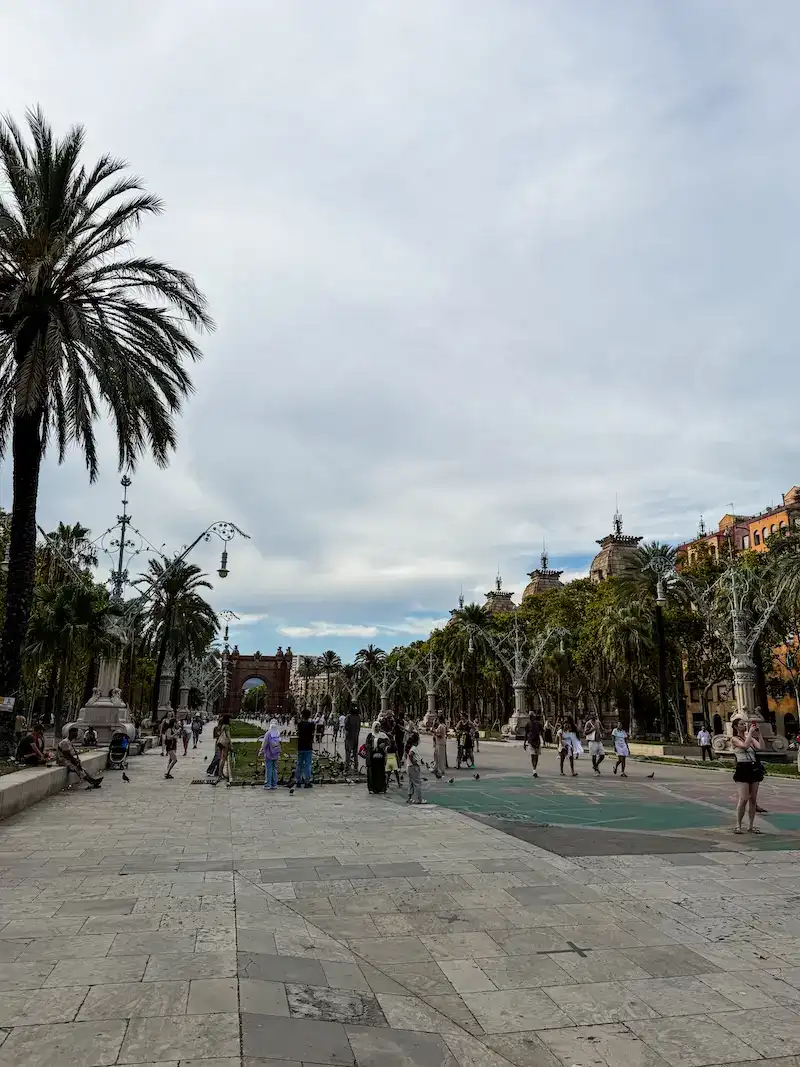
Parc de la Ciutadella is one of the reasons I really like Barcelona. While you’ll inevitably see some duck lips and people with parrots on their heads, it’s nice to see so much green space in the middle of the city.
Take some time to wander through the park, check out the fountains and foliage, and watch people actually enjoying the space…some with birds on their heads.
Fun fact: Those bright green parrots aren’t native to Barcelona. They’re monk parakeets, originally from South America, and their presence dates back to escaped or intentionally released captive birds. They’ve been breeding in Barcelona since the 1970s, with Ciutadella Park one of the first places they established a colony. Today, they’re considered an invasive species.
Give yourself 30 minutes or so to walk through it and enjoy the change of scenery, then continue toward the Gothic Quarter.
Optional Stop 3: La Boqueria
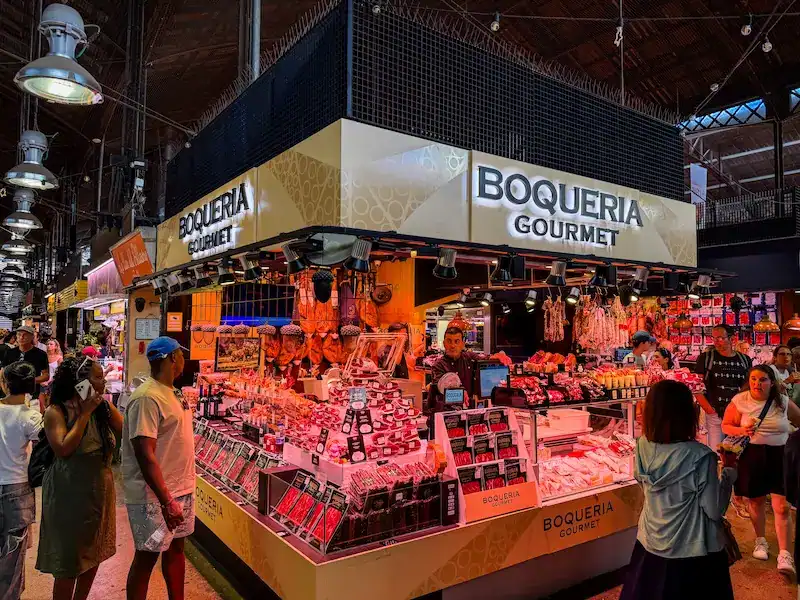
From the park, you can head toward La Rambla and stop at La Boqueria, Barcelona’s famous covered market.
It’s fun to walk through, particularly if it’s your first time in Barcelona, but I found it to be super touristy. Be selective if you’re spending money here. Some of the stalls are VERY overpriced. The candy lady, for example, really loves that tourist tax.
I wouldn’t plan your lunch here, but it’s worth a stroll through…if you want.
Stop 4: Gothic Quarter
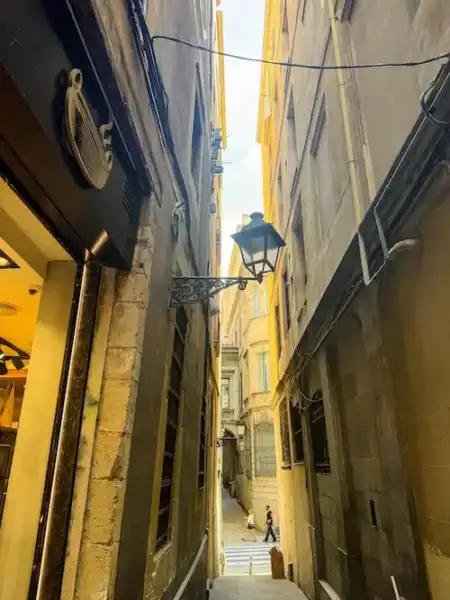
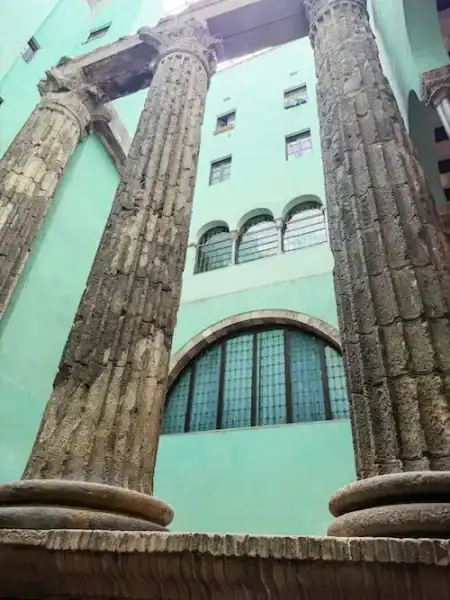
The Gothic Quarter is one of those places where you don’t really need a rigid route, unless you’re a type A personality like me. The neighborhood sits over the oldest core of Barcelona, with Roman and medieval history layered throughout.
Here are a few stops I would make sure you don’t miss:
- Plaça de Sant Jaume: Start here, where Barcelona City Hall and the Palau de la Generalitat de Catalunya face each other across the square. It’s one of the main civic centers of the city.
- Temple of Augustus: These four enormous Roman columns are tucked into the middle of the Gothic Quarter. This stop is super quick. Read the signage, marvel at the old stuff, and carry on.
- Barcelona Cathedral: If your outfit is up to code — this means no shoulders or knees or slutty attitudes — you can go inside and check out its ornate chapels, stained-glass windows, vaulted ceilings, and the beautiful cloister.
Stop 5: Lunch
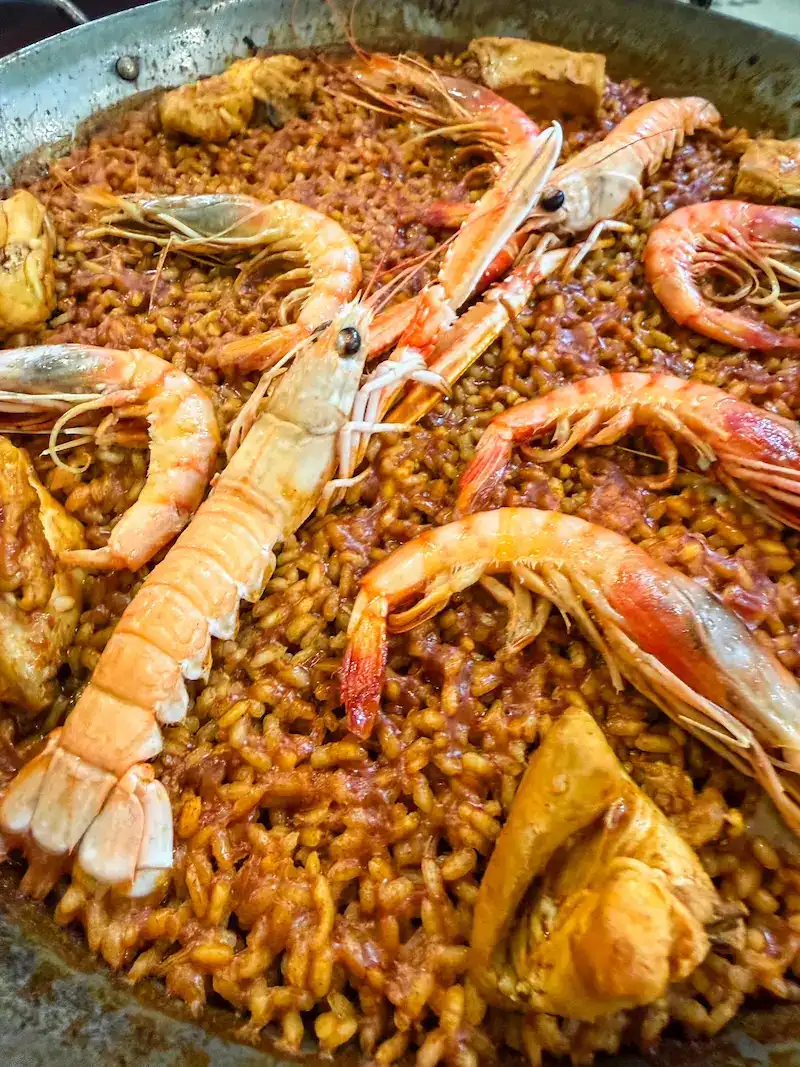
At this point, you’ve been walking for a few hours, even if you had breakfast with a corgi, so it’s time to pause for lunch.
We really liked Tapeo for tapas. Order a few things to share and settle in for a proper Spanish lunch.
If you’d rather try something different, Sagardi BCN Gòtic serves Basque-style food, including the pintxos that the region is known for.
Paella is another option for something more indulgent. There are some real stinkers out there in terms of quality, though.
La Paella de Su is a popular option, but I thought it was just OK. Prices were fair, but service was chaotic, and I didn’t find the paella itself all that impressive.
Stop 6: El Born
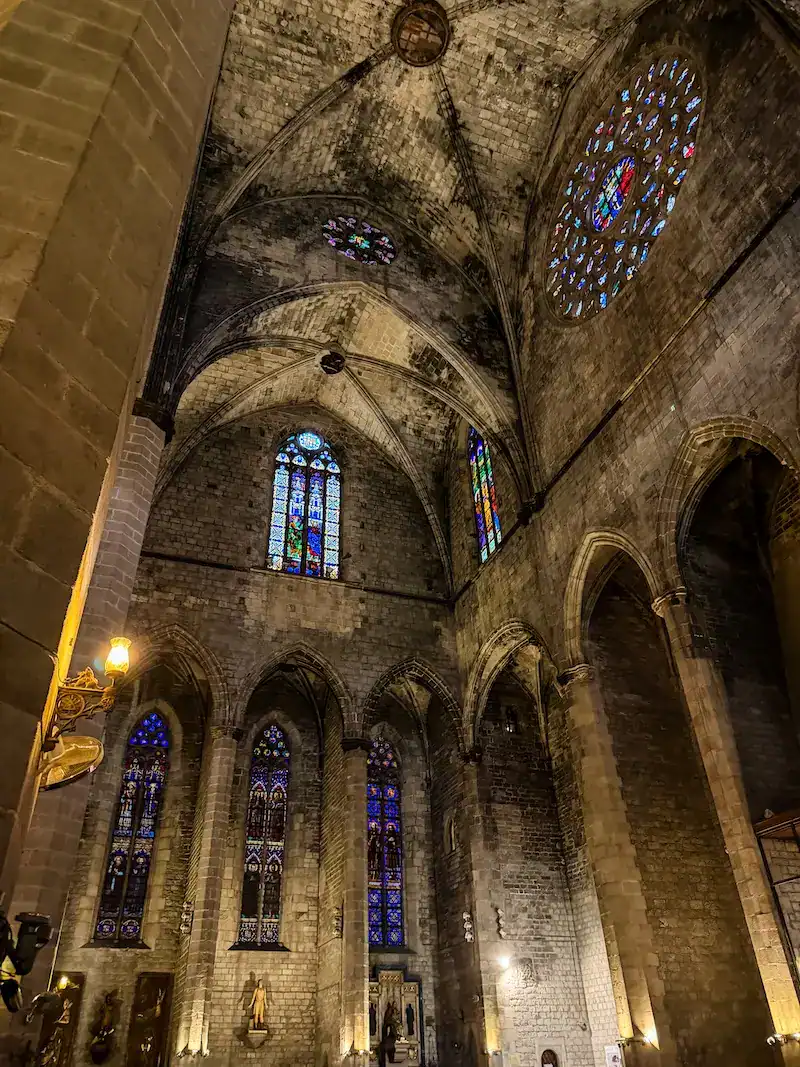
After lunch, continue toward El Born, another historic neighborhood that’s packed with shops, restaurants, wine bars, and beautiful old buildings.
This is where I’d loosen the itinerary again…unless you’re type A…again.
Start at Passeig del Born, the neighborhood’s main promenade, and wander the surrounding streets. Pop into the little shops, browse the boutiques along Carrer de l’Argenteria, and make your way toward Santa Maria del Mar.
I only had a quick visit inside the church, but was so impressed by the stained glass. If you want something a little more structured, stop at the Mercat del Born, a former market that houses an archaeological site under an iron-and-glass structure.
Stop 7: Rooftop Drinks
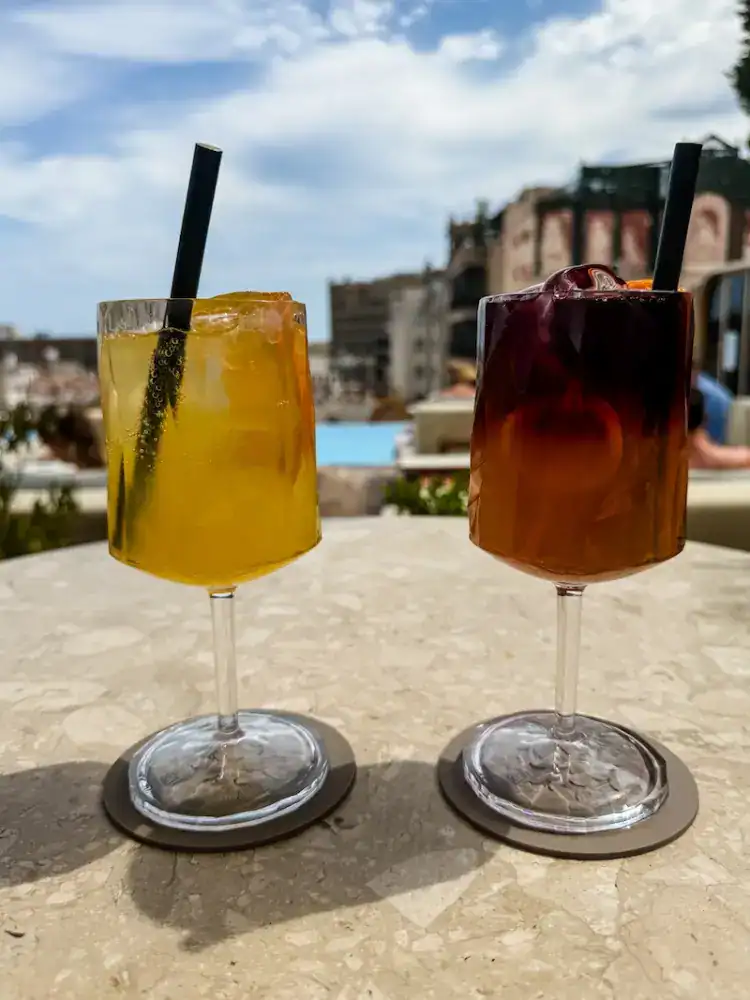
I love a cocktail (or mocktail) with a view.
I liked the rooftop at Grand Hotel Central for its views over the city from its rooftop terrace. Non-hotel guests can visit for drinks, although you’ll need to check in with the guy or gal manning the front door to make sure there’s space.
The rooftop pool is for hotel guests, so don’t show up expecting to take a swim. You’re here for the drinks and view. There are snacks for sale, too, in case you don’t want to leave for dinner.
Stop 8: Dinner
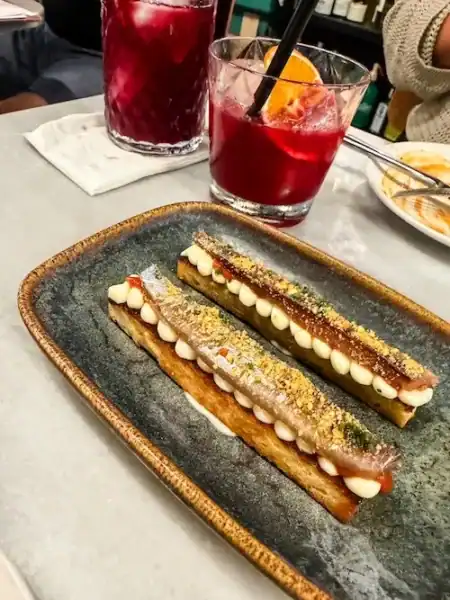

Finish the day with tapas at Orvay in El Born.
This was one of my favorite meals from either trip. Everything we ordered was good, but the sardine on brioche was the standout.
It’s a little more polished and pricey than the random tapas bars you’ll find throughout Barcelona, so this is one place where I’d make a reservation rather than just winging it.
If you’re not beat, El Born and the Gothic Quarter are both lively in the evening. Barcelona overall is very much a nightlife city.
Find a spot with outside seating that speaks to you if you’d like, with the understanding that you have a busy day tomorrow.
Two Days in Barcelona: Day 2
This is a big day. You’re going to see some of Barcelona’s biggest attractions today: Park Güell and the Sagrada Família.
Note: Both Park Güell and parts of the Sagrada Família are recognized as UNESCO World Heritage Sites as part of the “Works of Antoni Gaudí” designation. If you only have one day in Barcelona, you might as well just swap the two days.
This is the day when I strongly recommend having your tickets sorted out ahead of time. I learned that lesson with Park Güell the hard way on our first trip to Barcelona. Grab coffee today, eat a quick bite, and get moving.
Stop 1: Park Güell
Buy your Park Güell ticket in advance.
Did y’all hear that in the back?
On my first visit to Barcelona, I wasn’t as awesome a planner as I am today. (Yeah, toot toot! I’m REALLY good at the travel thing.) By the time I got there, the tickets were sold out for the entirety of our trip.
I could see parts of Park Güell from outside, but I definitely experienced some serious FOMO knowing I’d missed the part everyone comes to see.
On my second visit, I had a 10:30am timed ticket, and the park was already really busy by then. I can only imagine it gets more crowded as the day goes on.
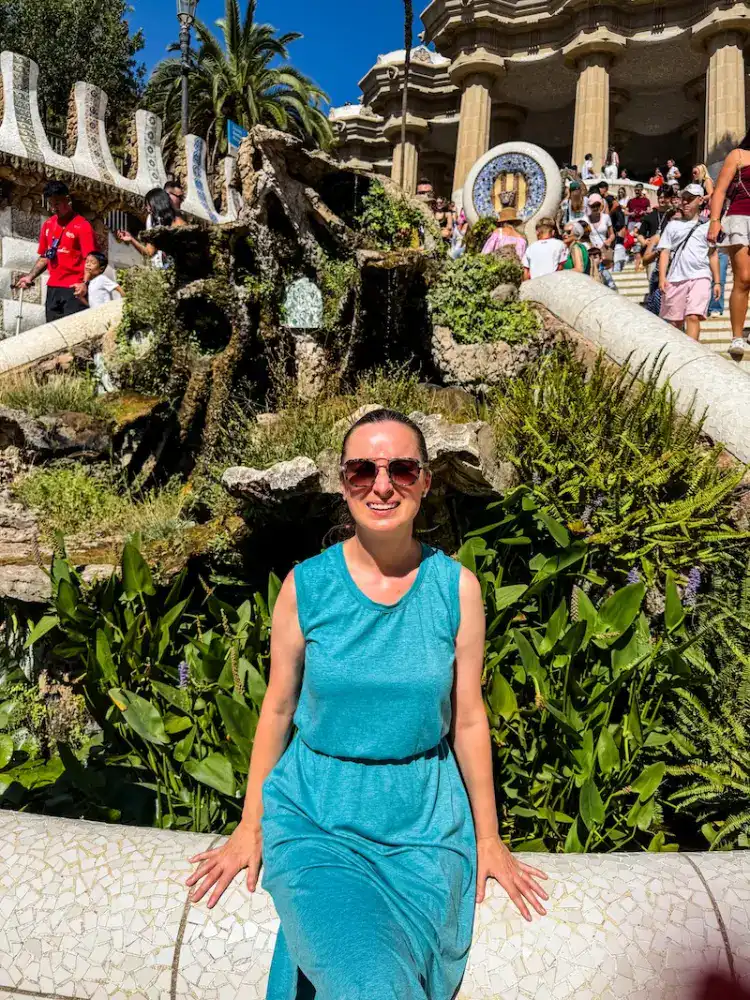
Inside the Monumental Zone, you’ll see the famous mosaic-covered structures, the Monumental Staircase, and all of Gaudí’s wonderfully weird architectural details.
Fun fact: That long, colorful bench snaking around the terrace isn’t just pretty to look at. Gaudí had a worker sit down in the wet plaster to create the shape of the seat, so it was designed to fit the human body. Basically, Gaudí invented ergonomic outdoor seating before IKEA.
Give yourself about an hour if you’re trying to keep this itinerary moving. Park Güell sits on the edge of Gràcia, one of Barcelona’s most popular neighborhoods. If you have extra time, you can easily explore the area before heading back.
Stop 2: Casa Amatller
From Park Güell, head back toward the center for another dose of Gaudí-era architecture. I’m not talking about Casa Batlló, though.
I know. It’s the one you see all over Instagram. But after hearing from local guides that it was overpriced and more of an Instagram trap than a must-see attraction, I decided to pass.
Instead, I visited Casa Amatller, right next door, with no regrets…especially after seeing the crowds around its trendier neighbor.
The building was designed by Josep Puig i Cadafalch, another major figure of Catalan Modernisme, and the interior is quirky and ornate. You’ll be guided from room to room by a human, but it’s mostly an audio tour.
The best part is that it was SO quiet. Some of the rooms were practically empty! We were able to walk in and book the next tour without incident. If you have more time, the Museu Tàpies is nearby, too.
Stop 3: Lunch
By now, you’re likely hungry.
Head to Taller de Tapas on Rambla de Catalunya for lunch. It’s a convenient stop after Casa Amatller, with a menu full of Spanish and Catalan tapas.
After lunch, walk toward Plaça de Catalunya, where you can take a quick look around before continuing to the Sagrada Família.
Stop 4: Plaça de Catalunya
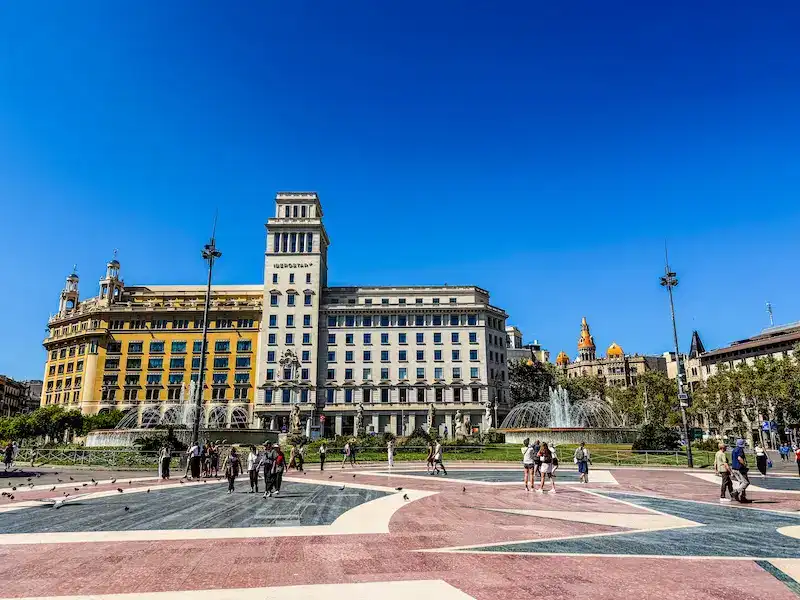
Plaça de Catalunya is Barcelona’s enormous central square. There’s not a ton you need to do here, but it’s worth seeing because you’ll probably pass through it anyway.
There are fountains, sculptures, pigeons, tourists, shopping, and almost no shade when it’s hot.
The square sits right where Barcelona’s Old Town meets the newer Eixample neighborhood, so it’s basically a giant crossroads for the city.
Note: If you need anything from Sephora, the Sephora inside El Triangle nearby has a giant slide that you can ride into the store. Yes, really.
Stop 5: Sagrada Família
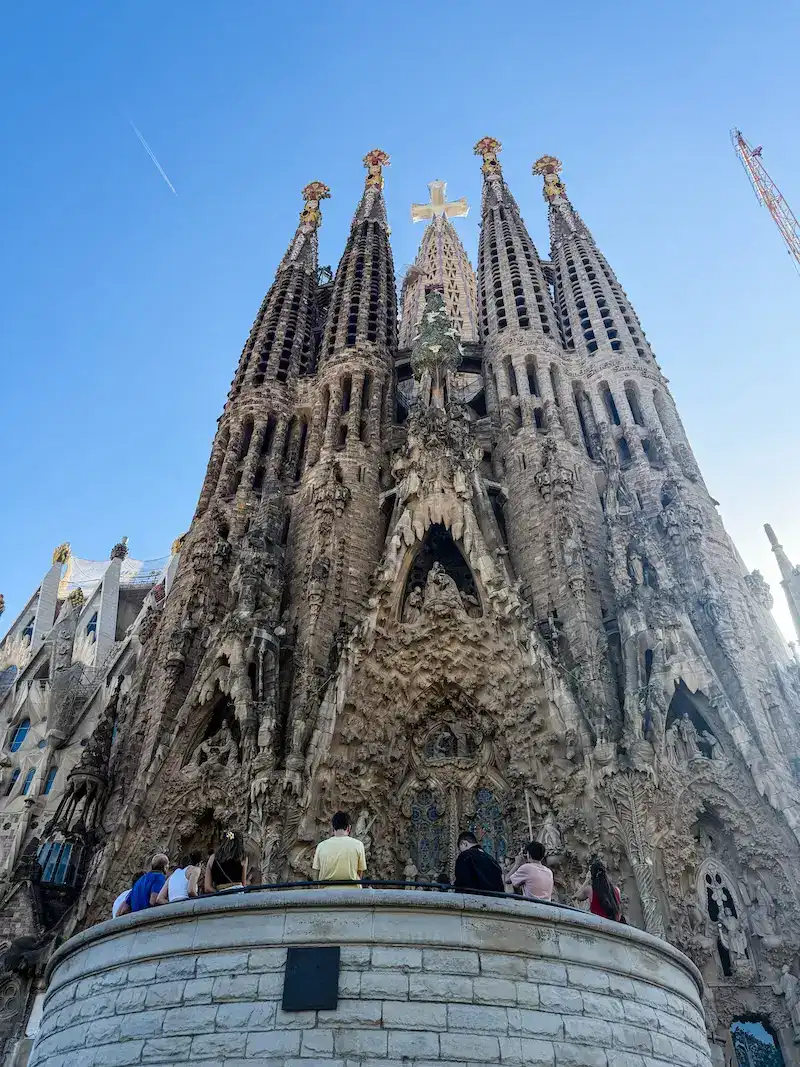
Now for the big one.
Do not skip the Sagrada Família.
I’d seen it more than a decade earlier, and while I was kinda hoping they’d be done with it by now, it’s still a very impressive sight to see.
You’ll need a ticket booked ahead of time for a timed entry. If you opt for the audio tour, bring headphones, as the audio plays through an app on your phone. I didn’t bring mine, so I was left reading the captions of each clip between stops.
The outside was the highlight for me. This thing is massive, and completely over the top. You’ll see towers reaching toward the sky and elaborate facades covered in sculptures.
The Nativity Façade is especially impressive; the Passion Façade has a more angular look. If you’re wondering why they feel so different, it’s because the basilica has been worked on by multiple architects and artists over its very, very long construction period.
The interior feels so much more modern than any other church I’ve visited, and I’ve seen A LOT of churches. Gaudí designed the columns inside to resemble a forest, with branching forms spreading across the ceiling.
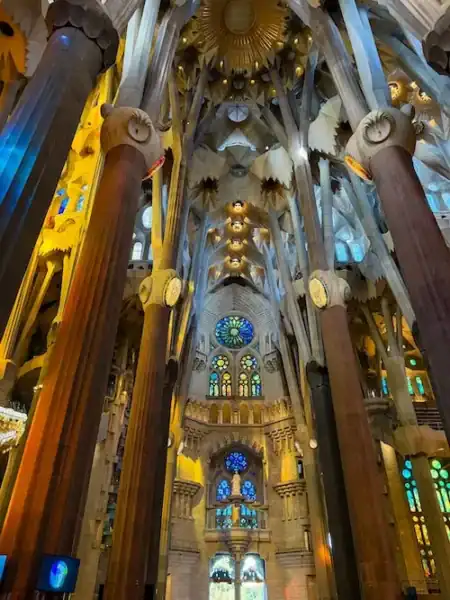
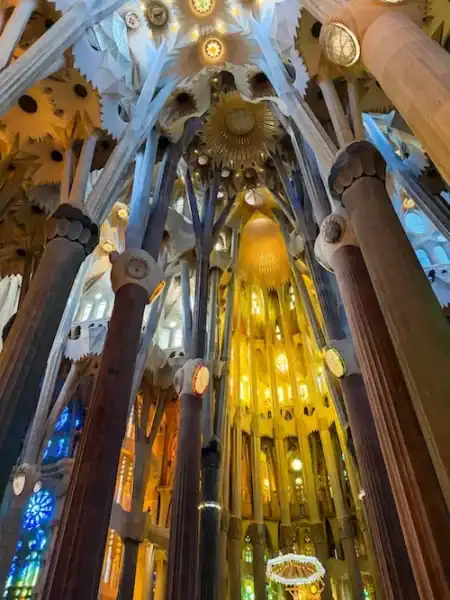
Light pours through the colorful stained-glass windows across the space, and it can be a real mood shift depending on the sunshine outside.
It’s grand, obviously, but it’s never dark or heavy. Instead, it feels open, bright, and almost otherworldly. This is a Barcelona must-see.
Stop 6: Barceloneta
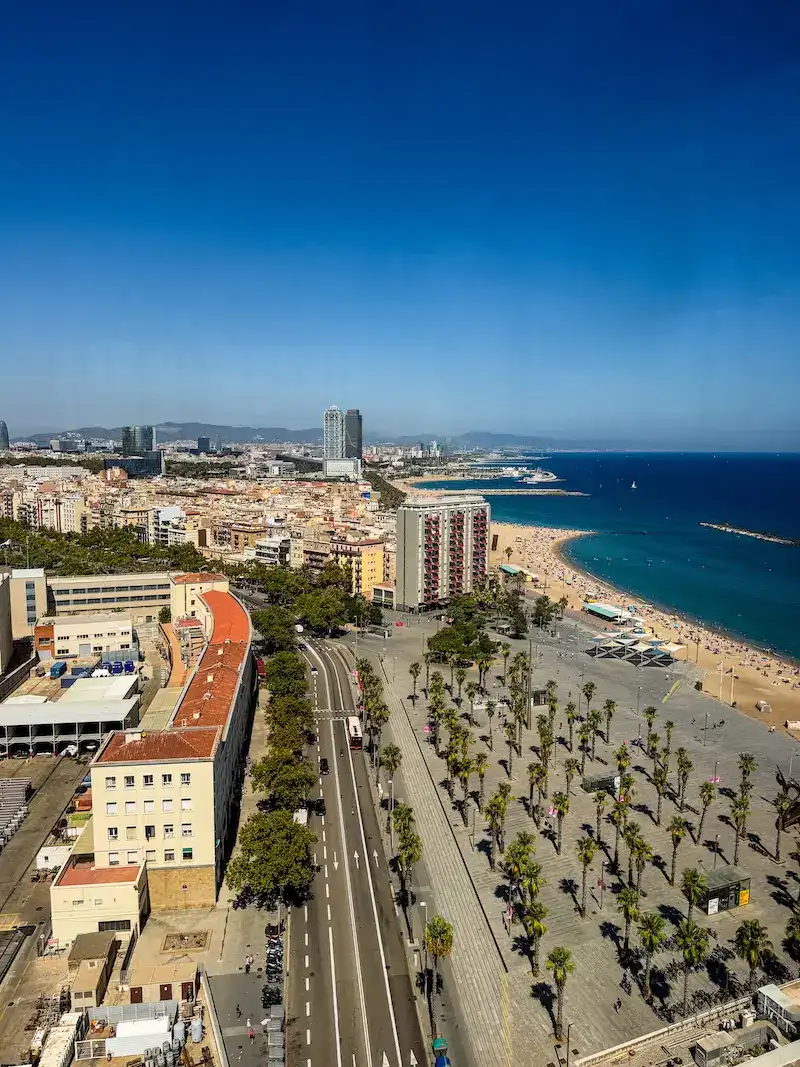
You’ve spent the day with some of Gaudí’s architecture. Now you can look at the Mediterranean, and potentially some very body-positive individuals, depending on the season. (Ladies and gentlemen like to let it all hang out here.)
If you’re here in the summer, you might be down for prioritizing the beach with more time. But even just walking along the water or finding a little beach bar is a fun way to end your sightseeing.
I spent time at the beach on both of my trips. The second time around, my girlfriend and I rented some chairs and an umbrella at Lovers Bar to keep our feet off the scorching sand.
The bar had smoothies and light bites, but if you’re interested in a bit more, La Deliciosa is another option nearby. The area is lively, especially later in the day.
From Barceloneta, you can also walk along the waterfront toward Port Vell, Barcelona’s old harbor, if you want to extend your stroll.
Stop 7: Dinner
Finish the day with dinner near the beach.
If you want to stick with the seafood theme, Bodega La Peninsular is my pick. It’s a traditional Barceloneta spot serving seafood, tapas, and Catalan dishes. Can Ramonet is known for traditional seafood, tapas, and paella.
If you want to eat with an actual view of the water, La Mar Salada is a more polished option right along the waterfront. Assume reservations for that one.
If you’re not as old as I am, you don’t need to stop here.
Absenta Bar is a longtime Barceloneta bar known for its absinthe cocktails and late-night hours. If you’re ready to go full Barcelona nightlife mode, head toward Port Olímpic, where the big beachfront clubs take over after dark.
It’s not my scene, but I’m not going to stop your party!
What’s the best time of year to visit Barcelona?
Spring or fall are the best times to visit Barcelona.
Barcelona can get brutally hot in the summer, especially if you’re planning to spend your days walking between sights. July and August are also peak tourist season, so you’re dealing with the biggest crowds when the weather is at its hottest.
That sucks all around.
May, June, September, and early October can be a much nicer balance of warm weather and manageable sightseeing conditions. October kicks off the wettest time of year, but temperatures remain nice.
Is Barcelona safe?
I’ve never felt unsafe in Barcelona.
That said, Barcelona is a major tourist city, and petty theft and pickpocketing have become a bigger concern in touristy areas and on public transportation.
I wouldn’t let that stop me from visiting, but I also wouldn’t walk around with my phone hanging out of my back pocket and my purse wide open. That’s just not a good look anywhere.
It’s also worth acknowledging that not everyone in Barcelona is thrilled about tourism. The city has been dealing with overtourism for years, particularly around the cruise ports.
Overcrowding is a big deal and the subject of frequent protests, often involving water guns targeted at tourists.
I’ve never been the target of any anti-tourist vitriol in Barcelona, but I’m also generally not a jackwagon when I travel. Here are a few easy ways to be a better tourist:
- Don’t block sidewalks while stopping to take photos.
- Do keep your voice down in residential areas, especially late at night.
- Don’t treat the metro like your personal party bus.
- Don’t litter, especially around the beach.
- Don’t walk around the city shirtless or in a bikini just because you’re headed to the beach.
- Do dress in a respectful manner in the city’s churches and holy sites.
- Don’t assume every local restaurant exists to cater to tourists.
- Do learn a few basic Spanish or Catalan phrases, be patient, and treat people like people.
More Things to Do in Barcelona
If you have more time in Barcelona, here are a few more ideas and travel tips for what to do in Barcelona beyond this two-day itinerary:
- See the views from the Museu Nacional d’Art de Catalunya. Even if you’re not much of a museum person, the grand building, surrounding grounds, and views over Barcelona are worth the trip.
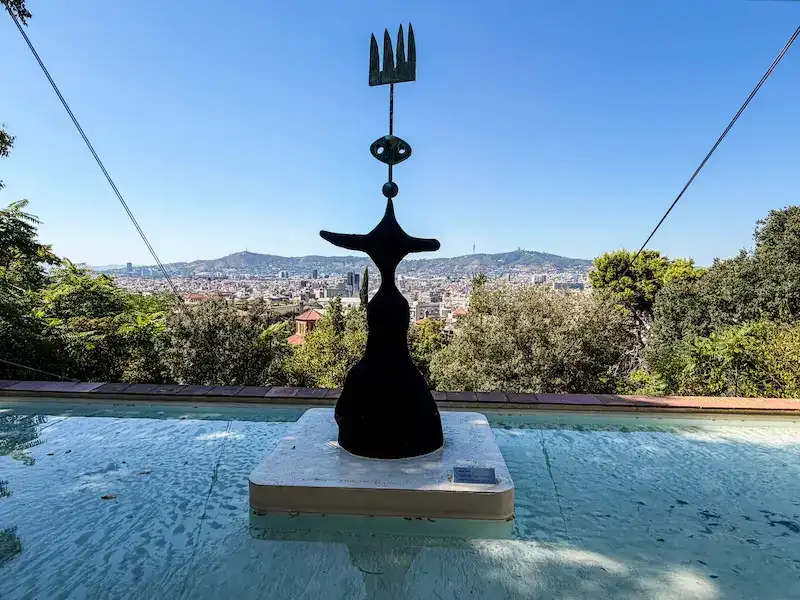
- Spend an afternoon on Montjuïc. Take the funicular up to Montjuïc Castle, check out the Olympic sites, or visit the Joan Miró Foundation. We chose the Miró Foundation on our second trip because it was SO HOT OUTSIDE.
- Take in the views from Tibidabo. The Temple of the Sacred Heart of Jesus is beautiful, and the views over Barcelona are even better. There’s also a random Ferris wheel and mini amusement park up there if you’re into that sort of thing.
- Visit the Sant Pau Modernist Complex. This former hospital is one of Barcelona’s most impressive Modernisme sites, with colorful buildings, mosaics, gardens, and plenty of architectural details to admire.
- Tour La Pedrera. Casa Milà is another famous Gaudí creation, with a wavy stone exterior and a particularly cool rooftop. If you skip Casa Batlló like I did, this is a Gaudí house I’d consider instead.
- Tour the Palau de la Música Catalana. This ornate concert hall is another beautiful example of Barcelona’s Modernisme architecture. The interior is all stained glass, mosaics, sculptures, and decorative details.
- Go underground at the Museu d’Història de Barcelona. This museum has archaeological remains beneath the Gothic Quarter, including parts of Roman Barcelona.
- Visit the Picasso Museum. Barcelona has an impressive collection of Picasso’s work, and it’s worth adding if you’re interested in his art. Book ahead if you want a specific entry time.
- Take a day trip. With more time, consider Montserrat, Girona, Sitges, or Tarragona. Barcelona is a great base for getting out of the city for a day.
You can also book a walking tour. There are SO many options for guided experiences in Barcelona. See a few highly-rated ones below:
Where to Stay in Barcelona
I stayed at Hotel Rec Barcelona on my most recent trip, and the location is great. It’s an easy walk into the Gothic Quarter and convenient to many of the major sights, with good connections to the rest of the city by bus and metro.
The rooms are on the small side, especially if you’re sharing with someone. There’s also a rooftop pool, although I’d describe it more as a plunge pool than somewhere you’re going to spend the afternoon doing laps.
Barcelona overall is expensive. Staying somewhere with easy public transportation can also save you money and time if you’re willing to be a little farther from the most famous sights.
Use the map below to help you browse:
Is Barcelona worth visiting?
Absolutely. I really like Barcelona.
I can understand why some people complain about the crowds and tourism, but there’s still just so much happening here. There’s enough going on to keep you busy well beyond two days.
You also don’t have to spend every minute sightseeing, no matter how much FOMO you typically deal with. Eating an “unreasonable amount” of tapas and hanging out at the beach are acceptable choices.
Seeing more of Spain? Check these out:
- Do You Need to Rent a Car in Tenerife?
- A Detailed 5-Day Tenerife Itinerary
- How to See Whales in Tenerife
- Visiting Tenerife in the Winter Months
- Hiking Roque de Taborno in Tenerife
More European cities perfect for a weekend away:
- A Guide to the Best of Belfast
- How to Plan Two Days in Edinburgh
- Spend an Incredible Weekend in Kraków
- A Guide to the Best of Bologna
- Spend Three Perfect Days in Rome

Want to see more?
Subscribe to my biweekly newsletter for hot travel tips I come across, weird stories you won’t see elsewhere and perhaps lifelong friendship.
Too much, or just enough?
