
Belfast, Northern Ireland, wasn’t on our list of cities we were dying to visit. It had this reputation of being a little rough around the edges. It wasn’t until we booked bucket list golf for Brian at Royal County Down that we decided we should give this one a shot.
We’d be so close, after all, and the golf part of the trip coincided with Belfast’s first time hosting the Fleadh Cheoil na hÉireann. The timing was perfect.
So, is Belfast worth visiting?
Somewhere between wandering through a packed St. George’s Market, listening to kids playing traditional music in the streets, and a tour through Titanic Belfast, I got it.
Belfast isn’t a city that tries to impress you at first glance, but the more time you spend here, the more it starts to give a little. I’ll get into all of the little surprises we experienced, some history, and why you should consider Belfast for any trip to Ireland.
I traveled to Belfast as a guest of Tourism Northern Ireland and Tourism Ireland. All opinions expressed here are, as always, my own. For more information on planning your trip to Belfast, visit Ireland.com or Discover Northern Ireland.
Quick Tips for Your Belfast Visit
Your Flight: Belfast International Airport (BFS) and George Best Belfast City Airport (BHD) are the main options for Belfast. We flew into Dublin Airport (DUB) because it was cheaper and drove to Northern Ireland from there.
Find deals to those cities on Skyscanner. Love deals? Subscribe to Going.
Your Accommodations: We stayed at the Bedford Hotel Belfast for two nights. I’d recommend it for short stays in the city, as it’s quite centrally located.
Browse Booking.com or Hotels.com for more options throughout Northern Ireland. Vrbo is my Airbnb alternative.
Your Ride: If you’re visiting elsewhere in Northern Ireland, you’ll want a car. I recommend booking a rental car in advance. Just note that Northern Ireland drives on the left side of the road.
Top Spots: Tour Titanic Belfast, eat your way through St. George’s Market, and seek out Belfast’s political murals.
Disclosure: Travel on the Reg uses affiliate links to keep things running around here. At no additional cost to you, I earn a lil’ commission if you make a purchase. Any income earned supports the upkeep of this site. I appreciate you!
Is Belfast worth visiting?
Yes, Belfast is absolutely worth visiting.
We weren’t sure what to expect before our trip. Belfast has a complicated history and, unlike some of Ireland’s more obvious tourist destinations, it doesn’t necessarily have the same immediate postcard appeal.
But after spending a few days there, it started warming up to us, and vice versa.
Belfast has great pubs, excellent museums, fascinating history, an interesting food scene and a vibrant music culture. It’s also compact enough to explore on foot, and its location makes it an excellent base for seeing more of Northern Ireland.
What I liked most, though, was that Belfast feels like a city that’s still evolving. You can see its industrial past, learn about the Troubles, and then turn a corner and find a lively restaurant, or a crowd of kids playing traditional Irish music on the street.
That’s what makes Belfast worth visiting. This is a place of reinvention.
They built the Titanic.
The people of Belfast built the Titanic.
The city was once one of the world’s great shipbuilding centers. And in 1909, Belfast’s Harland and Wolff shipyard was tasked with building what would become the most famous ship in the world.
Visiting Titanic Belfast makes it clear that the story is much bigger than one famous ship, though.
Our guide explained that Belfast avoided really embracing the Titanic story for years. Given the ship’s tragic fate, it wasn’t exactly an easy piece of local history to celebrate. I get that.
After the Troubles and the resulting peace process, Belfast wanted to start inviting people back. They wanted a tourism boost. And so they started looking at the Titanic story differently and recognizing its potential.
Today, Titanic Belfast tells the story of the ship alongside the bigger story of Belfast’s shipbuilding industry and the people who built these vessels in the city’s shipyards.
Note: We loved the little ride through the shipyard galleries, which takes you through a short story of the men who worked here and how challenging the work was. It’s free, but there is generally a wait to get one of the cars.
The museum is a must, not just for visitors to Belfast or Titanic fans whose hearts will go on, but for any traveler interested in histories that make cities tick.
Belfast is a music hub.

The timing of our visit certainly helped showcase this fact. The city was hosting the Fleadh, a massive celebration of traditional Irish music, dance, and culture, and traditional music was everywhere.
Musicians played outside bars, kids busked on the sidewalks, and signs invited fiddlers, singers, and the rest to come in and perform. We saw tiny flute players alongside more experienced performers.
At one event, we watched performers from the Molly Smith School of Highland Dance, including a little girl who was just five years old. She was doing her best, and it was friggin’ adorable.
READ MORE: Love all things Scottish? You’ll want to plan a trip to Edinburgh!
We also saw an all-female fiddle group from Donegal and attended a performance by the Comhaltas National Folk Orchestra of Ireland that wove in the story of Belfast. They touched on everything from the Titanic and World War II to the Troubles.
At one point, folk singer Tommy Sands came out to perform his song about the Troubles, and there were people in the audience wiping away tears.
Music is woven into the city’s identity, so even if you don’t visit during a massive festival, I’d make an effort to find some live music while you’re there.
They’re doing fun things with food.
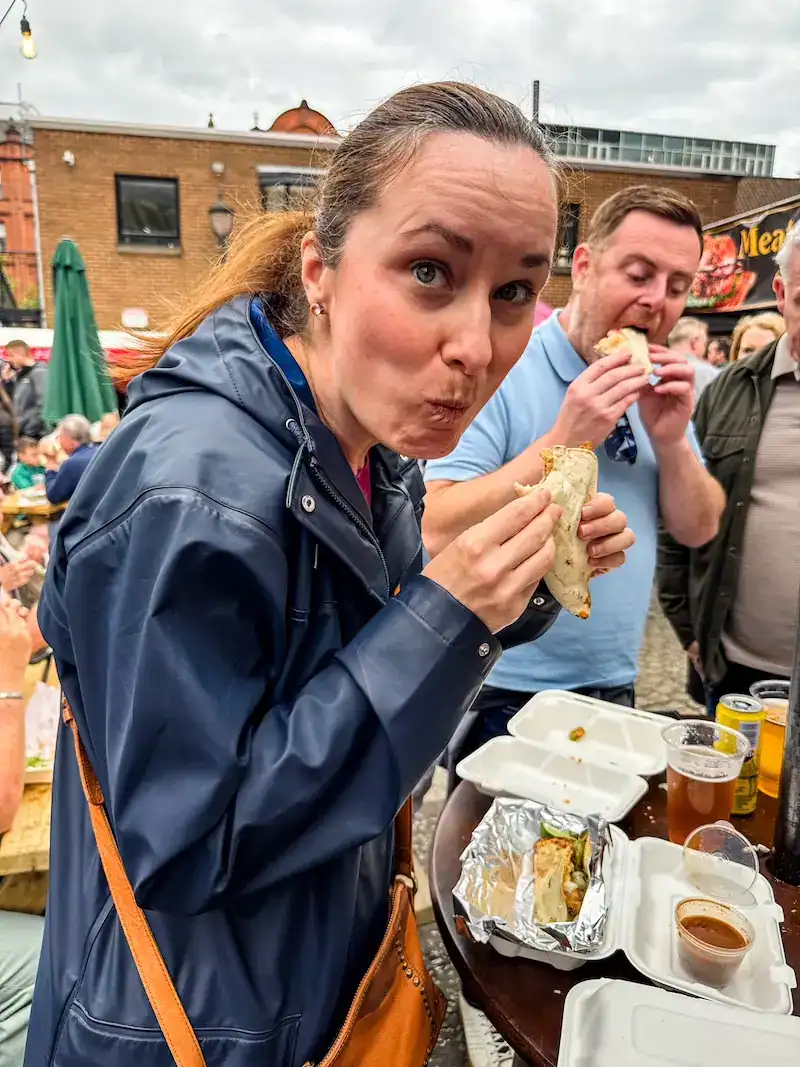
I wasn’t expecting Belfast to become one of the food highlights of our trip to Northern Ireland, but honestly, I wasn’t expecting much out of the food overall. We’d been to Ireland before, and it’s not exactly a culinary wonderland.
As the largest city in Northern Ireland and second-largest in Ireland, Belfast has more going for it.
We had a food tour booked with Taste & Tour to have someone else show us the goods, but even if you don’t do that, you’ll want to visit St. George’s Market.
It’s open Friday through Sunday and has everything from food and drinks to antiques, art, and local food products. We started with a “little snack” of a Belfast bap, a crusty bread roll topped with bacon, sausage, egg, and the condiment of your choice.
While a “little snack” it was not, it was pretty tasty.
Fun fact: Belfast baps are a serious working-class breakfast, and the ones we saw coming out of the market were roughly the size of a forearm.
From there, we sampled cheese and chili jam, Irish butter, and smoked salmon at Sawers, which dates back to 1897 and bills itself as Belfast’s original grocery store.
Lunch was at The Morning Star, where we were served chips and beef. I figured it was just another touristy Irish pub, but it’s actually a family-run local institution that’s been around for decades.
Belfast has a nice cheese scene, too, beyond Irish cheddars. Mike’s Fancy Cheese serves up local blues and goat cheeses that’d be unheard of in the Irish market up until modern day. It was all surprising, and all delicious.
The city center is very walkable.
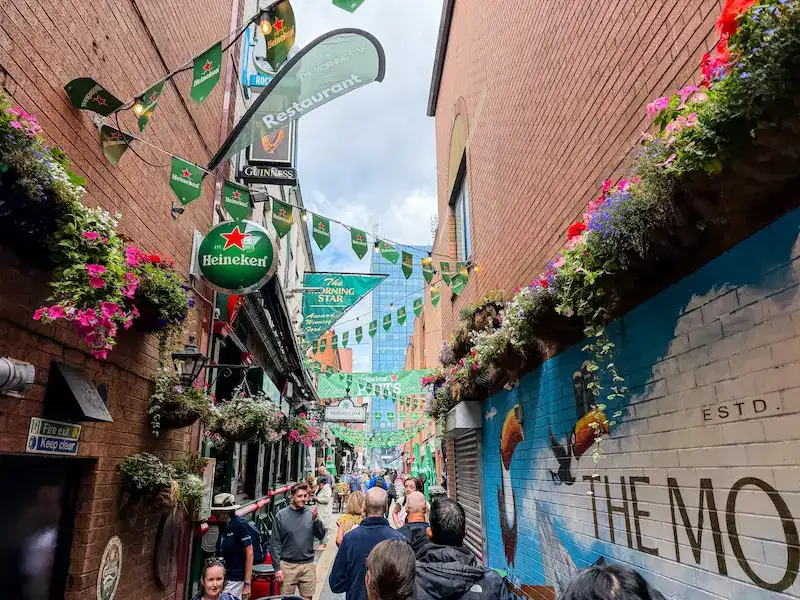
We stayed at The Bedford Hotel Belfast, and loved how easy it was to get around on foot. We were able to walk to St. George’s Market, through the city center, across to the Titanic Quarter, and back again without worrying about transportation.
There are plenty of things to do in Belfast that are packed into a relatively manageable area. While it didn’t feel as much like the “you should get lost here” kind of city you hear about from bloggers, it is easy to walk around here with an agenda.
If you’re here for one day or the weekend, I’d recommend staying in or close to the city center. We really enjoyed The Bedford, but use the map below to browse more options:
The street art scene is great.
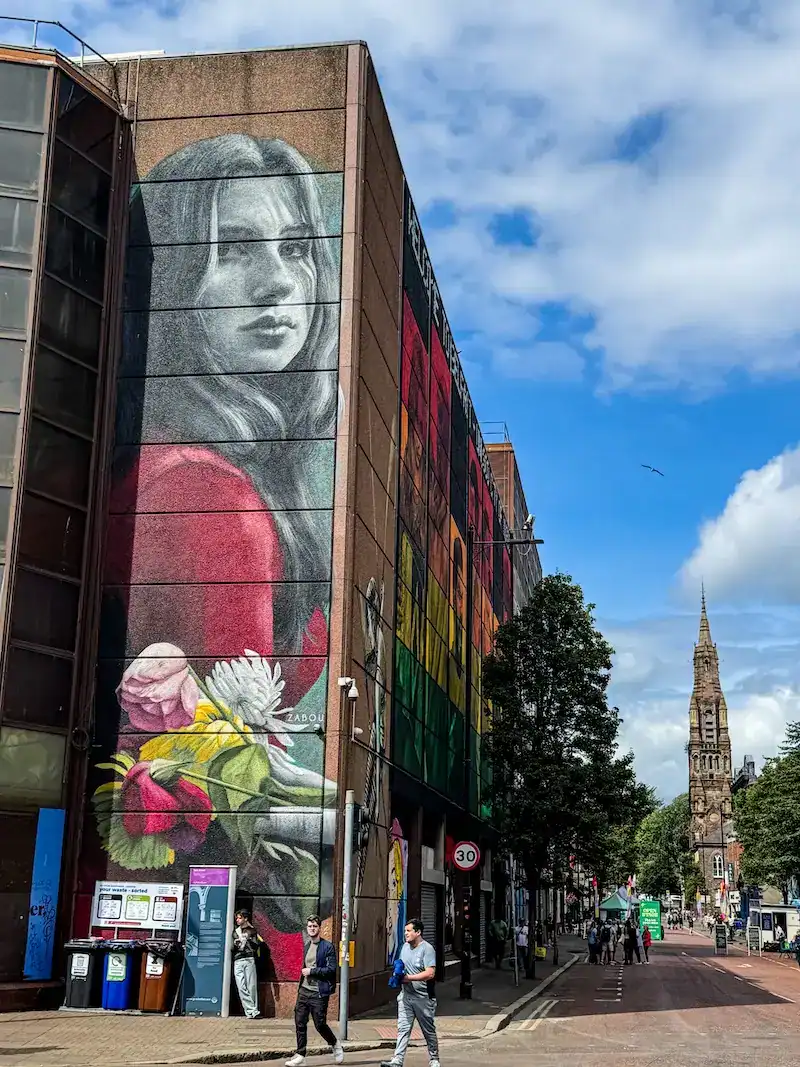
Murals and public art are deeply connected to the city’s history and politics, which makes wandering around Belfast different from other cities with a street art scene.
We walked into West Belfast to see the famous Bobby Sands mural on the Falls Road, along with the International Wall.
Note: The murals along this corridor are currently focused on Palestinian solidarity, but you’ll see them change as international causes become more immediate.
Across the city, the Shankill Road has a very different collection of loyalist murals, including imagery connected to William of Orange and the area’s history.
If you like a side of history with your street art, several black taxi tours in Belfast focus on doing just that. Check out some highly-rated options below:
Belfast has important history to explore.
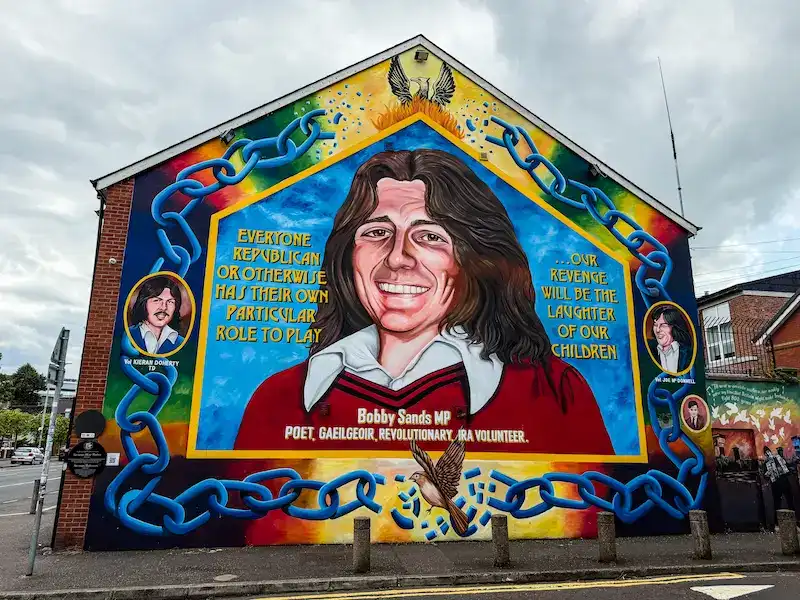
Since we’re on the topic, you can’t really visit Belfast without confronting its complicated history.
If you’re not familiar with the Troubles, they were roughly three decades of conflict in Northern Ireland, beginning in the late 1960s.
At its core, the conflict was between unionists and loyalists, who wanted to remain part of the United Kingdom, and nationalists and republicans, who wanted to unify Ireland.
The conflict involved paramilitary groups on both sides as well as British security forces. More than 3,500 people were killed before the Good Friday Agreement helped bring the worst of the violence to an end in 1998.
The Troubles shaped the city for decades, and their legacy is still visible in Belfast today. You’ll see it in its murals, naturally, but also in memorials around town and in how the neighborhoods have developed along different community lines.
What struck me was how often people talk about the city’s past alongside its future. The peace process changed Belfast in enormous ways, including how the city thought about its own history and how it presented itself to visitors.
That’s part of what made the Fleadh so interesting, too. Everywhere we went, people seemed genuinely interested in what we thought of the festival. There was almost a sense of nervousness, as if they wanted Belfast to get this right.
From what we experienced, they should be proud. Seeing people from different parts of Ireland come together to celebrate music and culture, while watching kids carry on traditions, felt so special.
Belfast museums are impressive.
Belfast has some excellent museums, and they cover a surprisingly wide range of the city’s history and culture.
Obviously, Titanic Belfast is the big one, and I’d consider it a must if you’re visiting the city for the first time.
The Ulster Museum is another worthwhile stop, particularly if you want to understand more about Northern Ireland beyond the Titanic story and the Troubles. There’s also the MAC, Belfast’s contemporary arts centre, if you’re more interested in modern art.
Crumlin Road Gaol is a former prison that dates back to the 19th century. I didn’t get to visit on this trip, but it’s high on my list for next time, especially since you can tour the old prison and visit a whiskey distillery while you’re there.
Belfast has great pub culture.
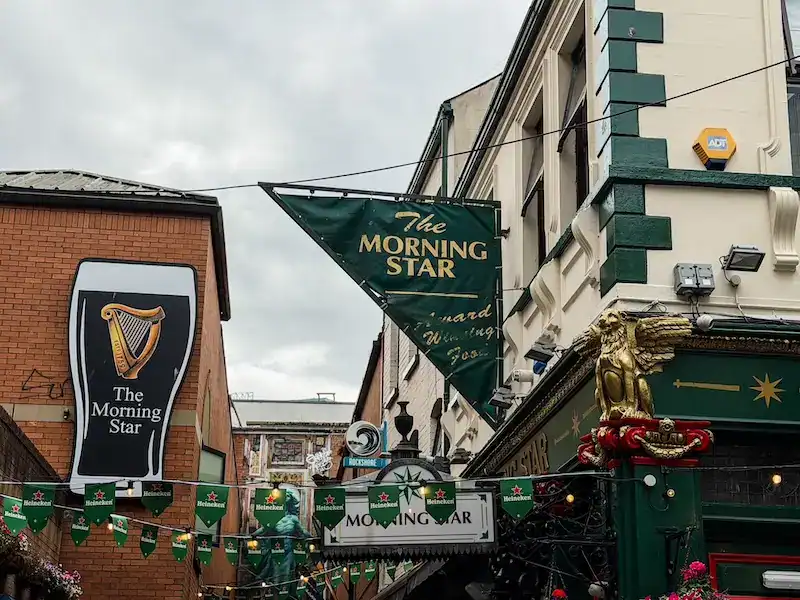
You won’t have trouble finding a decent pub in Belfast. Much like the rest of Ireland, it’s lousy with them.
What I liked was discovering that some of these places have much more history and personality than you’d expect from the outside. I mean, in Dublin, so many of them feel like tourist traps and hangouts for roving bros at this point.
I need to shout out The Morning Star here again. At first glance, it could easily be mistaken for one of those bro traps. Instead, we learned that it’s a family-run establishment that’s been part of Belfast for around 40 years.
And then, of course, there’s the music. Live sessions, musicians in bars, and a sense that you’re always within earshot of someone playing something made Belfast’s pubs feel like part of the music scene.
It generally feels like any spot in Belfast can become a live music venue at any moment.
It’s a great base for golf.
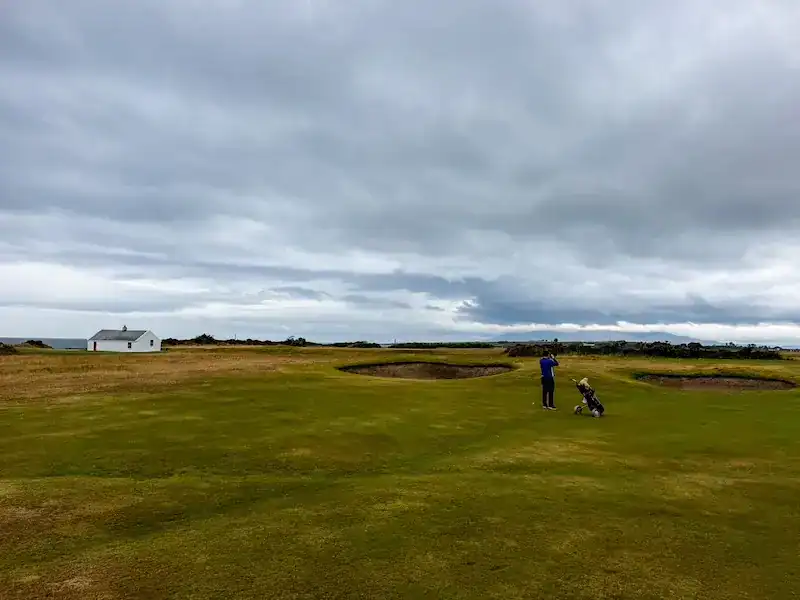
There’s some seriously good golf on Belfast’s doorstep.
At least that’s what I hear. I don’t golf. But the overpriced hobby is what brought us to Northern Ireland in the first place.
Northern Ireland is home to some of the most famous courses in the world, and Belfast puts you within easy reach of several of them.
Royal County Down, considered one of the world’s great golf courses, is about an hour from Belfast in Newcastle. If you’re a Rory McIlroy fan, you can visit Holywood Golf Club, where he grew up playing. It’s only about 20 minutes from Belfast.
Fun fact: Rory McIlroy was just seven when he joined Holywood Golf Club. He was so good that the club actually changed its minimum-age rules to let him become a member.
Brian also played Ardglass Golf Club, a dramatic links course about an hour south of Belfast. I know he’s spoiled.
I’m not suggesting you need to build an entire Northern Ireland golf trip around Belfast, although you absolutely could. But if you’re travelling with a golfer, having Belfast as your base allows you to combine a city break with some very serious tee time.
I prefer tea time myself.
READ MORE: Did I catch a golfer? Check out Brian’s tips for booking the Old Course at St Andrews!
Belfast is reinventing itself.
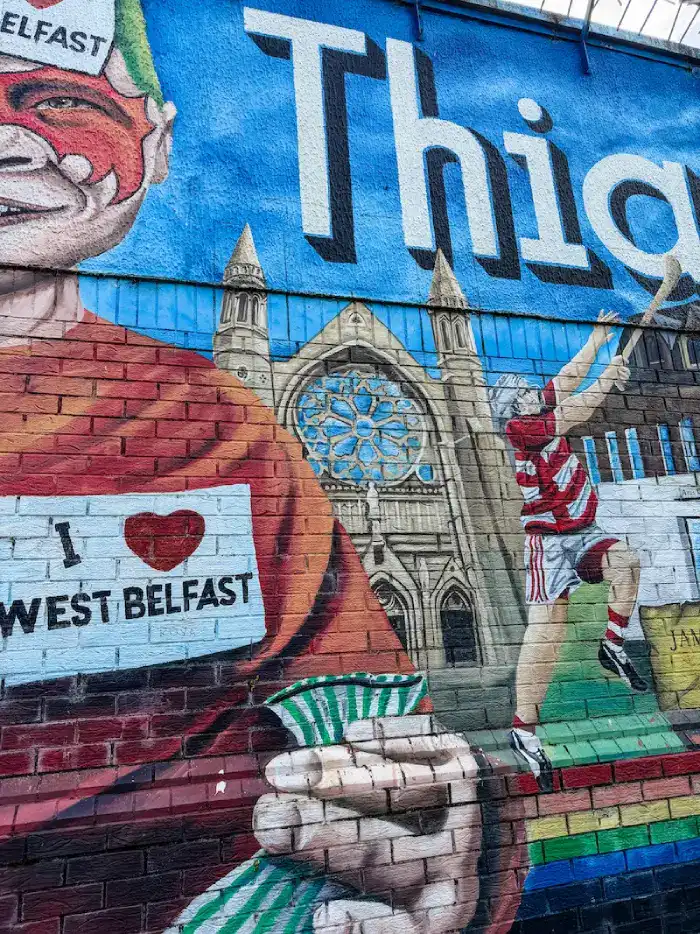
Belfast is a city that feels like it’s changing.
You can see it in the Titanic Quarter, in the restaurants and independent businesses, in the arts scene, and in the way the city is embracing its history, not hiding from it.
I felt this particularly strongly during the Fleadh. Walking through the city and seeing thousands of people eating, drinking, listening to music, and celebrating together, it was hard not to feel optimistic.
Different parts of the island were coming together around something that united them rather than divided them. It all felt so hopeful, and it was a good example of how the city isn’t forgetting its past. It’s building something new on top of it.
It’s a good base for exploring Northern Ireland.
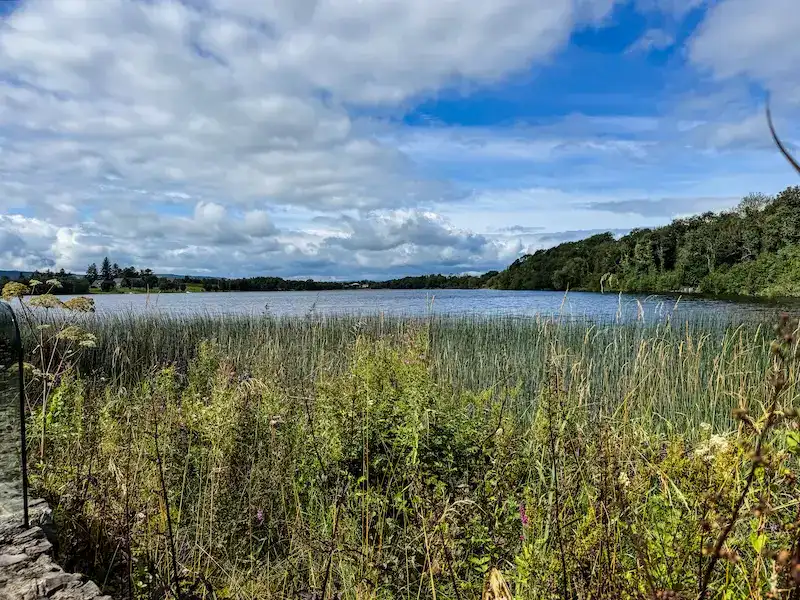
Belfast is an excellent base for exploring more of Northern Ireland.
From Belfast, you can easily go up the Antrim Coast and Causeway Coastal Route, visit the Giant’s Causeway, or explore Carrick-a-Rede. You can head south as we did toward County Down and spend time in the Mournes.
I’d still recommend giving yourself at least a couple of days to experience Belfast itself rather than treating it as somewhere to sleep between day trips. There’s enough here to keep you busy, particularly if you like history, food, music and culture.
But adding a few extra days to explore beyond Belfast makes it an even more compelling stop on a Northern Ireland itinerary.
Who Belfast Is Best For
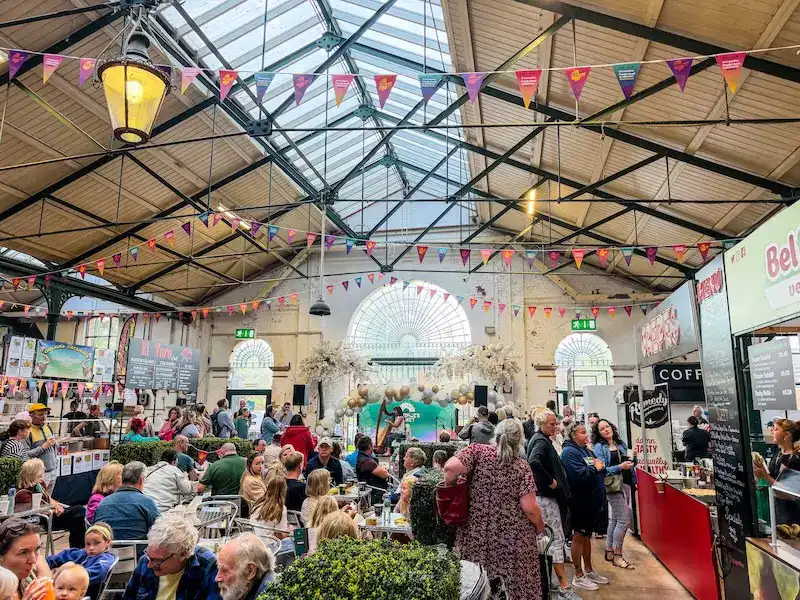
Belfast is particularly well suited to travelers who like a mix of history, culture, food, and nightlife rather than spending an entire city break ticking off major attractions.
It’s a great choice for:
- History buffs: From the Titanic and Belfast’s shipbuilding legacy to the Troubles and the city’s changing identity, there’s a lot of history to unpack here.
- Music lovers: Belfast has a strong live music scene, from traditional Irish sessions in pubs to major cultural events.
- Foodies: St. George’s Market, historic food shops, local cheese makers, pubs, and creative restaurants make Belfast a fun city for eating your way around.
- Golfers: Belfast is a great base if you’d like to combine a city break with golf, with courses including Royal County Down and Holywood within easy reach.
- Repeat visitors to Ireland: If you’ve already done Dublin and some of Ireland’s most famous attractions, Belfast offers something distinctly different.
When Belfast May Not Be Worth Visiting
Belfast won’t necessarily be everyone’s cup of tea. If you’re looking for a city filled with grand historic architecture, major monuments and a long list of famous attractions you can tick off in a weekend, it may not top your list.
Belfast’s appeal is more about the combination of things. You might spend the morning learning about shipbuilding, wander through a food market, stop for a pint in a decades-old pub, and end the night with some live music.
It’s also a city where the history can be confronting. If you have no interest in learning about the Troubles or understanding the political and cultural divisions that shaped Belfast, you may not get as much out of the experience.
And if you’re planning to spend most of your time exploring Northern Ireland’s coast and countryside, you may prefer staying somewhere outside the city.
For me, though, those aren’t really reasons not to visit Belfast. They’re more reasons to make sure Belfast matches the kind of trip you actually want.
Is Belfast safe?
Yes, we felt safe visiting Belfast.
We walked around the city center, went to pubs and restaurants, attended events at night, and explored different parts of the city without feeling uncomfortable. We were visiting during a major festival, too, which meant bigger crowds than usual.
We did see one fight break out between youths on the street once the sun went down, but they weren’t bothering passersby. I think they were just overserved. As with any city, use normal precautions, particularly late at night and around busy areas.
Belfast’s history means you may encounter political murals and reminders of the Troubles, but that’s not something to be freaked out about. I’d recommend guided tours to explore Belfast if you don’t have a solid background in the history here.
Here are a few nicely rated options:
Is it better to visit Dublin or Belfast?
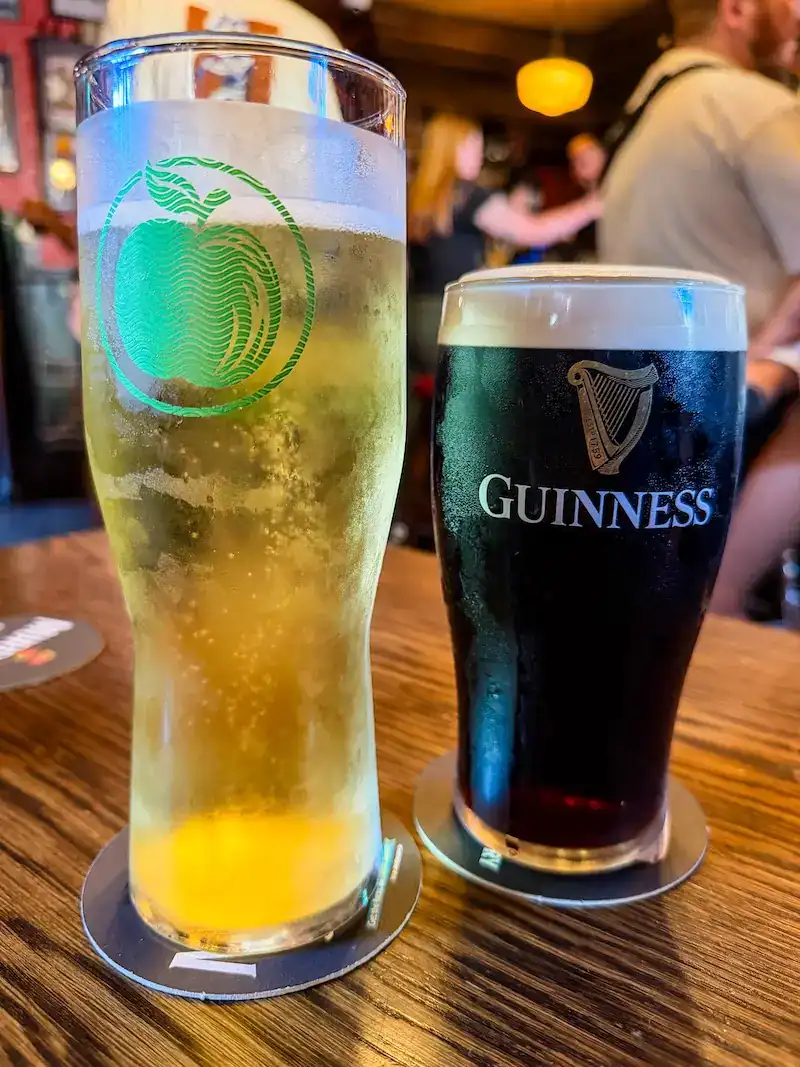
If you only have time for one Irish city, choosing between Dublin and Belfast really comes down to what you’re looking for.
Dublin is probably the better choice for a first-time visitor who wants the classic Irish city experience. It has more major attractions, a larger tourism infrastructure, and plenty of famous sights packed into the city.
Belfast feels different. It’s smaller and easier to explore on foot, and its history is much more immediately visible. I’d choose Belfast over Dublin if you’re particularly interested in history, music, golf, or exploring Northern Ireland.
I’d also choose Belfast if you’ve already visited Dublin. I find Dublin to be reaching that uncomfy, over-touristed spot, too, just from what we experienced on visits 10 years apart.
Of course, you don’t actually have to choose. If you have enough time, Dublin and Belfast work very well together on the same trip. They’re close enough to combine, while being different enough that the two cities don’t feel repetitive.
Belfast is worth visiting on your trip to Ireland.
If you’re planning a trip to Ireland, don’t automatically skip Belfast.
We went there because it made sense with Brian’s golf plans and the timing of the Fleadh, but we left with a much better appreciation for the city.
Belfast has a complicated history, a strong sense of identity, and a lot of personality, and I think that’s exactly what makes it worth experiencing. Give yourself a couple of days to explore the city, then use it as a jumping-off point for more of Northern Ireland.
Planning more travel to the U.K.? Read these next:
More European cities we’ve loved visiting:
- One Day in Gruyères, Switzerland
- How to Plan a Long Weekend in Kraków
- A Guide to the Best of Utrecht, Netherlands
- Things to Do on Visits to Delicious Bologna
- How to Spend the Perfect Day in Reykjavik

Want to see more?
Subscribe to my biweekly newsletter for hot travel tips I come across, weird stories you won’t see elsewhere and perhaps lifelong friendship.
Too much, or just enough?
