
Crete keeps coming up in conversations about Greece for a reason. Greece’s largest island has the beaches, the history, the food, and enough variety that you can easily blow through five days without much effort.
We left wishing we’d booked even more time than that, especially after visiting over-touristed Santorini.
This five-day Crete itinerary takes you from the cute harbor town of Chania in the west to the Minoan ruins of Heraklion in the east. I include a beach day, a monastery wine tasting, and one of the best lunches we’ve had anywhere in Greece in between.
You’ll want a rental car for most of it, but it’ll be worth it, I promise.
Quick Tips for Your Crete Visit
Your Flight: Fly to Crete from Athens or major European cities. You can also take a ferry from Athens, but flights are cheaper and quicker.
Find deals to Crete on Skyscanner. Love deals? Subscribe to Going.
Your Accommodations: I’ll include tips for where to stay across Crete in this guide. Browse Booking.com or Hotels.com for more options. Vrbo is my Airbnb alternative.
Your Ride: You’ll want a car to explore Crete. Book a rental car ahead of time.
Top Spots: Plan a hike to Katholiko Bay, sip “holy” wine at the Agia Triada Monastery, and explore the legend of the Minotaur at Knossos Palace.
Disclosure: Travel on the Reg uses affiliate links to keep things running around here. At no additional cost to you, I earn a lil’ commission if you make a purchase. Any income earned supports the upkeep of this site. I appreciate you!
How many days do you need in Crete?
Five days gives you a solid taste of Crete without feeling like you’re hitting it too hard. You’ll have time for a proper beach day, a hike, the island’s classic towns, and the big archaeological draw at Knossos. You’ll have time in there just to eat tasty things, too.
That said, Crete is a big island. The western side alone, with Chania and its surroundings, could easily fill a week. If you have more time, you could just slow it down in Chania, add a day at Balos Lagoon, or spend an extra night in Rethymno.
Five days is the sweet spot for a first visit, though.
A rental car is highly recommended for this itinerary. Some of the best parts of Crete, like the drive out to Falassarna and the Akrotiri Peninsula, are hard to reach without one. Book ahead, especially in high season.
Five Days in Crete at a Glance
Here’s a rundown of this five-day Crete itinerary:
- Day 1: Explore Chania.
- Day 2: Hike to Katholiko Bay and visit Agia Triada Monastery.
- Day 3: Spend the day at Falassarna Beach and explore the countryside.
- Day 4: Drive to Rethymno and visit Fortezza Fortress.
- Day 5: Drive to Heraklion for Knossos Palace.
Day 1: Chania
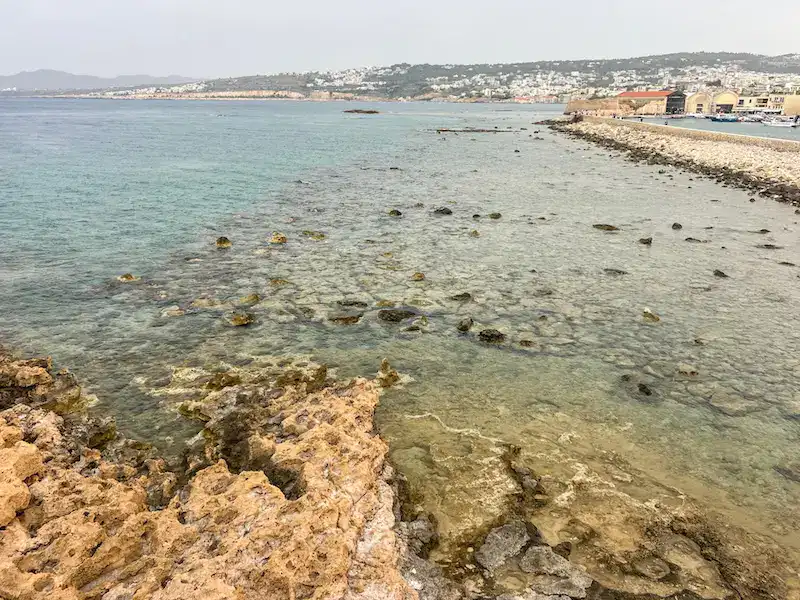
You’re starting your trip to Crete in the best base on the island: Chania.
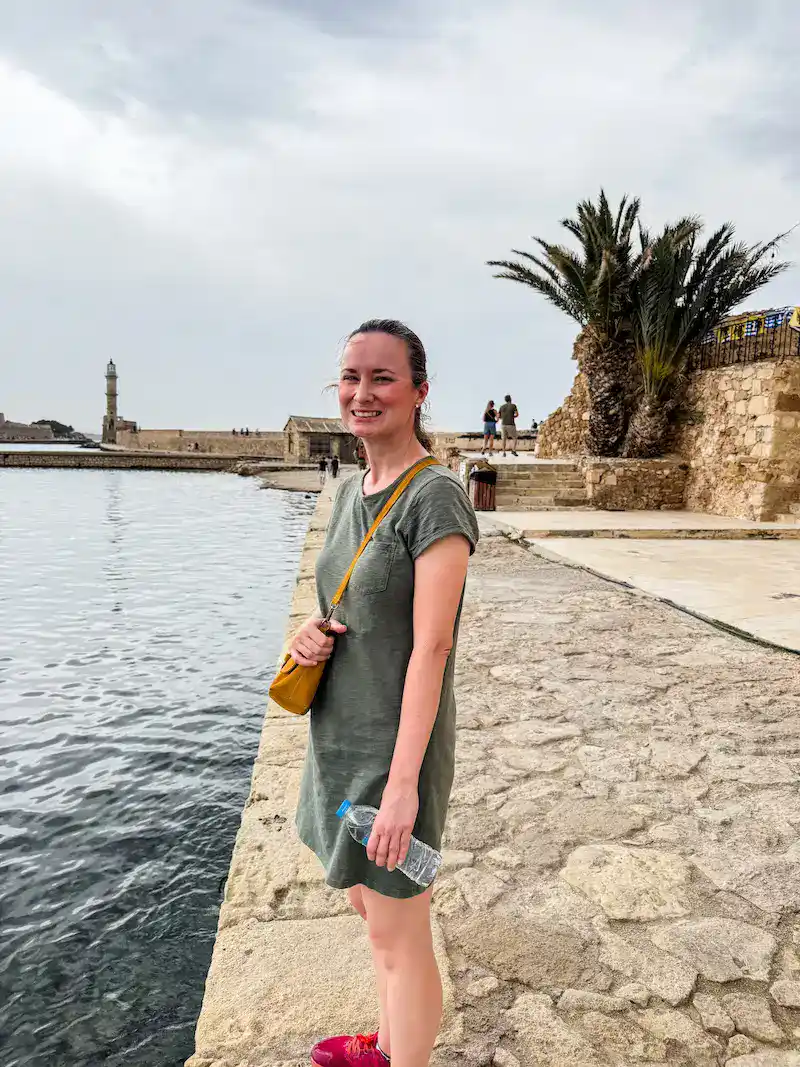
Chania’s Old Venetian Harbor is one of the loveliest spots in Greece. The Old Town behind it, with all its narrow streets, Ottoman minarets, and what felt like thousands of cats, is pretty sweet.
It’s also compact enough that you can cover the highlights in a day without feeling like you’re rushing.
I have a full one-day Chania itinerary for you, but here are the highlights for your first day on the island:
- Bougatsa Iordanis: Start your morning here. Bougatsa is a Greek blintz made to order, either sweet or savory. Get one of each and report back to me on your fave. This place has been at it since 1922.
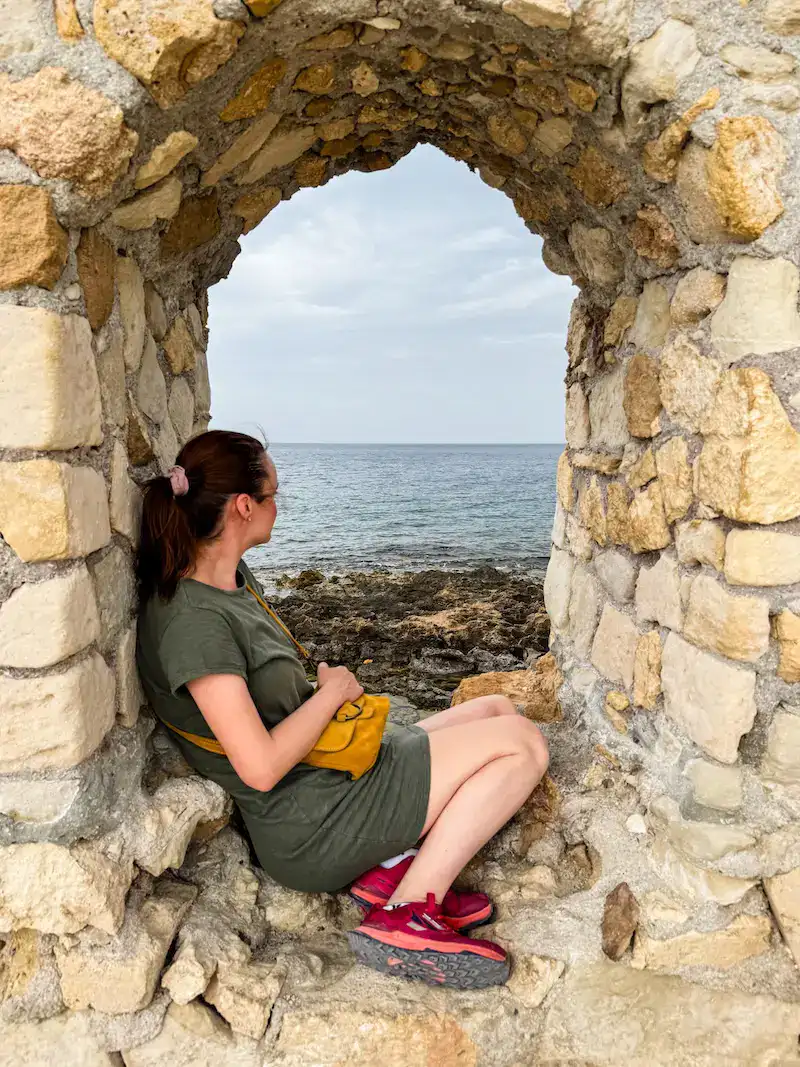
- Old Venetian Port and Lighthouse: Walk the ramparts out toward the lighthouse for the most scenic stroll in town. There isn’t a ton to do at the lighthouse itself, but the walk is the point of this exercise.
- Old Town: Find Splantzia Square, check out the Ottoman-era Ahmet Ağa Minaret, and wander away from the harbor. I don’t love telling travelers to just go out and wander, but if you’re going to do it, do it here.
- Venizelos Graves: This scenic spot is a short drive or bus ride from the center, but it’s worth it for the best views in Chania. There’s free parking, more resident cats, and lovely gardens up there, too.
- To Steno: Enjoy a meal of Greek mezze. The beet tart and lentil balls were highlights for us, but the menu changes on the regular. Complimentary raki arrives at the end, but as we discovered, this is the norm for Crete.
If you’re still hungry after dinner, Oh La La does a pistachio soft serve drizzled in pistachio cream that makes a strong case for itself as a last stop of the night.
For accommodations, we stayed at the Archontiki City Hotel in Chania. It was no-frills, but the location was great, and it was within our budget at the time. It suited us well for the three nights we spent in Chania.
That’s how long I’d recommend for you, too. Anything less and this Crete itinerary will feel quite rushed.
Browse the map below for more accommodations in Chania:
Day 2: Katholiko Bay
Get up and go today! If you want something sweet before heading out, stop at Wild Child for a cinnamon roll and better-than-average coffee.
It’s pricier than some of Chania’s traditional bakeries, but it’s a good road-trip breakfast when you don’t want to spend half the morning sitting around.
From there, you’ll head out toward the Akrotiri Peninsula for the Katholiko Bay hike.
I have a full guide to the Katholiko Bay hike, including what to expect on the trail and how to avoid being an asshole out there. (I’ve seen so many bloggers give awful advice for this one.)
Overall, though, this is one of the days where I wouldn’t over-plan things.
The hike takes you through the ruins of Katholiko Monastery, down through a dramatic gorge, and eventually out to the rocky bay. It’s not a beach day. I’ll get to that for you later. It’s actually forbidden to swim here, even though people do it anyway. Just don’t.
Bonus Stop: Agia Triada Monastery
On your way back toward Chania, stop at Agia Triada Monastery for a wine tasting.
Yes, a monastery wine tasting.
The monks here produce their own wine, olive oil, and balsamic vinegars, and you can try a selection of them during the tasting. The red wines were our favorites. The rosé was honestly pretty bad, but the ambiance was excellent.
We also tried a balsamic cream with orange that was somewhere between a balsamic glaze and orange marmalade. Naturally, I bought a bottle that is still sitting in my cupboard, as that’s how I operate around here.
The monastery itself is in the countryside of the Akrotiri Peninsula, about 15 km northeast of Chania.
If you’re visiting during busy season specifically for the wine tasting, reservations are a good idea. You’ll need to pay separately if you want to visit the interior of the monastery.
Finish Back in Chania
Head back to Chania and use the rest of the afternoon to tick off anything you didn’t get to on your first day in town.
If you have the energy, the Archaeological Museum of Chania is worth a quick look. It’s small, but I liked the exhibits dealing with the aftermath of the earthquake on the island. On our visit, though, it was also VERY hot inside, so do with that what you will.
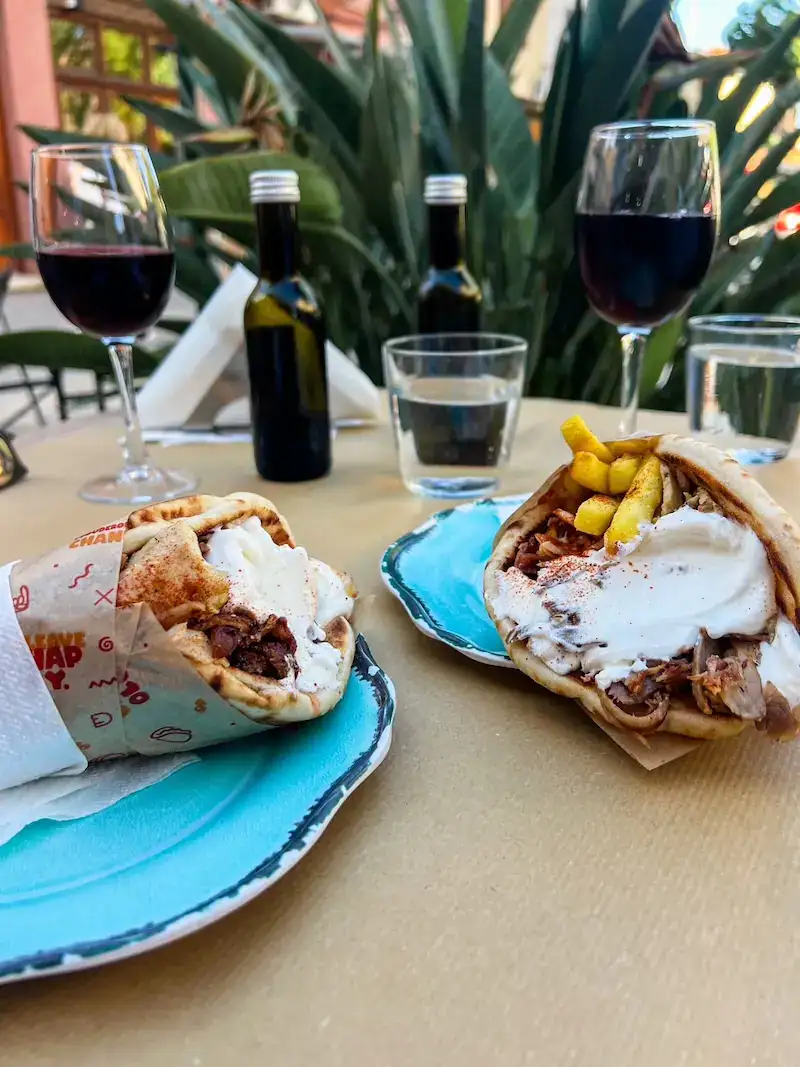
Grab dinner at Delish Food Streat Story if you’re up for something casual. We had a hankering for gyros and ordered mixed chicken and pork gyros in a pita, with Brian adding fries. We almost over-ordered, but thankfully the server talked us out of it.
You’re still at the same accommodations tonight, so I hope you chose wisely!
Day 3: Falassarna Beach
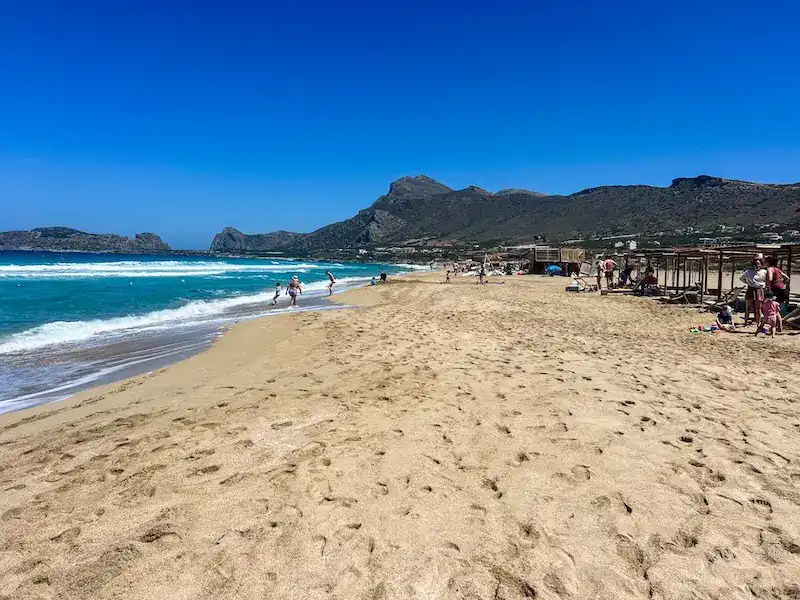
I told you I was going to give you a beach day.
Grab the car and head west toward Falassarna Beach, which was recommended to us by a local when we said we wanted somewhere that felt a little less touristy.
This is still Crete, so I wouldn’t expect solitude in high season, but it felt quite relaxed when we visited. I’m not much of a beach person, but I’ll admit it felt nice to kick the day off in a relaxing way after hiking the day before.
Note: There are beach chairs available for rent. We paid €25 for a pair during our visit. They were more expensive closer to the water, and there may have been cheaper options farther down the beach.
The water wasn’t too chilly on our visit in May, but as the air temperatures were milder than hot, Brian was the only one who went for a swim.
There are several places to grab food and drinks nearby. I had a pretty good Greek salad, Brian had pizza, and the smoothies were decent. This isn’t necessarily a destination for a culinary revelation, but you’re at the beach.
Expectations can be adjusted accordingly if the sand’s kept out of your teeth.
Other Beaches in Crete
If Falassarna doesn’t sound like your thing, you have options near Chania:
- Elafonissi Beach: This is the famous pink-sand beach, although from what I saw, it looked like one of those places that could be a bit of an Instagram-versus-reality situation. It’s also considerably farther from Chania than Falassarna.
- Paralia Grammenou (Grammenou Beach): This is a more local beach option that was recommended to us. It’s a small, laid-back stretch of coast with a much quieter feel than the big-name beaches around western Crete.
- Gialiskari Beach: Again, this is another local recommendation if you’re looking for something even quieter. It’s a more secluded beach area surrounded by the rugged landscape of southwestern Crete.
- Balos Lagoon: This is the big one. Balos is famous for its turquoise lagoon, but getting there is an adventure. The road is rough and rental-car restrictions can apply, so taking the ferry is the easier option.
Optional Stops Nearby
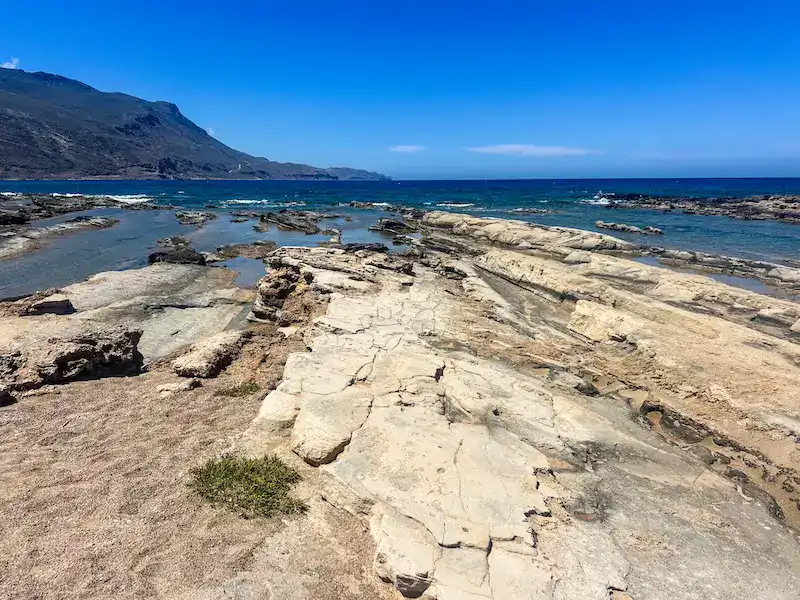
You can spend the day at the beach, or do a little extra sightseeing on your drive back to Chania. As I’ve already admitted that I’m no beach person, you likely already know where this is going. Here’s what we did:
- Trachilos: This village is home to what are some of the oldest footprints associated with human ancestors. When we visited, the site was covered up, so I wouldn’t make a special trip for it, but go if you’re passing through.
- Ancient Olive Tree of Vouves: This olive tree in the village of Ano Vouves is considered one of the oldest olive trees in the world, with estimates putting it at least 2,000 years old. It’s free to see if you skip the museum. (We did!)
If you want more waterfront, you can stop in Kissamos, a small coastal town on the way back from Falassarna. Wander along the water, regroup over coffee, or snag a quick bite before continuing toward Chania.
You can also just head back to Chania. Inopieio is another option for Greek food. Fourgatos is a nice option a little farther east.
If you don’t want your last night in Chania to end, you can pop by Sinagogi Cocktail Bar. It’s housed in a refurbished synagogue, which sounded fun to us. We didn’t make it, because we’re old.
Day 4: Rethymno
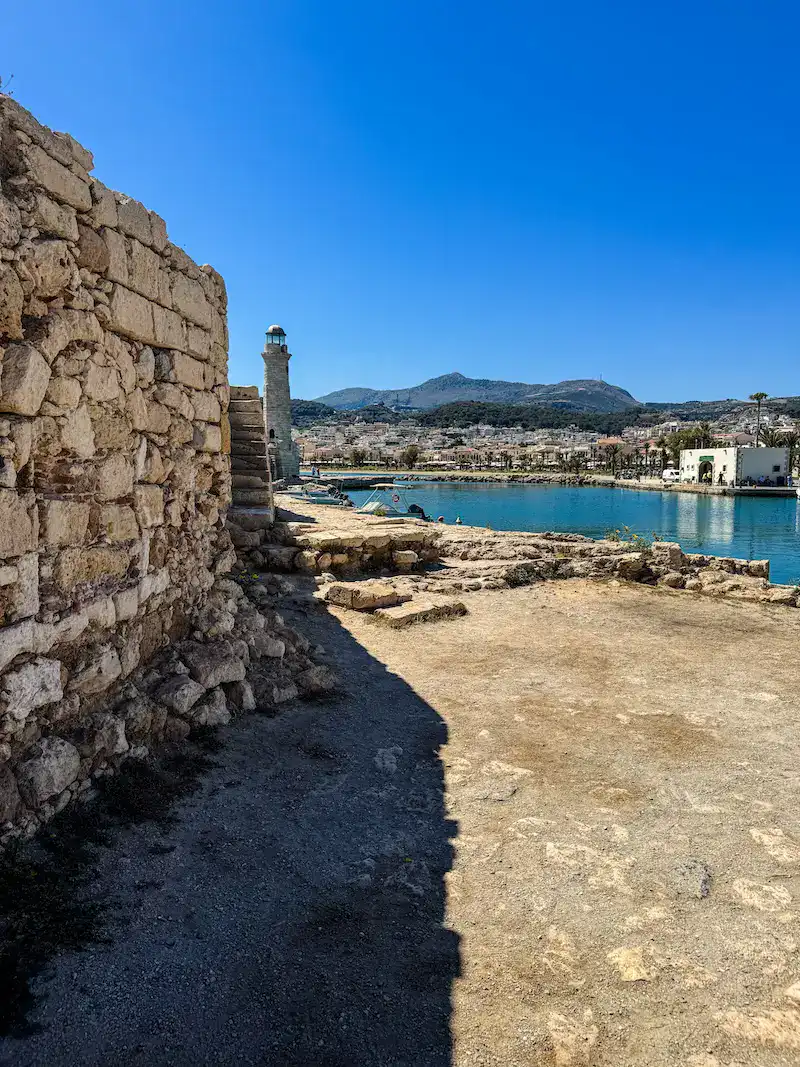
After a few days exploring the western end of Crete, it’s finally time to leave Chania. You’ll head east to Rethymno, a convenient halfway point between Chania and Heraklion.
We spent the day there, but carried on to Heraklion for the night. I’d suggest straying from our plan here and staying overnight in Rethymno. It is very, very cute.
Upon arrival, we parked in a free lot marked “free parking lot” on Google Maps. People had parked a little… creatively, but we had no issues. It was a 15-minute walk to the center, so if you don’t mind the walk, this is a good way to avoid parking fees.
Note: Don’t feel like you have to drive straight there. You can stop wherever looks interesting along the way. The coastal scenery between Chania and Rethymno is beautiful.
Rethymno Lighthouse
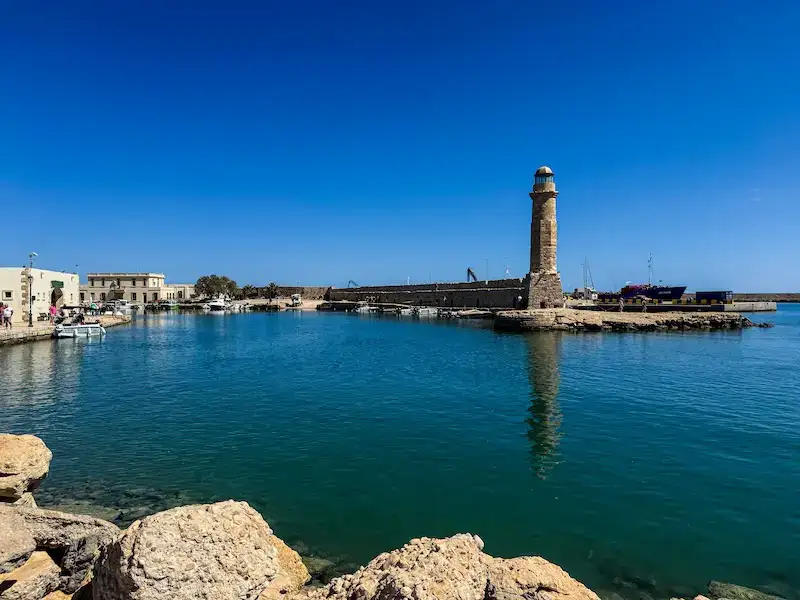
Start by wandering through the Old Town toward the waterfront and the Rethymno Lighthouse, one of the more recognizable sights in the historic harbor.
You can walk right up to it and continue along the water for views back toward the Venetian harbor and Old Town.
Rethymno’s lighthouse dates to the Ottoman period, when the harbor was an important center of trade. It was built in the 17th century after the Ottomans took control of the city from the Venetians in 1646.
Fortezza Fortress
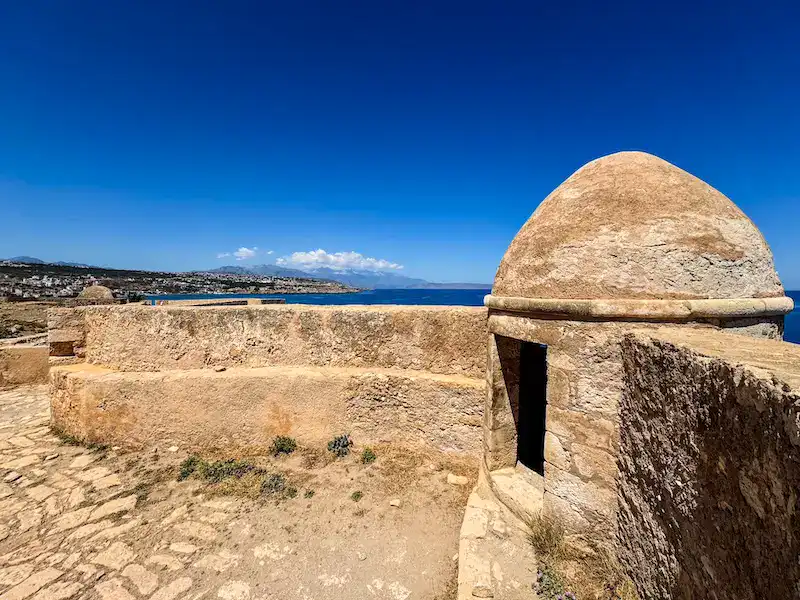
From the lighthouse, it’s only about a six-minute walk to Fortezza.
The Venetian fortress overlooks Rethymno and is one of the city’s defining landmarks. The Venetians began building it in 1573, after the Ottoman conquest of Cyprus exposed how vulnerable the town’s defenses were.
The sign said admission was €6 when we visited, but we paid €5 each, so apparently Crete’s fortress pricing has a little flexibility.
The main reason to come up here is the view. You get a fantastic look over Rethymno, the harbor, and that blue Cretan sea.
There isn’t a ton of signage explaining what you’re looking at, so I’d come more for the atmosphere than a deeply informative historical experience.
Lunch at Stella’s Kitchen
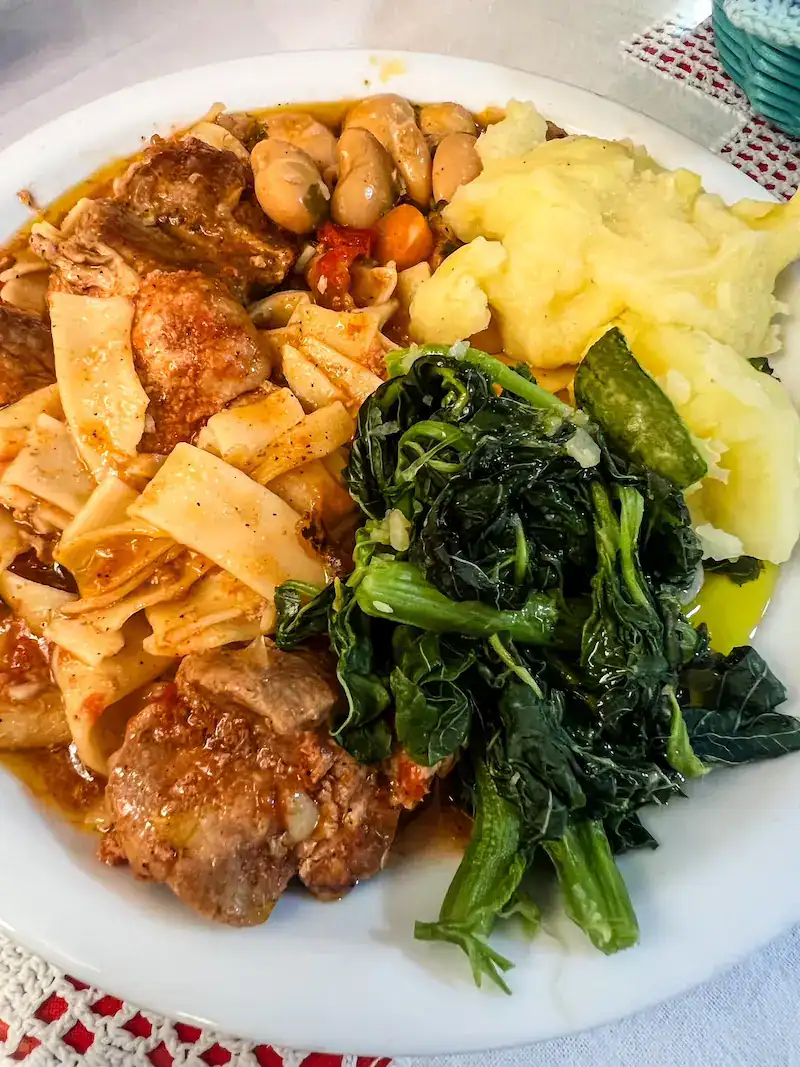
For lunch, we ended up at Stella’s Kitchen, and the sassy woman running the place is worth the trip alone. She gives approximately zero ducks.
A guy walked in and asked for a Greek salad. She immediately asked who had sent him there for a Greek salad. He was basically shamed for even asking for such a thing. Silly tourist. Just choose from what’s in front of you!
That’s what we did. She showed us what was already prepared for the day. It was fresh, homemade Cretan cooking, and exactly the kind of meal we wanted…and exactly the kind of thing you should be wanting in a place like this.
Fun fact: The guy did, eventually, get his Greek salad.
Our meal also came with sliced melon and more raki at the end, because again, that’s just how eating works in Crete.
Rethymno’s Old Town
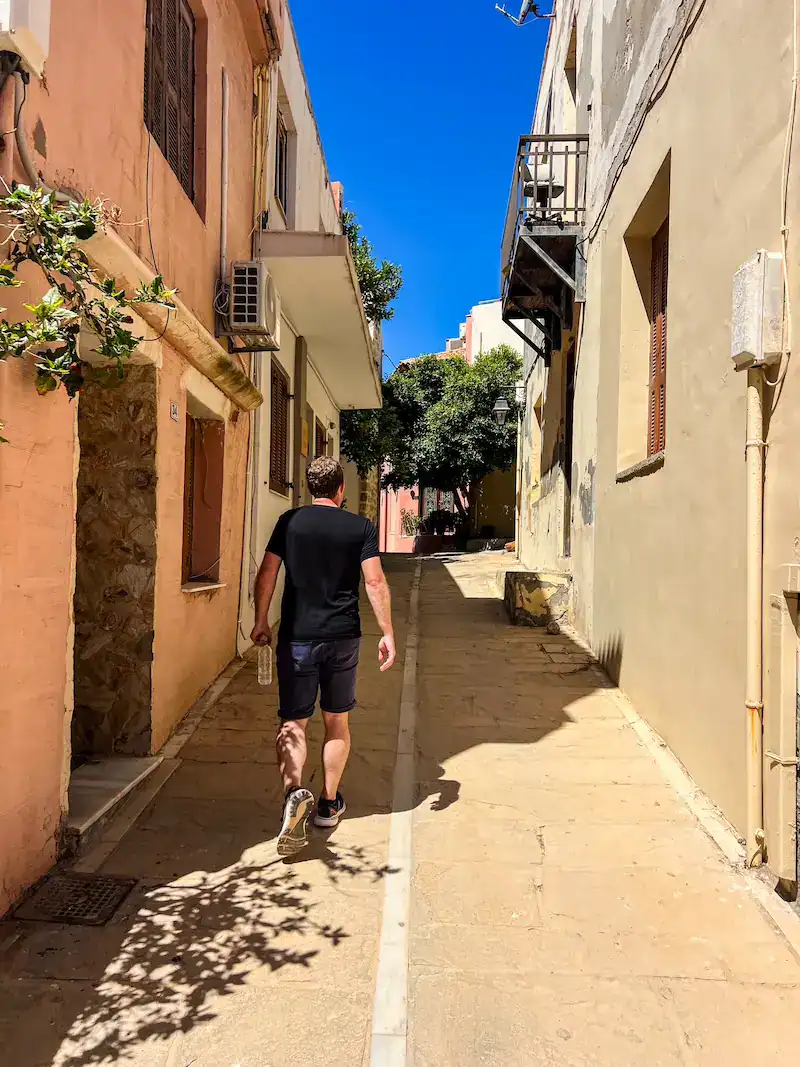
After lunch, give yourself a couple of hours to simply wander. Admire the Venetian and Ottoman architecture, little courtyards, old doorways and narrow lanes, then make your way back toward the waterfront.
Here are a few other stops you can add depending on how much time you have:
- Rimondi Fountain: The small but beautiful Venetian fountain sits tucked into the Old Town and dates to the 17th century.
- Neratze Mosque: This former Catholic church is hard to miss thanks to its tall minaret, which rises above the surrounding Old Town.
- Loggia: This small Venetian-era building offers another glimpse into Rethymno’s time under Venetian rule.
- Venetian Harbor: You can return to the waterfront for a drink or coffee while taking in the historic harbor and watching the city come alive.
- Rethymno Municipal Garden: This peaceful green space offers a nice break from wandering the busy streets of the Old Town.
We didn’t stay overnight in Rethymno, but I wish we had.
Rethymno has a fun evening scene, with plenty of restaurants and cafés throughout the Old Town and along the harbor. Instead of spending an afternoon in the city and continuing to Heraklion, as we did, I’d make Rethymno your overnight stop.
Have dinner in the Old Town, grab a drink along the harbor, and enjoy the city after the day-trippers have moved on, then continue to Heraklion the following day. To Parastratima was on our list for food if Stella’s Kitchen was a bust.
Use the map below to browse your options for where to stay in Rethymno:
Day 5: Heraklion
Grab a quick bite before getting back on the road. You’re heading east to Heraklion, the final stop on this five-day Crete itinerary.
We spent the night in Heraklion, but the highlight here is Knossos Palace. If you’re able to fit that in by mid-afternoon and bounce after that, I wouldn’t blame you for leaving.
Heraklion is fine, but it’s just not as interesting or atmospheric as much of the rest of Crete. It’s very much a transit hub for ferry folks. Let’s start with the biggie.
Knossos Palace
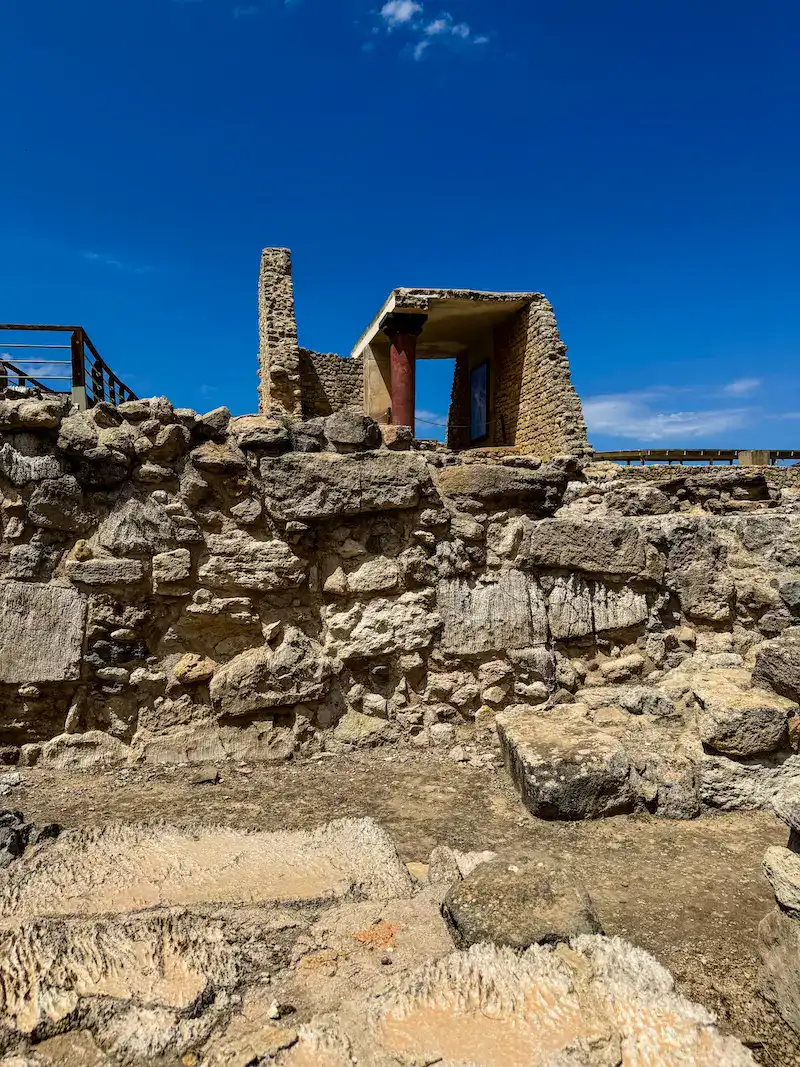
Knossos Palace is one of the most important archaeological sites on Crete and the place most closely associated with the island’s ancient Minoan civilization.
We booked tickets ahead of time, but visiting in the off-season, it didn’t seem particularly necessary. During high season, I can see this place getting busy, especially when cruise ships are in port.
I had more in my guide to Knossos Palace, but you should expect to spend about an hour wandering around the site.
Much of the palace has been reconstructed, which some dislike. But after seeing so many ancient ruins elsewhere, including the Acropolis in Athens, we didn’t mind.
Without the reconstructions, there wouldn’t be quite as much to look at beyond piles of rubble.
More Things to Do in Heraklion
After Knossos, we headed into central Heraklion to check into our accommodations. From there, we spent some time exploring the city on foot. Here are a few ideas for what to do in Heraklion:
- Koules Fortress: This is the Venetian fortress guarding the entrance to Heraklion’s old harbor. You can go inside to explore its rooms and ramparts, which offer views over the harbor and city, or just check it out from the outside.
- Heraklion Archaeological Museum: Its collection includes some of the most important Minoan artifacts discovered on Crete, which makes it a good companion to your visit to Knossos.
- Morosini Fountain: This Venetian-era fountain sits in Lions Square, right in the center of Heraklion. It’s an easy stop while wandering the pedestrian streets nearby, with cafés around if you want to grab a coffee and people-watch.
Where to Eat in Heraklion
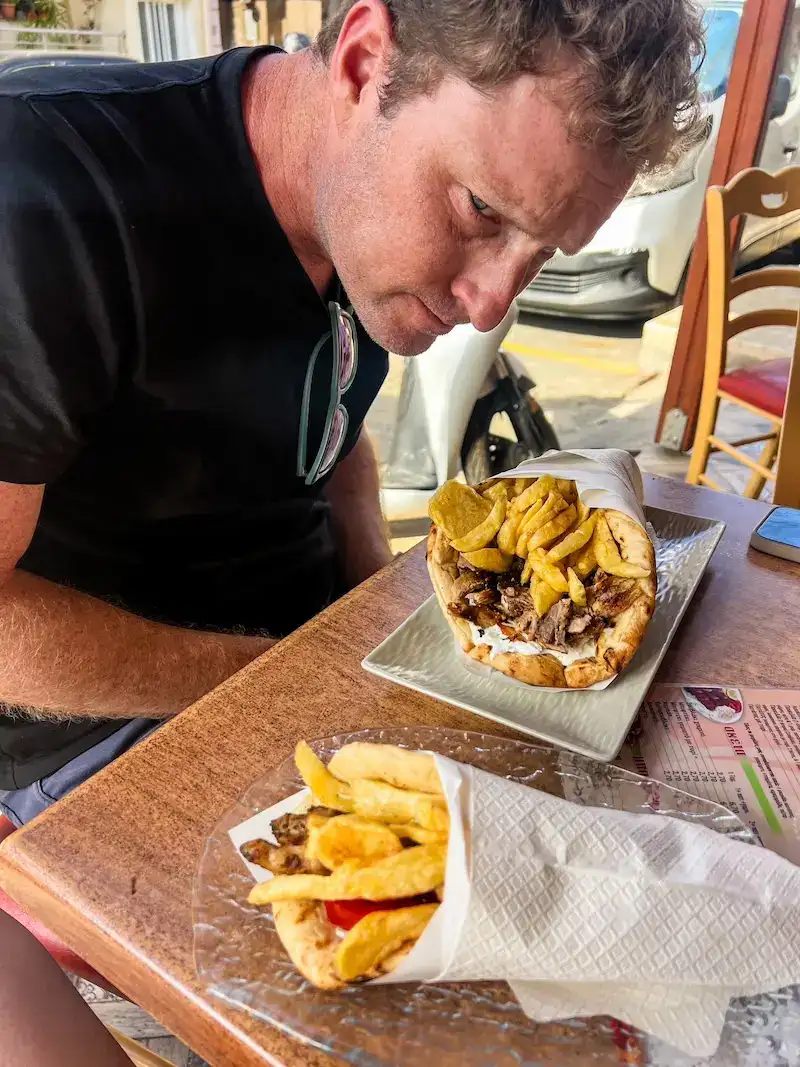
For something casual, Cine Gyros is an option if you’re in the mood for gyros. There was no English menu when we visited, so be prepared to describe what you’d like and see what happens.
Brian ordered a large pork gyros pita, while I asked for a chicken skewer and a small gyros. The server described the small portion as being about the size of his palm. What arrived was a pita stuffed with chicken skewer meat, which I didn’t hate.
If you’d rather make your final dinner a little more of an occasion, Peskesi is another option to investigate. This is more traditional Cretan cuisine and local ingredients, so it’d be a proper final taste of the island before you leave.
Should you stay overnight in Heraklion?
I’d recommend staying overnight in Heraklion if you’re planning to catch an early flight or ferry the following morning. If you’re not catching an early departure, whether to stay depends on how much time you want to spend exploring the city.
Heraklion makes a practical base for visiting Knossos Palace and enjoying the local food scene, but I wouldn’t say this one begged us for more time.
If you’re moving on to another island, check your ferry departure time before booking accommodation. Staying in central Heraklion puts you within reach of the port and gives you time for dinner before an early start the following morning.
Where to Stay in Heraklion
We stayed at an apartment that’s no longer available to book online during our night in Heraklion.
If you’re booking a night here, I’d look for accommodation in or near the city center. You’ll have restaurants and historic sights within walking distance, along with relatively easy access to the port and airport.
Use the map below to compare accommodations in Heraklion:
Your next step depends on where you’re headed. If you’re flying home, Heraklion International Airport is the main airport in the island’s central and eastern region. From central Heraklion, you can take a taxi or catch a local bus to the airport.
Heraklion’s port has ferry connections to destinations around Greece, depending on the season and sailing schedule. We headed to Santorini via Seajets, an overpriced, mediocre decision, but there weren’t many options that fit what we wanted to do.
READ MORE: If you’re visiting Santorini, the hike from Oia to Fira was our highlight. Here’s how to do it!
In any case, check your route and departure time in advance, particularly if you’re connecting to another island. If you have more time, you can also use Heraklion as a starting point for exploring central and eastern Crete.
With More Time in Crete
There is SO much to do in Crete. We’d love to return to the Greek island. Here’s what’s still on our list:
- Spinalonga Island: Take a boat from Plaka or Elounda to explore this former Venetian fortress, Ottoman settlement, and leper colony.
- Arkadi Monastery: Visit this historic monastery near Rethymno, known for its Renaissance architecture and role in Crete’s resistance against Ottoman rule.
- Lake Voulismeni: Wander around this lake in the heart of Agios Nikolaos, an easy stop during a day exploring eastern Crete.
- Dikteon Cave: Explore the cave associated with the birth of Zeus in Greek mythology, and admire its stalactites and underground chambers.
- Zaros Lake and Rouvas Gorge: Head to the village of Zaros for a peaceful lakeside walk, a meal of locally raised trout, or a hike into the Rouvas Gorge.
- Ancient Aptera: Explore the archaeological remains of this ancient city near Chania, including its Roman cisterns and fortress walls overlooking Souda Bay.
READ MORE: Love an island vacay? Steal this itinerary for five days in Tenerife!
When to Visit Crete
Crete is a year-round destination, but the best time to visit depends on whether you’re prioritizing beach weather, sightseeing, or avoiding the biggest crowds.
Visit in late spring or early summer (May or June) for warm weather and fewer crowds than in peak summer, though some seasonal businesses may not be fully open yet. That was our pick, and the weather was perfect for hiking, wine, and eating.
Early fall (September and October) is also a great time to visit for warm sea temperatures and beach days. In July and August, expect the hottest weather, busiest beaches, and highest prices for accommodations and rental cars.
The winter months are more suited to city breaks and cultural attractions, though many beach resorts and seasonal businesses will be closed.
Fun fact: Crete can experience episodes of Saharan dust carried across the Mediterranean, particularly in spring. It basically turns the sky orange. It happened to us! If you’re sensitive to that sort of thing, build some flexibility into your plans.
Tips for Your First Visit to Crete
Crete has its own identity and pace, so a little preparation goes a long way toward making your first visit more enjoyable:
- Be a good tourist. Tourism is essential to Crete’s economy, but its effects on local communities, housing, and resources can be complicated. Support local businesses, respect residents, and avoid treating villages as photo backdrops.
- Rent a car for exploring beyond the cities. A rental car gives you much more flexibility for reaching remote beaches, mountain villages, and archaeological sites. Steal this guide to renting a car in Crete.
- Don’t underestimate driving times. Crete is a large island with winding mountain roads, so a journey that looks short on a map can take longer than expected.
- Carry cash for smaller purchases. Cards are widely accepted in tourist areas, but having some euros on hand can be useful at small village businesses, rural tavernas, and parking facilities.
- Dress appropriately at religious sites. Bring clothing that covers your shoulders and knees when visiting monasteries and churches, and follow any posted rules about photography.
- Respect the natural environment. Stick to marked trails, take your trash with you, and avoid disturbing wildlife or removing stones, plants, and other natural souvenirs from protected areas.
- Check ferry schedules carefully. If you’re visiting nearby islands or connecting through a port, confirm departure times in advance because schedules can vary by season and weather.
- Clarify parking arrangements before returning your rental car. Ask the rental company exactly where to leave the vehicle and keys, particularly near ports and airports, so you don’t get caught out by unexpected parking charges.
Crete should make your Greek island bucket list.
We had such an adventurous, delicious time in Crete.
Whether you’re into turquoise beaches, ancient history, mountain villages, or some of the best food in Greece, Crete deserves a spot on your Greek wish list. It’s a big island with loads to explore, so give yourself enough time to see beyond Chania.
This is one that we’ve been thinking about returning to since our trip!
Love a good island? Check out these guides:
- Should You Drive While in Tenerife?
- A Guide to Hiking Roque de Taborno
- Why You Need to Visit Madeira
- How to Spend Three Big Days in Malta
- How to Get Around Malta on the Road
More destinations perfect for road trips:
- Why You Need to Visit Northern Ireland
- Where to Find Volcanoes in France
- An Itinerary to the Best of Belgium
- A Road Trip Planner for the Dordogne
- How to Road Trip France as a Tourist

Want to see more?
Subscribe to my biweekly newsletter for hot travel tips I come across, weird stories you won’t see elsewhere and perhaps lifelong friendship.
Too much, or just enough?
