
This three-day Easter Island itinerary is exactly how we explored Rapa Nui on our trip from Chile, and I honestly don’t feel like we missed anything by keeping it this short.
If you’re searching for an Easter Island itinerary that covers the main archaeological sites and moai viewpoints without overcomplicating things, this is a solid way to do it.
Easter Island feels incredibly remote, and that isolation is a big part of what makes it special. It also means you don’t need a week here to justify the journey. Three days are enough to see the highlights at a relaxed pace, especially if you plan your route well.
Quick Tips for Your Easter Island Visit
Your Flight: Seek out deals to Arturo Merino Benítez International Airport in Santiago, the usual starting point for Easter Island, using Skyscanner.
There are morning, afternoon, and evening flights to connect to the island from there, depending on the day of the week and season. Love deals? Subscribe to Going.
Your Accommodations: We stayed at an inn that no longer appears to be taking bookings (the Tekarera Inn), but browse Booking.com or Hotels.com for more options. Vrbo is my Airbnb alternative.
Your Ride: You’ll need a car for your Easter Island itinerary. Book a rental car ahead of time or borrow one from your accommodations. That’s what we did.
Top Spots: The Rano Raraku Quarry, Ahu Tongariki, and the Orongo Ceremonial Village were our favorite spots on Easter Island.
Disclosure: Travel on the Reg uses affiliate links to keep things running around here. At no additional cost to you, I earn a lil’ commission if you make a purchase. Any income earned supports the upkeep of this site. I appreciate you!
3-Day Easter Island Itinerary Overview
This three-day Easter Island itinerary covers the highlights of Rapa Nui without feeling rushed. With just a few days, you can still see the island’s most important moai sites, volcanic landscapes, beaches, and ceremonial villages.
- Day 1: Hanga Roa, museum, Ahu Tahai, and sunset moai viewpoints
- Day 2: Rano Raraku quarry, Ahu Tongariki, and Anakena beach loop
- Day 3: Rano Kau crater, Orongo ceremonial village, caves, and inland moai sites
This route is the same one we followed, and it works well for first-time visitors who want a balanced Easter Island itinerary with archaeology, scenery, and time to explore.
How many days do you need on Easter Island?
You can thoroughly experience the best of Easter Island in three days. That’s the amount of time we gave it, and it felt like plenty. If you’ve only got two days, that’s probably fine, too.
Easter Island is weird and mysterious, and I highly recommend that you go there. It’s also an island of a very manageable size, full of giant heads.

Things to Know Before You Go
As anyone with teaching experience will tell you, front-loading a reader with relevant vocabulary enriches their experience.
Here are five key terms that will be tossed around Easter Island like you’re supposed to know your moai from your ahu already:
- Rapa Nui: This is the Polynesian, or native, version of “Easter Island.” If you want credibility with the local people, it’s Rapa Nui to them, not Easter Island.
- Moai: These are the heads, or in some cases, heads and bodies, that most people think of when they picture Rapa Nui.
- Ahu: These are the stone ceremonial platforms that the moai sit on. In some cases, all that’s left at a site are the ahu. Don’t poo-poo the ahu.
- Pukao: This is the word for the moai’s hats, or maybe topknots, made out of red stone. You’ll see them on only the hippest of moai.
- Rongorongo: This is the system of writing or symbols that has been found on the island. Despite my best efforts, I’ve been unable to decipher it.
Easter Island Itinerary: Day 1
Before we get going, make sure you buy tickets to Rapa Nui National Park ahead of time to visit two of the most important sites on the island.
The tickets cover the Rano Raraku Quarry and the Orongo Ceremonial Village, and you can buy them online. (We had to purchase them at the airport when we visited, so it’s a lot easier now.)
Tickets are around $100–105 USD for anyone who isn’t Chilean. They’re around $45 if you’re Chilean.
Yes, it’s expensive, but you do not want to miss those sites, and I’d be honest with you if I thought you could. No, you cannot pass for Chilean if you’re not Chilean.
Note: The tickets are good for 10 days, and you can only enter each UNESCO World Heritage Site one time during your stay. One time is plenty.
Stop 1: Hanga Roa
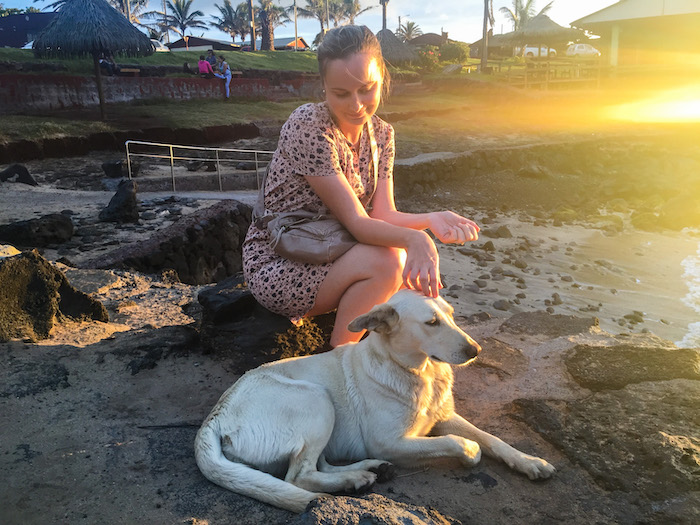
Ahead of jumping right into the head-hunting, a good option on your first afternoon is to soak in some local culture and head into town.
While there, you’ll get a lay of the land as far as most of the food options on the island, too.
The main road through town includes the usual tourist shops, with food markets that’ll allow you to make a decent packed lunch for your road-tripping the next few days.
Stop 2: Museo Rapa Nui
Another option if you’re a nerd like us is to get yourself to the Father Sebastian Englert Anthropological Museum, or Museo Rapa Nui, on your online maps.
It’s an easy spot to explore on foot from most lodging and a great way to get your own big head wrapped around what you’ll be seeing on the island.
Fun fact: A highlight there are the Rongorongo glyphs, a system of glyphs discovered on the island back in the 19th century. No one has been able to decipher them, so have at it!
Admission is free, but the museum is closed on Mondays.
Stops 3-4: Ahu Tautira and Ahu Tahai
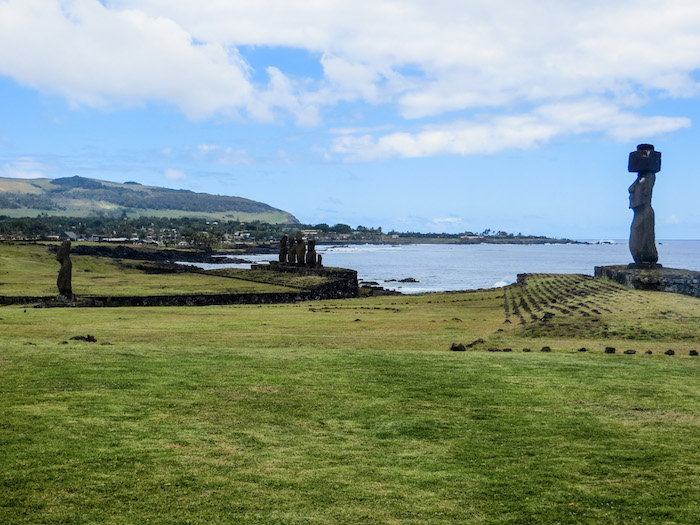
If you just can’t wait for the goods, Ahu Tautira at the harbor and Ahu Tahai are also within walking distance from most city lodging.
Ahu Tahai is made up of not one but three different ceremonial platforms, each with its own charms. It’s also a great place to catch a sunset.
Stop 5: Dinner
Return to town for some dinner. Hai Tonga Rapa Nui is a good option if you’d like to pair your traditional meal with a beer.
Interested in dessert? Try Vaikava. Sometimes you’re able to see swimming turtles from this dessert cafe on the harbor.
Don’t forget to pick up some packed lunches for the next two days, as you’ll be hitting the road in the morning.
Easter Island Itinerary: Day 2
Get in that Jeep with your packed lunch and let the scenic driving begin. As you’ll be on one main road, you shouldn’t get lost. Obviously, pull over if you see something interesting, or find a stray dog to meet.
What you’ll see here are highlights that struck our fancy.
Stop 1: Ahu Hanga Te’e
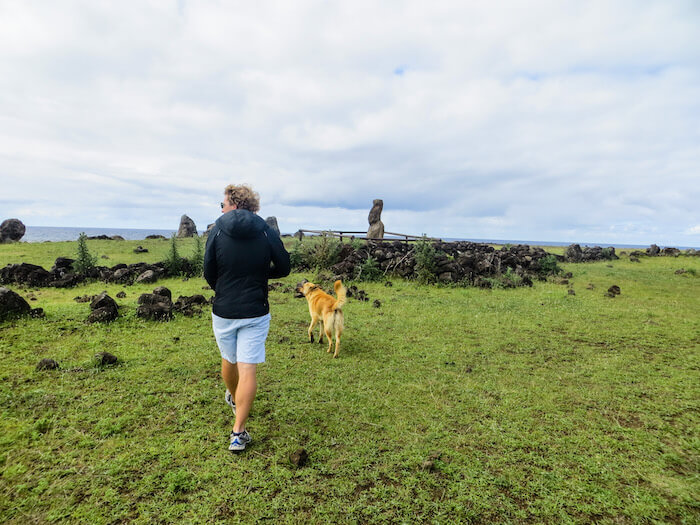
Our first stop on this day was Ahu Hanga Te’e. We were lucky enough to meet a dog here that showed us around, wind whipping through our hair.
He was all, “You must be here for the moai. Let me show you the way.”
He did, and it was good.
Stops 2-4: Ahu Akahanga, Ahu Hanga Tetenga, and Ahu One Makihi
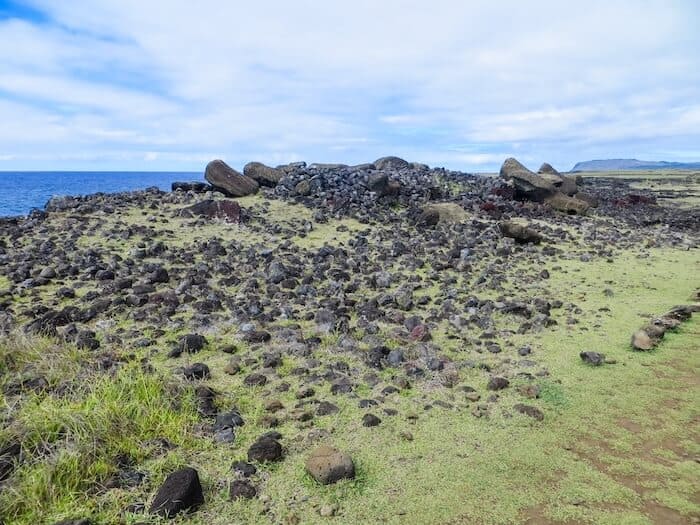
Heading east along the main road, the moai at our next three stops, Ahu Akahanga, Ahu Hanga Tetenga, and Ahu One Makihi had too much of something. Perhaps it was the wind, as they were all tipped over.
Signage everywhere reminded us not to touch things or climb on them.
A neat part of being somewhere so remote is that you could be alone at many of these sights and have yourself some of that sweet, sweet solitude.
READ MORE: Love the sound of silence? Check out some of my favorite day trips from Perth, Western Australia.
Stop 5: Rano Raraku Quarry
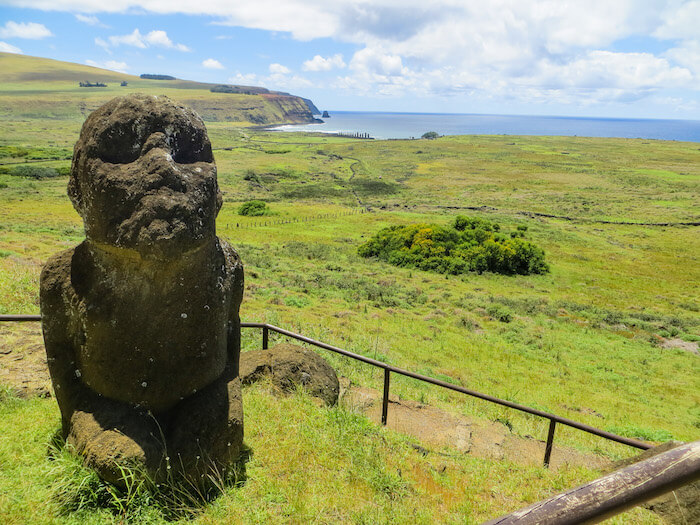
Alright, enough of the rubble already. Break out the big guns and continue heading east along the main road. This is what you’ve come to see, along with the rest of the tourists sharing the island with you.
Still, there are so many moai at the Rano Raraku Quarry that you’ll have plenty to selfie with.
Fun fact: The quarry, once the Rano Raraku volcano, is apparently where all of the island’s moai were born. Today, it offers up excellent vistas of the rest of the island.
You can only visit the site once on your national park ticket — that’s once in total, not once per day — so get your fill while you can.
Stop 6: Ahu Tongariki
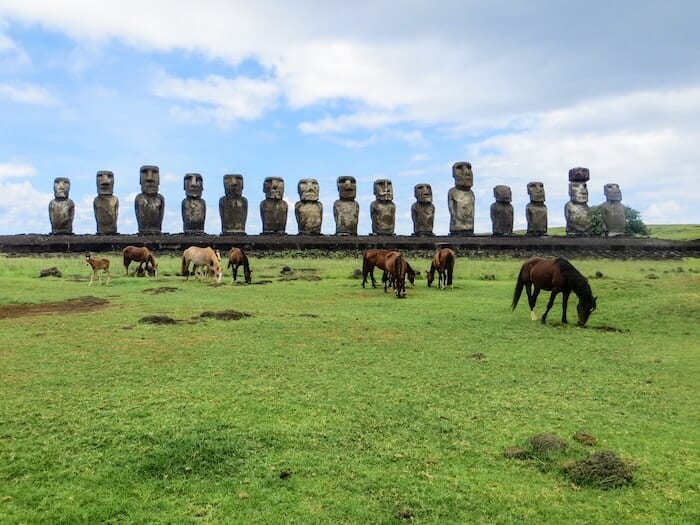
You’re probably on a high at this point. That was a lot of moai. You won’t see this many again in one place, but the next spot will not disappoint.
If you’re lucky, you’ll encounter wild horses at Ahu Tongariki as we did, making it seem as if you’re in some magical fairyland.
Stops 7-8: Ahu Te Pito Kura and Ahu Nau Nau
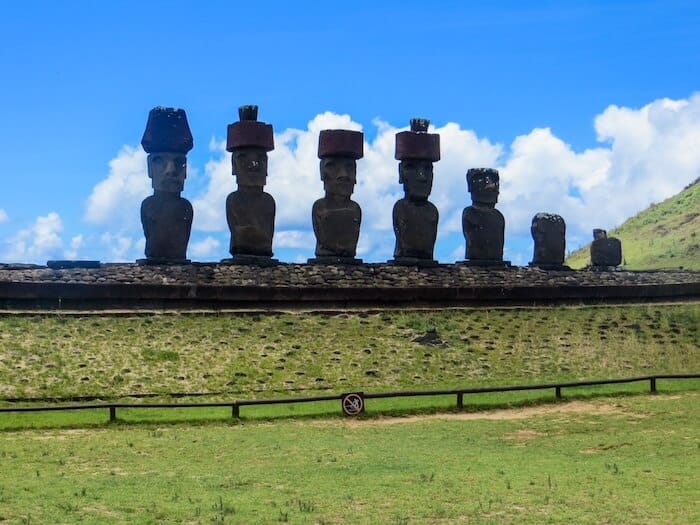
Continue driving, pulling over to check out the seascapes as you pass the peninsula.
Make a quick stop at Ahu Te Pito Kura, the scene of a giant moai head cracked down the middle, and continue on to Ahu Nau Nau. That’s another impressive series of moai atop their ceremonial pedestals.
Stop 9: Playa de Anakena
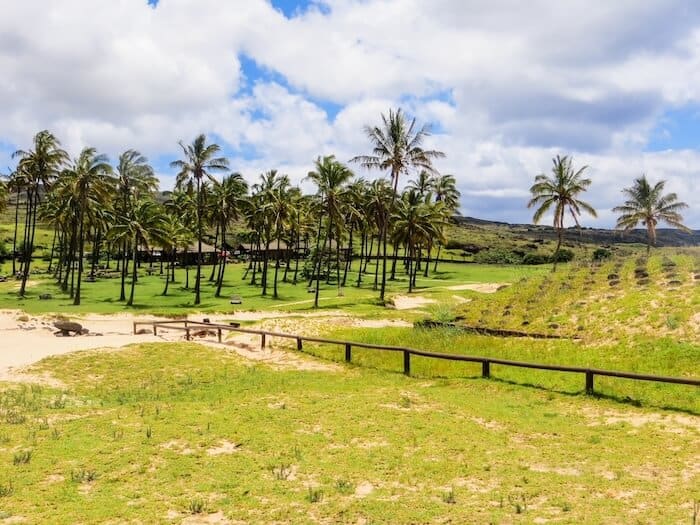
This will be it for the day, so spend some time on the Playa de Anakena, the main beach on the island. You’ll find some kiosks where you can pick up a skewer or two, alongside some island beers.
We didn’t do any swimming at the Anakena beach, but you can certainly do that here in the calm waters.
What we did do was have some of those beers. If you’ve timed things right, you’ll be in a great spot for a sunset. You can do this while drinking beers.
Easter Island Itinerary: Day 3
Ideally, you’ll have a packed lunch for the day, or you’re planning on picking up some empanadas for the adventuring.
Stop 1: Ahu Vinapu
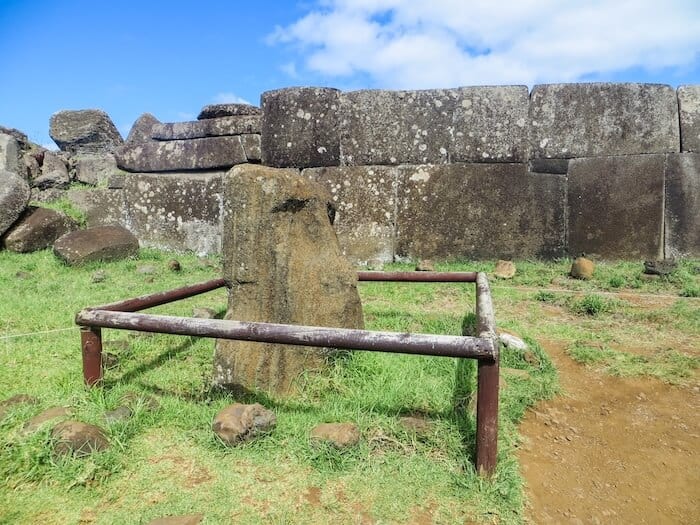
If your Jeep is still in one piece, it will serve you well to start to the southeast of Hanga Roa at Ahu Vinapu, a site archaeologists say is special due to its Inca-style ahu.
You’ll see several moai here, with one set deep into the ground, surrounded by rocks.
Stop 2: Rano Kau Volcano

The extinct Rano Kau Volcano is your next stop, now a giant crater filled with water. The lagoon inside boasts its own microclimate on the island.
Stop 3: Orongo Ceremonial Village
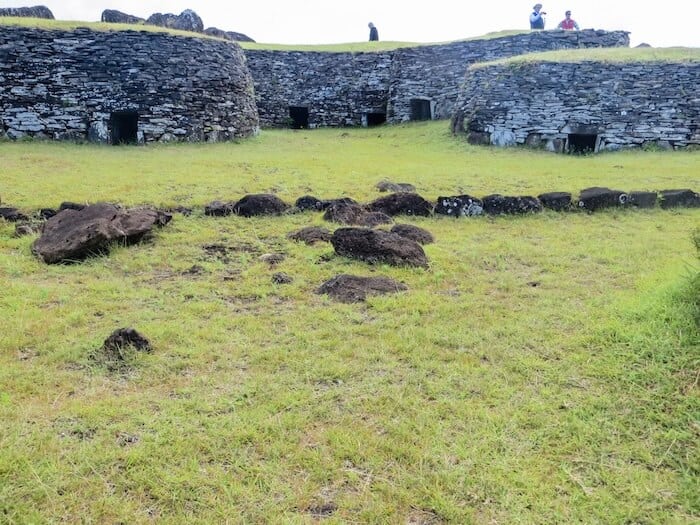
Directly west of the crater, you’ll arrive at the Orongo Ceremonial Village, a site that offers expansive views of the island and some weird history. A parking lot offers easy access. You’ll need your ticket, which you purchased in advance, for this site.
The village is the home of the manutara bird, a very regular-looking bird that was at some point elevated to cult status.
Isn’t that how it is with cults?
This boring little bird was the basis of the bird-man cult of Easter Island for the Rapa Nui people.
Every year, the village would hold a contest where brave souls climbed down the cliffs, jumped into the water, and took man-made rafts to reach nearby Motu Nui island.
It was there that they would attempt to find the first egg of the season to bring back to the village. They were often waiting there for days, even weeks, for the birds to lay their golden eggs.
If they were able to bring it back, all in one piece — Humpty Dumpty need not apply — they would become Orongo’s new bird-man.
Obviously, many died due to these heroics.
The island still celebrates the power of the bird-man with annual festivals showcasing physical, and often shirtless, tests of strength. If you want to test your own mettle, there is a path from the town below up to the village, but I’ve read it’s quite strenuous.
As with the Rano Raraku Quarry, you can only visit the village once on an advance ticket, so spend some time here.
Stop 4: Ana Kakenga Cave
Back in your vehicle, stop again at the Ahu Tahai complex on the Hanga Roa Bay if you so desire, before continuing north along that same road.
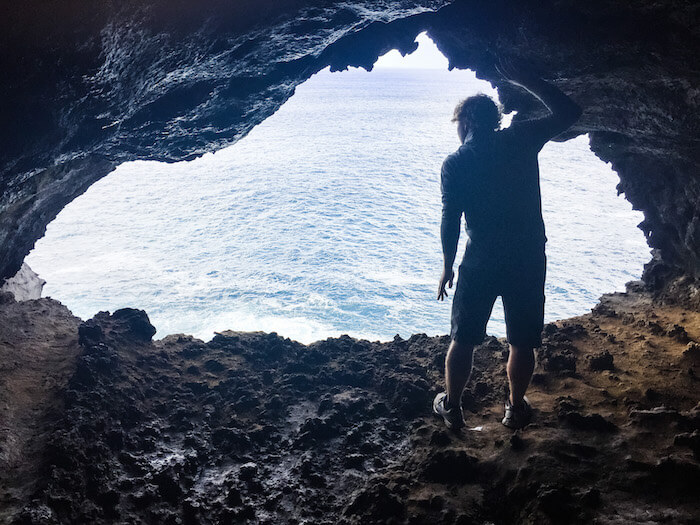
For your next stop, get your phone’s flashlight out because you’re going into some caves. First up is the Ana Kakenga Cave, or the “Cave of Two Windows.” You’ll see why once you’re in there.
Ok, I’ll tell you.
There are two different openings to the coastline, both a little freaky if you get too close. You’ll need to do some walking to get there, as your Jeep will only get you so close.
Having your maps downloaded for this one is a great idea, as it does show up on maps. Follow your map until you see a guard station; this is where you’ll continue on foot.
We arrived at the same time as another couple, which was fortuitous because lowering yourself into a hole in the ground is a little bit sketchy. It gets much wider inside once you’ve gotten over the initial claustrophobia.
Stop 5: Ana Te Pahu Cave
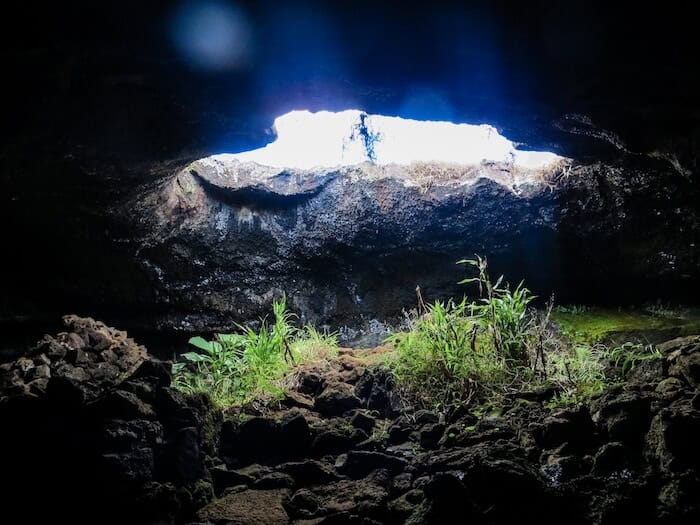
Ana Te Pahu Cave is just east of Ana Kakenga. It’s larger than the other, with a pleasant setting amongst some banana trees.
Stop 6: Ahu Akivi
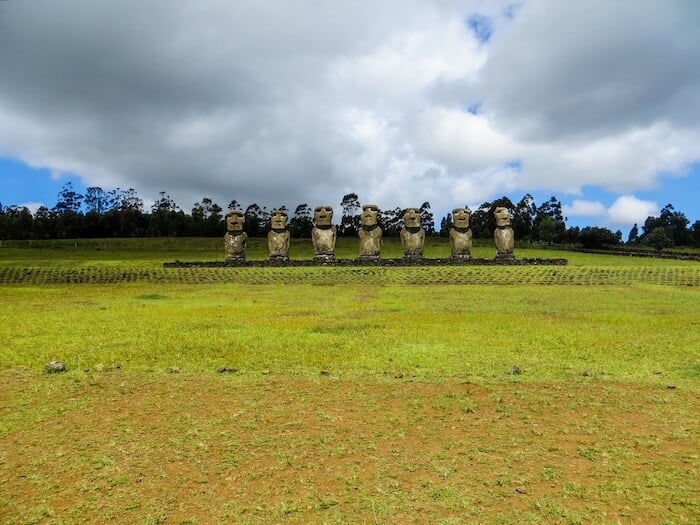
Continue east, and you’ll arrive at Ahu Akivi, an ahu with seven moai statues of equal size facing the Pacific Ocean. These are the only moai on the island facing this way. The path there is more obvious from the parking lot.
Some visitors report needing their national park tickets handy at this one, so be prepared to show them upon entry.
Stop 7: Puna Pau Quarry
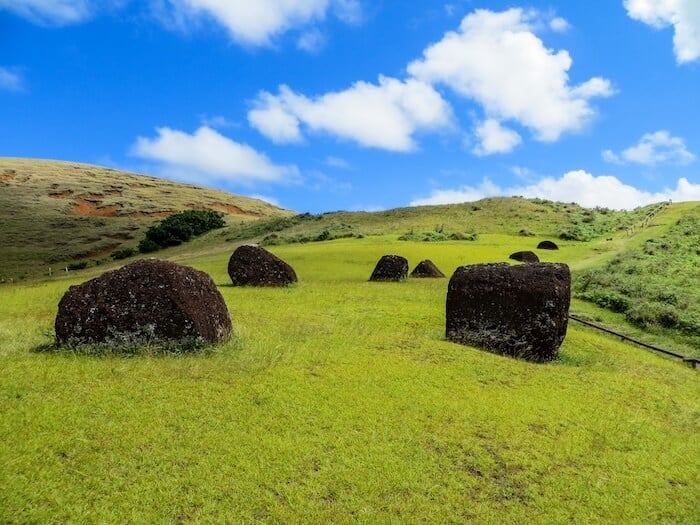
It may seem anti-climactic, but I made you learn what a pukao was, so you may as well see how those were made in the Puna Pau Quarry.
You’ll find the site heading back south toward Hanga Roa. This is a quick stop. A few dozen of the red stone embellishments remain there — not all moai need a topknot — that you can view, along with vistas of the rolling hills around you.
Stop 8: Dinner
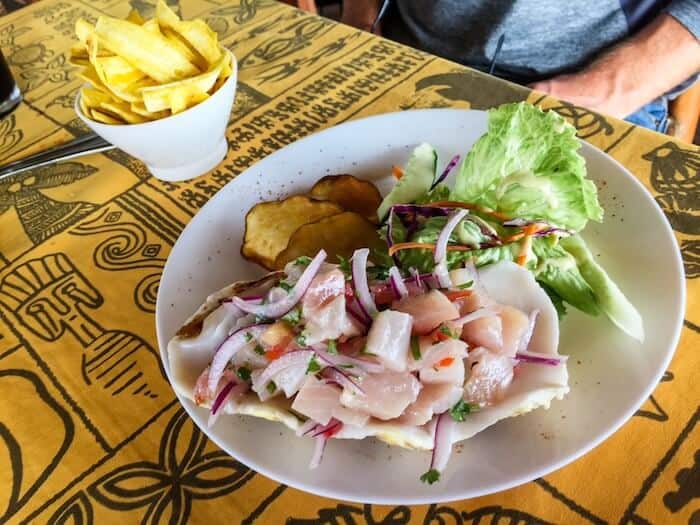
It’s probably just about time for dinner by this point. Head back to your lodging to freshen up or head somewhere casual back in town.
We were here for Thanksgiving travel at the time, so we had saved Tataku Vave for our Thanksgiving meal.
Empanadas Tia Berta are also delicious, and an easy way to bring food along with you if you don’t mind your car smelling of empanadas all day. Club Sandwich is another option.
Don’t forget to say goodbye to all the stray dogs you’re not able to take with you.
With More Time on Easter Island

We were satisfied with the amount of time we spent on the island. If you’re here for longer, here are a few more ideas for those with more time:
- See a show from the Kari Kari Cultural Ballet, the oldest group of this type on Rapa Nui.
- Trek up Ma’unga Terevaka, the highest point on the island, for panoramic views.
- Visit Playa Ovahe, another option for beach relaxation.
- Go diving or snorkeling in the crystal-clear waters surrounding the island.
- Rent a bike instead of a car and explore Easter Island’s rugged landscape at your own pace.
When is the best time to visit Easter Island?
Easter Island is a good destination weather-wise year-round. The rainiest months are April and May, although the island gets a steady amount of rainfall throughout the year. That’s what keeps it so lush-looking.
We went in November. The weather was great, if windy at some points. November is also well into the dry season.
How to Get Around Easter Island
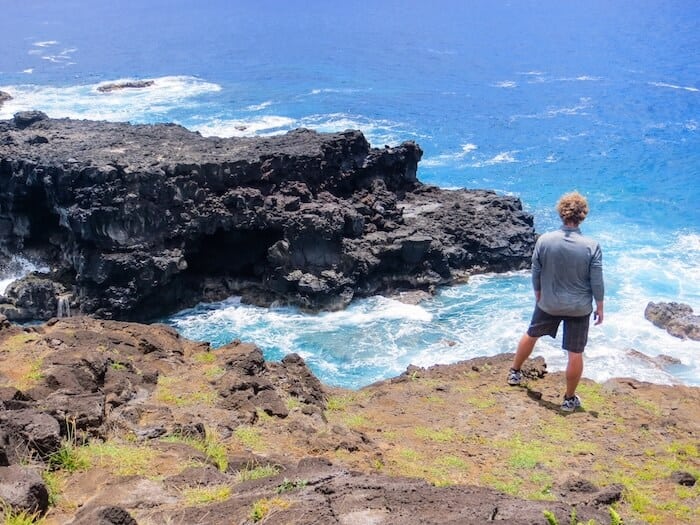
A self-drive tour of Easter Island will allow for the most flexibility. You’ll be able to see the most with the time you’ve got with a car — or a motorbike if you’re a daredevil — and you won’t be tied to a tour group.
We were able to rent a Jeep right at the property we were staying at. The faulty door handle — Hertz, this is not — meant we weren’t too worried about gentle handling. We rented the car for two full days to give us time to explore Easter Island.
This is highly recommended.
Note: If your accommodations don’t offer a car rental, available car rental agencies are located in town on Atamu Tekena, the main street. Most hosts will help you figure this out, and there’s really no need to book a car ahead of time.
You don’t need a guide to visit Easter Island, especially if you’re comfortable renting a car and exploring independently. Most major sites are well-marked, and it’s easy to follow a logical route around the island.
That said, a guide can add valuable cultural and historical context if you’re interested in going deeper. Interested in something more guided on Easter Island? Check out the highly-rated tours below:
How expensive is Easter Island?
Easter Island is one of the more expensive destinations in South America due to its remote location. Expect higher prices for accommodations, rental cars, and food, along with a national park fee of around $100-105 USD for most visitors.
A short stay of two to three days helps keep overall costs more manageable.
It’s a good idea to carry some cash on Easter Island, even though many hotels and restaurants accept credit cards.
Smaller food stands and more remote spots may be cash-only, and ATMs can be limited. Having Chilean pesos on hand makes things easier.
Where to Stay on Easter Island
We stayed at the Tekarera Inn, a guest house part of the larger Hotel Tekarera complex, but it doesn’t seem to be taking bookings at the moment. Most of the lodging you’ll be able to find will be in Hanga Roa. You can’t camp on the island.
To browse your options, see the map below:
Visiting Easter Island is a special experience.
It’s also an experience that requires some planning to make happen. Once you’ve figured out the logistics of getting there, you don’t need that much time to see the best of Easter Island.
A three-day Easter Island itinerary is plenty of time for this one. We don’t have a pull to return, and yet it was a trip we’ll never forget!
Need more South American content? Check out these guides:
- Visit Colombia’s Enormous Salt Cathedral
- A Trip Planner for Three Days in Bogotá
- How to Plan a Hike up Monserrate
- Take the Best Street Art Tour in Bogotá
- Don’t Sleep on Magical Bogotá!
A few more guides to fuel your wanderlust:
- Top Things to Do in Peru’s White City
- The Coolest Things to Do on Iceland Trips
- See the Incredible Cliffs of Étretat
- How to Plan Your First Journey to South Africa
- Planning a Fun Vacation to Thailand

Want to see more?
Subscribe to my biweekly newsletter for hot travel tips I come across, weird stories you won’t see elsewhere and perhaps lifelong friendship.
Too much, or just enough?

Wow! Never considered visiting Chile before until I found this post! Thank you very much for inspiring my next trip! Greetings from Canada.
It’s a fantastic destination. Safe travels!