
We learned the hard way that when you visit Machu Picchu matters. Our first attempt at Peru’s most famous bucket-list attraction was derailed by bad weather and mudslide concerns, forcing us to abandon the trip.
Our second attempt went VERY well, but it also taught us that even a good month to visit doesn’t guarantee good weather.
So, when is the best time to visit Machu Picchu? May through October offers the best odds of dry weather and clear views, but there are no guarantees. The months of May, September, and October offer a particularly good balance of weather and crowds.
That doesn’t mean you can’t visit during the rainy season. You’ll find fewer tourists and lower prices, but you’ll also have a greater chance of rain, fog, and difficult hiking conditions. If you’re planning an Inca Trail trek, the time of year matters even more.
This guide breaks down Machu Picchu weather throughout the year, including the best times for hiking, fewer crowds, and lower prices.
Quick Tips for Your Peru Visit
Your Flight: Find deals to Jorge Chávez International Airport in Lima, your gateway for Peru adventures, using Skyscanner.
The most efficient way to get from Lima to Cusco is a domestic flight. LATAM Airlines and Avianca have the most routes. Love deals? Subscribe to Going.
Your Accommodations: Browse Booking.com or Hotels.com for your options as you plan your Peru travel. Vrbo is my Airbnb alternative.
Your Ride: We didn’t need a car on our trip to Peru, but you may want to plan a road trip while you’re there. Book a rental car ahead of time.
Top Spots: You’re here for Machu Picchu, but Cusco and Aguas Calientes, where your journey to the historical site will begin, are also worth your time.
Disclosure: Travel on the Reg uses affiliate links to keep things running around here. At no additional cost to you, I earn a lil’ commission if you make a purchase. Any income earned supports the upkeep of this site. I appreciate you!
When is the best time to visit Machu Picchu?
The best time to visit Machu Picchu is from May through October, during the dry season. For the best balance of good weather and fewer crowds, aim for May, September, or October.
That said, there are no guarantees when it comes to weather in the Andes. We visited Peru in May on both of our trips. Our first trip was derailed by mudslides, and we had to cancel our visit to Machu Picchu. Our second trip in May went perfectly.
June through August typically brings the driest weather, but it’s also peak tourist season.
Fun fact: June is also a popular time to visit because of Inti Raymi, the annual Inca festival celebrated in Cusco.
If you travel in April or November, you may still get good weather, but you’ll have a greater chance of rain as you transition into or out of the wet season.
What is the worst time to visit Machu Picchu?
February is generally the worst month to visit Machu Picchu. It’s the height of the rainy season, and the Classic Inca Trail closes for maintenance.
Note: The trail also closes intermittently throughout the year in response to mudslides or unpredictable weather. I’m telling you, this is a place that rewards persistence!
More broadly, November through March are the wettest months, with a greater chance of rain, fog, muddy trails, and limited views of the Inca citadel. If clear weather and hiking conditions are priorities, this is the period I’d avoid.
READ MORE: You’re probably starting in Cusco. Steal my one-day itinerary to help you ease into your trip!
What is the weather like at Machu Picchu?

Machu Picchu has a mild, humid climate year-round. Temperatures tend to change less dramatically than the amount of rainfall.
Daytime temperatures are generally comfortable, but mornings and evenings can feel cool, especially during the dry season.
The biggest difference throughout the year is rainfall and cloud cover. November through March is the wetter period, and May through October is generally drier. Even during the dry season, though, rain and mist are possible.
If you’re visiting for the classic Machu Picchu views, weather matters more for visibility than temperature. A cloudy or rainy day can mean the mountains disappear into the mist. What are you going to show off when you’re back home in that case?
Machu Picchu Weather Month by Month
There are two main seasons in the Andes: wet and dry. Here’s a month-by-month look at Machu Picchu weather, crowds, plus my verdict for each month:
| Month | Weather | Crowds | Verdict |
|---|---|---|---|
| January | Wet | Lower | Not ideal |
| February | Very wet | Lower | Avoid |
| March | Wet | Lower | Not ideal |
| April | Improving | Moderate | Good |
| May | Drying out | Moderate | Very good |
| June | Dry | High | Very good |
| July | Dry | High | Very good |
| August | Dry | High | Very good |
| September | Dry | Moderate | Excellent |
| October | Mostly dry | Moderate | Excellent |
| November | Increasing rain | Lower | Possible |
| December | Wet | Lower | Not ideal |
When is the best time to hike to Machu Picchu?

April, May, September, and October are some of the best months for hiking around Machu Picchu, offering a good balance of drier weather and fewer crowds.
June, July, and August have excellent hiking conditions, too, but they’re also the busiest months.
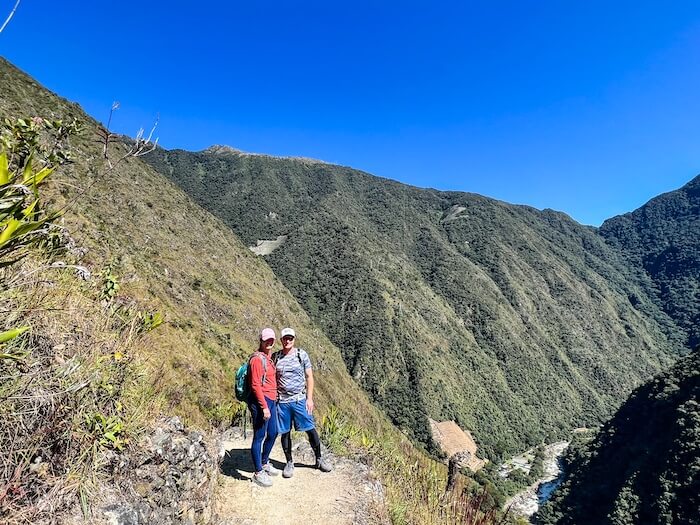
Our short Inca Trail hike fell at the end of May. The trek was challenging enough — I don’t miss those monkey steps! — without worrying about rain and wet conditions along the way.
Note: You can read all about planning a short Inca Trail hike in my guide to our experience. Action Peru Treks was our Machu Picchu tour operator if want a high-quality, personal experience. It was truly one of the most incredible things I’ve ever done!
The same shoulder-season sweet spot applies to alternative treks in the Sacred Valley, including the Salkantay Trek and Lares Trek, and Rainbow Mountain.
If you’re hiking one of the mountains at Machu Picchu, like Huayna Picchu, you’ll definitely want good weather to tackle these strenuous hikes.
When is the best time to visit Machu Picchu to avoid crowds?

The least busy time to visit Machu Picchu is during the rainy season from November through the beginning of April. It’s obvious why. You have a pretty good chance of experiencing wet conditions during that time.
If avoiding crowds is your priority, though, the tradeoff MIGHT be worth it. You’ll generally find fewer visitors and potentially lower prices, especially compared with the June through August peak season.
As far as the best time of day to visit Machu Picchu, the earlier, the better. Machu Picchu opens at 6am, and the lighting is generally better in the morning, too.
When is the cheapest time to visit Machu Picchu?
The cheapest time to visit Machu Picchu is during the low season from November to April. You could have sections of the ruins to yourself if you visit on a dreary day, but rainy conditions could also mean less-than-stellar photos.
The rainy season also begs for flexibility. I’d add a few days of buffer on either end of your trip if you’re visiting Machu Picchu during the rainy season, just in case you need something around for better conditions.
READ MORE: Planning to linger in Peru beyond Machu Picchu? Arequipa is our favorite Peruvian city.
How far in advance should you book Machu Picchu travel?

I recommend booking Machu Picchu at least three to four months in advance.
You can sometimes get lucky with last-minute tickets during the wetter months, but I wouldn’t build your trip around that possibility. If Machu Picchu is the reason you’re going to Peru, I’d lock it in before you book the rest of your itinerary.
Outside of February, when the Inca Trail is closed, Machu Picchu has a daily capacity of 4,500 visitors during the regular season, increasing to 5,600 during high season. Additional next-day tickets are also sold in Aguas Calientes.
Fun fact: Machu Picchu gets 1.5 million visitors per year. Book ahead is what I’m saying!
If you plan to hike the classic Inca Trail, try to give yourself even more of a buffer. The full trek is limited to just 500 permits a day. That includes tourists, guides, and porters.
For our trip to the UNESCO World Heritage Site, we booked about eight months ahead of our trip. We were just that excited. Unfortunately, the trip became a pandemic casualty that forced us to postpone our Inca Trail adventure for a full two years.
It was definitely worth the wait and multiple trips.
Is Machu Picchu worth visiting during the rainy season?
Yes, but I’d choose the dry season if you have the flexibility. You can absolutely visit Machu Picchu during the rainy season, but you’ll have a greater chance of rain, fog, slippery trails, and disrupted travel.
The rainy months at Machu Picchu are November through March. That doesn’t mean you won’t get rain the rest of the year. You’re just more likely to deal with wet conditions and slippery sections of the trail during this time.
I’m usually all about dealing with rain as it comes, especially in bucket list destinations, but you’re not only dealing with rain during the wet season. You’re dealing with fog, too. That means your photos may be disappointing after all that effort.
A bad rainy season can also affect access to the Inca Trail well after the rain is over. Our first attempt at visiting the citadel was a no-go after a season that left tourists stranded because of mudslide activity.
People died at the time, so it wasn’t something we wanted to mess around with. We switched gears completely for a Lima-only vacation, returning to Machu Picchu 12 years later.
It was all worth the wait.
Machu Picchu rewards those who plan strategically.
Shoot for the shoulder months within the dry season. May, September, and October are all great times to go. The wettest months are generally November through March, when you’re more likely to deal with rain, fog, and difficult trail conditions.
You’ll certainly enjoy fewer people and lower prices if you travel during those wet months. You also put yourself at risk for flooded-out trails and poor visibility of Machu Picchu itself.
You’re not coming all this way for garbage photos, right? Try to time your visit for your best chance at clear skies.
I’d love to come back and walk more of the circuits. While I don’t see myself hiking the full Inca Trail anytime soon, it certainly sounds like an incredible accomplishment!
Planning more travel in South America? Check out these guides:
- An Itinerary for Chile’s Easter Island
- Bogotá Is Always Worth the Trip
- Plan a Trip to Colombia’s Salt Cathedral
- How to Plan Three Full Days in Bogotá
- Check Out the Best of Bogotá’s Street Art
More bucket list destinations to add to your list:
- A Guide to Easter Island’s Mysterious Moai
- The Coolest Excursions to Plan in Iceland
- See the Incredible Cliffs of Étretat From Paris
- Busy Yourself With Three Days in Florence
- Top Hikes and Sights of Zion National Park

Want to see more?
Subscribe to my biweekly newsletter for hot travel tips I come across, weird stories you won’t see elsewhere and perhaps lifelong friendship.
Too much, or just enough?
