
If you’ve never been to Colombia, Bogotá may not be at the top of your list for must-sees. That’s where we were at as we planned our trip. I was more excited about Cartagena, as we needed some sun at the time.
That was a mistake. We ended up enjoying our time in Bogotá more than anywhere else in Colombia. It was more our speed as far as dining and a less touristy experience was concerned, and we had no regrets about our time there.
This itinerary for three days in Bogotá details everything we were able to see in our favorite Colombian city with some tips at the end for day trips, too.
Quick Tips for Your Bogotá Visit
Your Flight: If you’re able to watch flights for a while, you should be able to find a good flight deal to Bogotá’s El Dorado International Airport. Help the process along using Skyscanner. Love deals? Subscribe to Going.
Your Accommodations: We stayed at the GHL Hotel Hamilton during our trip to Bogotá and I’d highly recommend it. Browse Booking.com or Hotels.com for more options. Vrbo is my Airbnb alternative.
Top Spots: See the city on a free walking tour or graffiti tour, visit the Gold Museum, and tour the Museo Botero.
Disclosure: Travel on the Reg uses affiliate links to keep things running around here. At no additional cost to you, I earn a lil’ commission if you make a purchase. Any income earned supports the upkeep of this site. I appreciate you!
How Many Days to Spend in Bogotá
You need at least two days in Bogotá to see what there is to see in the historic center and spend some time in some of the city’s other vibrant neighborhoods.
Three days in Bogotá allows you to take things in a more leisurely fashion, build in time for the city’s best tours, and even spend some time outside of the city if you’re creative. Bogotá is a great base for day trips.
We spent four days in Bogotá. That meant three days in Bogotá proper and a day set aside for day trips. I wouldn’t change anything about that, as this city really opens up the more time you spend there. I’d argue it’s like New York City or Paris in that way.
One day in Bogotá is only enough for a cursory overview of the city. The city is so big that you may be tempted to just hang out in the historic center, but that would mean you’re not getting to see where the locals frequent.
If that’s all the time you have, start in the historic center, then take a rideshare to Chapinero or Usaquén for the rest of your afternoon.
What to Do With Three Days in Bogotá
You can spend three days in Bogotá like this:
- Book a free historical walking tour.
- Hang out on Plaza de Bolivar.
- Visit the Gold Museum.
- Marvel at the Santuario Nuestra Señora del Carmen.
- See the city’s best graffiti spots.
- Check out the art at Museo Botero and Museo de Arte Miguel Urrutia (MAMU).
- See the Pablo Escobar exhibit at the Palacio Museo Histórico de la Policía Nacional.
- Climb Monserrate.
- Have a coffee tasting.
- Relax in Parque 93.
- Drink a pint at the city’s best breweries.
- Spend time in Usaquén, Chapinero, and Zona Rosa.
Three Days in Bogotá: Day 1
This Bogotá itinerary assumes a full three days in Bogotá. We arrived the evening before our first full day, so hung around the hotel to rest before getting up and at ‘em the next morning.
I’m going to dive right in with one of Bogotá’s best tours, but if your hotel doesn’t offer breakfast as ours did get an early start for some morning snacks if you need them.
If you’re in Zona Rosa as we were, Café Quindío is a great option for morning pick-me-ups and treats.
We ate what I’d call a “Polish dinner” on our first day in Bogotá due to the length of our tour. That’s a midday meal during those dead hours between conventional lunch and dinner. I’ll recommend the same for you here if you’re following the same itinerary.
Stop 1: Bogotá Free Walking Tour
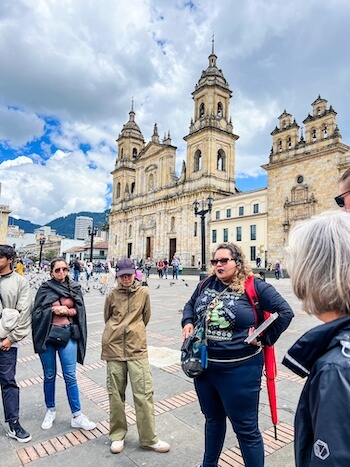

The tourist agency Beyond Colombia offers free walking tours all over Colombia. Their Bogotá tours include a classic walking tour with highlights about La Candelaria, the city’s historic center, a food tour, a graffiti tour, and a more politically-charged option.
Note: We did a graffiti tour on a different day, but I’ll get into that later. I highly recommend fitting in both if you can to learn about the city’s history and its street art.
As we’re both a little extra, we booked their “War and Peace” tour. It was still free and offered plenty of touristy stops. It also included detailed information about violent conflicts in the country over the years.
I can’t compare it to their classic walking tour because I didn’t go on that one, but this one was quite a bit smaller. That allows more opportunity for questions and less opportunity for shenanigans from misbehaving tourists.
Our tour started at 10am. If you’re able to book a free walking tour the morning after your arrival, that’s a great way to get an overview of the city.
Ours went over three hours, too, although that included a coffee break for a chat about drug cartels and Pablo Escobar.
Note: If you’re hungry here since this tour goes through lunch, the cafe will likely have some snacks for you, too!
Our tour guide was a historian, super knowledgeable, and very passionate about victims of violence in Colombia over the decades. I’d highly recommend it.
Make sure to bring some cash to tip your tour guides. Around $10 is recommended, which even sounds low once you consider the length and breadth of these tours.
Stop 2: Plaza de Bolivar
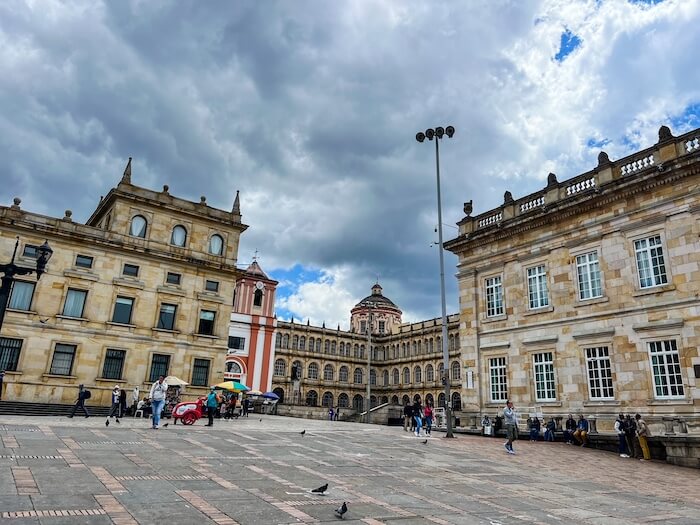
You’ll visit the city’s main square on your walking tour, but it’s worth returning to if you feel like you didn’t get enough time there in the big group.
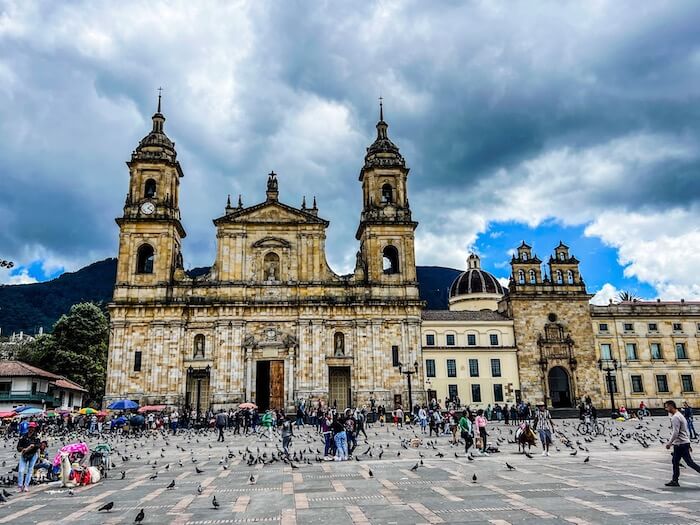
Take some time to check out the Catedral Primada, the largest church in the city and the site of what some historians believe was the first mass in the city. Other buildings of note include the Capitolio Nacional and the Supreme Court of Colombia.
The Supreme Court was the scene of a bombing known as the Palace of Justice siege. Nearly 100 people died in the siege led by the M-19 guerrilla group and the resulting military raid. Eleven of the dead were Supreme Court justices.
On a much lighter note, you’ll be treated to locals trying to get you to snap photos with llamas while you’re on the square. They may also be trying to sell you “big ass ants.” You can do better.
Fun fact: This is also the best place in the city to get pecked at by pigeons. They will land on your head if you let them, much to the chagrin of a gal on our tour who was afraid of birds. She didn’t tip our guide, so my empathy didn’t run all that deep for her.
Stop 3: La Puerta Falsa

You’ll see this historic eatery on most Bogotá itineraries as the perfect place to get a taste of a variety of traditional Colombian foods.
I can’t say it was my favorite restaurant in Bogotá, but it’s worth visiting for the history and primer on Colombian home cooking. We didn’t need dinner after this because we over-ordered so aggressively.
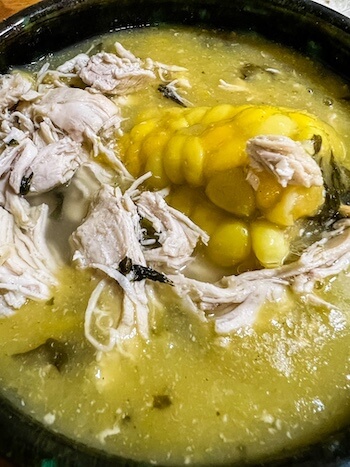
You’ll want the Aijaco for sure. That’s a Colombia soup with half a corn cob inside. Then they’re also known for their tamales, which are enormous and mostly unchanged for the last 200 years.
I’m serious. This place has been serving up tamales for two centuries now.
We then had to try the chocolate completo, which is hot chocolate, cheese, buttered bread, and an extra sweet roll thrown in for good measure. It was too much, and yet we finished it all because that’s how you do at Polish dinner.
Expect a wait no matter when you go. We were there after the peak lunch hour but still had to hang around for 20 minutes or so. It’s a small place with tight seating, so make nice with your neighbors.
Stop 4: Gold Museum

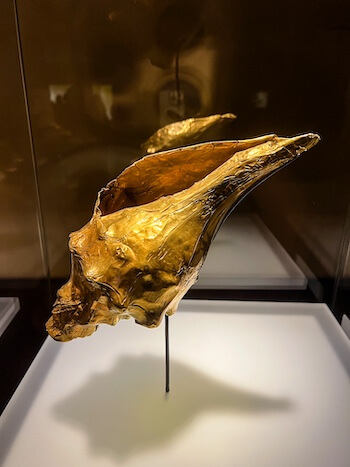
We had initially planned to make the trip here before lunch but didn’t realize our tour would take us up to 1:30pm. I’d urge you to plan a visit here no matter when you go, as the Gold Museum, or Museo del Oro, is well-known as one of Bogotá’s best museums.
There are usually some temporary exhibits on the lower levels, but the real goods are on the second and third floors. You’ll learn about gold as a sacred symbol and the many uses for the precious metal. This place gets crowded, so bring your patience.
Once you’re inside, don’t miss the Muisca raft, or the Golden Raft of El Dorado. This is likely where you’ll see tour groups stopping with their guides.
This is a gold piece created by the Muisca, an indigenous people in the region, that may depict ceremonies held at Lake Guatavita.
Those ceremonies were the basis of rituals described in the legend of El Dorado. That’s the mythical gold city where new chiefs were purportedly covered in gold and tossed into the lake along with other offerings.
Whether any of this has any basis in fact has been argued for decades, but you really can’t deny the intricate craftsmanship of the raft itself.
Optional Stop 5: International Emerald Museum
We were too tired to make this one happen, but as it’s near the Gold Museum, you may have the energy for it. The Museo Internacional De La Esmeralda is a collection of precious gemstones from the perspective of Colombian geology.
There’s the predictable emerald shop on site, too, just in case you’re feeling spendy.
Stop 6: Snacks and Drinks in Zona Rosa
La Candelaria is central to Bogotá’s main museums and attractions, but it’s not ideal after dark.
It’s come a long way over the years, but it’s still a hub for opportunists looking for easy marks. The food and cocktail scene isn’t the most impressive, either, as it does cater to tourists.
All of that means it’s not the best area if you’re seeking things to do in Bogotá at night.
As we stayed in Zona Rosa during our stay, that’s what I’d suggest for you as a fitting end to a busy day. We were still full from our ridiculous meal at La Puerta Falsa, but there are plenty of options for a nosh if you’re snacky.
Bogotá Beer Company handles the beverage side and the food side with an offensive menu of both. There are definitely better breweries in Bogotá, but even locals will tell you that they hang out at this place amongst the tourists.
The friendly gentleman at our hotel’s front desk called it his favorite “craft beer” spot, which was very sweet.
If you’re as tired as we were but now also a little tipsy, get yourself to El Carnal. It’s basically an upgraded Taco Bell.
If that doesn’t sound delicious to you I’m not sure what to tell you. It helped that those yummy street tacos and burritos were next door to our hotel, too.
Three Days in Bogotá: Day 2
You’ll start in the Bogotá city center again today because, despite my safety warnings, there is so much to see there. Much of the morning is taken up by another tour, but I promise there’s a method to my madness.
This was the city that turned me on to walking tours, especially when they’re run by knowledgeable locals with a passion for the topic. Start your day with your hotel breakfast or grab another quick bite at your new favorite coffee shop.
Stop 1: Santuario Nuestra Señora del Carmen

We really wanted to check out the inside of this church, the National Shrine of Our Lady of Carmen. The interior is supposed to match the candy cane stripes on the exterior. Unfortunately, it was closed despite what the internet told me.
You’ll likely read that it’s only open in the mornings. That is a lie.
I got to practice my limited Spanish with a security man who spoke to us out of a little hole, so I’m not sure why it was closed or when it’d reopen. I’d still recommend a quick stop just to check out the outside because it resembles a holy candy cane.
Fun fact: Iglesia de San Francisco is another option if churches are your jam and you encounter the same issue. Built in the 16th century, this is actually the oldest surviving church in the city. It’s just missing those stripes.
Stop 2: Bogotá Graffiti Tour

It’s another day, another tour here in Bogotá. This one will take you on a tour of Bogotá’s street art. That includes the city’s enormous murals and the less attractive tags on buildings throughout Bogotá.
We booked ours through the Original Bogotá Graffiti Tour. It’s free, highly rated, and, as the name suggests, the city’s first guided graffiti experience.
I have a full guide to what you’ll see on your tour but expect to meet in Parque de los Periodistas Gabriel García Márquez. That’s Journalists’ Park Gabriel García Márquez on most maps.
Stop 3: Lunch

It’ll be lunchtime by the time you’re done with your tour. The tour advertises a length of about two hours, but it depends on your group. We were pushing two-and-a-half hours by the time we were done.
The tour ends at the Plazoleta Chorro de Quevedo, a great spot for a variety of lunch options. We were feeling something a little more hip than the day before, so wandered to Madre. Look for the neon sign off the street that leads you into an airy, bustling space.
We made our choices based on what the servers were passing around, which meant pizza with Spanish ham and a salad.
I think the lunch the day prior was still sitting like a lead balloon in our bellies if you’re wondering about that salad.
Everything was delicious and filling, and the ambiance only made for a more pleasant lunch.
Stop 4: Museo Botero


Museo Botero, or the Botero Museum, was my favorite Bogotá museum. After entering a lovely courtyard, you’ll find works of art here from big names like Picasso, Dali, and Monet. The big draw here, though, is Fernando Botero himself.
Botero loved painting things fatter than they are. That means fat bananas, fat horses, and a fat Mona Lisa. He made himself fat in self-portraits. He painted a depiction of the death of Pablo Escobar, but fatter.
It’s all quite amusing, so budget some time for this one, please.
Stop 5: Museo de Arte Miguel Urrutia (MAMU)

Follow up that epic art with some quirkier pieces at the Museo de Art Miguel Urrutia (MAMA). This one is focused on regional artists and temporary exhibits and connects to an art collection with more contemporary pieces.
There are lots of pieces to see here if you want to peruse it all, and it’s all free.
Stop 6: Palacio Museo Histórico de la Policía Nacional

If you’re looking for weird things to do in Bogotá, I’ve got you. The Palace Historical Museum of the National Police is a little much in terms of the copaganda, complete with video clips of police officers hugging small children.
You’re here for the Pablo Escobar goods.
I’m being literal here. They have a small room of artifacts related to Escobar’s arrest. That includes various personal items, a cartel money-counting machine, and a roof tile with his blood on it.
The rest of the museum is weird. If the rooftop is open during your visit, that’s likely a great view of the city. It was closed during our visit.
Optional Stop 7: Museo Santa Clara

This one came highly recommended in other Bogotá travel blogs, and I really didn’t get it. Yes, the Museo Santa Clara boasts a beautiful interior. It’s covered in baroque paintings that are lovely to see.
This was the only place in all of Bogotá that felt like a ripoff, though. We paid around $10 per person to go inside the one decorated room, which I would have questioned if I was less of a pushover.
I’m working on it.
In reading even more recent reviews, it sounds like they’ve raised the ticket prices even higher for some tourists. I say some tourists because it seems like pricing is arbitrary. Some paid around $13, while others claimed the pricing was fair.
Honestly, that’s absurd and may signal some corruption at this site. Avoid it unless you have some kind of bucket list for baroque religious art.
Stop 8: Happy Hour in Chapinero
It was time for a drink after that debacle, so we grabbed an Uber with a broken shifter knob to head to Chapinero, my favorite part of the city.
The knob just came right off our driver’s shifter, so that was fun. He kept on keeping on after placing the loose piece in his pocket with a little tap. I admired it.
It was much like the Uber driver before him who didn’t have a great grasp of shifting gears when navigating hills. It all makes for good stories, right?
In any case, our picks for drinks were Cervecería Gigante and Hanna Hops. I’d recommend both, but if you’d like to comparison-shop, I have a rundown in my Bogotá breweries roundup.
Stop 9: Dinner in Chapinero

Chapinero is super cute, so you likely won’t want to leave just yet. We grabbed an easy but delicious dinner of noodles and sushi at reasonable prices at WOK after drinks. It was right next door to Hanna Hops, so the convenience factor was a big draw.
You also don’t only need to eat Colombian food while in Colombia. Locals don’t.
Here are a few more options for restaurants in Chapinero:
- Café Bar Universal: The dishes here are a little pricey for Colombia, but they’re nowhere near what you’d expect in big American cities for ceviches and seafood platters featuring sustainable fish. Reservations are recommended.
- El Chato: Let’s say you want something fancy. This one is on all kinds of lists as one of the best restaurants in Latin America, let alone Bogotá. We were in Colombia to eat cheap, but you don’t have to. Just make reservations before you go.
- Mini Mal: Dishes at this popular eatery are inspired by classic Colombian fare, but their takes on them are new and fresh. Think rabbit arepitas, citrus soups, and braised beef in Amazonian herbs.
Three Days in Bogotá: Day 3
Get an early start today to start your day in an active fashion. You’ll be climbing to Bogotá’s best views today. Its placement on your third day is deliberate. When planning what to do in Bogotá in three days, you have to consider the altitude.
If you’re not acclimated to the heights, it can leave you feeling pretty wrecked. You’ll still need to take it slow on day three, but you’ll definitely have better luck with potential symptoms if you wait as long as possible.
Grab a quick coffee and nosh or some hotel snacks for the road and head to the base of Monserrate.
Stop 1: Monserrate


You can’t start this one after 1pm due to safety concerns, but who wants to hike in the middle of the day anyway? I have a complete guide to hiking to Bogotá’s best views and an easier alternative in a cable car if you’re not interested or able to hike.
It’s a pretty challenging trek, by the way, so there’s no shame in the funicular option. If you do hike, budget a few hours for this activity. Expect to work up an appetite by the time you get down.
READ MORE: Love an epic hike? It doesn’t get much better than the Inca Trail.
Stop 2: Lunch in Usaquén


Take an Uber after your hike to place yourself in another of Bogotá’s hippest neighborhoods. If you have any trouble catching a ride, walk closer to the funicular for an easier pickup.
We were pretty hungry after the workout, so had our driver drop us at Abasto. This was our favorite lunch spot in Bogotá.
The decor was very cute, but it’s the food I won’t forget. We shared arepas, chicken empanadas, and rotisserie chicken that was seasoned to perfection.
Everything was flavorful and the service was great. Access English menus online if you’re lost in translation while you’re there.
Stop 3: Coffee Tasting

Get yourself a little afternoon pick-me-up with a coffee tasting at Catación Pública nearby. This was like a wine tasting but so much cheaper and just as delicious.
We learned about everything from Colombian beans to brewing methods with such passion from our guide.
We were impressed enough by it all that we left with a bag of beans to brew back at home. This was one of our favorite experiences in Bogotá after our guided free tours.
Stop 4: Parque 93

We took a long walk next to Parque 93, or Parque de la 93 if you’re fancy. I’ll tell you now that it wasn’t close, but it did allow us to see more of the city as we returned to this area just north of Chapinero.
If you’re exhausted from your morning hike, pop into an Uber. I definitely won’t judge.
This recreational park is a gathering place for locals and visitors alike. It’s also home to all kinds of great eateries and bars. While you may not be hungry just yet, you may be interested in a sip of something yummy, especially if you made the walk from Usaquén.
Our pick was El Mono Bandido La 93. There are a few of these breweries around town, but this one is beach-themed. That means beach umbrellas and a sandy area that no one was interested in during our visit. They have a full food menu that looks great, too.
If you want more caffeine after all that, the park is also home to Azahar Café 93, an offshoot of what many will tell is the best coffee in Colombia.
Stop 5: Zona Rosa
You can certainly linger in Parque 93 if you’d like, as it’s a safe area even into the evening, As you get closer to dinnertime, try the burgers at El Mono Bandido La 93. The Bombay Lounge, an Indian hotspot near the park, also gets lots of buzz.
If you’d like to finish up closer to Zona Rosa, you can try another version of the brewery in the park, El Mono Bandido Zona T.
Zona T and Zona Rosa are interchangeable, by the way. Just go with it.
This version has a giant gorilla out front with a much different vibe than the casual beach escape in the park. They have all kinds of yummy snacks on hand, the same menu of beers, and a slide you can ride down from the top level to the bottom. What’s not to love?
This is how we ended our three days in Bogotá, with a day trip planned for day four.
More Things to Do in Bogotá
You’ll inevitably run out of time in Bogotá just as we did. Here are a few more Bogotá tourist attractions for you to peruse with more time in the city:
- Shop at the Sunday Usaquén Market. We weren’t here on Sunday, but this looks like a great place for local tastes and souvenirs. Pasaje Rivas is another flea market option if you love handicrafts and aren’t here on a Sunday.
- Visit the Museo Nacional de Colombia. The National Museum of Colombia is another option in the city’s historic center if you encounter inclement weather. This is the largest and oldest museum in Bogotá.
- Stroll the Jardín Botánico de Bogotá. Officially known as the Jardín Botánico José Celestino Mutis in honor of the astronomer and botanist in the name, this looks like a lovely urban escape.
- Tour the Casa De Narino. This is the official home of Colombia’s president. Guided tours of about 45 minutes are available if you request them ahead of time. We just didn’t plan well enough for this.
- Summit Cerro de Guadalupe. As we already hiked Monserrate, we didn’t have the energy for Guadalupe Hill. This one includes a large statue of Our Lady of Guadalupe at the top to go along with its stellar views.
- Book a bike tour. If you don’t love my tour options or just want to peruse others, several tour operators run bike tours around the city. Here are a few options if you want a little bit more exercise while you’re here:
Bogotá Day Trips


I’ve already mentioned that Bogotá is a great city for day trips. If you’re here for longer and want to substitute a Bogotá day trip for one of the days above, have at it.
I’d argue the city gets less appealing the less time you spend there, but you can’t argue the intrigue around getting into some nature.
We had one big day trip courtesy of our hotel which included Casa Loca in Guatavita, Lake Guatavita, and the Salt Cathedral of Zipaquirá. The tour was super cheap compared to what you’d expect in the United States, but our driver only spoke Spanish.
If you’re wondering whether I pretended to understand more than I really did, you’d be correct.
To do some comparison-shopping on similar tours, check out these options below:
Here are a few more details on those and a few more day trips from Bogotá:
- Casa Loca: Our tour started at Casa Loca, an upside-down house with all kinds of Instagram potential inside. Was it a tourist trap? Yes. Did we still have a good time? Also yes.
- Guatavita & Lake Guatavita: Tours of Lake Guatavita are done as a group in Spanish. If you don’t speak Spanish, you can hire a guide to whisper-translate for you. The lake is beautiful, but the visit was a frustrating one.
- The Salt Cathedral of Zipaquirá: You’ll get an audio guide in your native language before starting your self-guided tour of this site. I have a full guide to the rest, but I found it all quite impressive once you start thinking about its construction.
- Chingaza National Natural Park: This national park is under an hour and a half from the city, but you’ll need your own car or a guided tour to get there. The most popular climb here is up to Lagunas de Siecha.
- Bogotá Waterfalls: If you love chasing waterfalls, several tour operators offer Bogotá day trips that include hikes to La Chorrera and El Chiflón waterfalls. This honestly sounds awesome.
When to Visit Bogotá
The best months to visit Bogotá are December through March. You’ll have the best chance at dry weather. January in particular is a great time if you want fewer crowds. This is a popular travel time for locals who want to flee the city for beach weather.
That all said, the best time to travel to Bogotá is whenever you can make it happen. Thanks to its altitude — Bogotá sits at 8,660 feet above sea level — the temperatures there are fairly consistent throughout the year.
How to Get Around Bogotá
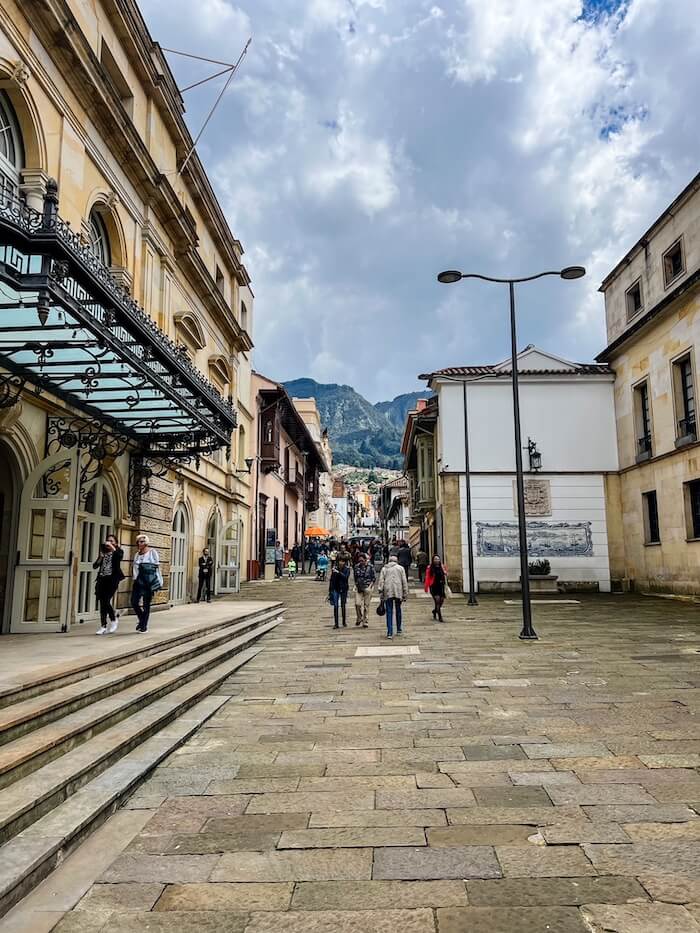
To get around Bogotá, we mostly used our feet and Uber. In terms of walkability, you can walk around Bogotá, but it’s not as pedestrian-friendly as some of the big cities in the United States and Europe.
Cabify is another rideshare option, but I’ve read mixed reviews about dropped rides and drivers preferring cash.
Uber is not technically legal in Colombia but continues to operate within a gray area all over Colombia’s main tourist hubs. The courts ruled that ride-sharing services were illegal in Colombia back in 2020, so Uber decided to operate as a car service, instead.
It sounds sketchy, but both locals and tourists still use Uber to get from place to place at the time of our visit. You should certainly do a quick search for the latest info on this, as regulations across South America change often.
The staff at our Bogotá hotel recommended Uber over taxis because cab drivers are more likely to rip you off. In general, do not take taxis in Bogotá unless it’s from the airport. They have additional measures to protect travelers at the airport.
If you need a cab from the airport, go to the kiosk at the arrival terminal and tell them where you’re going. It should be a flat fee. You’ll be given a receipt and ushered into an authorized cab.
Better yet, confirm a ride from the airport through your hotel.
This is what we did. It was on time, safe, and just a touch more expensive than cabs from the airport. This is a big reason I’d book hotels over Airbnb-style accommodations in Bogotá. You don’t get that additional layer of support.
Buses are another option in Bogotá. They’re cheap and run all over the city. As Ubers were also quite cheap and generally more reliable, that’s what we went with for our trip. Paying for transportation without cash was a nice perk, too.
Where to Stay in Bogotá
We stayed in the Zona Rosa neighborhood at the GHL Hotel Hamilton during our trip to Colombia. I’d highly recommend it for its proximity to restaurants, nightlife, and accessibility to transportation.
Our friends stayed at the NH Bogotá Boheme Royal next door when they found ours was sold out. They enjoyed their stay, so I’d recommend that one, too.
You just need to be aware that it takes a while to get around Bogotá. The traffic is intense, and the city is quite large. I highly recommend you prioritize comfort and safety over being in the historic center during your trip.
If you’re here a few days, you’ll find you don’t want to hang around La Candelaria once you’re done with the museums and tours anyway.
Here for a layover? The Courtyard Marriott Bogota Airport has a shuttle on the hour with affordable, big rooms and a decent on-site restaurant. We stayed there for one night just to make the flight back a little easier.
Use the map below to browse more options in my preferred neighborhood of Zona Rosa:
Bogotá and Safety
Bogotá is safe, even at night, if you stick to neighborhoods like Zona Rosa, or Zona T, and Usaquén. La Candelaria has improved over the years, but it’s still not the best after dark.
If you can, stick to groups after dark and keep your wits about you. Don’t flash valuables no matter what time of day it is. I never felt unsafe, but we were also staying in a safe area of the city.
We were also traveling as a group of four. If you’re solo and female, exercise extra caution after dark. Choose accommodations in safe neighborhoods. Avoid cutting through parks after dark, especially in and around La Candelaria.
Bogotá is worth the visit.
Bogotá is worth going to and even prioritizing during your time in Colombia. It rewards travelers who spend more time there, too.
I wasn’t sure I’d like it at first glance. It’s busy and gritty, with a historic center that isn’t as attractive as what you may be used to in your travels.
Give Bogotá a chance, though, and you’ll find that this city is busy and gritty but also delicious and vibrant. We had so much fun bopping around the city’s unique neighborhoods. I’d love to give it more time on a return trip.
Planning more bucket list adventures? Check out these guides:
- A Detailed Trip Planner to Incredible Easter Island
- Explore the Best Moai on Mysterious Easter Island
- Planning a Peruvian Trip? Here’s a Guide
- How to Plan the Best Trip to South Africa
- A Complete Guide to Hiking Roque de Taborno
Love planning travel with good eating? Check out these guides:
- Eat All of the Pizza on a Day Trip to Naples
- Plan a Food Tour in Bologna, Italy
- How to Road Trip the Southern United States
- Eat at Pequod’s, Chicago’s Best Pizza Shop
- How to Book a Food Tour Like a Pro

Want to see more?
Subscribe to my biweekly newsletter for hot travel tips I come across, weird stories you won’t see elsewhere and perhaps lifelong friendship.
Too much, or just enough?
