
We made Rouen one of our bases during a Normandy road trip with my in-laws. While D-Day sites and Mont Saint-Michel were the priorities for our group, I knew from the start that I wanted to see Rouen.
Rouen is known for its medieval half-timbered buildings, Gothic architecture, its connection to Joan of Arc, and its role in the history of Impressionism. Claude Monet fans, I hope you’re paying attention!
So, is Rouen worth visiting? Here’s what we discovered during our time in the city, and why I think Rouen deserves a spot on any Normandy itinerary.
Quick Tips for Your Rouen Visit
Your Flight: Paris Charles de Gaulle Airport or Paris-Orly Airport are your main options for Normandy trips. Use Skyscanner to monitor flights. Love those deals? Subscribe to Going.
Your Accommodations: I’d recommend staying as close as possible to the historic center. Browse Booking.com or Hotels.com for your options. Vrbo is my Airbnb alternative.
Your Ride: A car is a good idea if you’re planning a road trip in the region. Book a rental car ahead of time, especially if you can’t drive a manual.
Top Spots: Visit Cathédrale Notre-Dame de Rouen, see the Gros-Horloge, and tour the Joan of Arc sites.
Disclosure: Travel on the Reg uses affiliate links to keep things running around here. At no additional cost to you, I earn a lil’ commission if you make a purchase. Any income earned supports the upkeep of this site. I appreciate you!
Is Rouen worth visiting?
Yes, absolutely. Rouen is a French city that packs a lot into a relatively compact historic center.
You get medieval architecture, Impressionism, Joan of Arc sites, excellent food, free museums, and some weird places that will delight travelers into dark tourism.
Rouen also feels like more than a pretty French city. There’s a lot of history here. You can stand where Joan of Arc was executed, see the damage left on a Gothic courthouse from World War II, and wander through a former plague cemetery.
That’s before you’ve eaten anything, too!
Rouen is an easy trip from Paris.
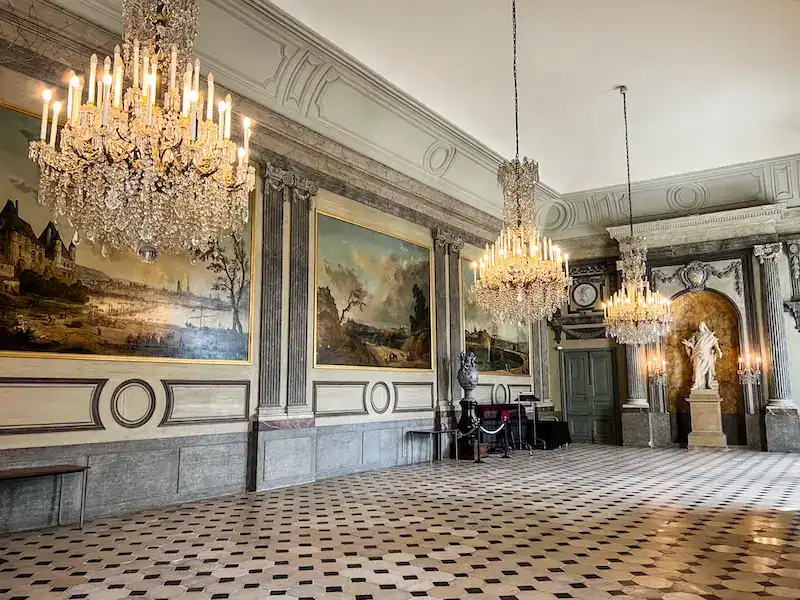
Rouen is only about 80 miles (130 km) from Paris, making it a relatively easy addition to a Paris trip if you want to see a different side of France. You can get there by train in roughly an hour and a half, or drive in about two hours, depending on traffic.
I’d suggest driving. Once you’re there, you really don’t need your car, but if you want to see more of Normandy once you’re done in Rouen, it’ll be much more efficient with a ride.
It has a major Joan of Arc connection.

You don’t have to know much about Joan of Arc before visiting Rouen to realize just how important she is to the city.
Joan was captured, tried, and ultimately burned at the stake in Rouen in 1431. Today, you can visit several places connected to her story, including the site where she was executed in the city’s historic center.
The Église Sainte-Jeanne-d’Arc is a good starting point. The modern church sits on the Place du Vieux-Marché, the site where Joan of Arc was burned at the stake in 1431. There’s a marker outside indicating the spot of her execution.
The church itself is also worth a look. The stained-glass windows inside came from a 16th-century church that was damaged during World War II. Entry is free, so it’s a no-brainer while exploring the historic center.
For a deeper dive into her story, head to the Historial Jeanne d’Arc. This isn’t your regular museum filled with objects and plaques, but an immersive retelling of Joan’s life and trials, taking you through her story room by room.
If you love Joan of Arc history, there are guided tours that offer exactly that. Here are a few to check out:
The architecture combines the medieval with the modern.
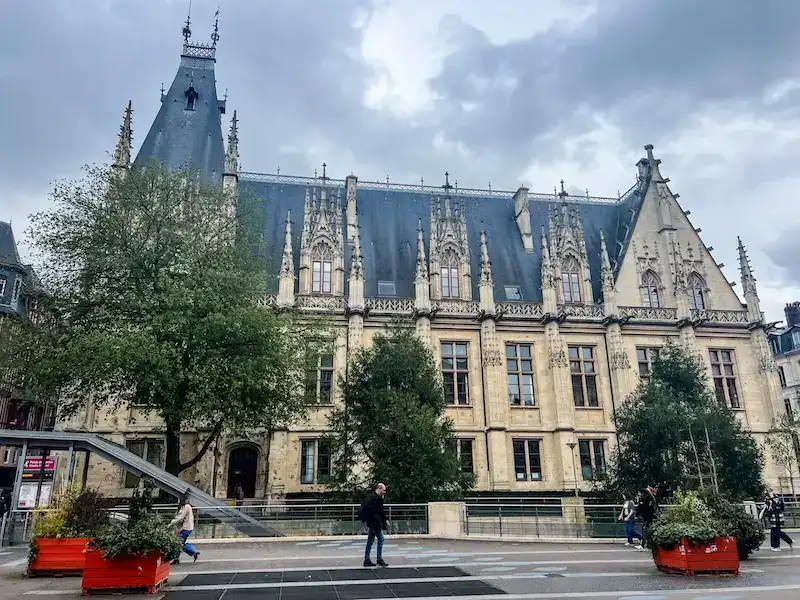
You don’t have to look very far to see how Rouen has changed over the centuries.
The historic center is packed with half-timbered buildings, Gothic churches, and ornate medieval architecture. But World War II also left its mark on the city, and many of the modern buildings sit alongside centuries-old ruins.
A great example is the Vestiges de l’Église Saint-Vincent, where the remains of the old church sit directly against modern architecture. Rouen is a living city that has been rebuilt, altered, bombed, and modernized over hundreds of years.
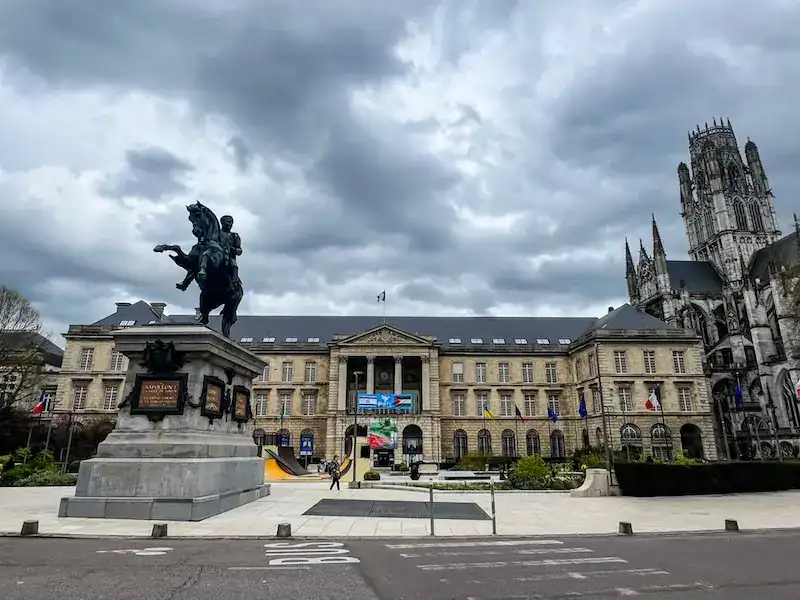
You can also see the scars of World War II on the Palais de Justice. Its Gothic facade is still visibly pockmarked from bombing raids in 1944.
And then there are the buildings that somehow survived it all, including the enormous Cathédrale Notre-Dame de Rouen.
You can stand where Monet painted.
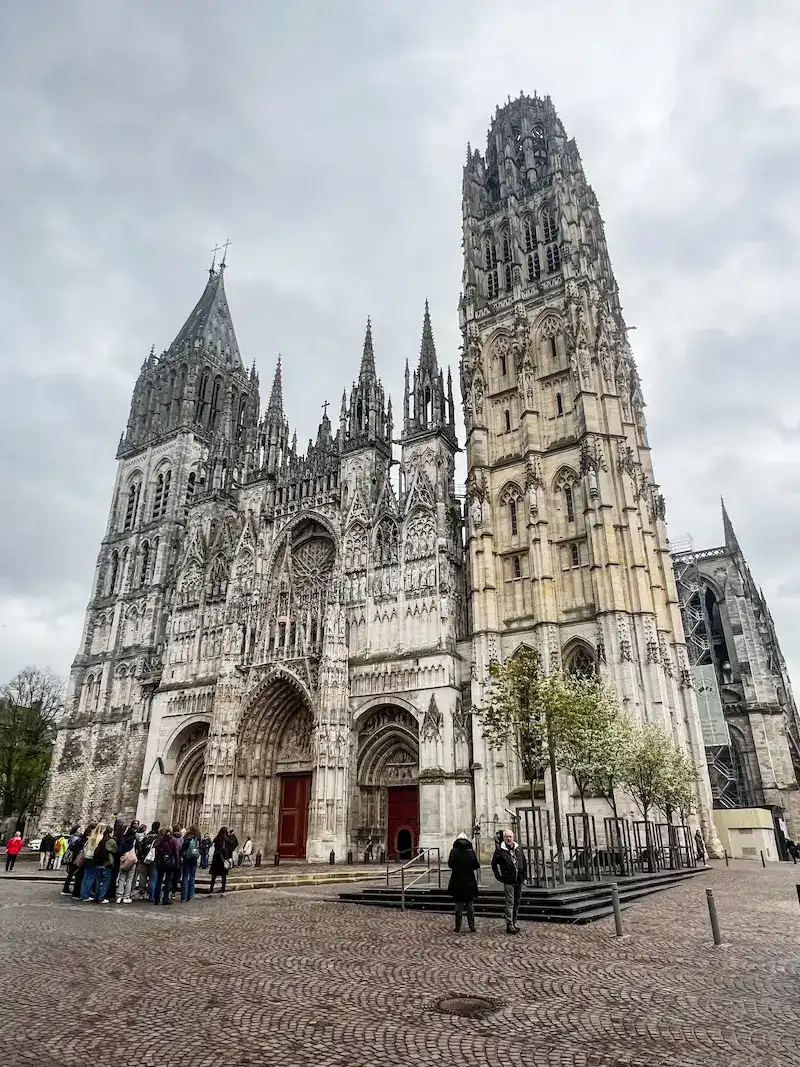
Monet was so fascinated by Rouen’s cathedral that he painted it more than 30 times as part of his famous cathedral series. He wanted to catch it in different light and weather conditions.
Apparently, he’d never heard of my motto, “Finished is better than perfect.”
Today, you can stand in roughly the same area where Monet set up his easel and look at the same cathedral facade he spent so much time studying.
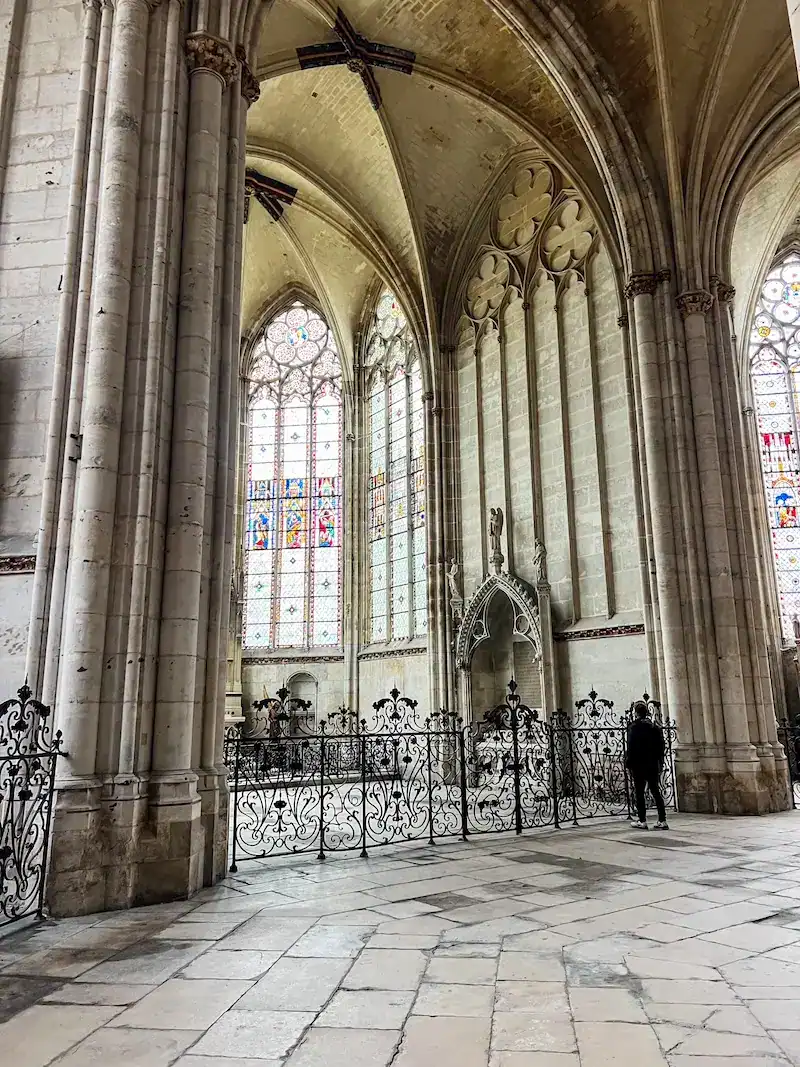
The cathedral itself is worth seeing even if you’re not an Impressionist fan. It’s an impressive example of Gothic architecture, and entry is free. Inside you’ll also find the heart and effigy of Richard the Lionheart.
Fun fact: Richard the Lionheart is buried in three different places. His body was buried at Fontevraud Abbey, his entrails were buried at Châlus in France, and his heart was buried right here in Rouen Cathedral. Richard was Duke of Normandy and King of England, so Rouen was an important part of his life.
There are many beautiful churches.
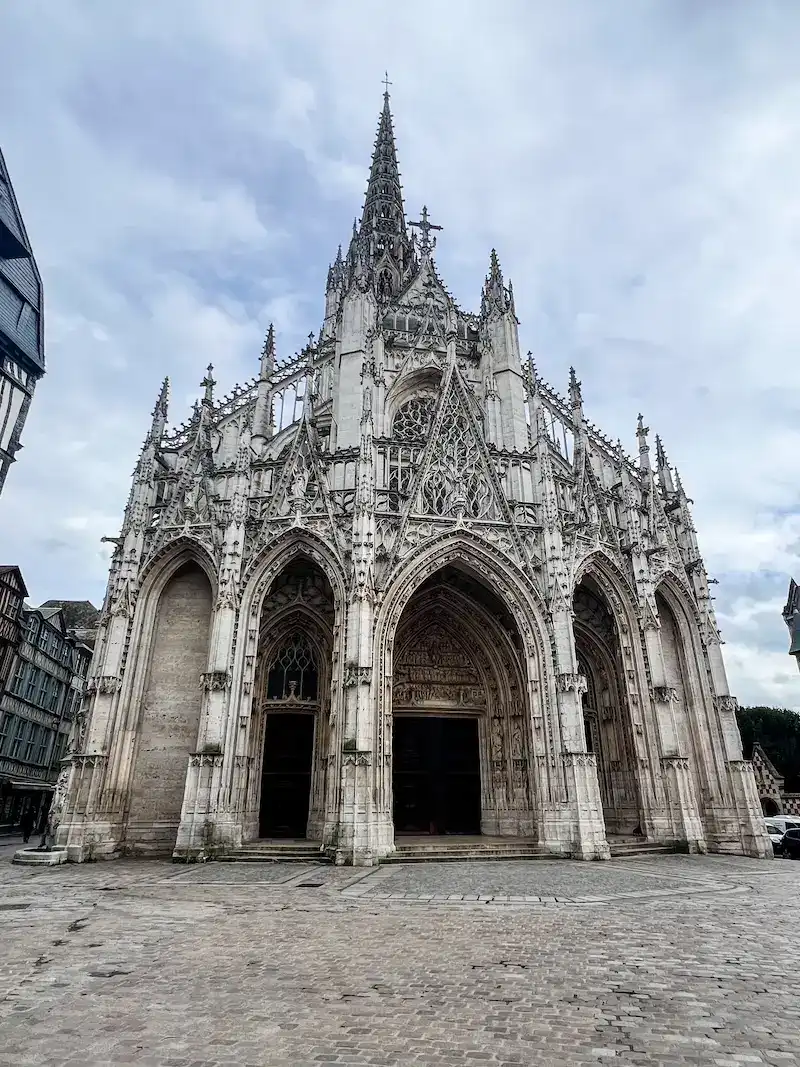
Rouen has so many beautiful churches in addition to the cathedral. You can visit the Église Saint-Maclou, with its elaborate wooden doors, and the Saint-Ouen Abbey Church, a Gothic church with about 80 stained-glass windows.
The Église Saint-Patrice is another worthwhile stop, particularly for its impressive collection of stained glass. The Église Saint-Godard has its own collection of Renaissance windows.
We weren’t able to see Saint-Ouen’s famous organ during our visit because it was covered, but the church itself is impressive enough to justify a stop.
You can eat at the restaurant that introduced Julia Child to French cuisine.


This might be my favorite reason to visit Rouen because, well, food.
La Couronne claims the title of the oldest inn in France, and it also has an important place in American food history. This is the restaurant where Julia Child famously had a meal that helped inspire her love of French cuisine.
Photos and signed memorabilia of Child decorate the restaurant, so you don’t have to wonder whether you’ve come to the right place. The food lives up to the setting too.
I initially balked a little at the price, but our mid-range prix fixe meal was generous enough that we almost couldn’t finish it. It also included the obligatory cheese course, which is always a good idea when you’re eating a meal in France.
You’ll want to make a reservation for this one in advance if you’re interested, no matter when you’re visiting Rouen.
There are plenty of other good places to eat, too.

You don’t need to spend La Couronne money to eat well in Rouen, either.
For a more casual lunch, In Fine is a tasty option. Poppy’s Burger serves up a great fish and chips platter if that’s what you’re after. (I assume the burgers are good, too, although we didn’t try them.)
For drinks and small bites, Public looked fun. We arrived too early for dinner service, but it would make a good stop for happy hour or a snack.
And if cocktails are your thing, L’Absinthe is a good spot for a drink in the historic center. Cocktails aren’t cheap, but the wine prices are more reasonable.
You can see a 14th-century clock.
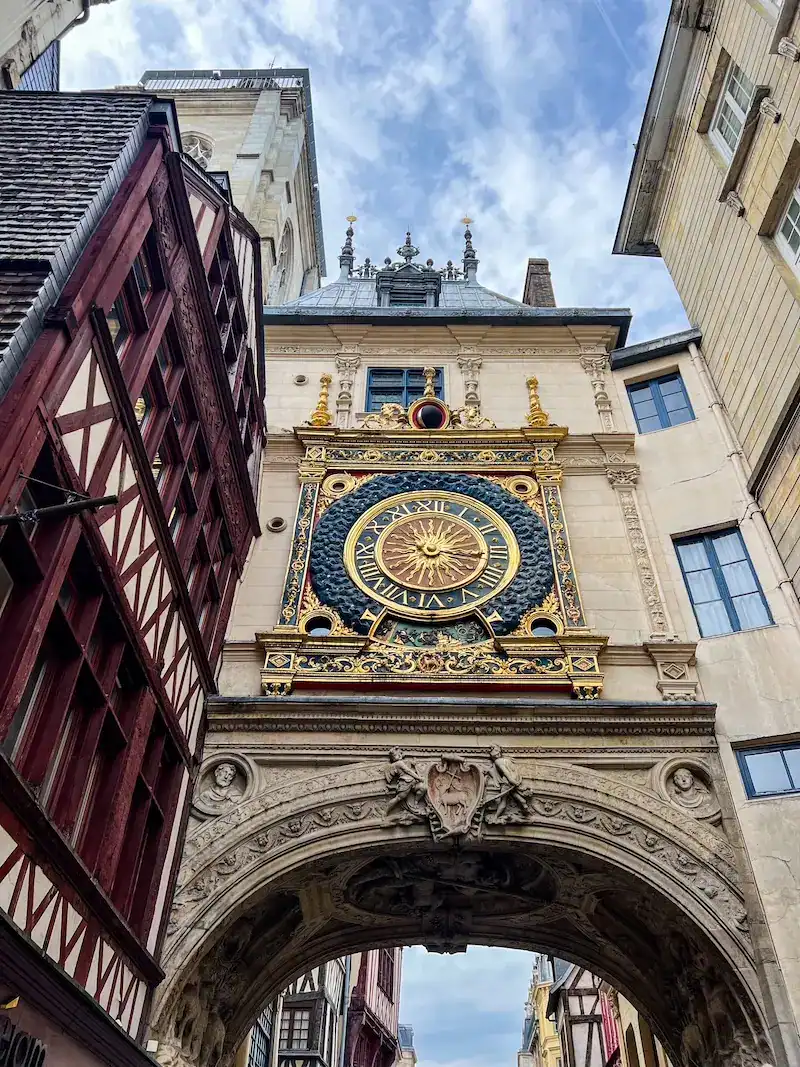
Le Gros-Horloge is one of the city’s most recognizable landmarks, with its enormous astronomical clock spanning a Renaissance archway in the historic center.
The clock dates back to the 14th century, although the structure you see today has been modified over the centuries. You’ll almost certainly walk beneath it while exploring central Rouen, so it’s an easy one to add to your itinerary.
Dark tourism fans have plenty to see.
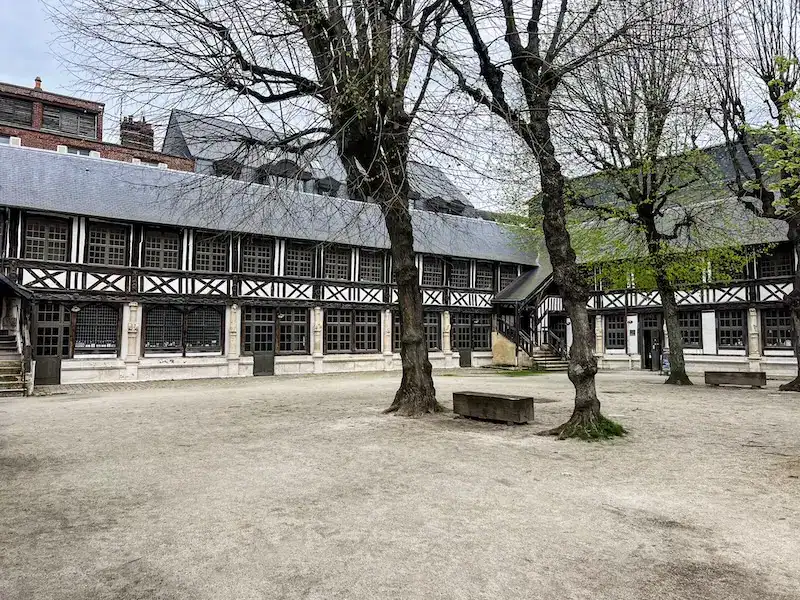
Rouen gets considerably darker once you start digging into its history. The Aître Saint-Maclou is probably the most unusual example.
An aître is an old French word for a cemetery or burial ground, and this one dates to the time of the Black Death. Walk into the courtyard, and you’ll find macabre carvings of skulls and bones, along with other reminders of the site’s original purpose.
Fun fact: There’s a mummified cat, too, because medieval plague history wasn’t creepy enough on its own.
Rouen also gives you plenty of opportunities to learn about Joan of Arc’s execution and the destruction the city experienced during World War II. The history here isn’t limited to pretty buildings and famous paintings.
There are lots of free museums in Rouen.
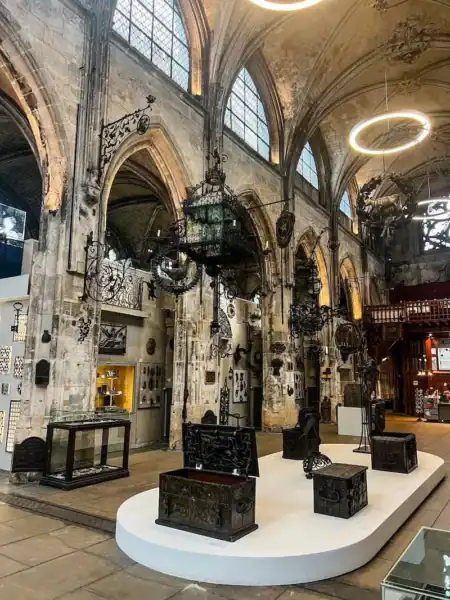
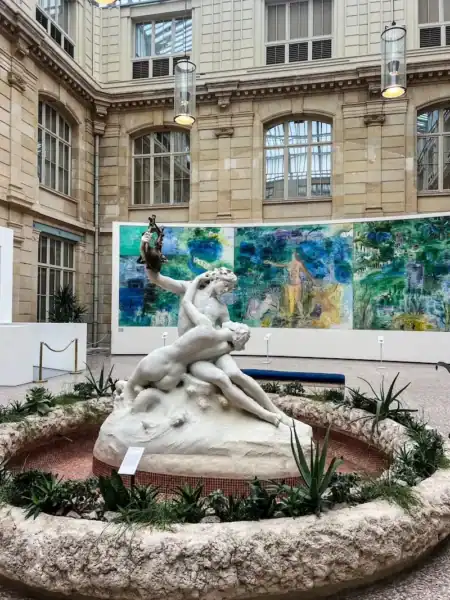
Let’s say you spend too much at the Julia Child place. There are lots of places to visit without paying an admission fee. Here are a few free museums that impressed us:
- Musée Le Secq des Tournelles: This one is housed inside a deconsecrated church and contains a massive collection of wrought-iron objects. Some are decorative, while others are unsettling, including historical surgical equipment.
- Musée Flaubert d’Histoire de la Médecine: This one includes the room where Gustave Flaubert was born as well as exhibits focused on the history of medicine. It’s housed in the former Hôtel-Dieu, where Flaubert’s father worked as a doctor.
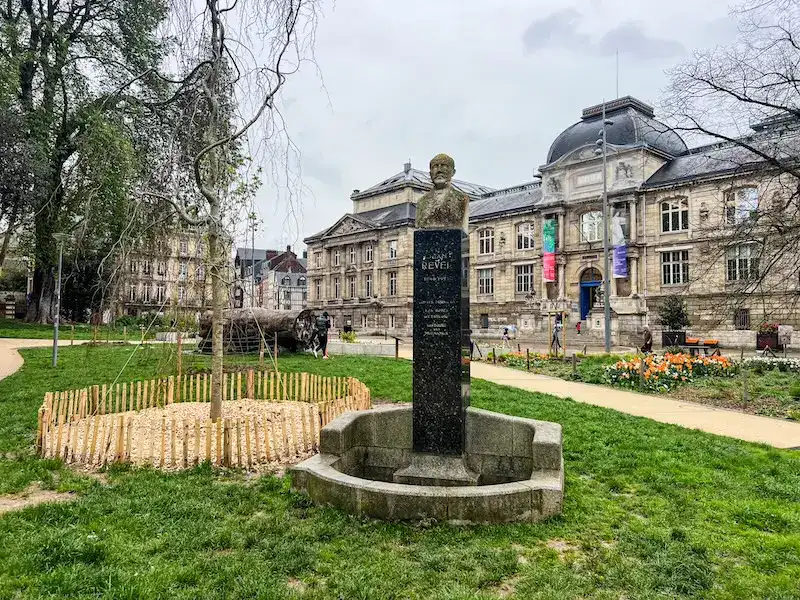
- Musée des Beaux-Arts de Rouen: This is a more traditional art museum and a must for Impressionist fans. We had less than an hour, so we made a beeline for the Impressionists upstairs, where we found one of Monet’s cathedral paintings.
Note: There’s a nice park outside the Musée des Beaux-Arts de Rouen, complete with a giant sequoia tree. You can make a quick stop there even if you’re not planning to spend time inside.
Rouen is an easy base for day trips.
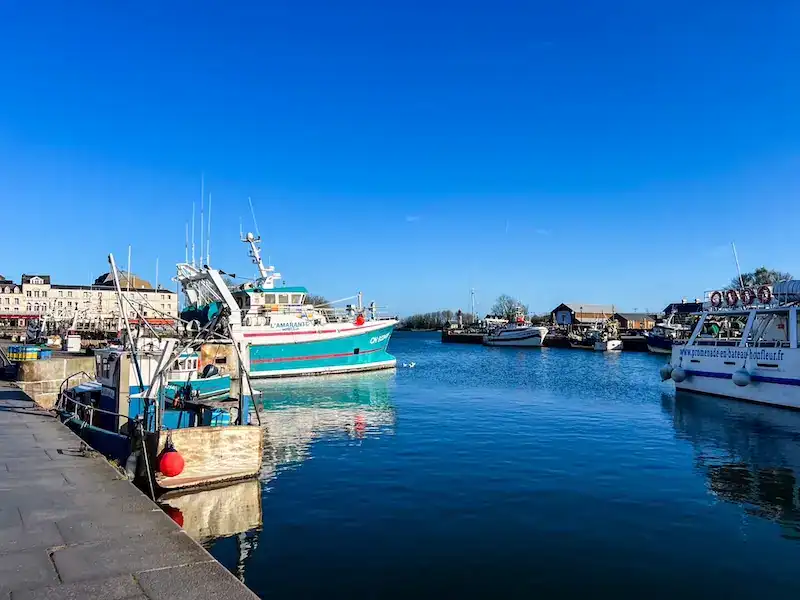
Rouen’s location makes it a nice base for exploring more of Normandy. From here, you can set out for the cliffs of Étretat, the harbor in Honfleur, or the historic cities of Caen and Bayeux.
You can also use Rouen as a jumping-off point for exploring the D-Day sites, including Omaha Beach, the Normandy American Cemetery, Pointe du Hoc, and Utah Beach.
Note: Just keep in mind that trying to fit all of that in isn’t recommended. If D-Day history is a priority for you, Bayeux makes a much better base for exploring the landing beaches.
If you’d rather learn about Normandy’s apple brandy, the Calvados Experience is in Pont-l’Évêque, about 50 miles (80 km) from Rouen. It’s an immersive museum dedicated to Calvados, followed by a tasting. You’ll need a designated driver!
Bayeux is a little farther away than the others, but it’s still doable by car in under two hours, depending on traffic. There’s enough going on there, though, that I’d recommend staying overnight rather than treating it as a quick day trip.
Who Rouen Is Best For
Rouen has a lot going for it anyway, but here’s who I think would really enjoy it:
- History buffs: Between Joan of Arc, World War II, the Black Plague, medieval architecture, and centuries of French history, Rouen gives history lovers plenty to dig into.
- Architecture lovers: Rouen has a fun mix of medieval half-timbered buildings, Gothic churches, modern architecture, and even bomb-damaged buildings that were never completely restored. You can see a lot wandering the historic center.
- Impressionist fans: If Monet is your guy, you’ll love Rouen. The city has an impressive collection of his works at the Musée des Beaux-Arts, on top of the spots around the city that inspired those works.
- Foodies: From an iconic historic restaurant like La Couronne to casual spots for fried fish, Rouen gives you plenty of reasons to plan your sightseeing around your next meal.
- Travelers who like quirky attractions: Rouen has some wonderfully weird stuff. You can see a mummified cat, a former plague cemetery covered in skull carvings, a museum of wrought iron, and a church built to resemble a boat.
- Travelers looking for a Normandy base: Rouen makes sense if you’re planning to explore more of Normandy by car. You can visit the city itself while using it as a jumping-off point for places like Étretat, Honfleur, and the D-Day sites.
When Rouen Might Not Be Worth Visiting
Rouen is a city I’d recommend visiting for its history and character, not because it’s the prettiest place in Normandy. If your idea of the perfect Normandy stop is a tiny harbor town, you may prefer a place like Honfleur.
It’s also not the place I’d choose if you only have a couple of hours and aren’t all that interested in history, architecture, or art. You can see some of the highlights quickly, but I think Rouen becomes more rewarding when you have time to actually explore.
And if you’re looking for dramatic coastal scenery, Rouen obviously isn’t going to compete with Étretat. This is a city visit, not a nature escape.
How much time do you need in Rouen?
I’d give Rouen at least one full day if you want to see the major sights without rushing. That gives you enough time for the cathedral, Gros-Horloge, Joan of Arc sites, Aître Saint-Maclou, a museum or two, and a sit-down meal.
You can certainly see the highlights in a few hours, especially if Rouen is a stop between other destinations. If you’re interested in the museums, history, and architecture, I’d stay overnight and give yourself a full day.
Which is better, Rouen or Honfleur?
This one really depends on what you want from your Normandy trip.
Honfleur is the smaller, prettier option if your ideal Normandy stop involves a picturesque harbor, loads of color, and a leisurely wander. It’s compact and feels very much like a postcard version of a French port town.
Rouen is the better fit if you’re interested in history, architecture, museums, Joan of Arc, and Impressionism. There’s just more to do here, in case you’re that kind of traveler. If you have room for both, visit both.
Where to Stay in Rouen
I wouldn’t recommend the apartment we picked for our stay in Rouen, but you have lots of options if you want to spend the night. (I’d recommend it!)
For the easiest sightseeing, look for a hotel in or near Rouen’s historic center. This puts you within walking distance of the cathedral, Gros-Horloge, and Joan of Arc sites.
If you’re traveling by car, pay attention to parking when choosing your accommodation. Being a little outside the center can make parking easier, but I’d still prioritize a location where you can leave the car behind and explore Rouen on foot.
Use the map below to browse your options while in Rouen:
Rouen is worth visiting, even just for the day.
So, is Rouen worth visiting? I’d say yes, even if you only have one day.
It’s an easy addition to a Normandy road trip, and there’s plenty to keep you busy. We each found something to enjoy, too. My in-laws loved the food, while Brian and I were entertained by the history, architecture, and all the quirky stuff.
If you’re traveling to Brittany, too, check these out:
- Cancale, the Oyster Capital of France
- The Prettiest Places to See in Brittany
- Should You Plan a Trip to Brittany?
- A Guide to Dinard, a Pretty Resort Town
- Planning Two Weeks Through Brittany
More France guides to help you plan your trip:
- Planning a Trip to the Dordogne
- Should You Visit the Paris Arrondissement?
- A Guide to the Best of Saint-Germain-en-Laye
- Spend the Perfect Day in Bordeaux
- Tips for Planning Summer Visits to France

Want to see more?
Subscribe to my biweekly newsletter for hot travel tips I come across, weird stories you won’t see elsewhere and perhaps lifelong friendship.
Too much, or just enough?
