
Venice, Italy, is a good time, but it can also be overwhelming.
A day exploring the Venetian Lagoon can then be a welcome diversion from the chaos over there in Venice.
Our trip was a lot of fun, despite the not-so-ideal weather we had the day of our travel. Each island has a unique vibe and claim to fame, so you won’t get more of the same at each one.
The best part is, it’s easy to do without much pre-planning. If you can read a ferry schedule, you can make a day trip to Murano, Burano, AND Torcello happen without much effort.
Quick Tips for Your Venice Visit
Your Flight: Seek out deals to Venice Marco Polo Airport using Skyscanner. Love deals? Subscribe to Going.
Your Accommodations: We stayed at the Hotel Canaletto for four nights, and I’d highly recommend it. Browse Booking.com or Hotels.com for more options. Vrbo is my Airbnb alternative.
Top Spots: Walk the Ponte del Diavolo on Torcello, snap photos of the colorful homes on Burano, and learn about a local trade at the Murano Glass Museum.
Disclosure: Travel on the Reg uses affiliate links to keep things running around here. At no additional cost to you, I earn a lil’ commission if you make a purchase. Any income earned supports the upkeep of this site. I appreciate you!
You can do Murano, Burano, and Torcello in one day.
Burano and Murano are already popular day tours from Venice, but Torcello is an easy addition for some historical intrigue.
There isn’t much to do on each island in the way of traditional attractions, so how much time you spend on each is really up to you and the ferry schedules.
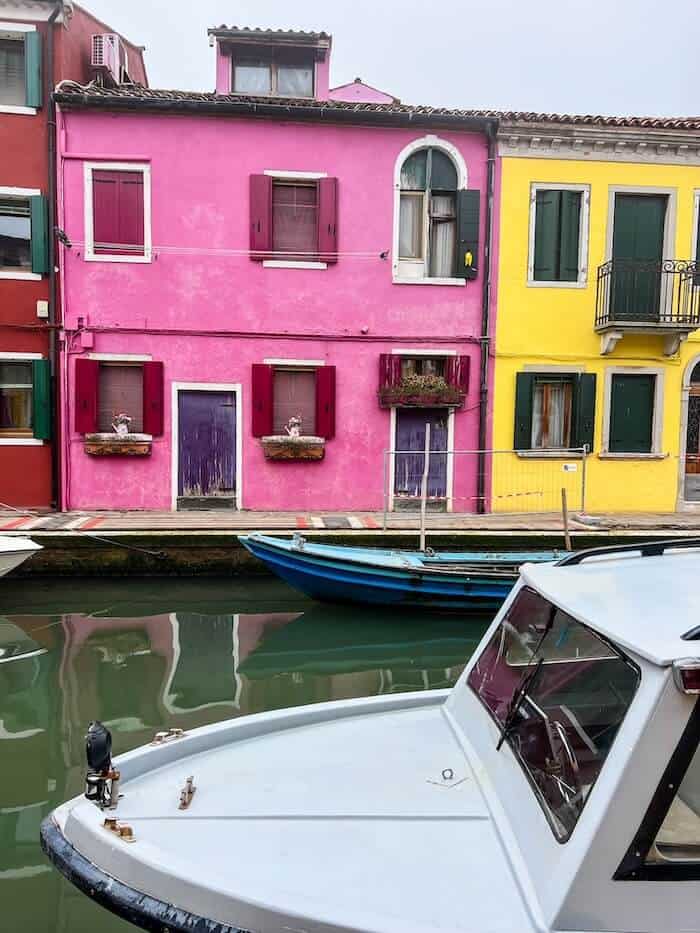
You can easily visit Murano, Burano, and Torcello without a tour, too. That’s what we did. We didn’t need any ferry tickets in advance, either.
How to Get to Murano, Burano, and Torcello From Venice
We had 24-hour ACTV travel cards gifted to us from the city’s tourism bureau and recommend you purchase the same day pass for getting around Venice and the lagoon.
You won’t have to bother with multiple passes as long as you validate your cards at the very start of your journey.
Note: If you’re in Venice for a few days, you may want to check out the Venezia Unica City Pass for discounted public transportation and admission to the city’s most popular tourist attractions. There are different levels of the pass, but you’ll get a deeper discount by buying it at least 30 days before your arrival.
The transport cards are 25€ each, but you’ll still save money if you’re tackling this itinerary as I’ll describe it.
We took water bus number 12 from the Fondamenta Nove ferry terminal in Venice and got off at Burano to start. (If you see them marked as vaporetto lines on your maps, those are the same boat rides.)
We were going to start our lagoon adventure there but the fog was awful.
To give it a chance to lift, we waited 10 minutes or so for the number 9 water bus nearby to Torcello.
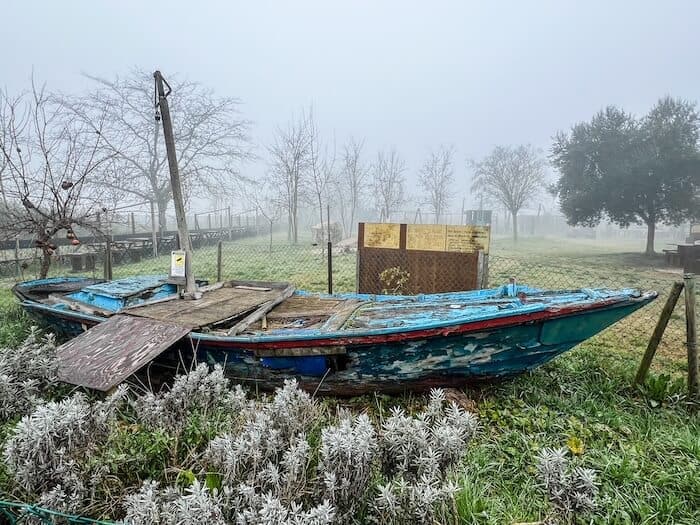
The number 12 also goes to Torcello if you ask nicely, but this scenario sounded too awkward for me and connections were breezy. It’s more likely to be a standard stop in the summer months when more tourists are visiting the ghost island.
READ MORE: Want more inspiration for Venice day trips? Verona was one of our favorites. Check out my guide!
Stop 1: Torcello
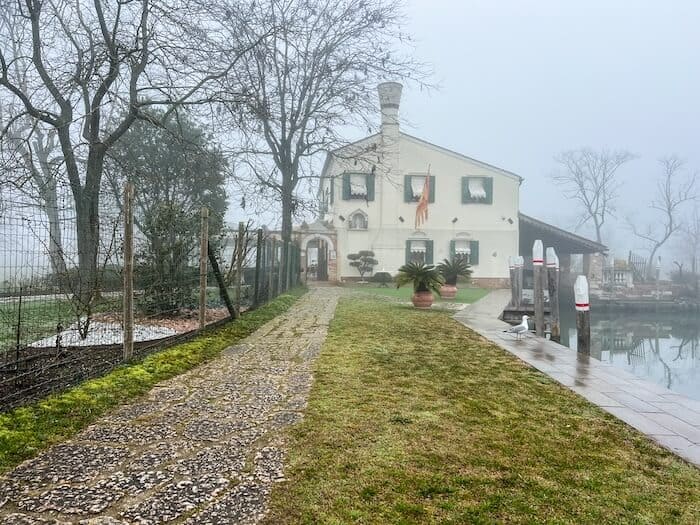
As I said, we had every intention of starting with Burano as our first stop on our Venetian Lagoon adventure. Unfortunately, we chose what appeared to be one of the foggiest days of the year to take our trip.
Since Burano is known for vibrant colors that would be muted by the fog, we started in Torcello, instead. It only made our stop there more atmospheric.
How long does it take to get to Torcello from Venice? It takes about 40 minutes to get to Torcello from Venice with the transfer at Burano. If the weather is nice and sunny and you’d like to start there, by all means do so.
Now that we’ve been to all three of these, we wouldn’t have done it any other way no matter the weather.
Torcello is famous for being one of the first settlements in the Venetian Lagoon. Its marshy surroundings meant it was an important trading hub back then.
It’s worth visiting Torcello for that historical significance alone, but it’s also worth a trip for the tranquility you may not get elsewhere in Venice.
There isn’t much in the way of “doing” in Torcello. It’s more about experiencing one of the first populated islands in the lagoon.

Torcello used to be an even more important trading center than Venice thanks to its plentiful salt marshes. Thousands of people called the island home, including Ernest Hemingway at one point.
What made Torcello such a desirable trading post turned into its slow death by the end, as transportation within the salty marshes became harder with changing water levels.
Only about a dozen people live here full-time today, including the head priest of the local church.
I loved the ghost island vibes, though. Let’s get into what you can do in about an hour or so on Torcello.
Snap a photo on the Ponte del Diavolo.
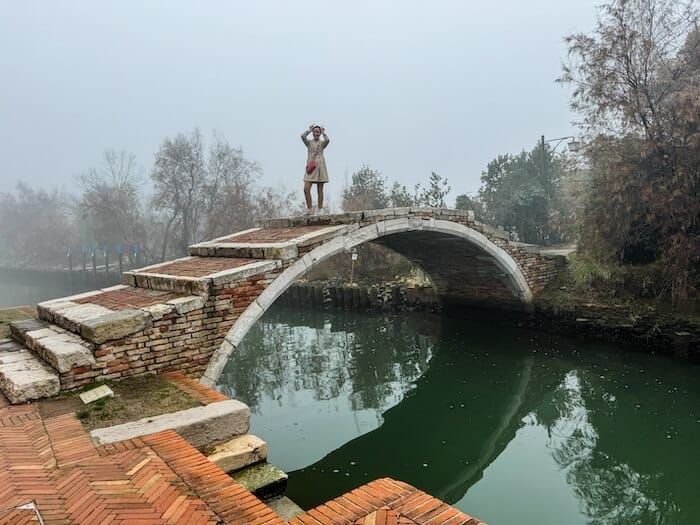
This is the Devil’s Bridge, the site of local legends involving a young girl’s pact with the devil to restore the life of her lover.
Here’s how it went: Local girl meets Austrian boy. Family disapproval ensues. Boy dies. Girl meets witch who brings boy back from the dead on the promise that the witch will bring him the souls of dead babies on Christmas Eve for the next seven years.
This one was an even more intriguing time in the fog.
Visit the main palazzo.
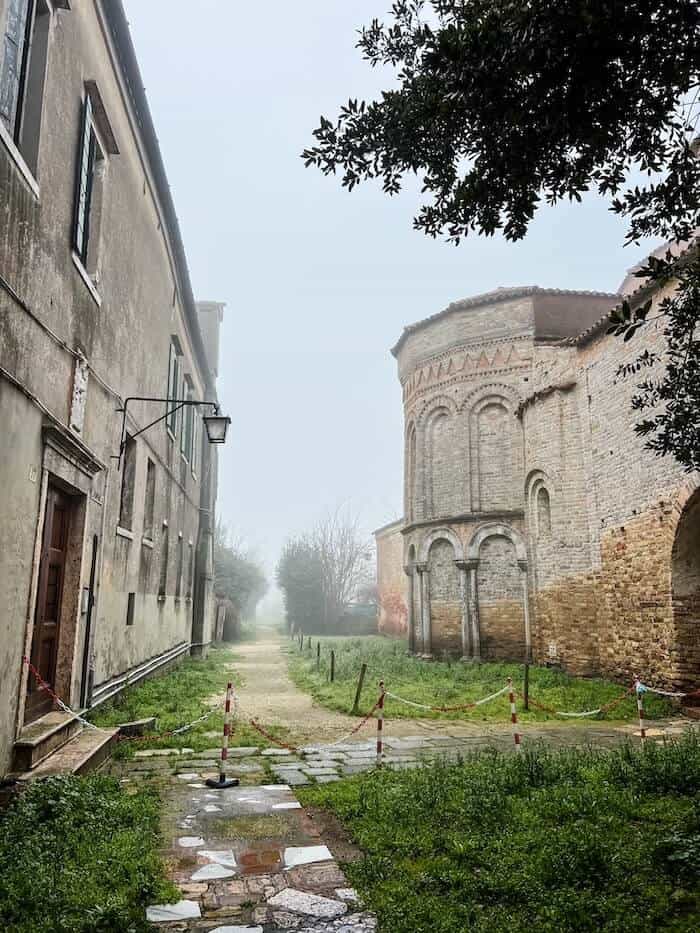
This is where you’ll find most of the island’s “attractions.”
Start at the Basilica di Santa Maria Assunta, or Torcello Cathedral, a 7th-century landmark. You’ll pay a small fee to see the mosaics inside. Pay a few extra to climb the campanile, or bell tower, something we skipped due to the fog that day.
There are no photos allowed inside, but what you’ll see are Byzantine mosaics dating back to the 11th century, including a depiction of the Last Judgement.
I was more impressed by the free Church of Santa Fosca next door, but I’m a sucker for free stuff. You can’t visit this way today, but at one time, the two houses of worship were connected by a portico.
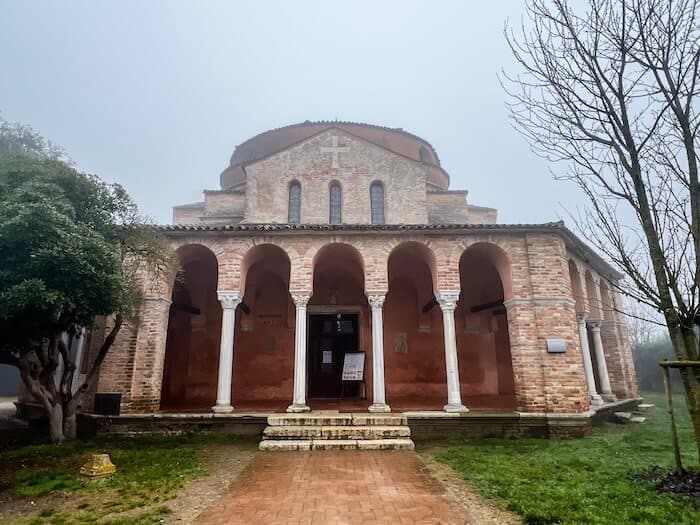
The last item of note is the Museo Provinciale di Torcello, the town’s archaeological and medieval-modern art museum.
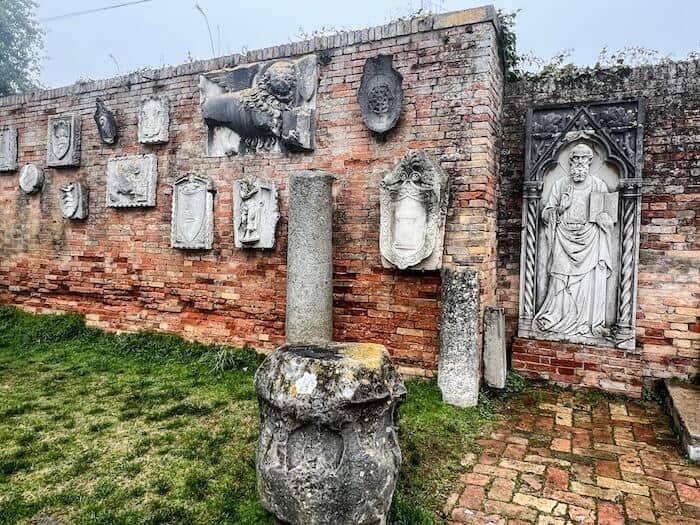
You’ll likely pop by the property anyway in search of the “Throne of Attila,” a stone chair that doesn’t actually have anything to do with the King of the Huns.
Note: The chair was placed here at least 100 years after he was dead and gone and is more likely connected to local religious folks of importance. Legend has it that if you have a seat there, you’ll return to Torcello one day.
If you’re here for learning, the museum itself houses all kinds of archaeological finds from digs in and around Venice.
See the art at Casa Museo Andrich.
This one was closed on our trip, and that may be the case for you, too. The museum has super limited hours, and you need to book ahead if you’re interested in a visit.
That said, the former home of artist Lucio Andrich gets high marks for its collection of tapestries, glass works, and engravings. If you’re here from March to September, you can also visit to see flamingoes on the banks of the lagoon.
That sounds quite whimsical indeed.
Try the local restaurants.
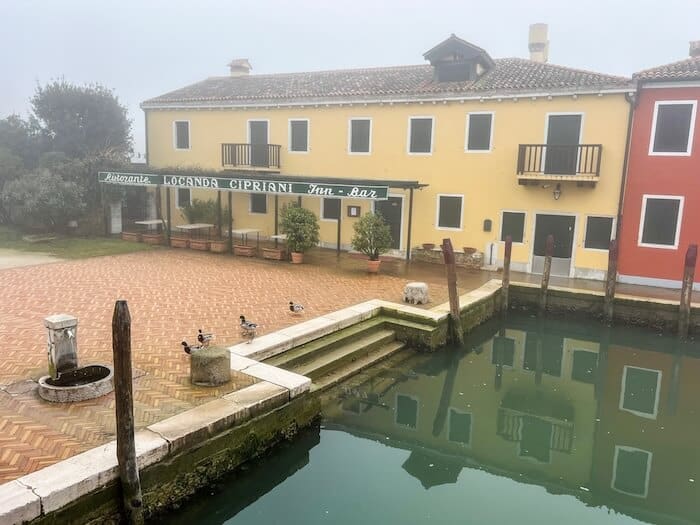
There wasn’t much open during our off-season visit, which makes sense. I told you there are like a dozen people who live here, and they’re likely not hitting the neighborhood haunts with any level of regularity.
The big deal here is the Locanda Cipriani. The hotel and restaurant has hosted the likes of Hemingway and heiress Barbara Woolworth Hutton.
Two other options are the Osteria al Ponte del Diavolo and Ristorante al Trono di Attila. Both serve lunch with seasonal ingredients.
If you’re here during a slow time of year as we were, though, your next stop will have plenty of options for food.
Stop 2: Burano

Time your exit from Torcello around the next ferry. It seemed to come about every 15 minutes during our visit. It’s just a short five-minute trip back to Burano on the number 9 water bus.
You won’t need extra Burano tickets if you have that 24-hour pass I told you about.
We arrived with a persistent heavy fog but I could tell this one was still a stunner. The lack of summer tourists only made it that much more enjoyable as one of the most beautiful islands in the lagoon.
You can see Burano well in two hours or so, including time for a seafood lunch.
READ MORE: I have a full guide to things to do in Burano to help you prioritize or plan if you have more time.
With a few hours, don’t miss the Lace Museum to learn a bit about the local industry and the local leaning tower, Il Campanile Storto.
From there, eat at one of the many restaurants that boast seafood from the lagoon and the sea, and take your glamour shots against the colorful houses.
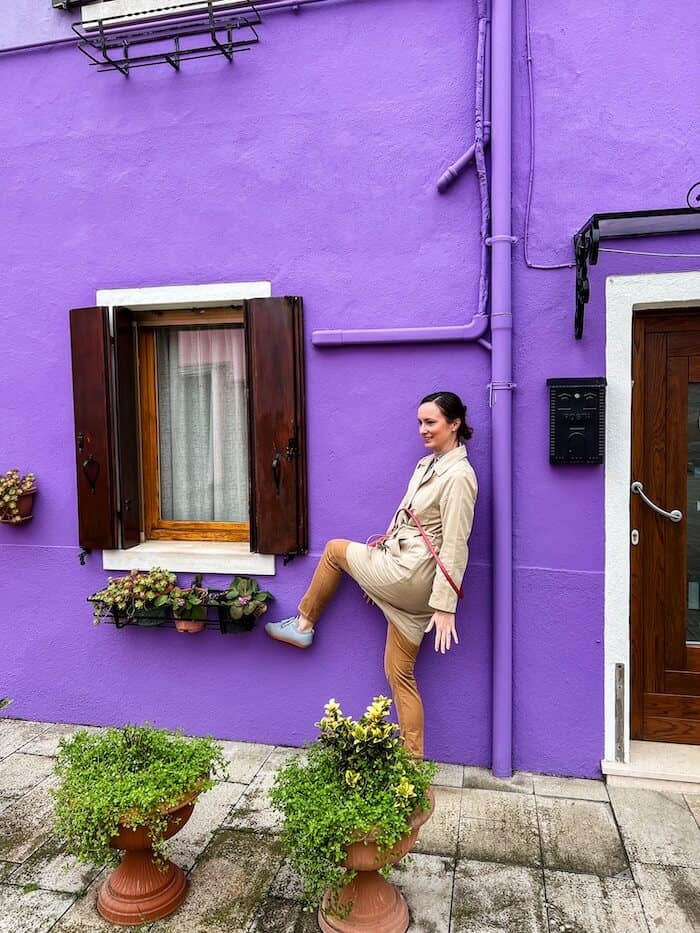
Burano is famous for its colors, and they were showing off even through the fog.
The former home of Giuseppe Toselli, a local who loved movies and painting new shapes onto his house daily, is a particularly colorful spot. You’ll see it marked on your maps as “Bepi’s House.”
Fun fact: If you want a bonus island from here, you can walk over the Ponte Longo to Mazzorbo, a separate island. This one is known for Venissa, a restaurant and winery with a Michelin star. The lauded eatery comes with four dollar signs, so you’ve been warned.
Stop 3: Murano
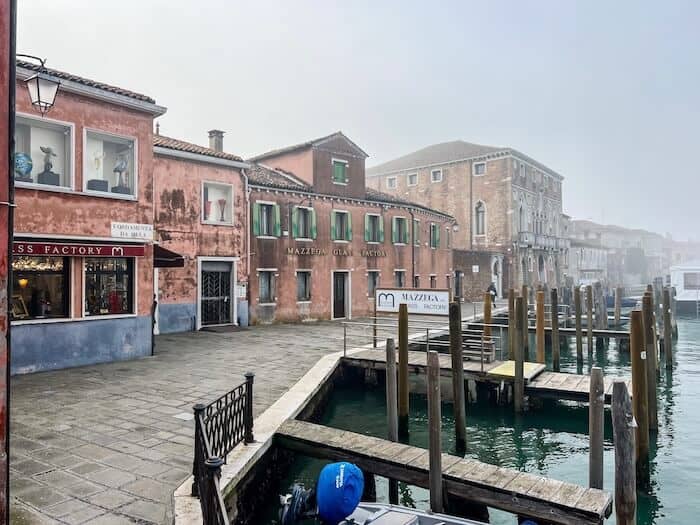
Visiting Murano is your last stop on your lagoon tour. Our water bus from Burano to Murano was super crowded, so give yourself time before your desired departure to queue up.
Otherwise, you may need to wait up to 30 minutes for the next ride.
We arrived at a view of the Murano Lighthouse. Yes, the fog was still a thing. In fact, it progressively got worse during our time in Murano, but thankfully that didn’t affect our trip back to Venice.
If you’re looking to prioritize your time on your trip, Murano is better if you want more amenities. It’s the bigger island. Burano is better if you’re seeking a more aesthetically pleasing place. Burano’s colorful buildings are the stuff of Instagram legend, and the story checks out.
Let’s get into a few more things to do in Murano if you’re still following along with our day on the Venetian Lagoon.
Visit the Murano Glass Museum.
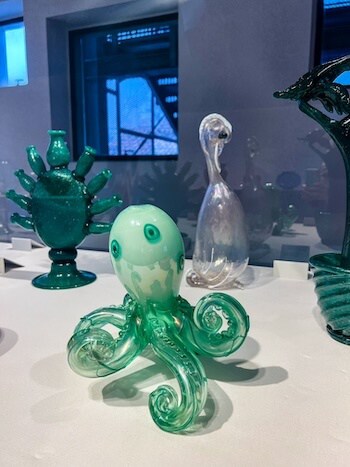
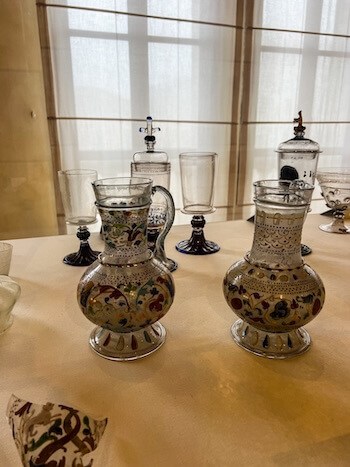
Murano is known for its history of glassmaking. The art goes back to the late 13th century when glassmakers were forced to move to the island due to fire risks in Venice along the Grand Canal.
This museum gives you some context on the trade. I found this one much more interesting than the lace-themed version on Burano.
They had a great glass recycling exhibit on display during our trip on top of the permanent exhibit of blown glass throughout the years.
Note: You don’t need advance tickets for these places, by the way. Most travelers are visiting for the vibes and vibes alone of the islands.
See the Basilica dei Santi Maria e Donato.
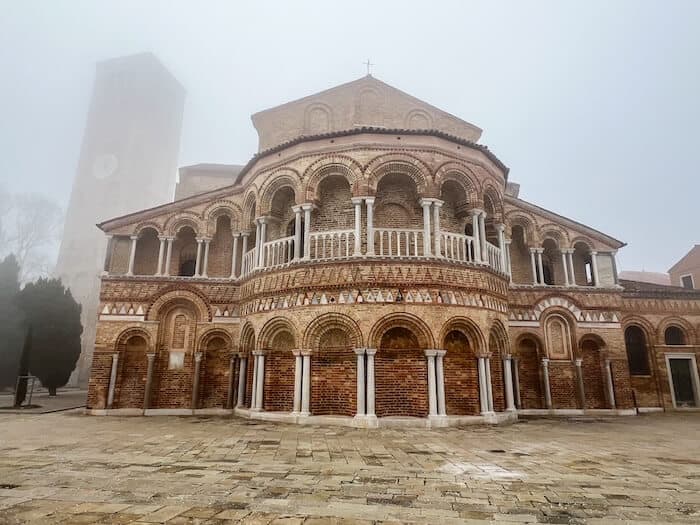
This is one of the stops I didn’t mind shrouded in fog. The church, which also goes as the Duomo di Murano, boasts a pretty ideal setting against the canal. It’s no Florence Cathedral, but it does have some intrigue.
Inside, see Byzantine mosaics from the 12th century and bones that may or may not have belonged to a dragon slain by Saint Donatus of Euroeau.
If you don’t believe in that sort of thing, you’ll see the relics of the saint inside, too. That part is confirmed.
Fun fact: If you love a good repurposed church, put The Glass Cathedral on your list. It operates out of what was once the medieval Chiesa Santa Chiara.
Get yourself some Murano glass.
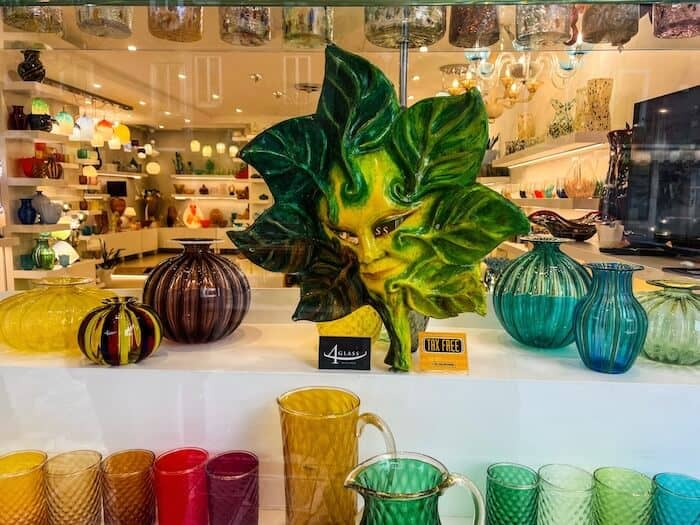
We popped in a few of the shops to look for a miniature goat, but couldn’t find one.
It seemed like they have something against goats, honestly. How would you explain the toucans, donkeys, and rhinos? There were so many clowns, too!
If you’re not as particular, there are plenty of shops selling beautiful collections of Murano glass in all shapes and sizes. Ferro & Lazzarini, an artistic glass factory, had a nice selection of weird stuff, including couples in coitus, all made of glass.
Some of the shops also had workers leading glass blowing demonstrations. You can also plan a visit to a spot like Xe Vero to watch a demo if you’re intrigued. We’ve done something like this in Asheville, and it’s an amazing thing to see.
Dine at Murano restaurants.
It was getting late from here on our full-day tour, and the fog was getting worse. We were nervous about getting back, so decided to return for dinner in Venice.
If you’re luckier with the weather, you have many options for dining in Murano.
If you just need a quick nosh in the form of a classic Italian sandwich, try Osteria Ai Cacciatori. Osteria Acquastanca and Trattoria Valmarana offer solid Venetian comfort food and fresh seafood.
Day Tours to the Islands of the Venice Lagoon
Our trip was self-guided, but yours doesn’t have to be if you want a guided tour. In the high season especially, it can be more intimidating to navigate the crowds and water bus system.
Here are a few options for highly-rated tours that allow you to see the best of each island:
Love tours in Italy?
Check out my guide to food tours in Bologna, one of my favorite Italian cities.
Where to Stay on a Day Trip to Murano, Burano, and Torcello
You can stay on the Burano and Murano islands, but both are easy to visit on a day trip from Venice if you want more affordable, plentiful options. Torcello accommodations are even more limited.
We stayed at the Hotel Canaletto for four nights on our Venice vacation. The staff was kind and helpful, the decor was whimsical, and the daily breakfast was delicious and included in the cost of our stay.
It was a great base for exploring Venice and for planning our self-guided tour of the lagoon, too.
Want to do some browsing? Check out the map below for more accommodations in Venice:
Spend some time exploring the lagoon on Venice trips.
The list of things to do in Murano, Burano, and Torcello isn’t long, but day trips here offer a more well-rounded picture of the lagoon vs. seeing Venice alone.
I’d highly recommend it on even long weekends to Venice, as it really can be more of a last-minute decision on your Italy trip.
I know I’ll be back to explore more of what the lagoon has to offer. These three islands are just a taste!
Traveling elsewhere in Italy? Check out these guides:
- Eat Your Way Through the Best of Parma
- A Guide to the Best of Florence, Italy
- How to Plan a Long Weekend in Rome
- A Detailed Guide to the Best of Bologna
- Florence to Lucca: Plan the Perfect Trip
Check out these guides for more spots in and around Italy:
- Should You Go to Rome or Florence?
- How to Visit Naples From Rome, Italy
- Navigating Rome: A Beginners’ Guide
- A One-Day Itinerary for Vatican City
- Is Giverny, France, a Good Idea in April?

Want to see more?
Subscribe to my biweekly newsletter for hot travel tips I come across, weird stories you won’t see elsewhere and perhaps lifelong friendship.
Too much, or just enough?
