
As a first-generation Pole and granddaughter of a survivor of Auschwitz, it was a no-brainer that I’d visit the camp at some point.
The idea can be polarizing for others. As a symbol of the Holocaust and all the suffering that accompanied it, visiting World War II’s most notorious concentration camp is a tough sell for some.
I urge you to treat Auschwitz-Birkenau as essential to your understanding of Poland and history overall, particularly in a climate where it’s cool to be ignorant.
I’ll even help you plan it. Learn more about the logistics of a day trip from Kraków to Auschwitz and why it’s an important experience to prioritize.
Quick Tips for Your Kraków Visit
Your Flight: Use Skyscanner to watch flights into Kraków’s John Paul II International Airport. Katowice Wojciech Korfanty Airport is another option, but it’s not as close to central Kraków. Love deals? Subscribe to Going.
Your Accommodations: Browse Booking.com or Hotels.com for accommodation options in Kraków. Vrbo is my Airbnb alternative.
Your Ride: You don’t need a car for Kraków or this day trip, but if you’re driving yourself, book a rental car ahead of time.
Top Spots: This guide prioritizes Auschwitz, but with more time in Kraków, visit Wawel Royal Castle and the neighborhood of Kazimierz.
Disclosure: Travel on the Reg uses affiliate links to keep things running around here. At no additional cost to you, I earn a lil’ commission if you make a purchase. Any income earned supports the upkeep of this site. I appreciate you!
How far is Auschwitz from Kraków?
Auschwitz is just 43 miles from Kraków. You’ll travel to the town of Oświęcim, the closest city to Auschwitz, to visit the camps.
How you get there will depend on your budget and how important convenience is to you. Many visitors take guided tours that last around seven hours, including transportation to and from the camp, but there are other options. Either way, you only need one day here.
How to Get from Kraków to Auschwitz
To get from Kraków to Auschwitz, you can drive yourself, take public transportation, or book a guided tour. I’ll give you details on each one, including how we made our trip happen.
You can drive from Kraków to Auschwitz.
The most efficient driving route from Kraków to Auschwitz is about 43 miles. That should take you a little over an hour. Once you’re there, you’ll find paid parking lots at both main sites.
You don’t need to drive yourself if you don’t want to, though. A taxi from Kraków to Auschwitz starts around $30 each way, but that can vary by actual distance, travel time, and even when you go.
Most accommodations can work out car hires for you, too.
Fun fact: This is what we did for our day trip to Auschwitz from Kraków. The journey takes much less time and it was affordable for our group. There were four of us.
You can get to Auschwitz from Kraków by public transport.
Traveling to Auschwitz by bus is your most economical option, but it’s also the least efficient. A bus journey will take you nearly two hours. You take the bus stop that leaves from behind Kraków Główny, or the main railway station in Kraków.
There are three stops available to you once you get close to Auschwitz via bus. The Muzeum Auschwitz (Auschwitz Museum) bus station is the closest. Timetables are available on the MPK website.
There isn’t a direct train from Kraków to Auschwitz, but you can take a train to Oświęcim. It’s still about a mile to the main camp at Auschwitz from the train station in Oświęcim.
You can then either hoof it or transfer to a local bus to get you to the memorial.
Finally, Auschwitz is accessible via the state railroad, or PKP. The Kraków to Auschwitz train will take at least 1.5 hours on a direct ride to Oświęcim. Timetables are available on the PKP website.
You can book an Auschwitz tour from Kraków.
If you’d prefer something a bit more full-service, there are a number of tour operators like KrakowBooking that will take you out on a guided Kraków to Auschwitz tour.
I’ve included a few more well-reviewed options for you below if that’s the route you’re interested in.
Take a look at these highly-rated options:
While a day trip from Warsaw would make for a long day, some visitors to Auschwitz do travel all the way from the capital city to the camps. Just expect tours to last at least 10 hours from start to finish. The driving time is nearly four hours from Warsaw.
Here are some well-reviewed tours if you’re traveling from Warsaw to Auschwitz:
A Brief History of Auschwitz
You’ll learn so much more on guided tours of the memorial, but I wanted to share a few points with you ahead of that, as there are some misconceptions about Auschwitz.
What you’ll see on a visit are two different sites: Auschwitz I and Birkenau.
Auschwitz I is the main camp, and what most people think of when they think of Auschwitz.
Note: This is where you’ll see the infamous entry sign to the camps: “arbeit macht frei,” or “work will set you free.”

Birkenau, or Auschwitz II-Birkenau, was built as an extension of the original camp. It became a vast complex of crematoriums to keep up with the influx of prisoners taken by the Germans.
Whereas the original camp was meant for political prisoners and those deemed as enemies of the Nazi regime, Birkenau was essentially a death camp. There were no pretenses here as far as any chance at freedom.
There was a third main camp, as well, Auschwitz III-Monowitz. This was a forced labor camp, where prisoners worked at factories on the site for the German war effort.
Note: The author Elie Wiesel was a famous survivor of the camp at Monowitz.
There’s no longer anything to see at the site, and the same is true for the dozens of subcamps that were a part of Auschwitz. Most were destroyed in bombings as the war came to an end.

Historians estimate that up to 1.5 million people, mostly Jews, but also Poles and others deemed undesirable by the Nazis, were killed at Auschwitz. This was part of the Germans’ “final solution.”
How much does it cost to go to Auschwitz?
It costs nothing to go to Auschwitz if you’re visiting on self-guided tickets.
Admission is free at the Auschwitz-Birkenau Memorial, but you’ll need to pay for a guide, or “educator,” as described on their website, if you want one. That serves as your ticket, and tours come in English or Polish.
You can walk around the site on your own without a tour guide, though. You still need to book a ticket ahead of time to ensure entry. This is to control crowds at the memorial site.
How much time do I need to visit Auschwitz?
You need at least two hours to visit Auschwitz, but budget for three hours. If you’re with a guide, it will take you at least 1.5 hours to visit Auschwitz I.
Plan for at least another hour at Birkenau, which was practically destroyed by the Germans just before the camps were liberated in 1945.
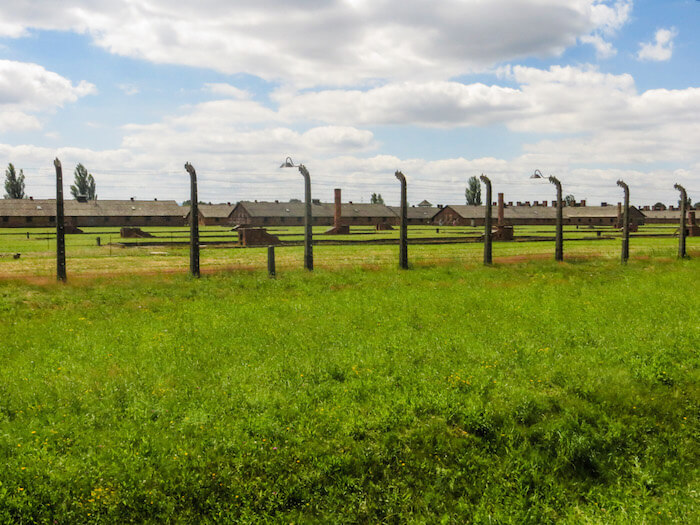
Birkenau is huge. While the buildings are mostly destroyed, a visit here will complete the picture as to how massive of an operation this was. Your visit there is self-guided. You won’t get a guided tour of the site unless you’ve hired a private guide.
Fun fact: There is a free shuttle bus that runs every 10 minutes between the two sites if you don’t want to walk the approximately two miles between them.
Is Auschwitz worth visiting?

Auschwitz is worth visiting if only to see this place for yourself. There’s no denying it moves most people in a way they’ll never forget. While it’s not somewhere I’ll return to, I urge you to visit once in your lifetime.
I’ve read all of the criticism and I wanted to address some of that here. In the end, it’s your vacation and your hard-earned money.
In all honesty, I’m glad you’re interested in exploring my Motherland. It’s a magical place. Ignoring the country’s difficult past does leave visitors with an incomplete picture, though.
Here are a few reasons why people skip Auschwitz on trips to Poland, with my responses to each.
I’m already super liberal and love all humans. What would I get out of a visit to a concentration camp?
A visit to the camps isn’t meant to make you think one way or another. It’s there as a historical record of the atrocities that occurred there.
What you get out of it is what you put into it, as with most experiences. If you arrive cynically, you won’t leave enlightened all of a sudden, as those kinds of personalities are quite stubborn in my experience.
I’d rather read about what happened at a museum.

I read this from a very prominent travel blogger who disparaged visits to any concentration camps in Europe. He cited a preference to visit museums that dive into the history of those sites instead.
I get it.
You love museums, and so do I. I can certainly see the value in them.
The United States Holocaust Memorial Museum is fantastic, and I highly recommend a visit there on your next trip to Washington, D.C. The permanent exhibits there are haunting and they do a stellar job with their temporary exhibits, too.
Visiting the place where it all happened is a different experience entirely.
Sometimes you need to feel a place to really experience that moment in time, if that makes sense. You’re not there to read about what happened during the Holocaust. You already know what happened. You’re there to feel something.
It’ll make me too sad for the rest of my vacation.

Travel is, for many, an escape from reality. It’s time to experience the world and get out of your bubble.
You don’t want to be bummed out by a bummer of a visit to a concentration camp on this amazing tour of vodka and pierogi you have planned. The Wieliczka salt mine is often a popular alternative for this camp. (It’s a great excursion. It’s just secondary to this one.)
I’m not going to tell you that you’ll leave Auschwitz feeling joy about what you just experienced. You will probably feel sad, maybe angry at what happened there. Maybe you’ll even feel frustrated about all of the feelings you’re feeling while you’re there.
That’s OK.
The moment will certainly stay with you, but you’re lucky enough to be able to leave the camps behind and have that plate of pierogi after. It’s a privilege to be able to sit in this moment in history and feel sadness.
I know all there is to know about Auschwitz already.
This is one of those moments where you think you know all about a place, but you really have no idea. Just because you’ve read about it or have seen movies about it doesn’t mean you fully appreciate the magnitude of what happened there.
Holocaust deniers are still a thing, by the way. The world is full of them. I’ve met them.
You won’t know all there is to know about a place until you’ve been there. It’s just not possible.
I don’t want to be those people who post selfies at concentration camps.
That’s great. Don’t do that. I’m proud of you. You shouldn’t be taking duck-lipped photos on the tracks leading into Birkenau, a death camp. People who rode in those train cars you’re posing next to were taking a ride to the gas chambers.
If you’re worried about what people at home will think of an Instagram feed full of concentration camp photos, let me give you a piece of advice.
You don’t need to be taking photos of yourself at all at Auschwitz. You won’t forget you were there and your followers won’t think you’re gross for posting those photos in the first place.
People just go to say they went. I’m not one of those people.

That’s unfair.
Generally, I’d always suggest seeing a place before making judgments about it and before making any assumptions about the effect a place may have on you.
Perhaps the pessimist in me may think that some people are there so they can wax on about how deeply moved they were on their social media accounts afterward.
The optimist in me believes that most visitors do so because they’re coming from a place of wanting to understand this moment in time and experience the place for themselves.
For many, visiting Auschwitz is very personal. It’s why you won’t see me talking about my own experience there.
That’s just for me.
More Things to Know Before Going to Auschwitz
Now that I’ve convinced you about why you should visit the camp, let’s get back to logistics. Here are a few more things to know before your visit to Auschwitz:
- You can go to Auschwitz without booking a visit in advance, but it isn’t recommended. Only a certain number of people is allowed into the site every hour.
- If you arrive without a plan, you’ll likely be met with a long line of humans who did the same. You may even find that visits are booked for the day.
- There is no dress code for visiting Auschwitz, but you want to balance comfort with the respect warranted by the site. That means leaving the booty shorts at home.
- Wear comfortable shoes for all of the walking on uneven surfaces you’ll be doing.
- Leave large bags back at the hotel. You’ll be restricted to a small purse for your visit.
- If you decide to bring a large bag anyway, you’ll need to check it in before you go on any tours.
- There is no official age limit for visits to Auschwitz. Due to the nature of what you’ll see there, it’s recommended by staff that kids are at least 14 years old.
- Don’t take glamour photos on the railway tracks at Birkenau. If this sounds specific, it’s because it is.
While we were there, we were unfortunate enough to see a group of jackwagons — because that’s what they were — taking absurd photos on the railway tracks at Birkenau.
They were either ignorant to the fact that these were the tracks that brought people into the camps to die, or they knew the history and just didn’t care enough to respect the site. There’s no excuse for this.
Also, you know the history now. You know better now, in case you didn’t before.
I’ll say it more time: This isn’t the place to take glamorous selfies draped atop the tracks, leaning seductively against buildings, or even taking selfies. Stop being gross.
READ MORE: Traveling elsewhere in Poland? I have a detailed guide for you.
What to expect at Auschwitz depends on you.
I can’t tell you what you’ll feel on your visit, as each person will experience the concentration camp differently.
You may feel something deeper because you have a personal connection to this place through familial lines. You may also feel something deeper because you’re an empathetic person.
I can only tell you how to visit Auschwitz and why you should tune out the noise and see this place for yourself.
Traveling elsewhere in Europe? Check out these guides:
- Plan a Delicious Day in Lucca from Florence
- A Monster Guide to Bologna, Italy’s Foodie City
- How to Plan Five Days on an Iceland Road Trip
- Take a Tour of Iceland’s Bucket List Waterfalls
- Brussels, Belgium: A Detailed Guide
We have lots of content from France. Check those out, too:
- Spend a Day in Charming Lille
- Fun Things We Learned Living in France
- Paris Will Always Be Worth Your Time
- A Review of a Round at Le Golf National
- How to Visit Monaco Starting in Nice

Want to see more?
Subscribe to my biweekly newsletter for hot travel tips I come across, weird stories you won’t see elsewhere and perhaps lifelong friendship.
Too much, or just enough?

We went to these camps a few years ago. We were fortunate enough to be able to have visited Dachau a few days before hand and visiting here made all of it become real. You learn about it in school of course but to actually go there and feel it was something that can’t quite put into words. It makes you appreciate what you have and allows you to remember those who did and did not survive.
So true. You just don’t know until you’re there.