
I’m not sure what took us so long, but over two years into our life in France, we finally made a trip to Lyon happen. We’d threaten it on road trips that were an hour or two north or south, and if you’ve been here for five minutes, you know we love to eat.
We just…didn’t follow through.
The wait was worth it, people. We absolutely loved this city. Is Lyon worth visiting? Absolutely. I’d argue it should be close to the top of essential cities to visit in France, alongside Paris (duh), Nice and the French Riviera, Bordeaux, and Strasbourg.
Lyon is delicious, but it’s also very much its own thing. I mean that in the best way. It’s not Paris, but it doesn’t want to be. It’s Lyon. And it’s awesome.
Quick Tips for Your Lyon Visit
Your Flight: Fly into Lyon-Saint Exupéry Airport (LYS), about 30 minutes from the city center by train, tram, or rideshare. If you’re already traveling through France, Lyon is also just two hours from Paris by high-speed TGV train.
Find deals to Paris and Lyon on Skyscanner. Love deals? Subscribe to Going.
Your Accommodations: We based ourselves in the 9th arrondissement near the Saône River, and it was easy to get to the historic center via public transit from there.
Browse Booking.com or Hotels.com for more options if you’re planning an overnight stay in Lyon. Vrbo is my Airbnb alternative.
Your Ride: You won’t need a car in Lyon. The city is highly walkable, and its metro, trams, and funicular make it easy to get around.
We only had one because we were on a multi-week road trip in France. If you’re doing that, too, book a rental car ahead of time.
Top Spots: Wander Vieux Lyon, visit the Basilica of Notre-Dame de Fourvière, and make a few lunch and/or dinner reservations for long, leisurely meals.
Disclosure: Travel on the Reg uses affiliate links to keep things running around here. At no additional cost to you, I earn a lil’ commission if you make a purchase. Any income earned supports the upkeep of this site. I appreciate you!
Is Lyon worth visiting?
Yes, Lyon is absolutely worth visiting. In fact, I’d argue it’s one of the most underrated cities in France.
Yes, everyone needs to visit Paris at least once in their lives, ideally more than once. But Lyon isn’t that far away, doing its own things, being all cool.
This is a city where Roman ruins sit next to Renaissance buildings, giant murals look like they’re coming out of apartment blocks, and lunch can stretch for hours. That said, Lyon isn’t a city that immediately dazzles everyone.
It doesn’t have an Eiffel Tower (well, not exactly), or the glamour of the French Riviera. Instead, Lyon rewards travelers who like to work for it a bit. Wander through hidden passageways, linger over meals at a traditional bouchon, and admire the art.
The more time you give Lyon, the more it grows on you.
If you’re looking for a city with incredible food, fascinating history, and far fewer tourists than Paris, Lyon deserves a spot on your France itinerary.
Lyon lives up to its reputation as France’s gastronomic capital.

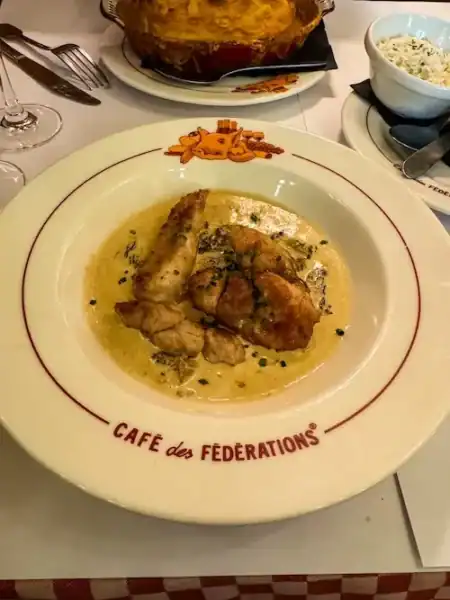
If you’ve heard Lyon described as the gastronomic capital of France, you might assume it’s just another tourism slogan. I’m sure that’s a part of it, but it tracks.
Food isn’t just something you use to fuel yourself between attractions in Lyon. It IS the attraction.
The city is famous for its traditional bouchons, cozy restaurants serving hearty Lyonnaise dishes like quenelles, all the pig parts, and salade lyonnaise. It’s also home to food halls, inventive bistros, and solid international cuisine.
Whether you’re browsing the market stalls or settling in for a three-course lunch, food here is meant to be enjoyed. So just indulge, even if you don’t think you’re a foodie. (I believe in you, though!)
Want to sample Lyon’s famous bouchons with a local guide? Check out these highly rated food tours:
The fine dining scene is on another level.


Lyon’s culinary reputation extends well beyond its bouchons. The city is home to an impressive collection of Michelin-starred restaurants, many inspired by legendary French chef Paul Bocuse.
The fanciest of the fancy feel more approachable, too, and lunch menus in particular cost a fraction of what you’d expect at establishments of this caliber in the U.S.
One afternoon, we enjoyed the three-course lunch special at La Mère Brazier, a two-star. Founded in 1921 by legendary chef Eugénie Brazier, the restaurant retains that essential culinary history.
Fun fact: Brazier was the first person ever to earn six Michelin stars and helped put Lyon on the map as France’s gastronomic capital.
Today, the restaurant continues to blend classic Lyonnaise traditions with a more modern approach. It was almost like eating at a bouchon on steroids. Everything was elevated, from the house pâté to the cheese course.
We also had lunch at Takao Takano, another two-star. This one shows off more of Lyon’s contemporary side.
Chef Takano blends French technique with Japanese flavors, resulting in dishes that focus on seasonality, balance, and ingredients big on umami. We loved that this one was more seafood-focused after a meat-heavy couple of days.
Of course, you don’t need to spend hundreds of dollars to eat well. One of my favorite things about Lyon is that incredible food exists at every price point. You will eat well here.
Lyon is easy to explore on foot.
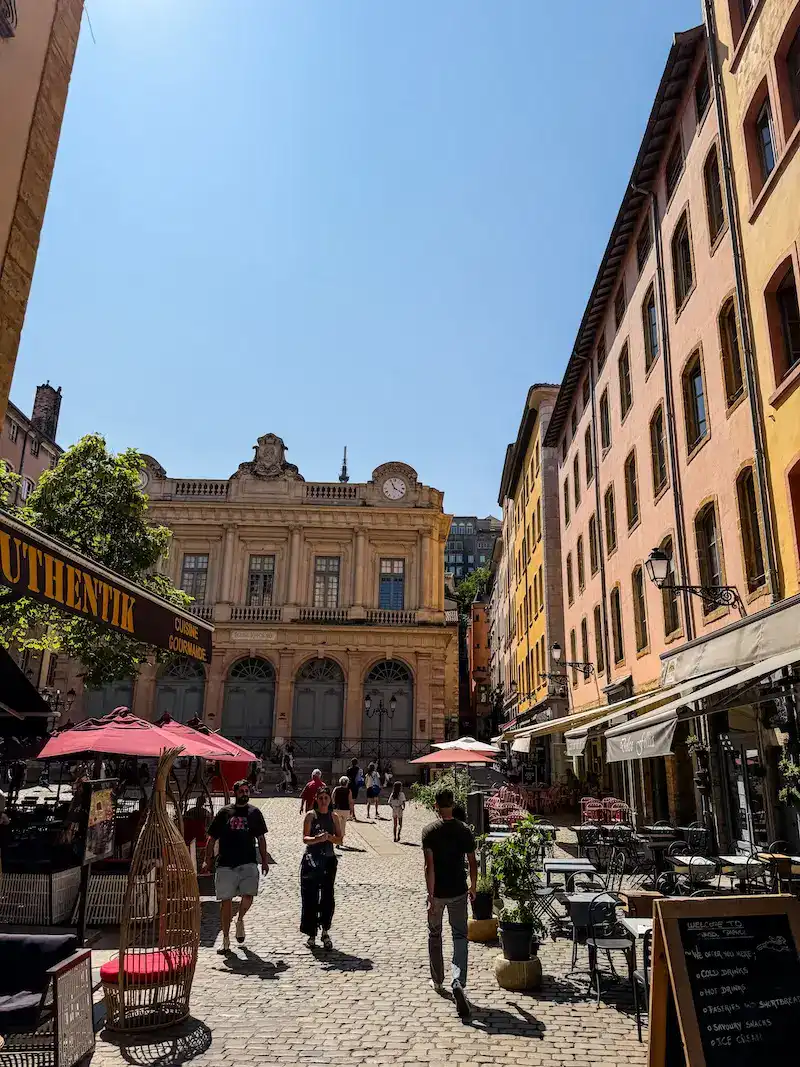
Despite being France’s third-largest city, Lyon feels very walkable.
Most of the major attractions are clustered between Vieux Lyon, Presqu’île, and Croix-Rousse, making it easy to spend an entire day exploring without public transportation.
Of course, there are hills, especially if you’re heading up to Fourvière or Croix-Rousse, but you’re rewarded with fantastic views over the city if you tackle them.
Note: If you do need to go further out, Lyon’s public transportation is great. We were staying about 20 minutes outside of the historic center, and tested out the city’s métro, funiculaire, tramway, and bus system. It was cheap and easy, and you can tap pay with your phone.
We chose a quieter base about 20 minutes outside the city, which was great for relaxing with our anxious pup after sightseeing. But if this is your first visit to Lyon, we’d recommend staying closer to the historic center.
Use the map below to help you browse:
It’s not Paris, and that’s a good thing.
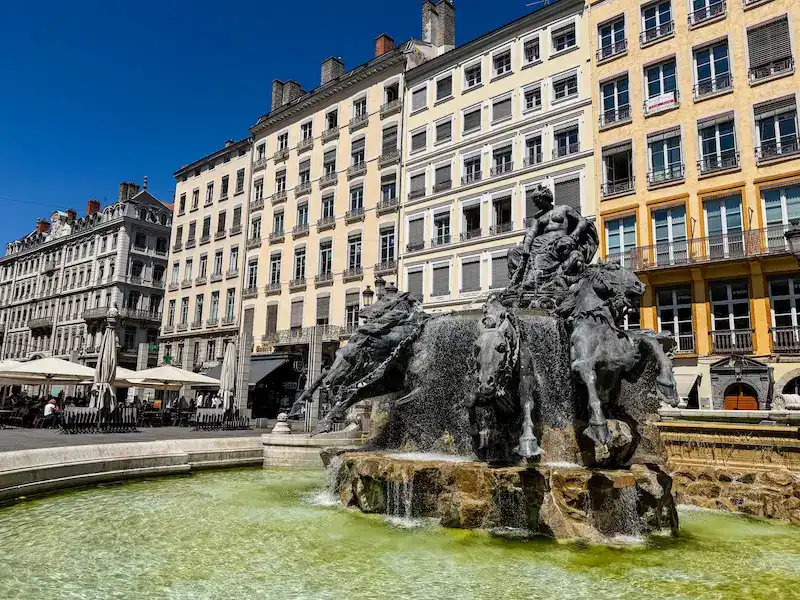
As much as I love Paris, not every trip to France has to revolve around the capital.
Lyon feels more relaxed, more local, and noticeably less touristy. You’re far less likely to find yourself standing in hour-long lines or squeezing through crowds just to catch a glimpse of a famous landmark.
Fun fact: So Lyon does have a tower that looks suspiciously like the Eiffel Tower, but don’t get too excited. The Tour métallique de Fourvière was built in the late 19th century and shares some of the same ironwork aesthetic as Gustave Eiffel’s creation. At 85 meters tall, it was once an observation tower.
Instead, you’ll discover neighborhoods filled with independent shops, busy markets where the French words are flying, and cafés where locals linger for hours.
Lyon doesn’t constantly demand your attention the way Paris does, and just being here should be enough for the bucket list. While I love being on the move, that slower pace ended up being one of my favorite things about visiting.
Vieux Lyon feels like stepping back into the Renaissance.
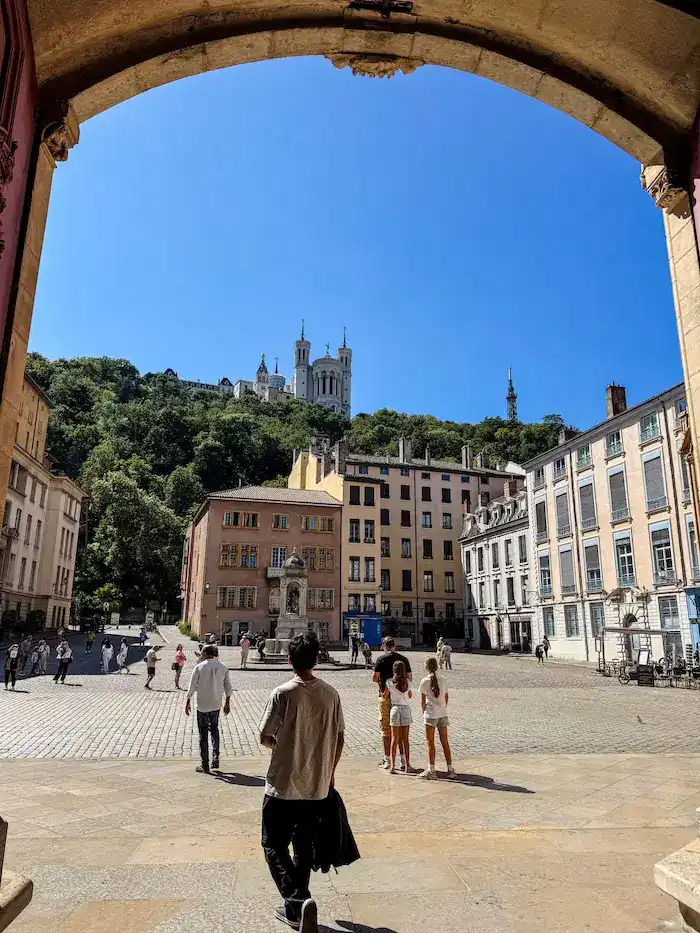
Lyon’s Old Town is one of the largest and best-preserved Renaissance districts in Europe and is part of the city’s UNESCO World Heritage Site.
Located between the Saône River and Fourvière Hill, Vieux Lyon is where you’ll find some of the city’s best architecture and hidden passageways.
Start along Rue Saint-Jean, the neighborhood’s main pedestrian street, with its colorful Renaissance buildings. While this is the busiest part of Vieux Lyon, it’s also where you’ll find the Cathédrale Saint-Jean-Baptiste, a local icon.
The smaller streets off Rue Saint-Jean, especially around Rue du Bœuf, are where you’ll find some of the more hidden but still preserved Renaissance architecture.
You can also just wander, something I don’t love telling travelers to do, as I like a plan. But unlike some historic districts that feel like outdoor museums, Vieux Lyon still feels lived in. You don’t always need to walk from pin to pin, I suppose.
You can walk through the ruins of an ancient Roman city.
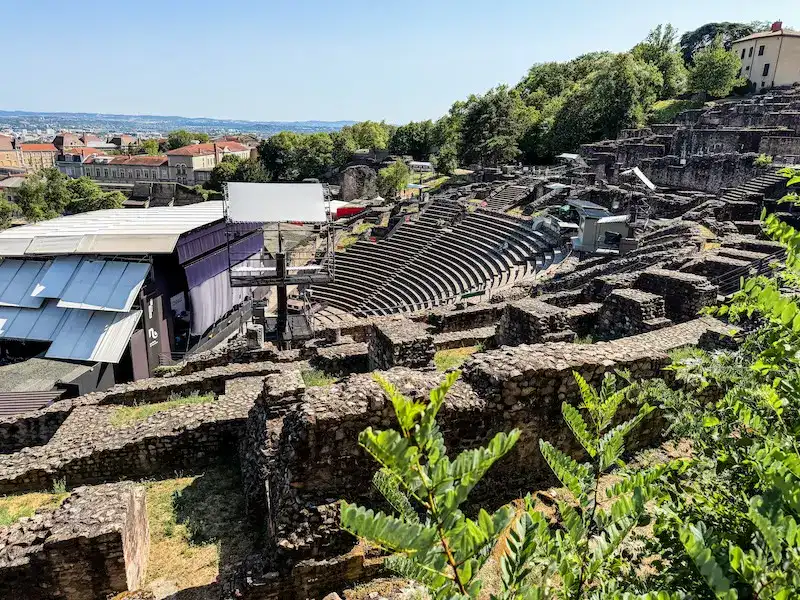
Lyon is my Roman Empire, basically.
Long before Lyon became France’s gastronomic capital, it was Lugdunum, the capital of Roman Gaul. Founded in 43 BC, it grew into one of the Roman Empire’s most important cities north of the Alps, and you can still see remnants of that history today.
The highlight is the Ancient Theatre of Fourvière, one of France’s oldest Roman theaters. Built around 15 BC, it could once seat up to 10,000 spectators for plays, concerts, and public gatherings.
Today, visitors are free to wander the stone seating (for free!) and imagine what performances looked like more than 2,000 years ago.
Right next door is the smaller Odéon, which hosted musical performances and political meetings during Roman times. Together, the two amphitheaters make up one of the country’s most significant Roman archaeological sites.
If you’d like to learn more about Lyon’s ancient past, the nearby Lugdunum Museum houses mosaics, sculptures, and other artifacts uncovered during excavations here. But even if you skip the museum, the ruins themselves are well worth visiting.
Hunting for traboules is a mood.
Traboules are hidden passageways that connect Lyon’s streets through courtyards and apartment buildings. These shortcuts were originally used by silk workers transporting fabrics across the city.
Some are easy to spot, but others are tucked behind ordinary-looking doors that you’d never think to open.
If a door looks like one you shouldn’t open, by the way, don’t. It’s probably private property. We learned this the hard way.
Anyway, finding them feels a bit like participating in another citywide treasure hunt. If you’re feeling stressed about this, Traboule de la Cour des Voraces is probably the most famous, and it shows up on map apps.
Lyon has an artsy, alternative side.
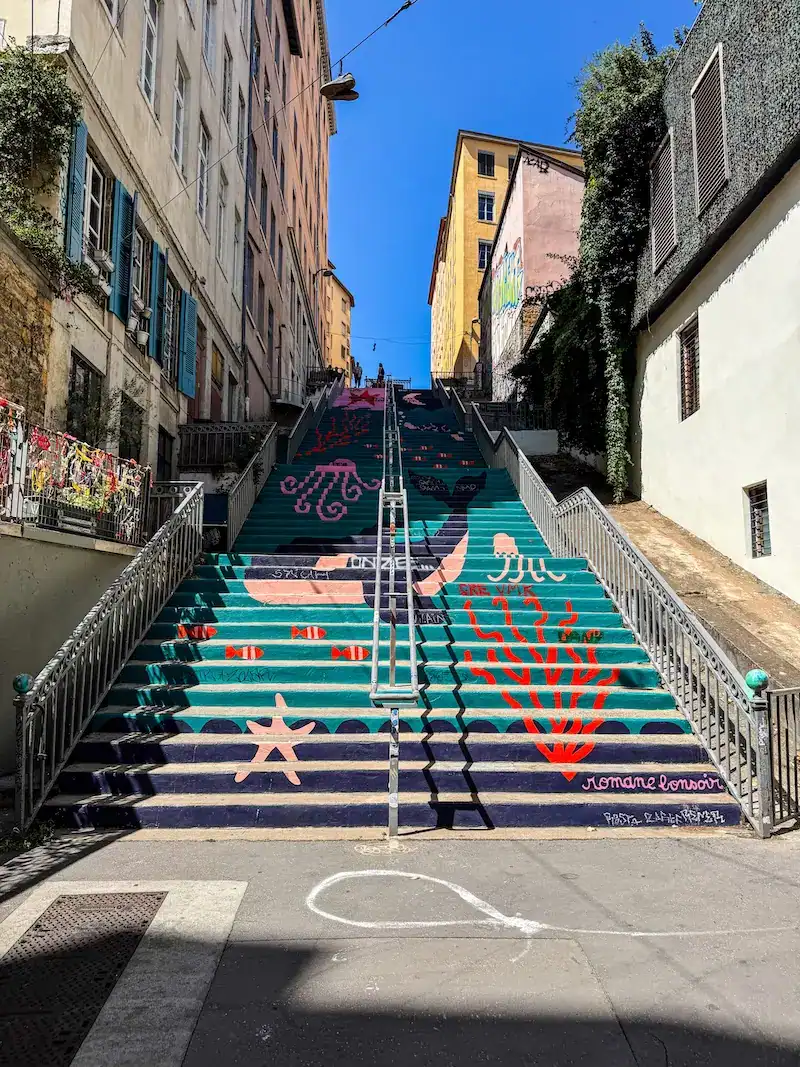
Lyon has a quirky, creative energy that surprised me.
Neighborhoods like Croix-Rousse are filled with colorful street art, independent boutiques, vintage shops, and cafés where students, artists, and locals gather. It feels a little rougher around the edges than Paris in places, but that’s part of the appeal.
I kept telling Brian that some of the locals looked like they were plucked from the 1990s punk scene. That’s the kind of thing I’m talking about. Rather than feeling polished for tourists, Lyon feels like a city that’s comfortable being itself.
The giant murals turn the city into an open-air gallery.
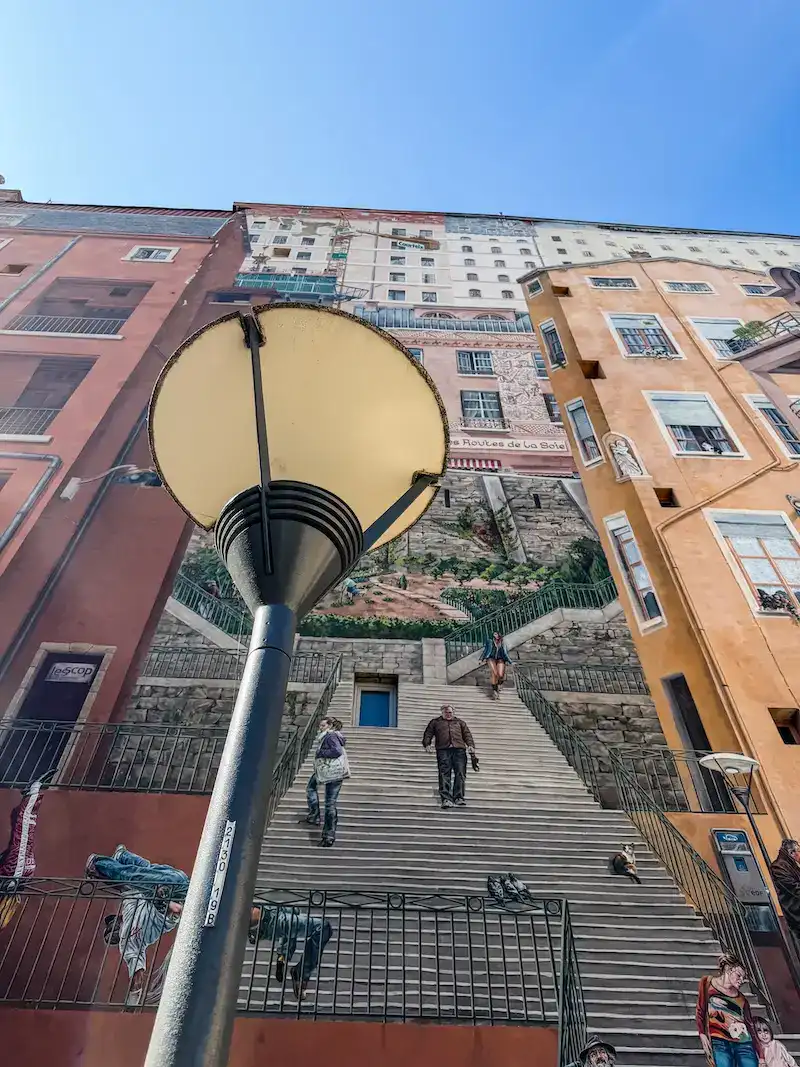
We love some good street art. In Lyon, the city’s public murals aren’t tucked into alleyways. Entire apartment buildings have been transformed into huge trompe-l’œil paintings depicting scenes from Lyon’s history, famous residents, and everyday life.
The Fresque des Lyonnais is probably the city’s best-known mural, featuring dozens of notable Lyonnais figures looking out from painted windows and balconies. We really liked the Mur des Canuts, which reflects life in the Croix-Rousse neighborhood.
Note: The Mur des Canuts was fenced off on our visit after some ding-dong tagged a piece of it to let everyone know they were there. It makes it harder to learn about it, as the signage is behind the fence, but the gist is that it celebrates Lyon’s silk-weaving history.
Finding these murals becomes a sightseeing activity in itself, encouraging you to explore neighborhoods you might skip on most itineraries.
The Musée Cinéma et Miniature is wonderfully weird.
We love a weird museum, but I was a little nervous about proposing this one to Brian because it looked like a tourist trap at first glance. Well, it can entrap me anytime it pleases, because we had such a fun time here.
The Musée Cinéma et Miniature has several levels of authentic movie props, costumes, and special effects used in films ranging from Alien to Mrs. Doubtfire.
Some of the rooms aren’t safe for the littles — rooms are curtained off if they include things like dismembered limbs and that Chucky doll — but most of it’s in good fun.
At the top, a room showcases painstakingly crafted miniature apartments that I likely spent way too much time staring at. It’s quirky, unexpected, and genuinely entertaining, even if you don’t usually seek out museums when you travel.
READ MORE: Love a weird museum? Check out the H.R. Giger Museum in Gruyères, Switzerland.
It’s one of the easiest cities to add to a France itinerary.
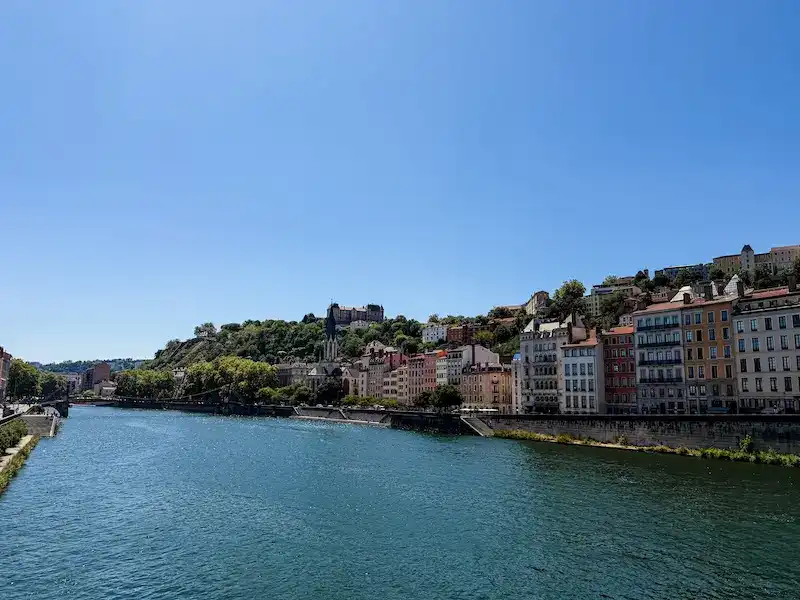
Lyon’s location makes it a convenient stop whether you’re traveling by train or car. High-speed TGV trains connect Lyon with Paris in about two hours. Direct rail connections make it easy to reach cities like Annecy, Marseille, Avignon, and Geneva.
If you’re road-tripping through southeastern France, Lyon also serves as a natural stop between Provence, the Alps, and Burgundy. We visited after a little jaunt to Annecy and Aix-les-Bains, and it couldn’t have been easier.
Whether you’re spending a weekend here or using it as a jumping-off point for the surrounding region, Lyon fits easily into almost any itinerary in France.
Who Lyon Is Best For
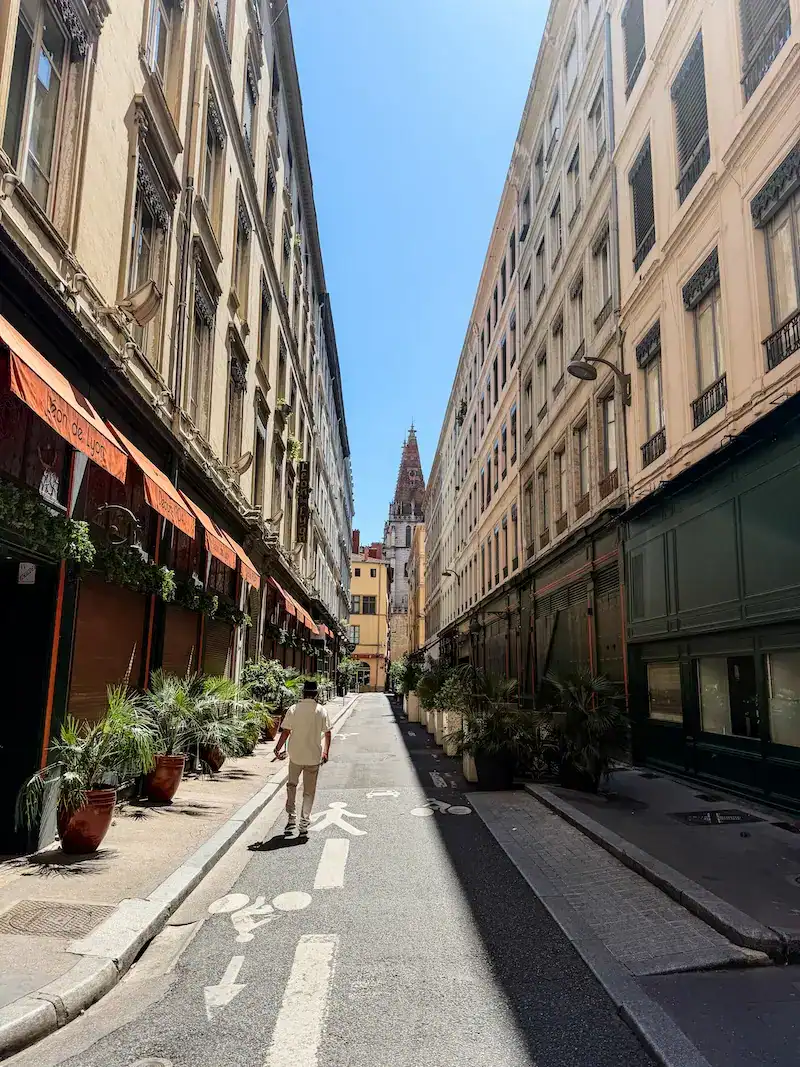
Lyon is easy to fall in love with. I’d put this one at the top of the list for:
- Food lovers: If your vacations revolve around memorable meals, you need to go to Lyon. Between traditional bouchons, Michelin-starred restaurants, and the city’s food markets, few cities celebrate food quite like Lyon.
- Travelers who have already visited Paris: It’d be weird of me to insist on Lyon if you haven’t been to Paris. But if you’ve already checked the Eiffel Tower and the Louvre off your list, Lyon offers a completely different side of France.
- History buffs: Roman ruins, Renaissance architecture, medieval streets, and centuries-old churches all exist within a relatively compact city center, making Lyon a fascinating destination for history lovers.
- Couples: Whether you’re sharing a long dinner, wandering the cobblestone streets of Vieux Lyon, or watching the sunset from Fourvière Hill, Lyon makes an excellent romantic getaway. Eating is hot, too.
- Travelers who like slower city breaks: Lyon rewards curiosity more than efficiency. It’s a city best experienced over a few days rather than squeezed into a whirlwind itinerary.
When Lyon May Not Be Worth Visiting
As much as I enjoyed Lyon, I don’t think it’s the right fit for every traveler.
If this is your first visit to France and you only have three or four days, I’d probably prioritize Paris. Lyon is fantastic, but Paris offers more of the iconic sights that many first-time visitors dream about.
If you prefer fast-paced sightseeing, Lyon isn’t a city built around that kind of vibe. Its biggest appeal lies in wandering neighborhoods, lingering over meals, and discovering places you weren’t specifically looking for.
On that note, if you don’t love spending good amounts of your time eating, you’ll be missing out on one of Lyon’s biggest selling points. Lyon isn’t the city for travelers happiest when they’re grabbing something to go before racing off to the next attraction
Finally, if you’re looking for the “prettiest” French city, this one isn’t it. Lyon is beautiful in its own way, but it’s not the Mediterranean, Alsace, or the Alps.
READ MORE: Brittany is pretty friggin’ beautiful, too. Here are my favorite spots in the region!
Is Lyon better than Paris?
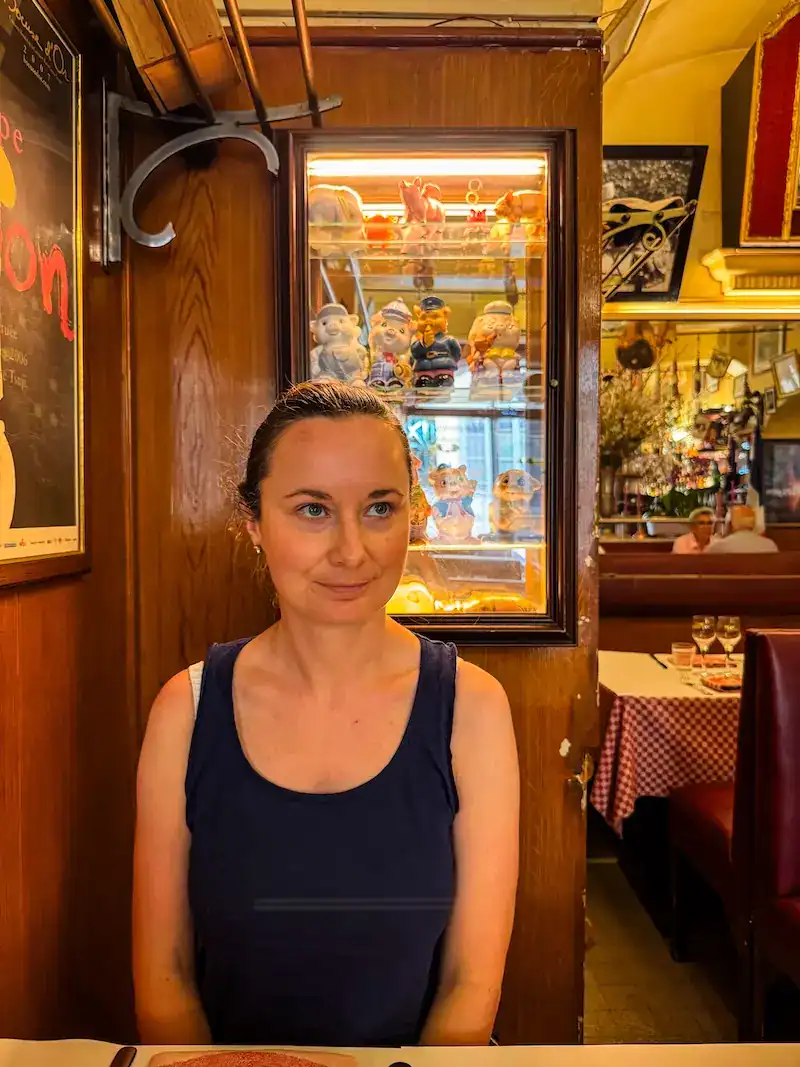
That depends on what kind of trip you’re planning. Choose Paris if you want world-famous landmarks, iconic museums, and the classic first-time France experience.
Choose Lyon if you’re more interested in food, fewer crowds, and a city that feels a little more local.
Personally, I don’t think Lyon is better than Paris, but it’s a tough comparison. They’re so different. I was dazzled by Paris immediately, and after dozens of trips there, I’m still not jaded by it.
Lyon takes a little longer to appreciate, but many travelers (that’s us!) end up falling for its quieter charm after they’ve visited Lyon. If you have the time, visit both.
Which is nicer, Lyon or Nice?
I know I said this about Paris, but these two cities couldn’t be more different.
Choose Nice if you’re dreaming of beaches, sunshine, and Mediterranean views. Choose Lyon if your priorities are eating world-class food, history, museums, and exploring one of France’s most walkable cities.
If you’re planning a summer vacation focused on relaxation, I’d lean toward Nice. If you’re planning a city break built around eating, history, and culture, Lyon wins every time. Again, you can do both!
Lyon is worth visiting, especially if you slow down.
Lyon isn’t the kind of city that overwhelms you with bucket-list attractions. Instead, it wins you over through incredible meals, hidden passageways, and a pace of life that is less frenetic than what you’ll find in Paris.
Just come hungry. That’s about the biggest piece of advice I can give you. I know we can’t wait to get back!
More destinations to tick off in France:
- How to Plan a Day in Toulouse
- Plan a Trip to Antibes From Nice
- A Spring Guide to Lovely Giverny
- How to Plan a Day in Marseille
- A Three-Day Guide to the Loire Valley
I’m not done yet! More guides for France:
- We Moved to France! Here’s How
- Planning One Day in Avignon
- Should You Visit Saint-Malo?
- A Walking Guide to Pont-Aven
- Tips for Driving Around France

Want to see more?
Subscribe to my biweekly newsletter for hot travel tips I come across, weird stories you won’t see elsewhere and perhaps lifelong friendship.
Too much, or just enough?
