
Before moving to France, we assumed people exaggerated when they talked about the quality difference of French food compared to the United States.
They’re famous for croissants, cheese, and wine, but how different could ordinary grocery store food really be?
As it turns out, pretty different.
From butter and bread to tomatoes and even frozen pizza, we’ve found ourselves repeatedly saying the same thing: “Why does this taste so much better here?”
For this guide, we’re comparing French food vs. American food. It’s based on our own experiences as Americans who have spent the last few years grocery shopping, eating out, and cooking in France.
If you want to watch us taste it all, check out the accompanying YouTube video below:
1. Croissants and Pastries

This is the obvious place to start.
French croissants are lighter, flakier, and far less sweet than what many Americans are used to. Instead of tasting like dessert, they’re designed to be eaten as part of breakfast. A big reason is the butter.
Fun fact: French butter generally contains a higher butterfat content for a richer flavor and better texture in laminated doughs.
Many bakeries also make pastries fresh daily rather than relying on centralized production and extended shelf life.
The result is a croissant that’s crisp on the outside, airy inside, and rich without feeling heavy somehow.
It’s not just croissants, though.
Brian is fully committed to pain au chocolat, especially when visiting our favorite place in Saint-Germain-en-Laye, the town we’ve lived in, for their double-chocolate version. My mom is a pain au raisin person, perhaps because it isn’t as sweet.
Then there are the more “fancy” bakery treats, which are way more affordable compared to the U.S. Things like fruit tarts, mille-feuille, and seasonal pastries tend to highlight fresh fruit rather than heavy frosting or overly sweet fillings.
This is one of the first categories where you really notice the difference. Pastries in France aren’t trying to be better baked goods. They just are.
2. Butter

Speaking of French butter, it deserves its own category.
It’s creamier, more flavorful, and often noticeably richer than standard American supermarket butter. Salted butter, in particular, is enough to make a meal out of when served with the next item on this list.
One of our favorite discoveries has been butter tastings. Some producers create butters with distinct flavor profiles depending on the region, production methods, and aging process.
We had a fun experience tasting eight different types at Bistro Autour du Beurre Bordier in Saint-Malo, a Breton town worth visiting for more than butter, but also butter.
I’m embarrassed that I even used to buy butter substitutes or “butter” sprays for the calorie savings, as if that was living. It wasn’t. The French perspective is simple: just eat real butter, because it’s worth it.
3. Bread

Bread might be the single biggest everyday difference between France and the U.S.
French bakeries expect customers to buy bread daily, which means loaves don’t need enough preservatives to survive a week on the kitchen counter. Ingredient lists are shorter, and expectations are higher.
Even a random neighborhood baguette can outperform expensive artisan bread we’ve purchased in the U.S. Honestly, even a random grocery store baguette is better than artisanal versions we’ve had in the U.S.
The ideal French baguette has a crunchy crust and a soft interior. If it’s worth its salt, the butt of the bread shouldn’t arrive intact by the time you’re home.
It should also cost no more than a euro or two. That just isn’t a thing in the U.S., and don’t try to convince me about that mass-produced “French-style” baguette from Costco. I’m not buying it.
4. Cheese

The first time we ate brie in France, we realized we’d never actually tasted brie before. The same goes for so many other cheeses. The Camembert actually smells like something you want to eat instead of something you’re afraid to open.
Comté, what I call the “gateway” French cheese, is nutty, complex, and completely different depending on its age.
Roquefort is sharp, salty, and intensely flavorful in a way most American blue cheeses never quite reach. Brian hated blue cheese before moving to France. It’s completely different. Even simple goat cheeses feel fresher and more varied.
France has a much stronger tradition of regional cheesemaking, and raw milk cheeses are far more common. Cheese isn’t treated as a specialty luxury item, but as a part of daily life.
We’ve even been impressed by inexpensive grocery store cheeses, as local fromageries can be found in the larger shops, too.
Our favorite source is our thrice-weekly local market. Our market cheese vendor regularly convinces us to try something new, but about once a month, we’ll allow ourselves a wedge of Brie à la truffe.
Fun fact: Brie à la truffe is made by folding black truffle shavings into the curd or layering them between the cheese as it ripens, so the flavor infuses the entire wheel. Because truffles are so aromatic, even a small amount can completely transform a classic brie.
5. Tomatoes

In much of the U.S., supermarket tomatoes are bred and selected to survive transportation, maximize yield, and look attractive on shelves. That usually means thicker skins, firmer texture, and a longer shelf life, but not necessarily better flavor.
A lot of the “bad tomato” reputation in the U.S. comes down to this tradeoff. Tomatoes are often picked before they’re fully ripe, so they don’t bruise in transit, then ripened off the vine.
The result is something that looks like a tomato, but doesn’t always taste like one.
In France, tomatoes are grown primarily for flavor. They’re sweeter, juicier, and taste like tomatoes. They’re not dry or chalky inside like some beefsteak versions back home.
Brian didn’t even like tomatoes before moving here. Now we put them on everything. That’s probably the strongest endorsement we can give. French tomatoes turned Brian.
Heirloom tomatoes are generally the best of U.S. tomatoes, but they’re treated like a specialty item with price points to match. In France, good tomatoes are normal and accessible, even among the everyday grocery store produce.
6. Seasonal Produce
The French approach to produce can be frustrating. You can’t always get everything whenever you want it, but that’s the point.
I had a real education about asparagus after we moved. It was one of our preferred veggies when we lived in the U.S., so naturally, I wanted to keep up those healthy vibes in France.
I just couldn’t find it anywhere, so no weird pee smells for us. Here’s the deal. Asparagus appears for a short season, tastes incredible, and then disappears.
Strawberries operate similarly. They arrive, explode with flavor for a few weeks, and vanish until next year. They taste so much sweeter than berries in the U.S., because they’re picked and sold when they’re ready.
French grocery stores often offer less variety than American stores, but what’s available tends to be fresher and more flavorful.
The emphasis is on seasonality, not constant availability, and I’m good with making that sacrifice if it results in better, tastier food.
7. Frozen Pizza
Sorry, DiGiorno. French grocery store pizza wins this one easily.
It’s less greasy and less processed. The crust tastes more like actual bread. Toppings are simpler, and the portion sizes are more reasonable. We don’t even need to buy frozen varieties, as there are always fresh options available in the fridge.
Now, to be fair, we’re talking specifically about frozen pizza in France. The best pizza in the U.S. is better than what we’ve eaten across France.
Honestly, I prefer a good Chicago tavern-style pizza or Pequod’s pie over anything I’ve had anywhere, including Italy. I’m from Chicago, you guys. There is no other option.
But if we’re comparing supermarket pizza to supermarket pizza, France wins.
READ MORE: What are the pros and cons of living in Chicago? I’m a local. Here’s the real deal!
8. Chips
Chips are my ultimate vice, but eating them in France doesn’t make me feel as gross as I do after noshing on a bowl or two in the U.S.
In France, chips are just less aggressive overall. They’re less greasy, less heavily salted, and more focused on actual potato flavors. It’s rare that we eat a serving and are left with chip residue on our fingers. They’re not overloaded.
Note: I’m talking about potato chips here, by the way. In France, chips are still potato chips. Fries are frites. This isn’t the Commonwealth, where chips are fries and potato chips are crisps.
Even when chips are more heavily seasoned, the taste often comes from recognizable ingredients like herbs, cheese, or spices instead of something engineered. The result is still indulgent, but in a way that doesn’t make you feel as bad.
One of our favorite discoveries has been the endless variety of Brets chips. These are chips from Brittany, one of our favorite regions in France.
Every time we think we’ve tasted them all, they throw something new at us, like chicken tajin or spicy chèvre. The flavors never taste like they were lab-made, though.
They taste like those very flavors in chip form. When you eat a Brets chip flavored with salted butter, my favorite flavor, it tastes like slathering French butter on a piece of baguette. It’s simple and delicious.
French ships are generally more expensive than basic American chips, but I’m OK with the upcharge. You shouldn’t eat bags of chips every day, and when you do, you’re not getting a giant, ultra-cheap bag designed for volume.
That’s part of the broader theme in France. Staples are less expensive, but treats, like chips, may cost a little more to promote moderation.
9. Grocery Store Sushi
This one surprised us. French supermarket sushi tends to focus on simplicity and freshness rather than heavy sauces and elaborate, loaded-up rolls. There’s usually less spicy mayo, less fried crunch, and fewer ingredients, and that’s the best.
The quality of seafood likely plays a role. France benefits from strong seafood supply chains and excellent access to Atlantic fish.
I’m not saying sushi at American grocery stores is trash. It just relies on toppings, perhaps to mask the fact that the fish traveled a little bit further to get to your mouth.
Note: Just don’t buy the discounted, end-of-day sushi. France has these “anti-gaspi” deals to reduce food waste, where unsold items are marked down later in the day. While the idea is great in theory, sushi doesn’t always age gracefully. The rice tends to dry out and go stale quickly.
When it comes to restaurant sushi in France vs. the U.S., the competition gets fiercer. It’s less expensive in France, so that’s a plus, but both countries have access to Japanese sushi chefs doing some fantastic things with fresh fish.
10. Coffee

In the U.S., coffee is often built around convenience and volume. Large to-go cups, drip coffee that sits for hours, flavored syrups, and customizations are the norm.
Coffee is something you grab on the way somewhere else, and it’s designed to be fast, portable, and personalized.
In France, no one is putting your name on cups. Coffee is much more tied to routine and place. It’s usually smaller, stronger, and simpler, often in espresso form, rather than a large filtered cup.
People tend to drink it sitting down, even if just for a few minutes at a café counter, rather than carrying it around all day. It’s less about fuel and customization, and more about a short pause in the day.
There is also less emphasis on oversized drinks or sugary add-ins. You will find cafés that cater to international tastes, but the default coffee culture is still very much centered on simplicity and consistency.
As someone who has never fallen for Starbucks and all of its overpriced tricks, I prefer the simplicity and the idea of coffee as a brief cultural ritual. I just can’t get behind the French need for post-dinner caffeine. I’m way too delicate.
11. Condiments
Condiments are one of those small categories where you don’t expect much of a difference, but it’s been pretty striking.
Ketchup is the easiest example. In France, it tends to be less sweet and more tomato-forward, likely because it doesn’t rely on high fructose corn syrup the way many American versions do.
BBQ sauce is similar. American BBQ sauces can be very sweet and thick. The versions you find in France often lean a bit lighter, less sugary, and more focused on vinegar, tomato, or spice.
You can still find American-style sauces, but they’re usually imported and priced higher. We just don’t buy them. It doesn’t make sense, especially when the French condiment world holds its own.
Mustard is a perfect example. There is a whole spectrum here, from classic Dijon to whole grain to old-style varieties that are sharp and punchy. Then there’s sauce algérienne, a fast food and kebab staple.
Mayo, one of my least favorite condiments, is everywhere. It’s often used as a base for other sauces in French cuisine or mixed into things rather than just sitting on its own. That includes dijonnaise, which is basically mustard mixed with mayo.
The overall difference isn’t just taste, but philosophy. American condiments often lean sweet, thick, and heavily engineered for consistency. French condiments tend to feel sharper, simpler, and more ingredient-forward, even when they’re still creamy or rich.
12. Cheap Wine

This one almost feels unfair.
France produces enormous amounts of wine, so decent bottles are available at prices like €4 that would be shocking in the U.S.
Wine here is treated more like food than a luxury product. There is less branding and marketing around the idea that wine has to be rare, aspirational, or reserved for special occasions.
In France, it is often a daily addition to the dinner table, and I like their style.
That contrast becomes more obvious when you think about places like California and Oregon. There is incredible wine coming out of both regions. Some of our favorite bottles are from Napa, Sonoma, and the Willamette Valley. The quality is there.
But the price point is very different.
Part of that comes down to how wine is structured and sold in the U.S. Smaller production volumes, higher land and labor costs in key regions, and a strong focus on branding and “premium” positioning all push prices up.
In France, wine is so embedded in everyday life that it functions like a staple. You can drink very good wine for cheap without thinking twice about it.
13. McDonald’s
If you watched our YouTube video, you’ll see Brian talking about how McDonald’s tastes better in the U.S. But he’s measuring that in the “it tastes so bad for me it’s good” kind of way.
It’s greasier. The fries are crunchier because of how they’re fried. It hits the spot in a way you need it to after a late night out, perhaps.
McDonald’s in France feels different. The portions are generally smaller, the ingredients can vary because of European regulations, and the restaurants often feel cleaner and more café-like.
We eat McDonald’s very rarely — we’ve had it twice, and have lived in France for over two years at this point — but I’d disagree with Brian. I prefer it abroad, and in France specifically.
The bread is better. Some menu items are localized, so you’re benefiting from tastier food abroad in general. Most importantly, fast food in France feels more like an occasional treat than an everyday habit.
French teenagers still seem to love McDonald’s just as much as American teenagers do, though. Our local one always has foot traffic, even though we’re surrounded by so many tasty things.
Some things are universal, I guess. You’re welcome, France. (I’m kidding, obviously. I’m actually sorry we introduced it to ehm.)
Why does food taste better in France?
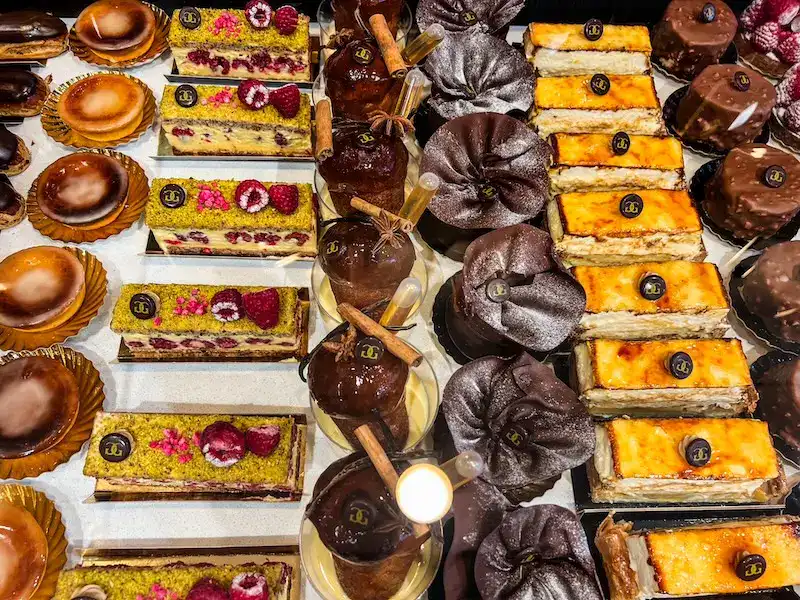
After two years here, we’ve noticed a few common themes when comparing French with American cuisine. French food culture tends to prioritize:
- Flavor over convenience. Meals are built around taste first, even if that means more steps, more time, or more frequent shopping trips instead of one big weekly haul.
- Seasonality over constant availability. If something isn’t in season, it’s just not on the shelves. That natural “pause” forces better timing and usually means that the produce we do get is picked at peak ripeness.
- Freshness over shelf life. Many foods are designed to be eaten quickly, not engineered to survive long transport or weeks in storage. That changes texture and flavor in a noticeable, and better, way.
- Quality ingredients over heavy processing. Simpler ingredient lists and less ultra-processed food mean the base flavors actually come through instead of being masked or engineered.
- Some additives are allowed in the U.S. but not in the EU. Some ingredients commonly used in the U.S. are restricted in Europe, which affects taste and texture in noticeable ways. (It also affects your health, but that’s another story.)
- Smaller portions over excess. Meals are more about satisfaction than volume, which often leads to better balance and a greater focus on quality per bite rather than quantity on the plate.
That’s not to say everything is better.
French Grocery Stores vs. American Grocery Stores

One of the biggest day-to-day differences we noticed after moving to France is how grocery stores are set up. In the U.S., supermarkets tend to prioritize scale and variety. You get endless aisles, dozens of brands for the same product, and year-round access to almost everything.
It’s convenient, but it also means a lot of products are engineered for long shelf life, a consistent appearance, and mass distribution. Walking into a typical American grocery store after living abroad is pretty brutal on the senses.
French grocery stores feel more restrained in comparison, but in a way that feels intentional. There is usually less variety, but a stronger emphasis on quality, freshness, and seasonality.
Produce is more seasonal, ingredient lists are simpler, and there is less pressure to make everything available all the time. You might not find five versions of everything, but what is there often tastes noticeably better.
The exception might be yogurt and cheese. There are SO many wide varieties of both. I’m still working my way through them all.
Is food cheaper in France than in the U.S.?
It depends on what you are buying, but in many everyday categories, France can feel surprisingly affordable, especially for quality staples.
Basic foods like bread, seasonal produce, dairy, and wine are often cheaper in France than in the U.S., particularly when you compare similar quality levels.
A fresh baguette might cost one or two euros, decent cheese is widely available at reasonable prices, and everyday wine can be very inexpensive. Because these foods are embedded in daily life, they aren’t marked up as “premium” items.
In the U.S., those same categories often split into two extremes: very cheap mass-produced versions or more expensive artisanal options. In France, there tends to be more middle ground where good quality is still accessible at everyday prices.
Processed and imported foods can be more expensive in France, but I’m good with that. This includes American snacks, specialty sauces, or international brands that aren’t produced locally and aren’t part of the core food culture.
Foods We Still Miss From America

There are some things France simply can’t replace. I won’t apologize for missing the occasional Taco Bell, but good hot sauce and affordable Mexican food are at the top of the list. Spicy food in general is a struggle to find in France.
While France does many things exceptionally well, spicy food generally isn’t one of them. Heat just isn’t a central part of the food culture here in the same way it is in the U.S., so even when something is labeled “spicy,” we call it “French spicy.”
That’s generally not spicy at all.
We’ve tried to adjust, and there are plenty of incredible meals here that don’t need heat at all.
But every once in a while, you just want that very specific kind of American fast food or the kind of punchy, vinegar-heavy hot sauce that shows up on everything from eggs to tacos back home.
Thankfully, a vendor from Mexico recently started selling tacos, burritos, and quesadillas at our local market, and it has quickly become one of our favorite stops. It isn’t even the food itself, but the spice and the familiarity of it all.
A little taste of home goes a long way.
READ MORE: What’s it really like to live in a charming French town? Check it out!
Is French food better than American food?
Not always. America still does some things well.
But when it comes to everyday staples like bread, butter, cheese, produce, and pastries, France tops the U.S. pretty easily. The cost of those staples is pretty awesome, too.
After two years here, we’ve stopped being surprised when ordinary grocery store food tastes extraordinary. We expect it now, and that’s going to be a tough thing to leave behind.
More content about our life in France:
- Tips for Renting an Apartment in France
- The Real Cost of Living in France
- Reflections From Two Years in France
- Tips for Visiting France in the Summer
- Surprising Things About Life in France
Planning a trip to France? Read these next:
- Take a Walk Through Pont-Aven
- Plan One Day in Marseille, France
- How to Visit the Palace of Versailles
- Is Paris Too Expensive to Visit?
- A Guide to Planning a Trip to France

Want to see more?
Subscribe to my biweekly newsletter for hot travel tips I come across, weird stories you won’t see elsewhere and perhaps lifelong friendship.
Too much, or just enough?
