I’ve read so many negative reviews about La Maison du Gruyère, the cheese factory in Gruyères, Switzerland, decrying it as a tourist trap that’s not worth your money.
As frequent travelers who have been to all kinds of real tourist traps, including some with truly exorbitant costs, I really have to question how jaded people have become.
Unless you’re lactose intolerant or have something against storytelling by a cow, I don’t get it.
The Gruyère cheese factory is well worth a bit of time on your next trip to Gruyères, if only to pay your respects to one of the most iconic Swiss cheeses. Let’s get into some reasons why this one’s not a waste of your time.
Quick Tips for Your Gruyères Visit
Your Flight: Find deals to Geneva Airport, the closest airport to Gruyères, using Skyscanner. Zurich Airport is another option. Love those deals? Subscribe to Going.
Your Accommodations: We didn’t stay overnight in Gruyères, but that doesn’t mean you can’t, especially with a belly full of cheese. Browse Booking.com or Hotels.com for your options in town. Vrbo is my Airbnb alternative.
Your Ride: Trips to Gruyères are easiest with a car. Book a rental car ahead of time.
Top Spots: You’re here for La Maison du Gruyère. Once you’re done there, visit the very weird H. R. Giger Museum and see the views from the town’s castle, the Château de Gruyères.
Disclosure: Travel on the Reg uses affiliate links to keep things running around here. At no additional cost to you, I earn a lil’ commission if you make a purchase. Any income earned supports the upkeep of this site. I appreciate you!
La Maison du Gruyère is worth visiting.
La Maison du Gruyère is worth visiting for its authentic cheese-making demos, tasty samples, and accessibility, all set in a lovely Alpine village. This is a genuine, educational, and flavorful glimpse into a Swiss icon: Gruyère cheese.
I’m not sure why you’d take issue with any of that. Let’s get into a few more details on why I think this one should make your to-do list on trips to the medieval town of Gruyères.
This place is set up for tourists.
So what?
Making a place tourist-friendly isn’t always a bad thing. Sure, there are destinations out there that are no more than hubs for crappy tchotchkes and T-shirts with questionable slogans. This isn’t that.
La Maison du Gruyère is designed to be accessible and easy to navigate. The facility balances efficiency with authenticity, making it a breezy visit no matter where you fall on the cheese appreciation spectrum.
I fall on whatever side loves cheese more than most things on Earth, by the way.
It’s easy to get to.
We drove to La Maison du Gruyère on a day trip from Évian-les-Bains, just over the border in France. While driving is by far the easiest way to get to Gruyères, you can also reach the town by train.
The dairy is located super close to the Pringy-Gruyères train station, with frequent connections from major Swiss cities like Montreux, Lausanne, and Bern.
Note: Assume that you won’t reach Gruyères directly, so keep that in mind as you plan out your day.
If you’re driving as we did, there’s plenty of parking upon arrival. There are additional paid lots below the medieval village if you’re doing some exploring after your fun with cheese.
This dairy isn’t a gimmick.

Unlike many commercialized attractions, this cheese dairy remains deeply connected to local traditions and the Gruyères community. La Maison du Gruyère is a living part of the local agricultural economy.
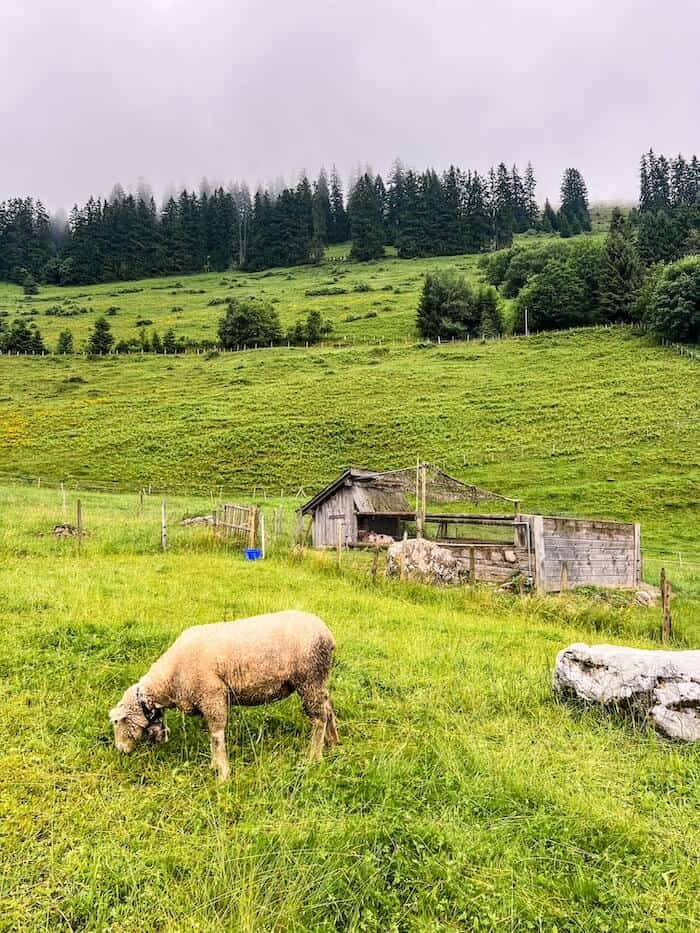
The cheese is made with milk sourced from nearby Alpine pastures, ensuring seasonal freshness and regional character. You’ll likely see some of the cows mooing about on your visit into town. It makes everything quite a bit more whimsical.
Everything, from the rustic architecture to the informative displays, reflects a genuine pride in Swiss heritage.
There’s no artificial pageantry here, just honest storytelling (some told by a cow) and hands-on insight into a product that is both super local and world-renowned.
You’ll learn something at this Gruyère cheese factory.
Learning is fun!
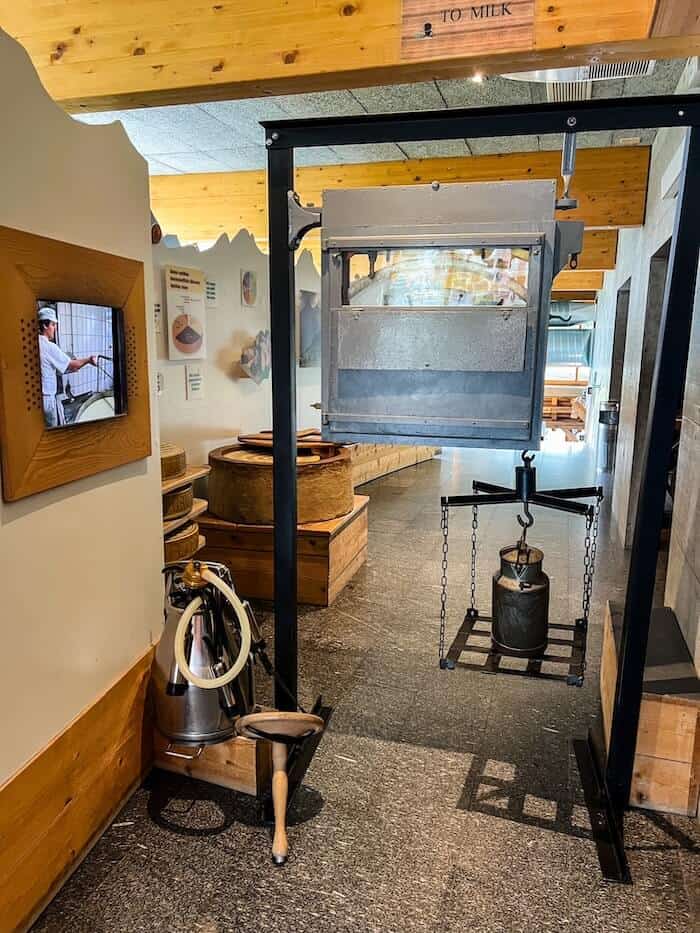
Your visit to the factory includes an interactive museum narrated by a charming fictional cow. I’ll get into why it’s fun for kids in a bit, but as adults, we appreciated both the historical and scientific information available on local cheese production.
I learned not only that cheesemaking is best left to the experts, but also about the role herbs play in influencing cows’ milk and the cheese maturation process. We discovered more about the importance of Gruyère in Swiss culinary culture.
It’s all playful and informative, turning what could be a passive visit into a more memorable one.
You get samples of Gruyère.
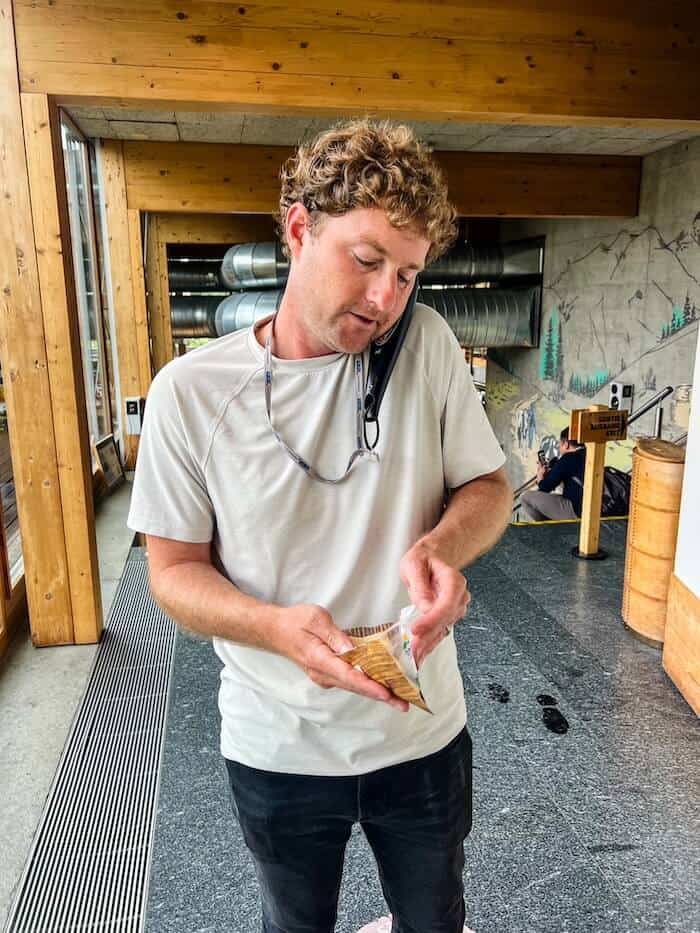
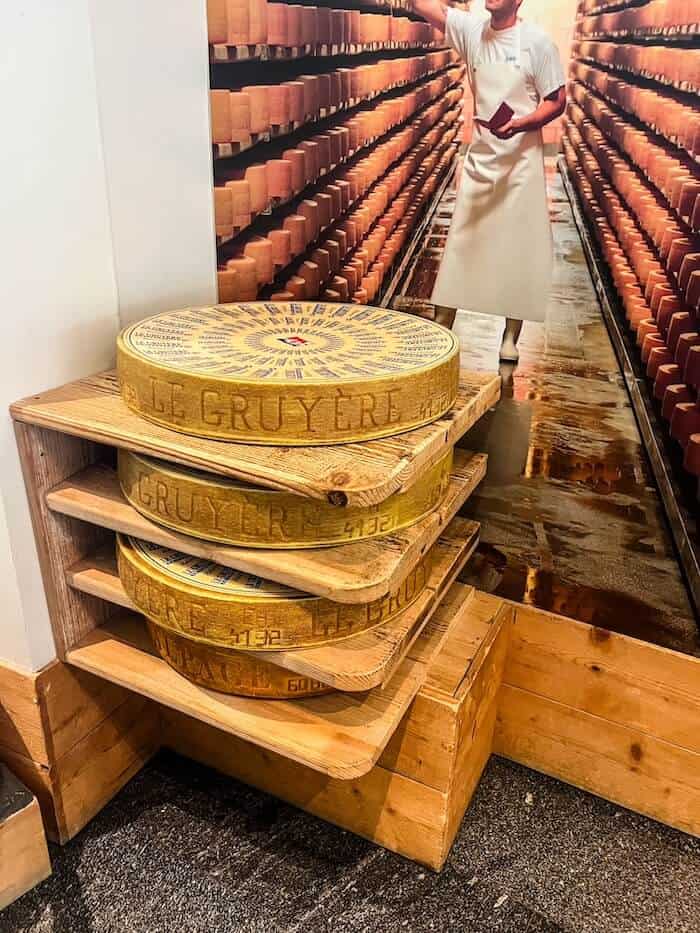
Every visit includes a mini tasting of three different Gruyère cheeses at various stages of aging. On our visit, we got snack bars of the six, eight, and 12-month cheeses.
I’m not saying you’ll leave the place well-fed, especially if you’re not visiting the restaurant, but it’s a little taste while you explore the exhibits. I love a good aged cheese, so I liked the subtly nutty flavor of the eldest variety.
It’s also a smart way to get you to buy more once you’re done with your visit. I know I couldn’t resist taking some Gruyère AOP home with us for noshing on later.
Fun fact: Gruyère cheese has no holes! While many people associate Swiss cheese with big holes, like Emmental, true Gruyère is known for its smooth, dense texture. Any cracks are known as “eyes,” and you won’t see too many of those, either.
You can watch the cheese being made.
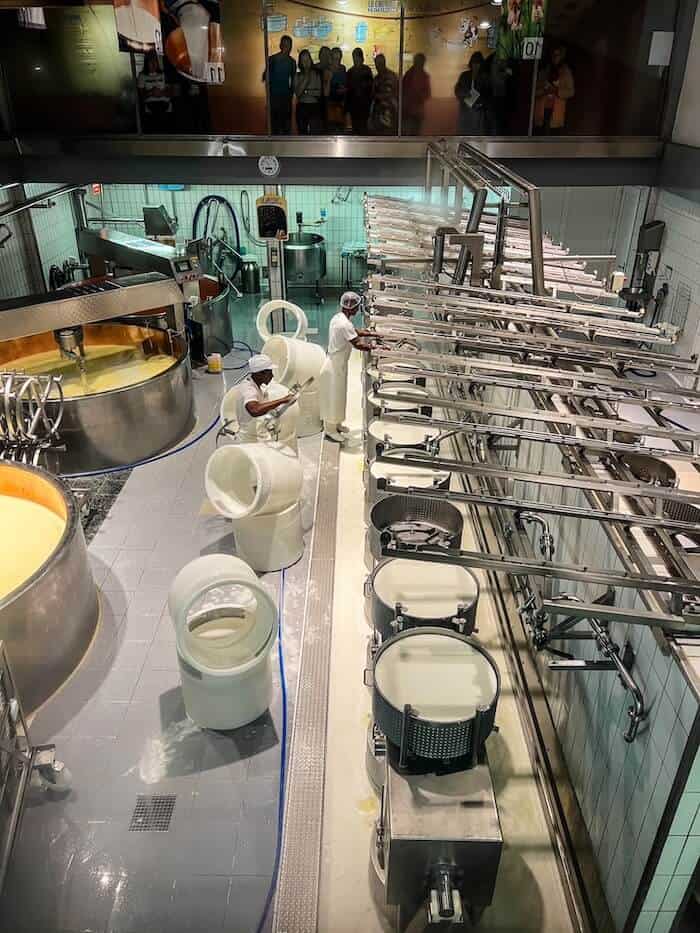
This is where timing matters. You can watch how the cheese gets made a few times per day between 9am to just after noon. (This varies somewhat by season, and hours from October to May are just a little bit shorter.)
The duration of each session is over two hours, but you don’t need to stand there and watch the whole thing.
Consult the cheese-making timetable on their website for detailed information on when to expect each step to happen. We watched them stir and cut the cheese, then prepare the cheese for the molds. Each step takes about 20 minutes.
Note: You’ll see that they suggest arriving for the cutting of the curds or removing the cheese to fill it into the molds as the most interesting parts. That’s what drove our decision-making, but the website describes each step in detail.
You can watch the cheese move through all of its stages through a glass-walled area. It’s a nice reminder that this is a working dairy.
It’s not expensive.

I really don’t understand the criticism about this one as a waste of money. Admission is under $10. What else are you getting in Switzerland at that price? For that price, you get a museum, a live production tour, and cheese samples.
While you won’t be here all day, you can spend a few hours exploring the site and staring at different steps of the production process. Seriously, how’d we get so jaded?
If you want to take home some cheese, prices in the shop are on par with the rest of Switzerland, too. It’s expensive here. If you want the goods, you will have to put down some coin.
It’s super kid-friendly.
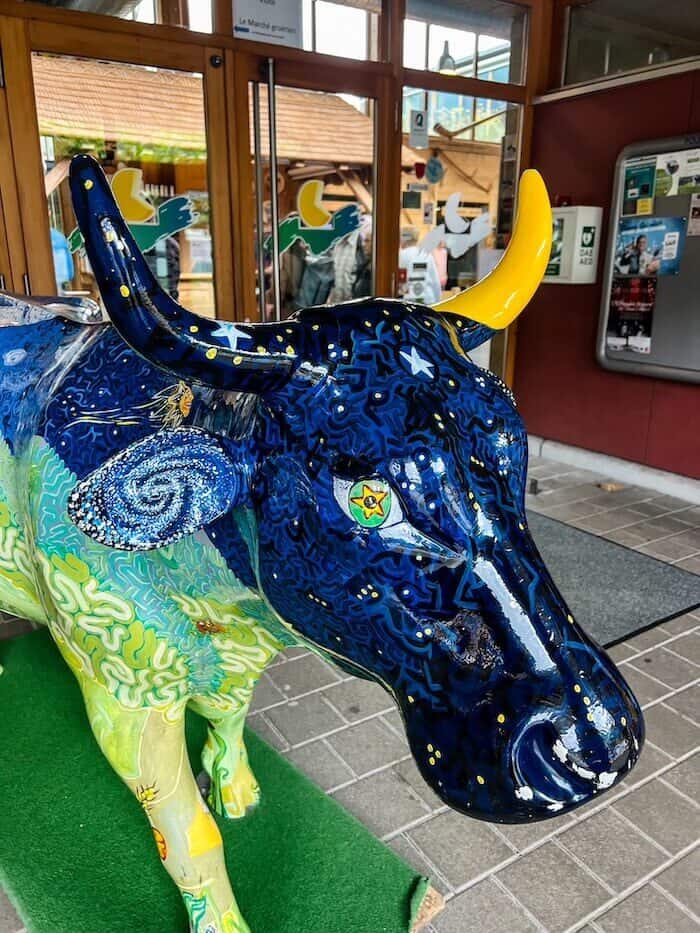
We don’t have children, but if you’re traveling with little ones, this is way more kid-friendly than the H.R. Giger Museum nearby.
The interactive museum component is narrated by “Cerise the cow,” who blends playful storytelling with solid educational content.
Again, we didn’t come here with kids and still had a great time, so don’t let a lack of children feel like some great sacrifice.
It’s an easy add-on to the rest of your day.
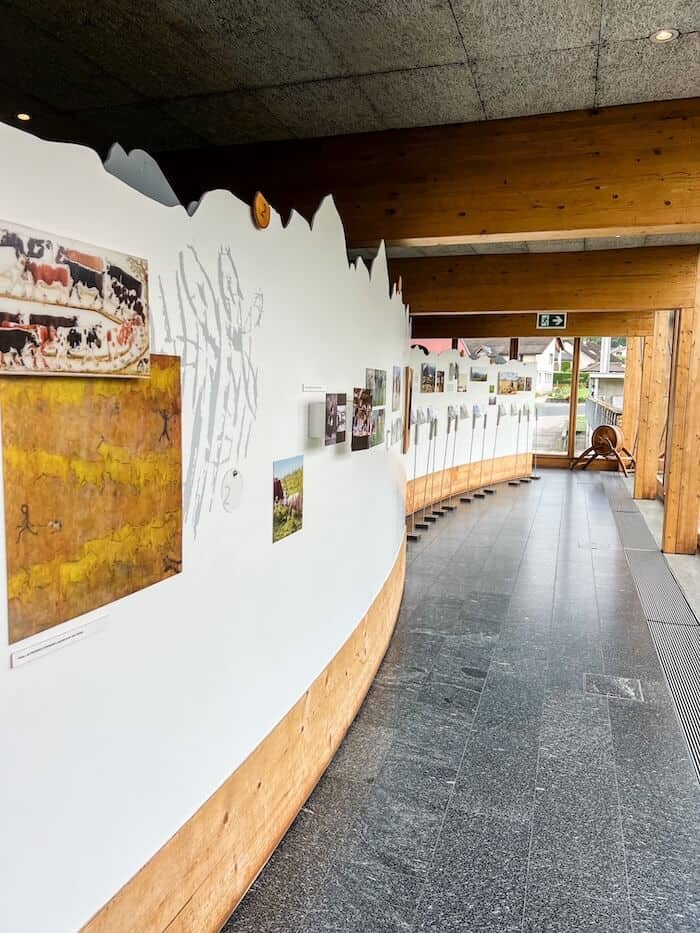
You can just show up and go on a self-guided tour. Tickets aren’t sold online anyway. Apart from timing your trip to coincide with the steps of the cheese-making processes you’d like to see, there isn’t much else to plan.
Spend an hour or so inside, and go on your merry day. Again, it’s less than $10. What more do you want?
Fun fact: If you really want to have yourself an indulgent day, tack on a visit to the Chocolaterie de Gruyères for chocolate tastings. You can also visit Maison Cailler in nearby Broc for a tour of a real Callier chocolate factory.
You can linger if you want.
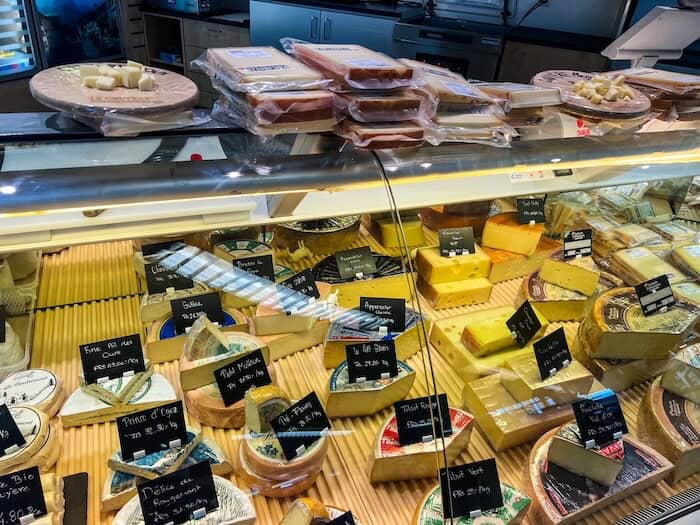
There’s an on-site restaurant that admittedly doesn’t get rave reviews. We didn’t try it, so I won’t force it upon you here. (We wanted to get fondue elsewhere.)
We did spend some time in the shop, as it felt only right to go home with some cheese from the source.
The shop’s emphasis is on the cheese, by the way. They don’t push souvenirs you’ll regret later.
Everyone there is super friendly.
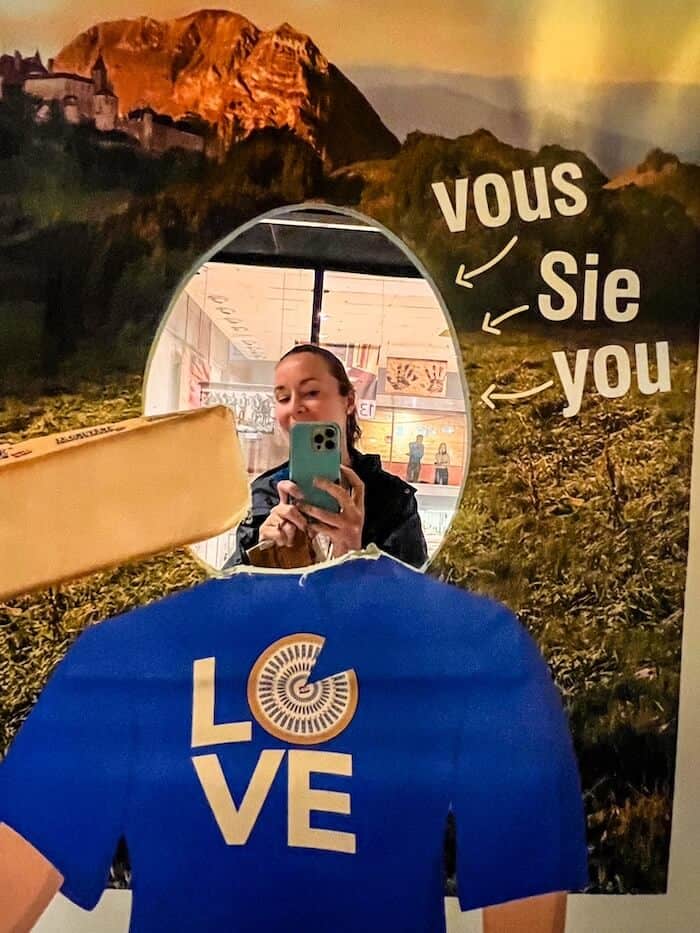
I’ve already mentioned they don’t push souvenirs at this place. The staff overall is very friendly but not overly rehearsed, lending a legitimacy to the whole experience over some staged production.
I found it to be so refreshing, as we’ve been to lots of places that have made us feel like a walking wallet.
Where to Stay in Gruyères
We visited Gruyères for the day from Évian-les-Bains across the border in France. It was much cheaper as a travel base compared to anywhere else in Switzerland, one of the priciest countries in Europe.
If you’re here for efficiency, use the map below for some options on where to stay in Gruyères:
Forget sausage. See how the cheese is made in Gruyère.
If you’re traveling to Gruyères already, it’d be silly to miss this one. It’s as simple as that. You’re not spending a ton of time here, it’s inexpensive, and you can go home with the best souvenir: cheese!
I’m all about being honest around here about spots that are truly not worth your time and resources, but this place isn’t that.
Planning travel in nearby France? Check these out:
- Spend a Day in Beautiful Avignon
- Do You Really Need to Visit Versailles?
- Plan the Best Day Ever in Marseille
- Springtime Visits to Giverny Can’t Be Matched
- How to Go About Planning a Weekend in Nice
Love cheese? You’ll want to plan a trip to these next:
- Paris Is Always Worth Your Time
- Plan a Trip to Oregon’s Wine Country
- Sonoma or Napa? I Can Help You Decide
- A Guide to Cheese and More in Parma
- Visiting Normandy and the Cliffs of Étretat

Want to see more?
Subscribe to my biweekly newsletter for hot travel tips I come across, weird stories you won’t see elsewhere and perhaps lifelong friendship.
Too much, or just enough?
