
Sukhothai is a touch off the beaten path on most Thailand itineraries, but it will easily become a highlight of your trip if you let it.
By “let it,” I mean just go there.
We waffled between planning a trip to Sukhothai vs. Ayutthaya, and I’m so glad we stuck with our gut on this one. Sukhothai is one of the most atmospheric places we’ve visited to date.
This guide gets into why Sukhothai is worth visiting, how to plan your visit there, and what to prioritize once you make it to the historical park.
Quick Tips for Your Sukhothai Visit
Your Flight: Deals to Bangkok, the gateway to Thailand, are fairly easy to come by.
From there, catch a regional flight to Sukhothai or travel via bus or train. Seek out deals to Bangkok using Skyscanner. Love deals? Subscribe to Going.
Your Accommodations: Agoda.com is a great booking tool in Asia. From there, compare prices with Booking.com or Hotels.com. Vrbo is my Airbnb alternative.
Top Spots: Explore Wat Mahathat, snap photos on the bridge at Wat Sa Si, and lose the crowds in the Eastern Zone area of the historical park.
Disclosure: Travel on the Reg uses affiliate links to keep things running around here. At no additional cost to you, I earn a lil’ commission if you make a purchase. Any income earned supports the upkeep of this site. I appreciate you!
Is Sukhothai worth visiting?
Sukhothai is worth visiting for the dozens of temple remains to explore. For photo enthusiasts, it doesn’t get much better than the shots you’ll get at the historical site.
You’re also less likely to encounter the large crowds that may exist at cultural sites that are easier to access from Bangkok, like Ayutthaya.
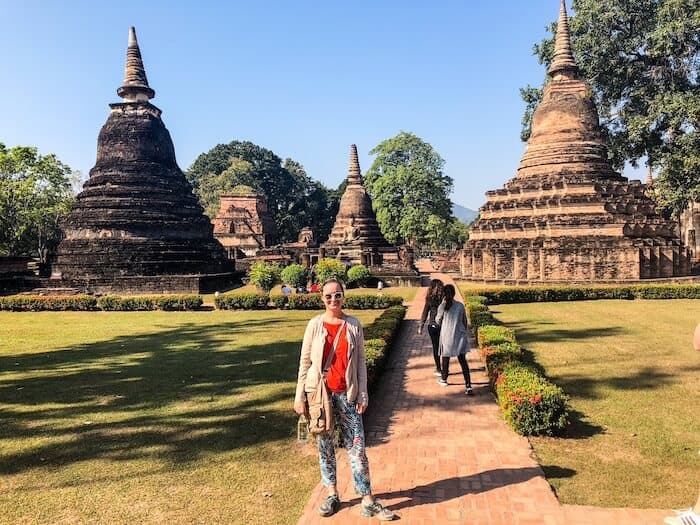
What is Sukhothai famous for?
Sukhothai is known for Sukhothai Historical Park, a UNESCO World Heritage Site. The ruins in the old town are impressive, with 21 historical sites within the park alone and an additional 70 sites within the three miles surrounding the park.
What you’ll see here dates back to the 13th century, when the park was the seat of the Sukhothai Kingdom. Founded by King Ramkhamhaeng, Sukhothai was the first capital of the Thai kingdom, marking a crucial era in Thai history.
The kingdom was eventually abandoned following a series of internal conflicts and external invasions. It was replaced by Ayutthaya as the seat of power in the region by the 14th century.
How to Get to Sukhothai From Bangkok
The most efficient way to get to Sukhothai is a regional flight to Sukhothai Airport from Bangkok. The distance between the two cities is about 269 miles.
The flight is a short one of about 90 minutes. If you’re staying in town, you’ll likely have available transfers that can pick you up from the airport and get you to your accommodations.
If you have more time, the cheapest option is to take a bus from Bangkok to the Sukhothai Bus Terminal or Old City Sukhothai.
I can recommend Win Tour, considered a VIP service by local standards, but well within most budgets.
Note: We traveled to Chiang Mai from Sukhothai by Win Tour bus once we were done with our historical adventure, but regional flights run from Sukhothai to Chiang Mai and Chiang Rai, as well. The same would be true for travel from Chiang Mai to Sukhothai.
Keep the driving distance in mind. The money you save on taking the bus will cost you nearly a full day, as you can expect to spend at least seven hours on the bus.
The train is another option, but it’s not quite as direct. You’ll only get as far as Phitsanulok on the train, after which you’ll still need to catch a bus to take you the rest of the way to Sukhothai.
That journey will take you at least six-and-a-half hours.
How to Get Around Sukhothai
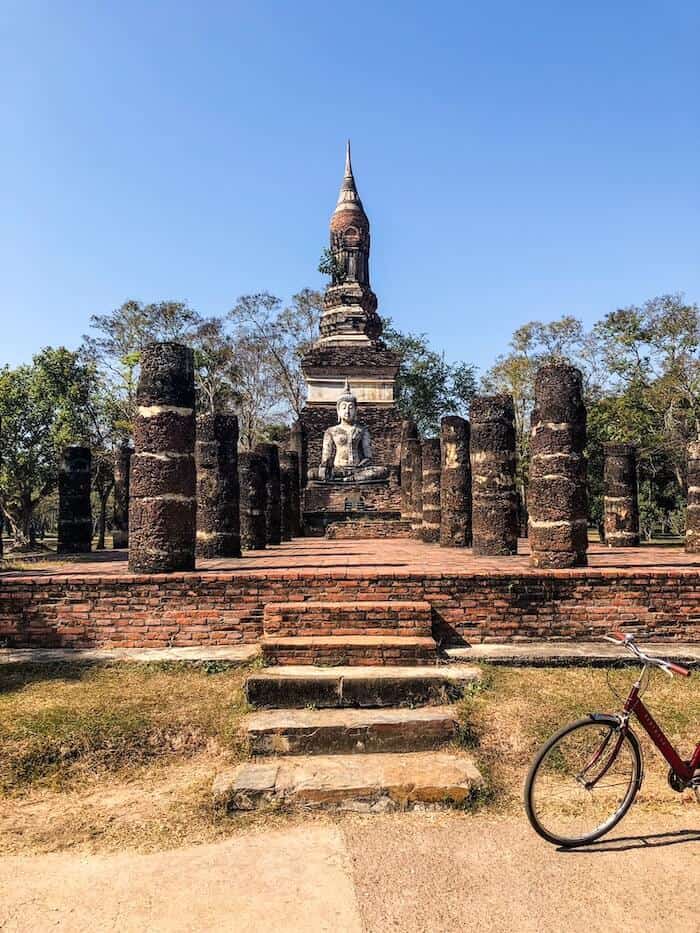
The best way to get around Sukhothai is to rent a bicycle at any of the rental shops outside of the historical park.
It’ll allow you to explore the park efficiently and at your own pace, and give you a great excuse to indulge in Thai food when you’re done with the park.
Sukhothai is easy enough to do self-guided, but it’s not your only option. If you like the idea of a guided tour, check out these highly-rated tours:
What to Do in Sukhothai
The main reason for visiting Sukhothai is the Sukhothai Historical Park and the Sukhothai temples within its borders.
The historical park is divided into several different zones. The central, northern, and western zones each have separate admission fees. You’ll need to pay an additional nominal fee if you bring in a bicycle.
Opening hours vary among the zones, but generally, expect access from dawn to dusk.
Wat Mahathat (Central Zone)
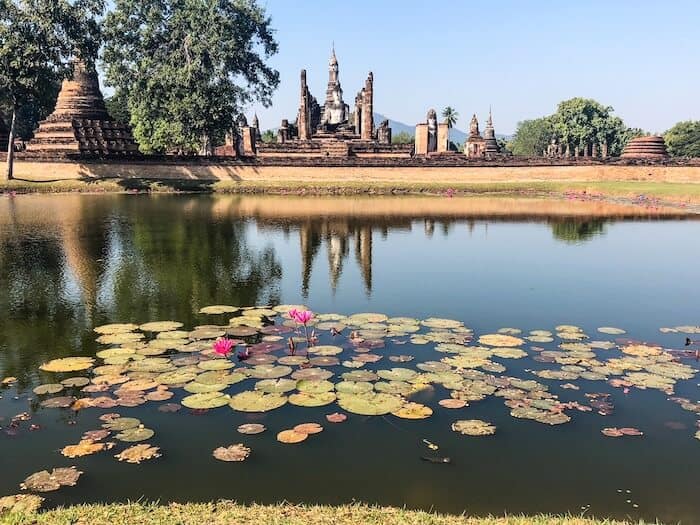
Wat Mahathat is the largest temple within the park. At one point, this was the center of the Siam kingdom. You’ll find it in the central portion of the park’s main zone.
Take your time exploring the interior, and make sure you take in the view across the lotus pond, as well. We were lucky enough to have the bluest skies on our visit there.
May the odds be ever in your favor, as well.
You’ll also be able to access Wat Si Sawai once you’re here. That temple is known for the large Khmer-style prangs out front and the mythical creatures guarding the entrance.
Wat Traphang-Ngoen (Central Zone)
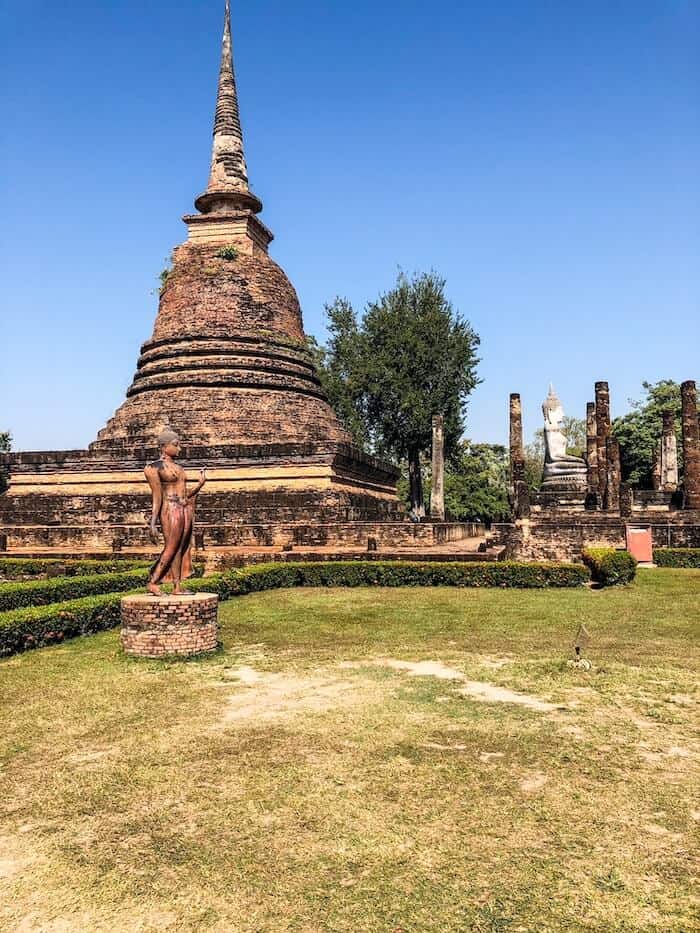
You’ll find Wat Traphang-Ngoen just behind the main Wat Mahathat, but don’t miss out.
While the chedi here is much smaller, the surrounding hillside and palm trees framing the images you’ll get here are all kinds of lovely.
Wat Sa Si (Central Zone)
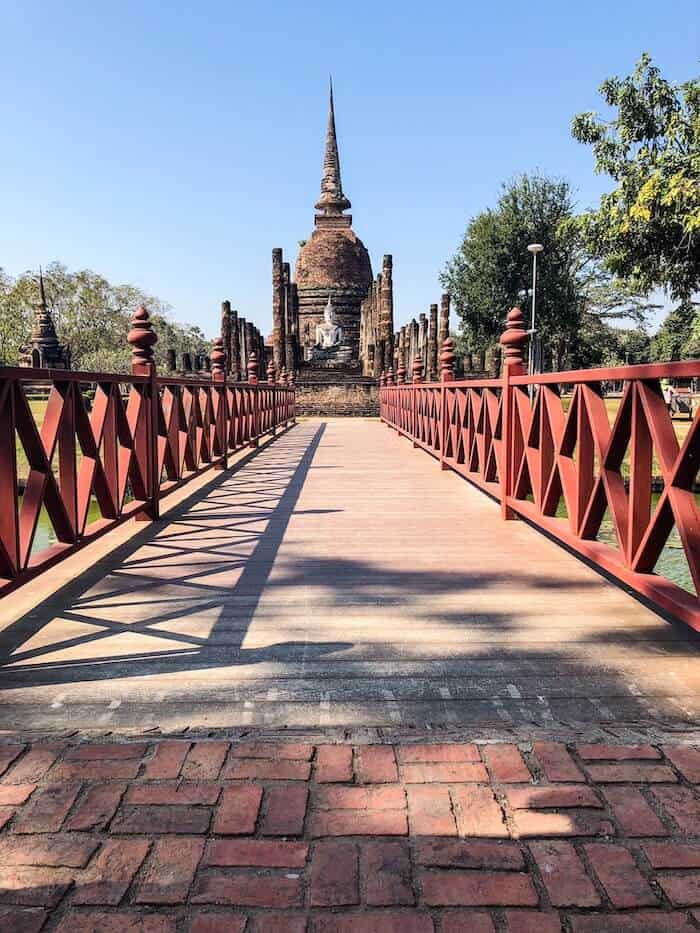
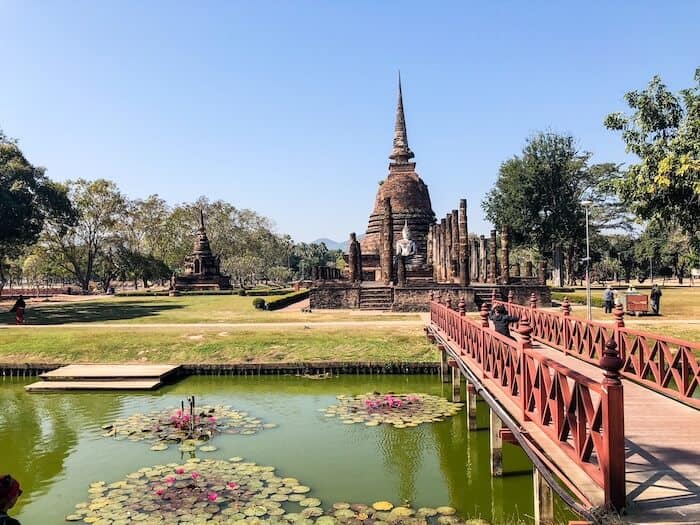
Still within the central zone of the historical park and accessible by footbridge, the approach to Wat Sa Si is something else.
The structure itself is smaller than many of the others in Sukhothai, but its location on its own personal little island makes it the envy of the other wats for sure.
The chedi here, or Buddhist stupa if I’m using words you don’t understand, is described as Sri Lankan-inspired. I’ll only assume that’s true as I’m certainly not an expert in historical architecture.
In any case, you’ll be inspired by your visit here. Try NOT to take at least a dozen photos of this one. It’s a tough ask, I know.
Wat Tra Phang Thong (Central Zone)
Just behind Wat Mahathat, within the same central zone, is Wat Tra Phang Thong. It’s much smaller than what you’ve seen so far, but no less impressive.
The name of this wat translates to “Silver Lake,” a nod to the large pond in front that is not really all that silver, but lovely nonetheless. The Buddha statue inside holds a lotus bud, which is quite welcoming to all who visit.
Fun fact: While you’re exploring the ruins, imagine the old city in its heyday. Sukhothai was once home to an estimated 80,000 inhabitants, with King Ramkhamhaeng presiding.
If you take a walk around the ruins, you’ll come across additional relics, including walking Buddhas.
Wat Si Chum (Northern Zone)
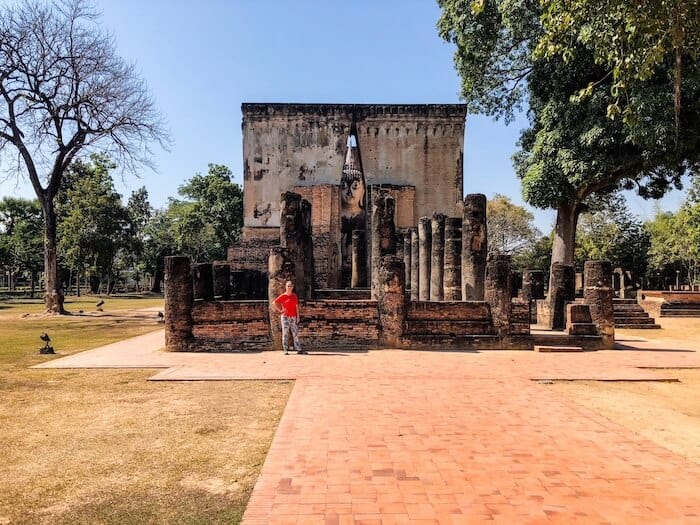
Head over to the north zone next to visit Wat Si Chum. It isn’t too big a burden on your trusty, albeit rusty, bicycle.
This one may not look like much at first approach, but the payoff is inside the stone building surrounding its exterior.
A narrow slit in the middle of the stone allows visitors a peek at the intrigue hiding within its interior.
Inside, a giant Buddha sits and watches all who enter. It’s a striking sight on the approach and one of the most photographed spots in the park.
Wat Phra Phai Luang (Northern Zone)
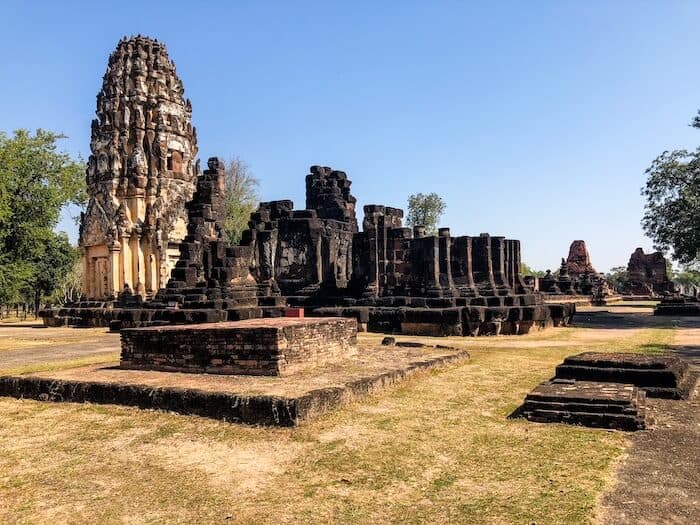
A second must-see in the northern zone is Wat Phra Phai Luang, not because it’s particularly picturesque, but for its historical importance.
The structures here date back to the 12th century.
If you’ve been paying attention, you know they predate even the Sukhothai Kingdom, the reign of which spanned the 13th and 14th centuries.
The monument you’ll see here is one of the oldest, if not the oldest, within Sukhothai Historical Park.
Wat Chang Lom (Eastern Zone)
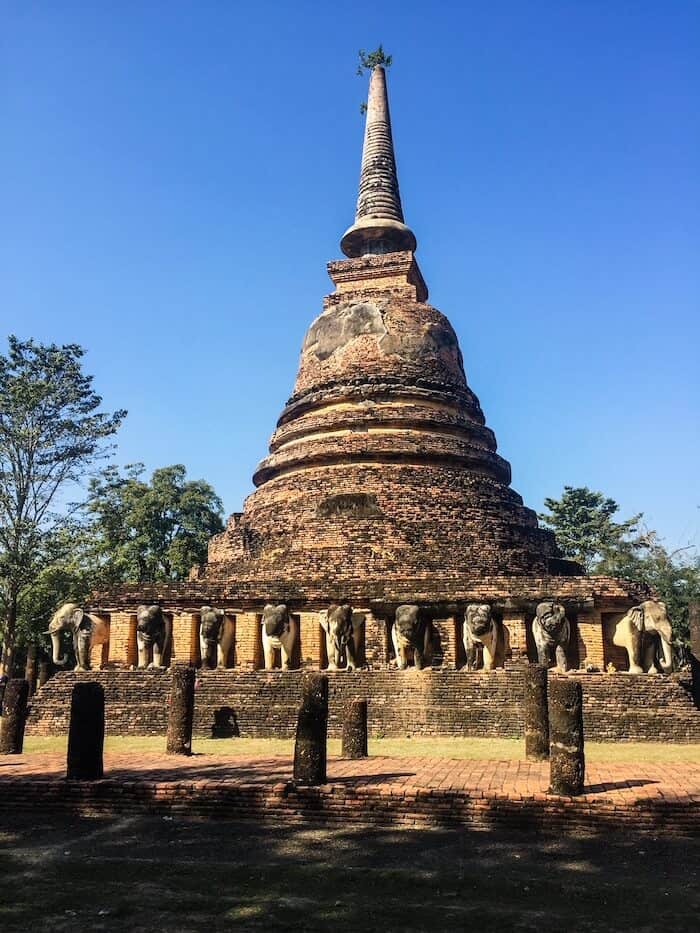
The eastern zone doesn’t require a separate admission as it’s along the road back to town near the Kamphaeng Hak gate.
This temple, Wat Chang Lom, translates to “temple surrounded by elephants,” and you’ll see in the image above that the description fits quite nicely.
It’s well worth a visit to get up close to some of the more intricate architecture you’ll see among the ruins today.
READ MORE: Visiting Thailand for the elephants? Use my guide to plan an ethical trip.
Wat Chedi Sung (Eastern Zone)
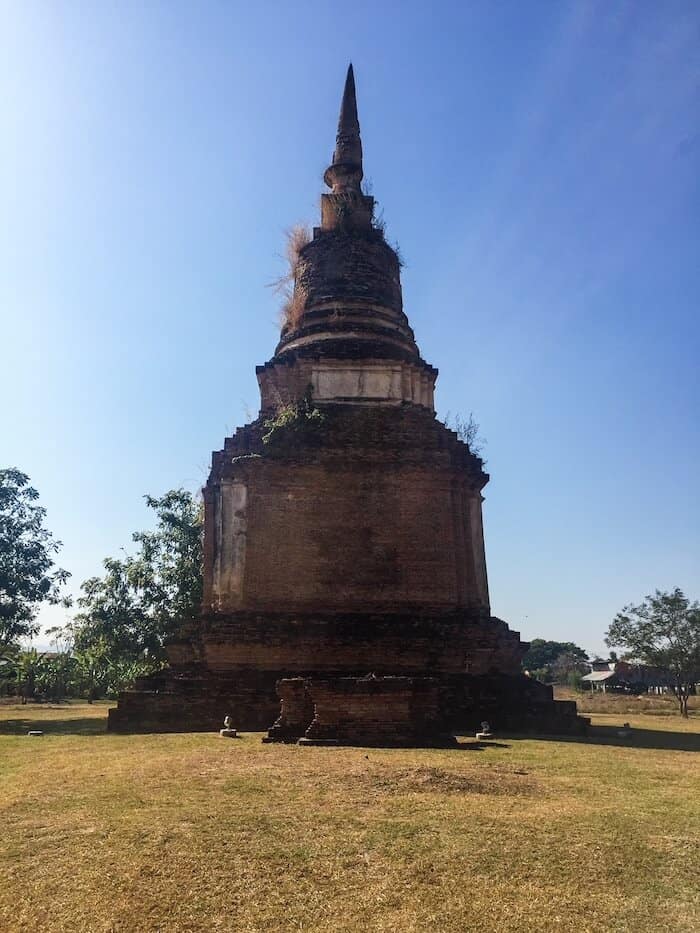
You’ll likely have Wat Chedi Sung and its large chedi to yourself, as it’s a bit off the beaten path, even for the eastern zone.
You’ll find this one in an open field east of the Kamphaeng Hak gate, and you’ll know it when you see it. The chedi here is the second largest after the chedi at Wat Mahathat.
Wat Saphan Hin (Western Zone)
It takes some effort to get to the western zone, as it’s a little over a mile outside of the old city walls.
You’ll be rewarded with expansive views of ruins free of tourists, including Wat Saphan Hin, a hilltop temple.
Park your bicycle and burn some additional calories hiking up to this one to get to the large standing Buddha at the top. It’s 41 feet tall and quite an imposing sight.
You’re on the right path if you see a rocky walkway leading your way.
Ramkhamhaeng National Museum
We read up quite a bit on Sukhothai Historical Park before our arrival, so skipped out on the Ramkhamhaeng National Museum on our visit.
Now, usually, we love a good museum, but with only one day in the park, we wanted to prioritize the ruins instead.
From what I read, the museum offers a good primer on the artifacts and antiquities of the Sukhothai Kingdom that have been excavated from the site you’ll see over the years.
It’s highly recommended for travelers who want to learn more about what they’re about to see in the historical park.
Things to Do in Sukhothai With More Time
The old Sukhothai Historical Park is the big draw here, but if you have more than the day, you can dig into Sukhothai the city a bit deeper.
Here are some ideas for those with more time in Sukhothai:
- Boat down the Yom River. Sukhothai sits on the Yom River, a tributary of the Nan River. Hire a long-tail boat to take you for a cruise at sunset or sunrise.
- Celebrate Loy Krathong. This is Thailand’s festival of lights, or candle festival. While it’s celebrated all over the country, it’s an especially big deal in Sukhothai.
- Explore New Sukhothai. That’s what locals call the modern city adjacent to the historical park. You’ll find all kinds of budget eats here.
- Take a day trip to Kamphaeng Phet Historical Park. The ruins are a combo of both Sukhothai and Ayutthaya styles. This park is about an hour’s drive from Sukhothai.
- See Si Satchanalai Historical Park. This is the second center of the Sukhothai Kingdom. The park is about 34 miles from the center of Sukhothai.
Fun fact: The park’s name means “city of good people,” which makes me wish to have lived back in the olden times even more now.
Where to Eat in Sukhothai
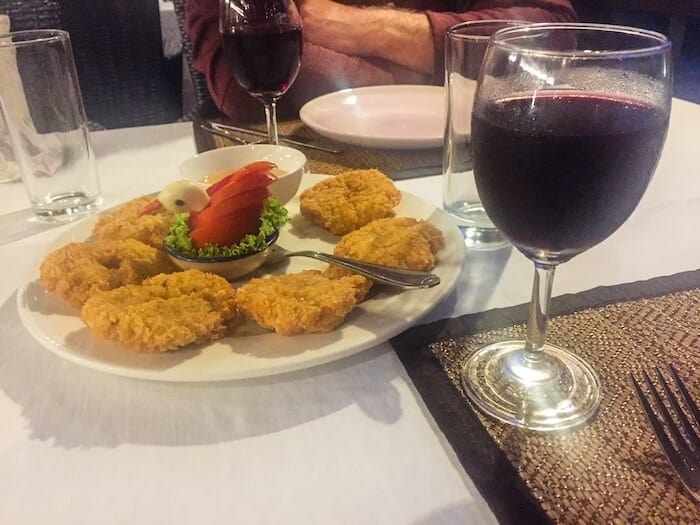
Sukhothai may be known for its historical sights, but you’ll find plenty of options in and around the historical part to get your grub on.
Here are a few options for Sukhothai restaurants and nosh stops along the way:
- If you need some caffeine to start the day, head over to Sukhothai Coffee for, you guessed it, coffee. They also serve breakfast plates and Thai-style lunches.
- While in Sukhothai, you’ll have to try the local Sukhothai-style noodles. Jay Hae Sukhothai Noodles on Jarodvithithong Road is the most popular spot.
- The local noodle rival is Ta Puy Noodle, and it’s usually quite busy with slurping patrons. With more time, why not try both?
- Fueng Fah Pla Maenam Restaurant is a local favorite. The riverside location just after the bridge on Kuhasuwan Road makes this casual spot a scenic option.
- If you’re very hungry, the large portions of Thai favorites at Poo Restaurant will certainly fill you up. The restaurant is named after the owner, by the way.
Note: If you happen to be visiting over the weekend, take advantage of the night market held within the historical district on Friday and Saturday nights. Located near the King Ramkhamhaeng Monument, you’ll find loads of local delights there, and you don’t have to pay the fee to visit.
Where to Stay in Sukhothai
We stayed at the Legendha Sukhothai on our own visit to Sukhothai. I’d highly recommend the property if you’re looking for easy access to the historical park and delicious meals during your stay.
If you want to shop around, use the map below:
Spend at least a full day in Sukhothai.
That will give you enough time to explore Sukhothai Historical Park. With more time, you can see more of the town or explore day trips outside of Sukhothai.
If you’re deciding between Ayutthaya and Sukhothai, Sukhothai offers a chance to visit important and beautiful historical ruins with fewer crowds. That means it’s a more tranquil experience that’s just as valuable on any itinerary in Thailand.
You’ll need to work a little harder to get there, but I promise it’s worth it.
Love historical travel? Check out these travel guides:
- A Travel Guide to Chile’s Easter Island
- How to Plan Trips to the Duomo in Florence
- Get Your Kicks on Tulsa’s Route 66
- A Guide to Bogota’s Incredible Street Art
- Museums in Memphis: How to Choose
More bucket list destinations to plan next:
- How to Plan Your Big South Africa Trip
- Planning Guide for Death Valley National Park
- How to Plan a Busy Three-Day Venice Itinerary
- Giverny Should Make Your Spring Wish List
- Top Things to Do in Colorful Arequipa, Peru

Want to see more?
Subscribe to my biweekly newsletter for hot travel tips I come across, weird stories you won’t see elsewhere and perhaps lifelong friendship.
Too much, or just enough?

I have never heard of this world heritage site before! Adding it to my list because I love walking around historic sites.
It wasn’t as crowded as many other historical sites in the country, too…another plus!