
Thailand is one of those places you’ll immediately want to return to after your first visit. Its landscapes are incredibly diverse, the food is delicious, and the locals are some of the kindest people you’ll meet anywhere.
This is a special place, but there is some prep involved to make sure you have the best trip.
The guide below will take you from start to finish when planning a trip to Thailand to make sure you have the same kind of trip we did. (It was incredible!)
Quick Tips for Your Thailand Visit
Your Flight: Deals to Bangkok, your gateway to Thailand, are fairly easy to come by. Use Skyscanner to watch flights. Love deals? Subscribe to Going.
Your Accommodations: Browse Agoda.com, Booking.com, or Hotels.com for your options throughout Thailand. Vrbo is my Airbnb alternative.
Your Ride: We didn’t need a car on our trip to Thailand, but you may want to plan a road trip while you’re there for destinations off the beaten path. Book a rental car ahead of time.
Top Spots: Eat your way through Bangkok, feel inspired at the Elephant Nature Park, and spend some time at the beach in Koh Lanta.
Disclosure: Travel on the Reg uses affiliate links to keep things running around here. At no additional cost to you, I earn a lil’ commission if you make a purchase. Any income earned supports the upkeep of this site. I appreciate you!
How to Plan the Perfect Trip to Thailand
To plan your first trip to Thailand, there are a few things you should consider before you book. Here are a few bits of travel advice to get you started before we get into the details:
- Determine the best time to visit. Thailand has a long rainy season, which isn’t the ideal time to travel when planning a Thailand trip.
- Set a budget. Thailand remains a budget-friendly destination, but prices can add up if you wait to book flights and accommodations.
- Decide on trip duration. There’s no right or wrong answer for how many days you should set aside for your trip. Work with your budget and availability.
- Check your passport. Make sure your passport is valid for at least three months beyond its expiration date before travel. Ideally, shoot for six months.
- Book your flights. Book your flights or set alerts to watch for price fluctuations and jump on a budget-friendly flight.
- Plan your route. Are you interested in a Bangkok city break, or do you want to see more of the country with stops in places like Chiang Mai, Chiang Rai, or Koh Samui?
- Book guided tours. If you’re doing something like the Elephant Nature Park, book those ahead of time so you’re not shut out once you get there.
- Book accommodations. I list these after your excursions just in case you’re booking something bucket listy, but the order here is interchangeable.
- Make a packing list. I’ll get into some tips later, but at the very least, make sure you include clothing that covers your knees and shoulders for visiting Thai temples.
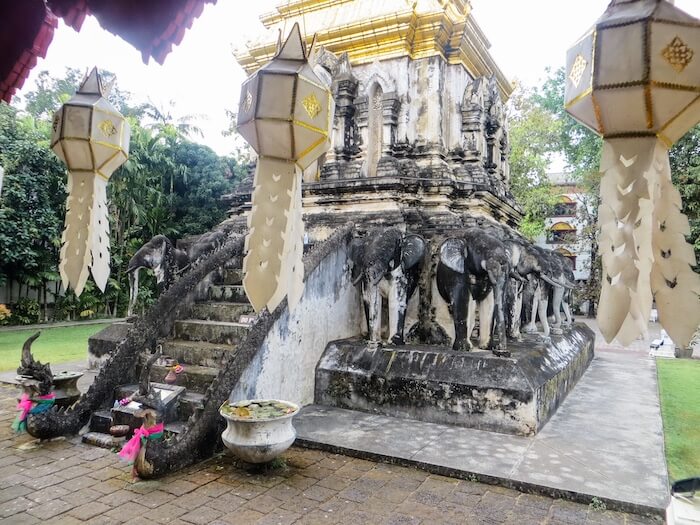
How Many Days You Need to See Thailand
You need at least a few days in Thailand if you’re limited to a city break in Bangkok, but most travelers plan for at least a week when planning a trip. Ten days is even better if you want to do some island hopping.
We had two weeks to explore Thailand and were able to do quite a bit with that time. If you’re not able to set aside two weeks due to work or obligations at home, don’t fret. You can still go to Thailand with less time.
You may just need to zero in on one region of the country, instead.
The Best Time to Visit Thailand
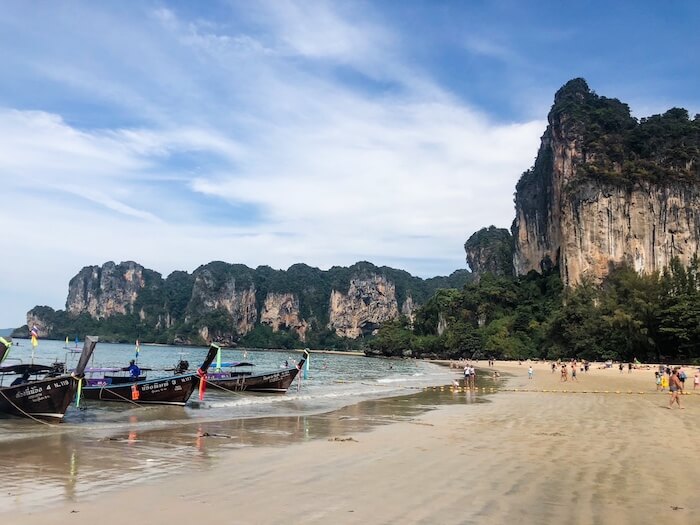
The best months to visit Thailand are during the cool season from November through February. The days are nice and cool, and typically dry.
Thailand really only has three seasons: rainy, cool, and hot. I don’t want to ever dissuade you from going to Thailand, but I don’t exactly want to persuade you to go during monsoon season, either.
Let’s look at the three seasons in a little more detail:
- Rainy (May-October): If you’re visiting southern Thailand, home to the incredible Khao Sok National Park, be aware that the rainy season hits that part of Southeast Asia the hardest. Your beach vacation will likely be washed out.
- Cool (November-February): This is high season, but temperatures are cool and the days are mostly dry. You’ll still be able to get some beach time along the southern coast, too.
- Hot (March-May): The northeast gets the worst of it with high humidity on top of the high temperatures. You’ll get a reprieve in southern Thailand, where temperatures are more consistent throughout the year.
How to Get to Thailand
To get to Thailand, you’ll likely fly into Bangkok. Deals to Bangkok, particularly from LAX, happen quite often, although the best deals may come with long layovers.
Thailand’s entry requirements are one of the easier aspects of a Thailand vacation.
American residents and those coming from 63 other countries do not need a visa if their travel in Thailand is for less than 30 days. To see if your country made the list, visit the Royal Thai Embassy’s website.
Note: If you’d like to extend your stay by an additional 30 days, you can do that legally and efficiently while in Thailand by paying a fee to the Thai Immigration Bureau office.
How to Get Around Thailand
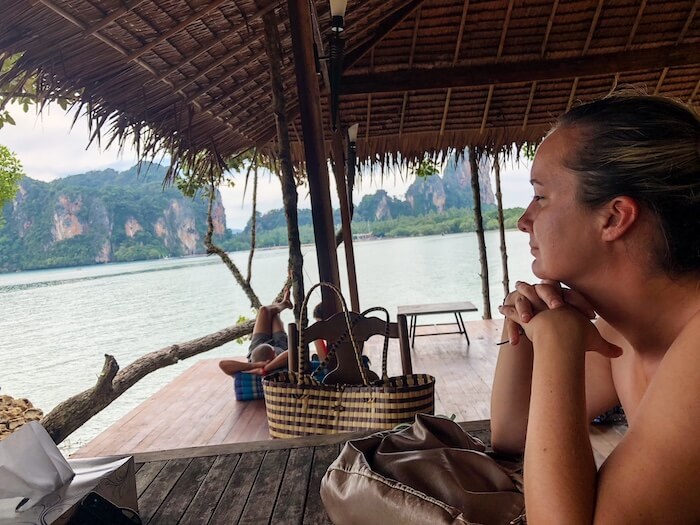
Once you’re in Thailand, you’ll find that some regional carriers offer decent prices on flights within the country.
Those include Bangkok Airways, Thai Airways, and AirAsia. If you’re flying something that’s not on that list, make sure you do your due diligence by checking out online reviews, safety histories, etc.
This is the most efficient way to travel within the country, and you can get decent deals if you book with some notice. If you want greener options for travel once you’re in Thailand, you have options.
Trains in Thailand
Thailand is served by a network of trains that is inexpensive and scenic, if slow. As with most train systems, classes come in first, second, and third.
The different types of trains available are Local or Ordinary, Rapid, Express, and Special Express. Those are basically listed by level of comfort, in increasing order.
Note: All of the commuter trains in Bangkok are considered third-class trains, and any long-distance trains will originate from Bangkok’s Hualamphong Train Station.
The network is run by the State Railway of Thailand. Timetables and cost by class are available on their website.
Overnight trains on a second-class sleeper or first-class cabin are an option if you’d like to save some baht on accommodations for a night.
Trains from the Airport
An Airport Rail Link is also available for travelers who need to get from Suvarnabhumi Airport to Bangkok’s city center at Phaya Thai Station.
The ride will take you half an hour, and tickets are available at the Automatic Token Dispensers on the first-floor station of the airport. You’ll need cash to pay for your tokens.
The Airport Rail Link runs from 6am to midnight.
Buses in Thailand
There are two main types of buses: government and tourist buses, with different classes and levels of comfort within each.
Government buses pick up at official stations and can be local, express, second-class, or first-class.
In Bangkok, the buses come in colors. Air-conditioned buses are more expensive and are cream-blue. All-night buses are cream-red. They are also numbered by final destination.
Tickets may be purchased at the station or on the bus, but make sure you’re paying with small bills. Prices are cheap compared to what you may expect in the United States and many European countries.
Tourist buses typically pick up in the main tourist centers, and tickets are often sold by tour companies or concierges.
Fun fact: They’re the “VIP” or “Super VIP” option. Representatives for the private companies are often found at government-run bus stations, confusing tourists.
They’re not a bad option and are typically more comfortable than the government buses. It’s just something to be aware of.
Prices are still low for the tourist buses when compared to Western standards. We took a government bus from Sukhothai to Chiang Mai with the Win Tour bus company. The journey was long, but the ride was comfortable.
Taxis in Thailand
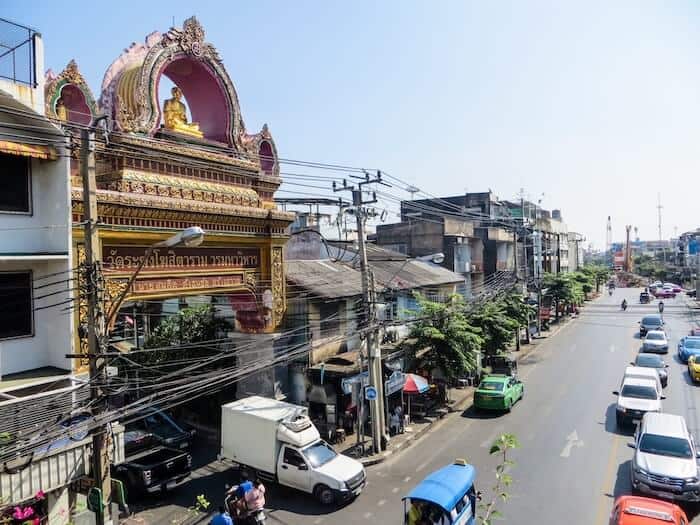
Traffic in Bangkok is horrendous. You can be sitting in a sea of cars for anywhere from an hour to three days.
That’s how bad it is.
Taxis, then, aren’t ideal when you’re trying to get from one end of the city to another. If you need to take a taxi, know that you’re on the hook for a traffic surcharge and any tolls your driver may need to drive through.
All taxis are metered. If yours isn’t, get out.
It’s not a bad idea to have access to a maps app while you’re in a taxi in Thailand, so download your maps before you head out so that you can make sure your driver’s taking you where you need to go.
Songthaews in Thailand
Songthaews are the red trucks you’ll see at tourist centers. They won’t take you everywhere like a taxi might, as they’re typically set to a tourist route.
They’re a good, inexpensive option if you’ve got the time. They usually won’t take you to your destination unless they’re full of passengers.
If you’re a nice human, sometimes they’ll wait for you at your destination to take you back from whence you came when you’re done there.
Rideshare in Thailand
We had a horrible experience using a rideshare while in Bangkok. Uber has since merged with the local operator, Grab, so maybe things have improved.
Make sure you’ve got some conversational Thai phrases at the ready if your driver starts doing his/her own thing. Again, access to a map app on your phone is always a good idea.
Island-Hopping in Thailand
Regional airlines offer flights to the main island hubs like Krabi and Phuket. If you’ve got the time to spare, Southern Thailand’s bus and train systems are a budget option, although they can take up to three times as long as your flight journey would.
On our last trip, we flew into Krabi and took a ferry from there to Koh Lanta. Thailand ferries are safe, frequent, and numerous.
Your options will depend on where you’re going and how quickly you’d like to get there. The faster the boat, the more you’ll pay.
If you’re traveling during high season or want to get yourself to a full moon party, you’ll want to book boat and ferry tickets in advance.
There are many options, but the best-priced options will book up quickly at peak times. Here are some options:
These options only scratch the surface of what’s available out there.
Your best bet will be to search for boats and ferries based on your origination point to your destination and go from there.
There’s a lot of competition out there, so your final pick will just be based on availability and what you’re willing to pay based on timetables, efficiency, comfort, etc. Don’t be scared of the commuter ferries, either, especially if your journey’s not that long.
Longtail Boats in Thailand
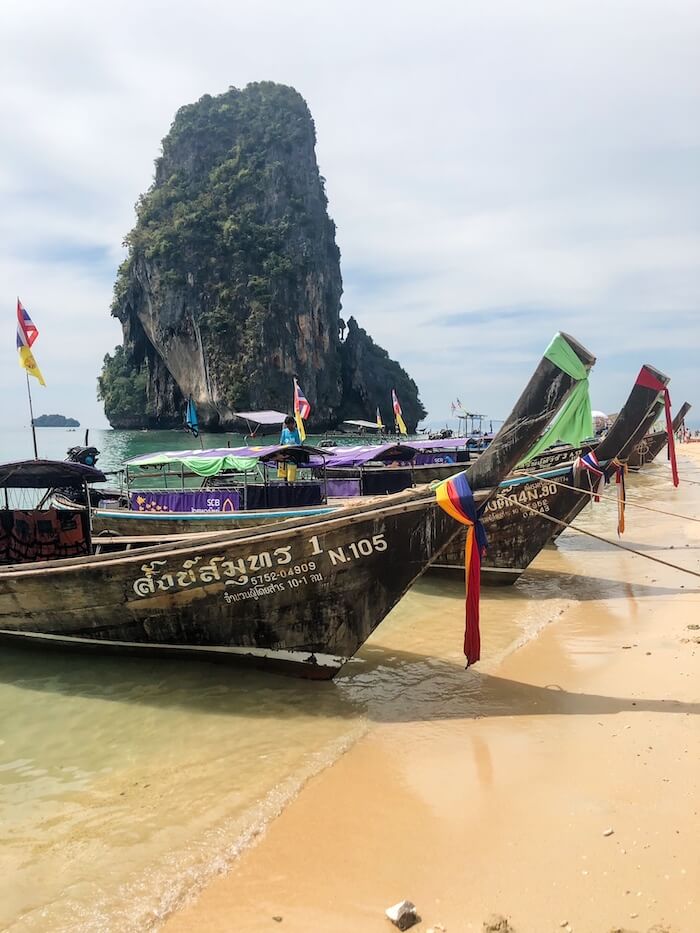
Longtail boats are a common mode of transportation when exploring the islands of Thailand.
If you’re in Krabi and want to visit the beautiful Railay Beach, for example, a long-tail boat will get you there in half an hour.
You don’t need to book anything in advance. Just visit the Ao Nang Long-Tail Boat Service Club booths. You’ll find them at both ends of Ao Nang Beach Road.
Don’t approach the boat operators directly, as you may be hit with a tourist tax that way. Make sure you confirm the last return boats back to Ao Nang.
As on the islands, Bangkok also has long-tail boats for tourists.
These are run by private companies, and you can book a ride at any pier. Price is set by the operator, and there may be some haggling involved, so be aware of that before choosing to take a long-tail boat tour.
We don’t like putting ourselves in situations where we may get hoodwinked so we kept to the express boats during our stay.
River and Canal Boats in Bangkok
River boats are a great way to get around Bangkok for sights along the Chao Phraya River. The Chao Phraya Express Boat Company has several options, and boats are marked by colored flags:
- No flag means the boat will make all stops. These boats only run on weekdays.
- A blue flag designates a tourist boat. These boats run daily and make any stop you request. They also come with some narration.
- Orange flags run daily and stop at the main piers.
- Yellow flag boats only run during rush hour on weekdays. They are large express commuter boats and stop at only 10 piers.
- Green flag boats are express boats for commuters and run on weekdays. They only stop at 13 piers.
Canal boats in Bangkok take tourists to lesser-known spots not served by the Chao Phraya River options. The Saen Saeb Knlong Express Ferry takes riders down the Khlong San Saeb Canal, from the Old Town to the mouth of the Bang Pa Kong River.
Things get a little precarious during rush hour as folks are jumping on and off and crowding the boats, but it’s an option if you’re avoiding Bangkok’s awful traffic. Your fare is paid once you’re on the boat.
Scooters and Bicycles in Thailand
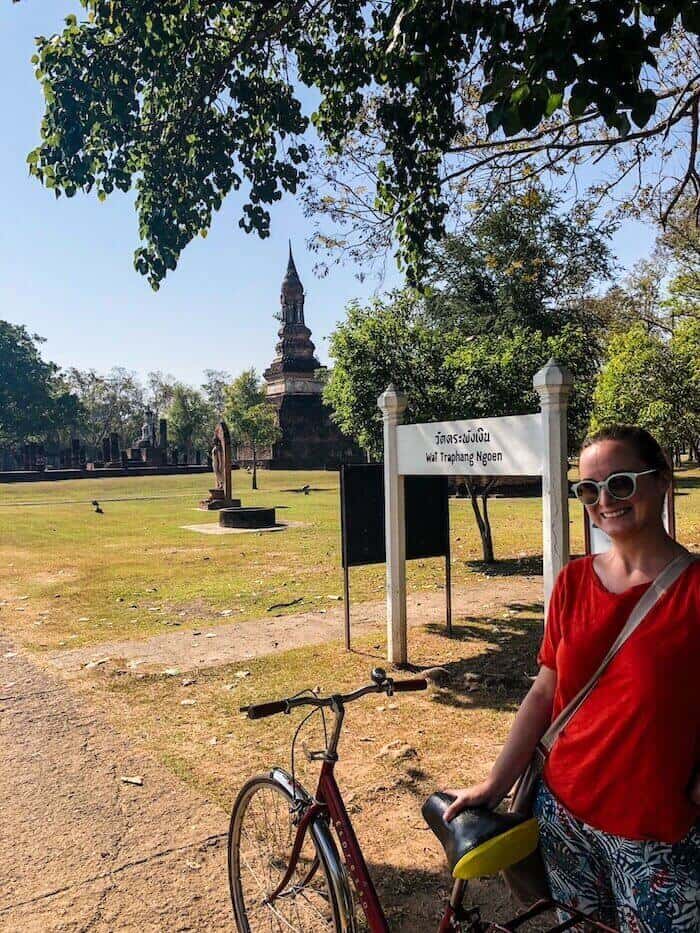
Renting a scooter or bicycle is a fun option if you’re island-hopping or getting yourself from Point A to Point B in an off-the-beaten-path destination.
We rented bicycles for our tour of Sukhothai, and wouldn’t recommend anything else while you’re there. It offered great flexibility to get around the temples and allowed us to spend as much time as we wanted at each temple.
We rented a scooter — Brian was the operator — while on Koh Lanta.
Things got a bit bumpy thanks to island potholes, but it was also a fun way to see the different corners of the island, and I still have both kidneys.
You don’t need to book a scooter in advance. Just visit a few rental shops for price comparison purposes and go with what feels right.
Driving in Thailand
Driving in Thailand should be left to the experts. It can get quite hectic, particularly around the larger cities, so I’d consider it the most dangerous transportation option for you.
If you must, though, renting a car is simple in Thailand. You can book in advance or book a rental through your accommodations. From there, it’s up to you to navigate those wacky traffic patterns.
Transportation Options to Avoid in Thailand
Unless you want to pay the tourist tax while on your Thailand vacation, avoid tuk-tuks. Unlike taxis, they’re not metered, and operators are notorious for scamming tourists out of their fresh baht.
Do it for the ‘gram if you must, but you’ve been warned.
How much does a trip to Thailand cost?
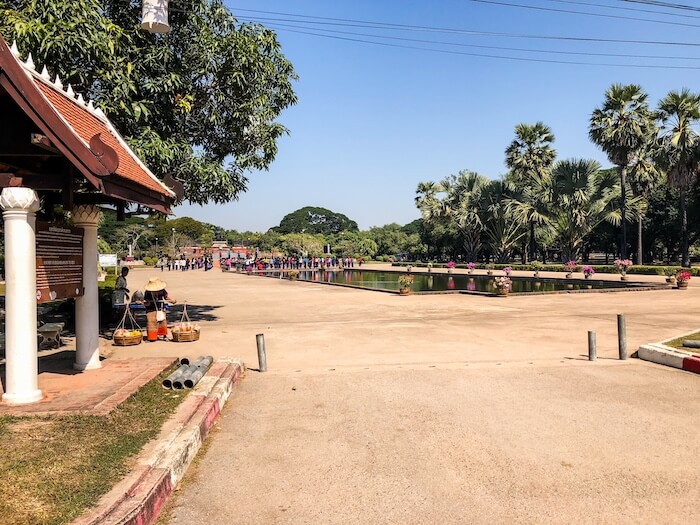
A trip to Thailand costs anywhere from $700-$1,000 per week on average for a solo traveler. Costs are variable from there. When you travel, how often you eat out, and the level of accommodations you book all matter in the total cost.
Thailand remains a budget-friendly destination compared to countries in Western Europe or even East Asia. This is particularly true if you’re flexible with your timing and avoid holiday travel.
The biggest chunk of your trip to Thailand’s cost will go toward your flights, even if you book a travel package. Watching for deals can save you hundreds of dollars if you’re flexible with timing.
Once you’re in Thailand, you can find accommodations at a variety of price points to keep expenses low.
Fun fact: Even in Bangkok, likely your most expensive city stop while in Thailand, you can still find private hotel rooms for around 40 USD per night.
That’s unheard of in other destinations this popular with tourists.
As far as how much you’ll spend once you’re there, expect to spend at least $25-30 in cash per day outside of the cost of flights and accommodations.
The national currency in Thailand is the baht. Credit cards are not widely accepted at local businesses, so you’ll need cash to cover many meals and extras. The good thing is that it’s not unheard of to find a plate of pad Thai for a few dollars.
Top Places to Visit in Thailand
There are so many beautiful places in Thailand that it’s a challenge to come up with a list of places to prioritize if you’re visiting for the first time. Thailand is incredible, and I know I need to get back there soon to see more of this friendly country.
That said, I do have some suggestions for you to add to your Thailand itinerary if you want a taste of what visiting this country has to offer.
Here are my favorite places in Thailand based on our trip to this wonderful country.
Bangkok
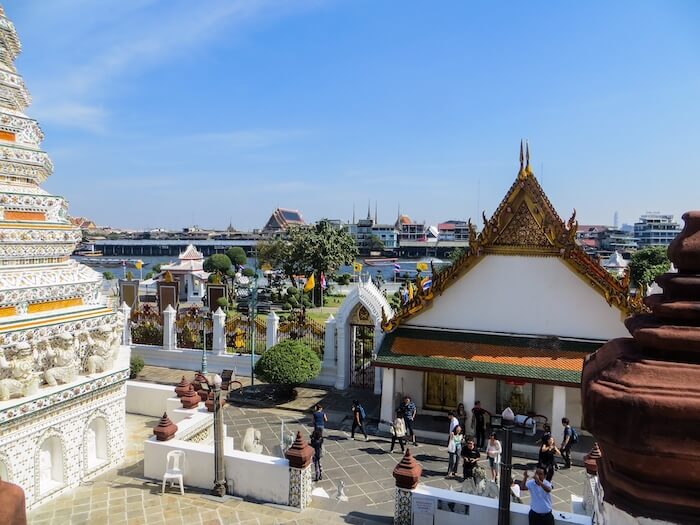
Bangkok and Paris trade places year to year as the most visited cities in the world for a reason. They’re both awesome, and they can both be overwhelming if you don’t start trips there with an open mind.
With Bangkok, you’re likely starting there on your travel plan for Thailand anyway. Stick around for a while and you’ll be rewarded with one of the best street food scenes in the world. Use my three-day guide to help you plan.
Interested in a guided experience while you’re here? Check out these options:
Chiang Mai
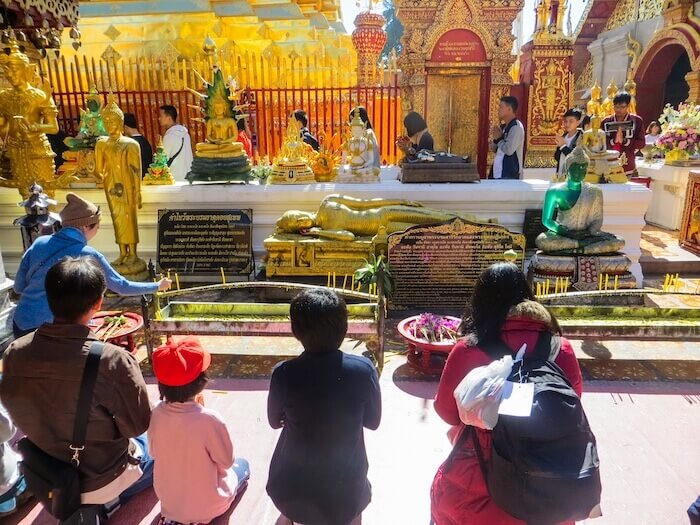
Chiang Mai in Northern Thailand isn’t some secret tourist destination by any means, and it’s certainly not as laidback as it once was. There’s a reason it’s so popular among tourists and expats looking for a different way of life.
It offers delicious food, plentiful markets for cheap produce, and easy access to day trips and outdoor pursuits not found anywhere else in the world, let alone in Thailand. Chiang Mai is a delight.
If it’s already in the cards for you, check out my detailed Chiang Mai itinerary for the perfect visit.
Love the idea of a guided experience here? Check out these options:
Elephant Nature Park
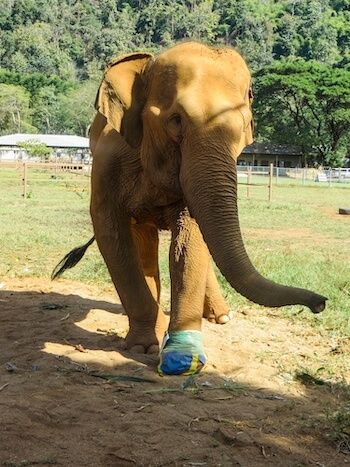
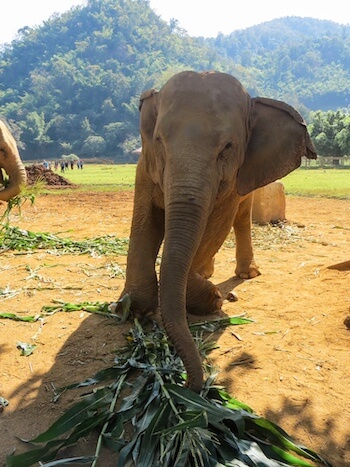
Chiang Mai’s Elephant Nature Park is a sanctuary and rescue center for abused and distressed elephants in Thailand. They offer a range of experiences for visitors, including overnight accommodations if you’d like to spend more time here.
During our visit, we were able to wash the elephants with buckets of water, but they’ve removed this level of interaction in favor of keeping things more natural.
On visits today, you’re still able to walk with them to the riverbank to watch them splash around on their own.
If you go to a different elephant park in Thailand, of which there are several, make sure you do your research. Riding elephants is not something a responsible tourist should do, so don’t do it.
READ MORE: Need more tips on finding ethical elephant parks in Chiang Mai? Start with my guide!
Koh Lanta
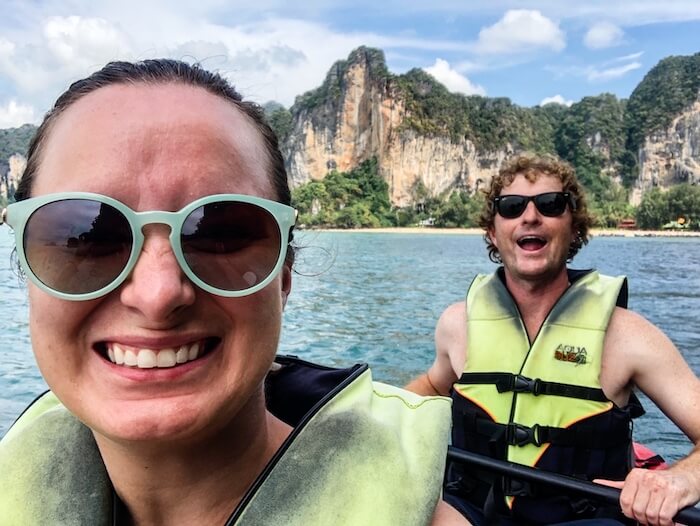
You have SO many options for island-hopping in Thailand. (There are more than 1,400 islands to choose from!) Koh Lanta, also spelled Ko Lanta, offers a more relaxed pace than some of the other islands, known for a good party atmosphere.
A highlight for us on the island was Time for Lime, a restaurant and cooking school that also offers overnight accommodations. Take a class and support their mission, animal welfare on the island, as you do so. It was one of our favorite experiences in Thailand.
Want to learn more about Koh Lanta? Check out my guide to why island-hopping in Thailand should be a priority.
Sukhothai
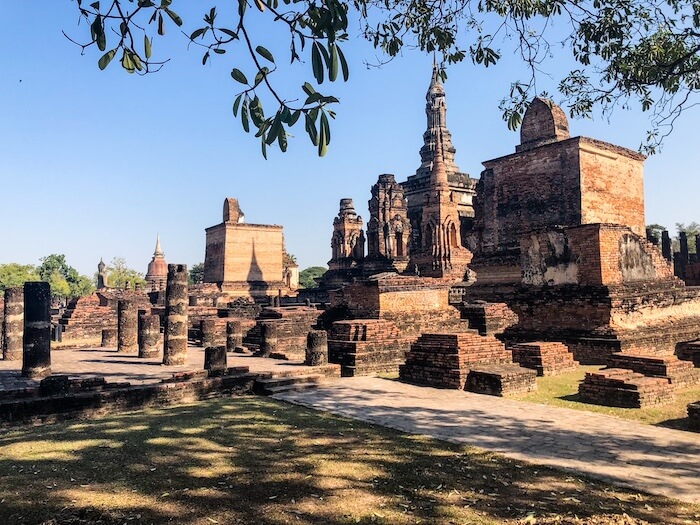
Sukhothai Historical Park, a UNESCO World Heritage Site, is one of the most important sites you can visit in Thailand. This was the first capital of the Kingdom of Siam and was a key component in the foundations of Thai culture and identity.
The park is also scenic as heck with its treasure trove of well-preserved temples, Buddha statues, and lovely lotus flowers. Explore by bike or on your feet. Any amount of time dedicated to the site will be well worth it.
I have a complete guide to Sukhothai if you’ve perked up over there.
Interested in a guided experience? Check out these highly-rated options:
More Places to Visit in Thailand
I could go on and on about all we were able to fit into our Thailand trip and all we left on the table. Here are a few spots we both visited and would prioritize on future trips to Thailand:
- Ayutthaya: If you’re not able to get to Sukhothai, these ancient ruins are more accessible from Bangkok. Don’t miss Wat Mahathat and its iconic Buddha head entwined in tree roots.
- Doi Inthanon: We planned a day trip to Doi Inthanon National Park to see the rooftop of Thailand, Thailand’s highest peak. Walk the trails and find your favorite waterfall in this scenic park, or use my guide to help you plan.
- Hua Hin: This coastal town is home to sandy beaches and the intriguing Phraya Nakhon Cave. We missed out on this one, but it seems like a good mix of seaside tranquility and recreation.
- Kanchanaburi: We took this easy day trip from Bangkok to see the Death Railway, a railway built during World War II connecting Bangkok with Burma. It’s also an access point for Erawan National Park’s emerald waterfalls.
- Wat Rong Khun: You probably know this intricately carved spot as the “White Temple.” We missed out on this one, but it’s high on our list for a return trip to northern Thailand.
Thailand Travel Itineraries
We know not everyone has two weeks to get away. In a week, you can still do quite a bit. You may need to prioritize islands accessible by air, for example, to make things more efficient.
Here are a few trip ideas for a full week’s worth of activities as you plan your Thailand itinerary:
Option 1: City Break & Island Escape
- Day 1: Arrive in Bangkok.
- Day 2: Explore Bangkok.
- Day 3: Plan a day trip to Ayutthaya.
- Day 4: Fly to Koh Samui.
- Day 5: Relax on Koh Samui.
- Day 6: Visit Mu Ko Ang Thong Marine Park.
- Day 7: Return via Bangkok.
Option 2: Food & Nature
- Day 1: Arrive in Bangkok.
- Day 2: Explore Bangkok.
- Day 3: Visit Ayutthaya.
- Day 4: Depart for Chiang Mai.
- Day 5: Explore Chiang Mai.
- Day 6: Visit Elephant Nature Park.
- Day 7: Return via Bangkok.
Option 3: Island-Hopping
- Day 1: Arrive in Bangkok.
- Day 2: Fly to Koh Samui.
- Days 3-4: Relax on Koh Samui.
- Day 5: Explore Mu Ko Ang Thong National Park.
- Day 6: Depart for Krabi.
- Day 7: Return via Bangkok.
READ MORE: Planning two weeks in Thailand? Save time and steal our itinerary!
Amazing Facts About Thailand
Here are a few fun facts about Thailand to show off some hot knowledge over those cheap, tasty noodles:
- The monarch with the longest reign in history was Thailand’s King Bhumibol Adulyade. He was in power from 1946 until 2017.
- Thailand is home to the smallest mammal, Kitt’s hog-nosed bat. It’s also known as the bumblebee bat, which is adorable.
- Thailand can boast that it’s the only country in Southeast Asia to have never been colonized by Europeans.
- There are more than 1,500 species of orchids in Thailand. The country is the top orchid exporter in the world.
- This is Bangkok’s full ceremonial name: Krung Thep Mahanakhon Amon Rattanakosin Mahinthara Yuthaya Mahadilok Phop Noppharat Ratchathani Burirom Udomratchaniwet Mahasathan Amon Piman Awatan Sathit Sakkathattiya Witsanukam Prasit.
What to Pack for Thailand
Deciding what to bring to Thailand will depend on what you plan to do once you’re there. If you’re here for nature adventures, you may need some hiking gear.
The abbreviated list below is what we found helpful on our trip to Thailand:
- Comfortable sandals: Bring a set that you can walk in and easily remove if you’re planning on temple-hopping in Bangkok or Chiang Mai. I loved my Sanuk pair for this purpose.
- Harem pants: Pack a pair of lightweight pants in a fun print to cover your knees on temple visits without feeling too hot. I got a pair of these in Chiang Mai just to have another set and for lounging back home.
- Shorts: It never got too cool for shorts on our December trip, so pack at least one lightweight pair for bopping around. You’ll need to cover up your legs for temples, but you’ll be thankful for shorts when the afternoon hits.
- Sun hat: Most itineraries include some beach time, so I’m assuming it’s in the cards for you, too. Protect your face and your noggin with a fun sun hat. I like the floppy kind for easier packing.
- Swimsuit: If you’re going island-hopping, a fun suit is a given. I’ve had this one for years. Despite its price point, it’s built to last and very flattering. Pack a second suit if you’re planning a week at the beach.
Local Thai Foods
There are 100 varieties of durian, a very stinky fruit, in Thailand. Only Indonesia is stinkier, with 300 varieties of durian. I don’t think you’re here for that, and for good reason. Thai food otherwise is delicious and so flavorful.
Here are a few dishes to seek out on trips to Thailand:
- Gaeng Keow Wan: This is the green curry variety, a spicy blend of green chilies, ginger, and eggplant.
- Kao Niew Ma Muang: If you’ve got room for dessert, most sit-down eateries will offer this dish, better known as mango sticky rice.
- Khanom Bueang: These are the Thai version of crepes and a popular street food option while you’re in Thailand. They’re crispy and wonderful and that’s all.
- Kuay Teow Reua: These are Thai boat noodles, typically served with pork, veggies, fish balls, and a sprinkling of pig’s blood. Don’t freak out. It’s tradition.
- Phat Kaphrao: This is a popular street food in Thailand. Phat kaphrao, also known as pad krapow, is a spicy blend of Thai basil, chili peppers, fish sauce, and chicken.
- Pad Thai: It’s OK, you guys. You can eat pad Thai while you’re in Thailand, especially when you see how cheap it is to indulge in the quintessential Thai noodle daily.
- Pla Pao: If you love whole grilled fish, you’ll love pla pao, a heavily salted version of whole fish served with chili seafood dipping sauce.
- Som Tam: This is a spicy papaya salad that is a mix of shredded green papaya and other veggies, alongside peanuts, dried shrimp, and lots of chili.
- Tom Yum Goong: This is a spicy shrimp soup that uses lemongrass, chili, galangal, kaffir lime leaves, and fish sauce to deliver the eater quite the kick.
- Yum Talay: The story checks out with this one because this mixed seafood salad is indeed quite yum. Veggies and rice glass noodles are mixed with the day’s seafood.
Special Events & Festivals in Thailand
If you’re planning a trip to Thailand during a specific time of year, consider whether there are any festivals or special events happening. You may want to attend special events or avoid them, as the big events may mean bigger crowds.
Here are a few notable dates across Thailand:
- Full Moon Parties: Full moon parties are the things of legend on the island of Koh Pha Ngan, but they’re attended mostly by tourists at this point.
- Songkran: The Songkran Festival, Thailand’s New Year celebration, is also known as the world’s largest water fight.
- Monkey Buffet Festival: The annual Monkey Buffet Festival isn’t about eating monkeys, but about treating the local macaques to produce buffets.
- Loi Krathong: Loi Krathong is an annual Siamese festival where people gather to pay respect to the water goddess and make wishes for the coming year.
- Wonderfruit: Wonderfuit is a music and arts festival held in Pattaya. It’s focused on sustainability, with organizers using locally sourced or recycled materials.
Where to Stay in Thailand
Where you stay in Thailand depends on your itinerary. Start with Agoda.com, a solid booking site for Asia. You can compare prices there with Booking.com or Hotels.com.
Vrbo is my Airbnb alternative, but I generally like to book hotels in Thailand. They’re so affordable, and many boast the amenities you’d expect in apartment-style stays.
You can plan your own trip to Thailand.
You just need to plan ahead for the best flight deals, accommodation options, and your pick of excursions once you’re in Thailand.
Thailand is exceptionally friendly to tourists. In fact, it’d be challenging for me to think of another country that is as friendly and welcoming to visitors as Thailand.
The people here don’t just want you to have a good time, though. They want you to experience their culture and delight in their food. Let those Thai smiles wash over you and dig in, even if it’s just into a plate of familiar noodles.
Planning more bucket list travel? Check out these guides:
- A Guide to the Moai of Easter Island
- How to Plan Your Next Trip to South Africa
- What to Expect on a South African Honeymoon
- A Detailed Trip Planner for Brussels
- Plan a Trip from Anchorage to Denali
Love beach escapes? Check out these guides next:
- Top Things to Do on Trips to Pacific Beach
- A Guide to the Best of Luxe La Jolla
- Incredible Day Trips from Perth, Australia
- A Guide to Antibes on the French Riviera
- What to Do When Beaches in Nice Aren’t an Option

Want to see more?
Subscribe to my biweekly newsletter for hot travel tips I come across, weird stories you won’t see elsewhere and perhaps lifelong friendship.
Too much, or just enough?
