
If you’re planning a day trip from Paris and want something unexpected, the Château de Monte Cristo in Le Port-Marly is a great option.
This is where writer Alexandre Dumas, the author of The Three Musketeers and The Count of Monte Cristo, built his dream home at the height of his fame.
While it’s certainly not as grand as Versailles or any of the big estates in the Loire Valley, it’s eccentric and atmospheric, with a fraction of the crowds.
If you’re coming from Saint-Germain-en-Laye, as we always do, you can even walk here, but I’ll include tips on common routes from Paris, too.
Want to watch more about it first? Check out our YouTube video:
Quick Tips for the Château de Monte Cristo
Your Flight: The easiest option is flying into Paris Charles de Gaulle (CDG) or Orly (ORY). An RER A train ride will take you to Saint-Germain-en-Laye and transfer points from there.
Find deals to both airports using Skyscanner. Love those deals? Subscribe to Going.
Your Accommodations: Most visitors will come from Paris, but if you want to visit our chosen ‘burb, we recommend the ibis Saint Germain en Laye Centre. Browse Booking.com or Hotels.com for more options. Vrbo is my Airbnb alternative.
Top Spots: You’re here for the Château de Monte Cristo, but don’t miss the Château d’If, his writing studio, and the surrounding gardens.
Disclosure: Travel on the Reg uses affiliate links to keep things running around here. At no additional cost to you, I earn a lil’ commission if you make a purchase. Any income earned supports the upkeep of this site. I appreciate you!
Who Was Alexandre Dumas?
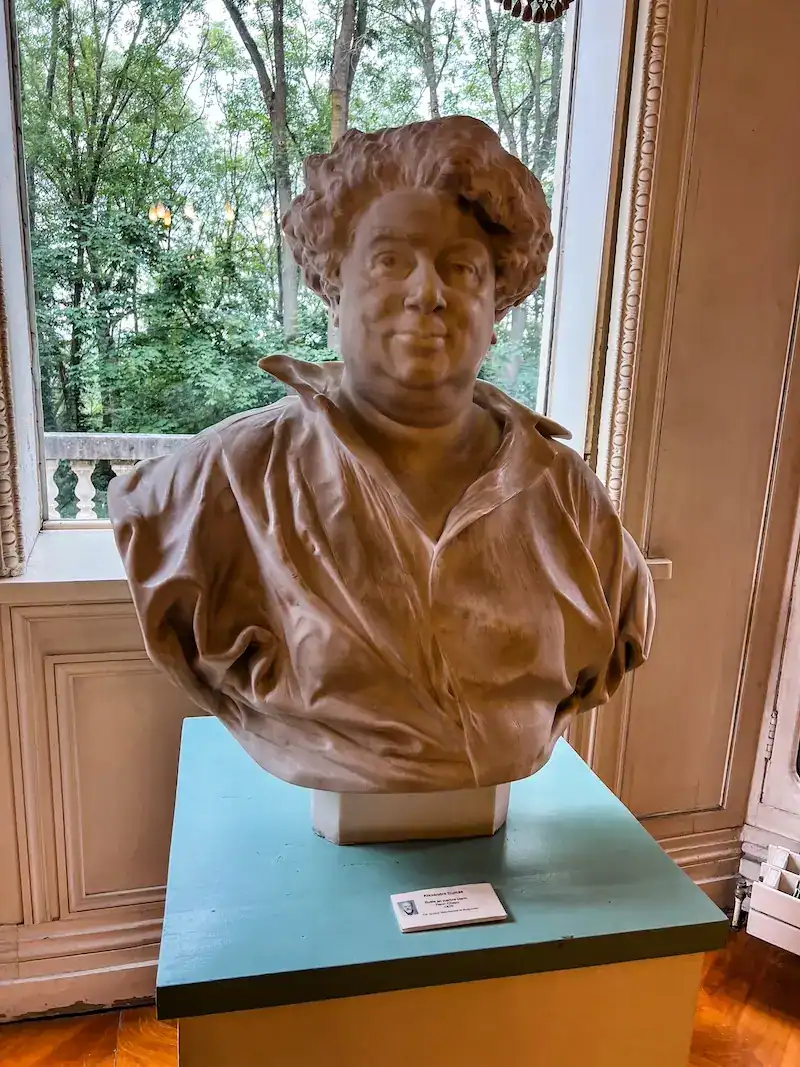
If you’re already a fan, I likely don’t need to sell you on this place, but even if you’re not, a little background will help you understand what you’re looking at before you go.
Dumas was born in 1802 to Marie-Louise Labouret, a French innkeeper’s daughter, and Thomas-Alexandre Dumas, one of Napoleon’s most celebrated generals.
Thomas-Alexandre himself was the son of a French marquis and Marie-Cessette Dumas, an enslaved African woman in Saint-Domingue (present-day Haiti).
When the marquis returned to France, he sold Marie-Cessette and her daughters to pay for his passage, but brought Thomas-Alexandre with him. The boy went on to become the first soldier of Afro-Antillean origin to reach the rank of general in the French army.
Dumas’s father died when Alexandre was just four, leaving the family in poverty. He arrived in Paris in his early twenties with almost nothing, and taught himself to write by creeping around libraries.
Within a decade had become the most popular author in France, quite possibly the world. That’s pretty incredible, and I’m not at all jealous.

His novels were serialised in newspapers and read by people across every class. He was prolific, but also somehow chronically in debt. He was a serial romantic and legendarily generous. I’m saying the guy had layers.
Themes of injustice, hidden identity, and hard-won revenge run through his work for a reason, and they’ll mean a lot more once you’re standing inside his house.
The History of the Château de Monte Cristo
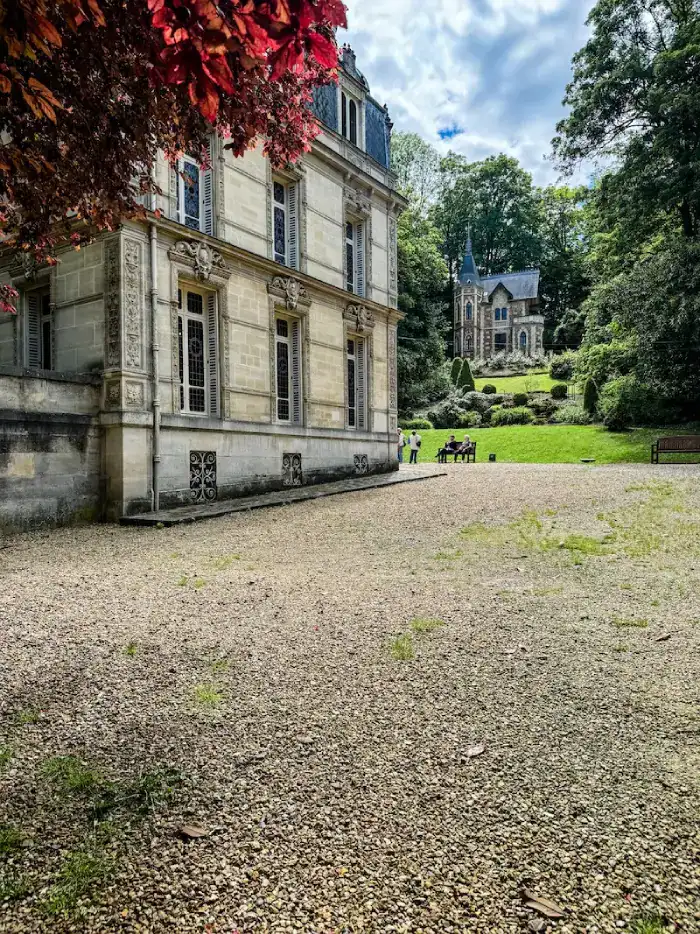
In 1844, Dumas published The Three Musketeers as a newspaper serial to pretty much immediate acclaim. The Count of Monte Cristo followed in 1845. Flush with success and wealth, he decided to build a fancy home for himself.
Dumas was living in Saint-Germain-en-Laye at the time — he’s just like us! — but found himself drawn to nearby Port-Marly, with its views toward the Seine.
He hired the architect Hippolyte Durand with these instructions: a Renaissance château, a Gothic writing pavilion surrounded by water, and an English-style park with grottos. It seemed he didn’t care about what it’d cost, which would catch up with him later.
Construction on his Monte Cristo castle was completed in 1847. Dumas named the estate after his novel, and named the writing pavilion in the grounds the Château d’If, after the island prison in the same story.
Fun fact: On July 25, 1847, Dumas threw a housewarming party attended by nearly 600 guests. Balzac, who was there likely having a grand old time, called it “one of the most delightful follies ever made.”
Life at Monte Cristo was perpetually full of friends, lovers, admirers, freeloaders, and a menagerie of critters that included parrots, monkeys, and at least one vulture.
It didn’t last. Pursued by creditors since the estate had cost an estimated 500,000 francs, Dumas was forced to sell it in 1849, recovering a fraction of what he’d spent. By 1851, his debts had grown further, and he left France for Belgium.
The Château Today
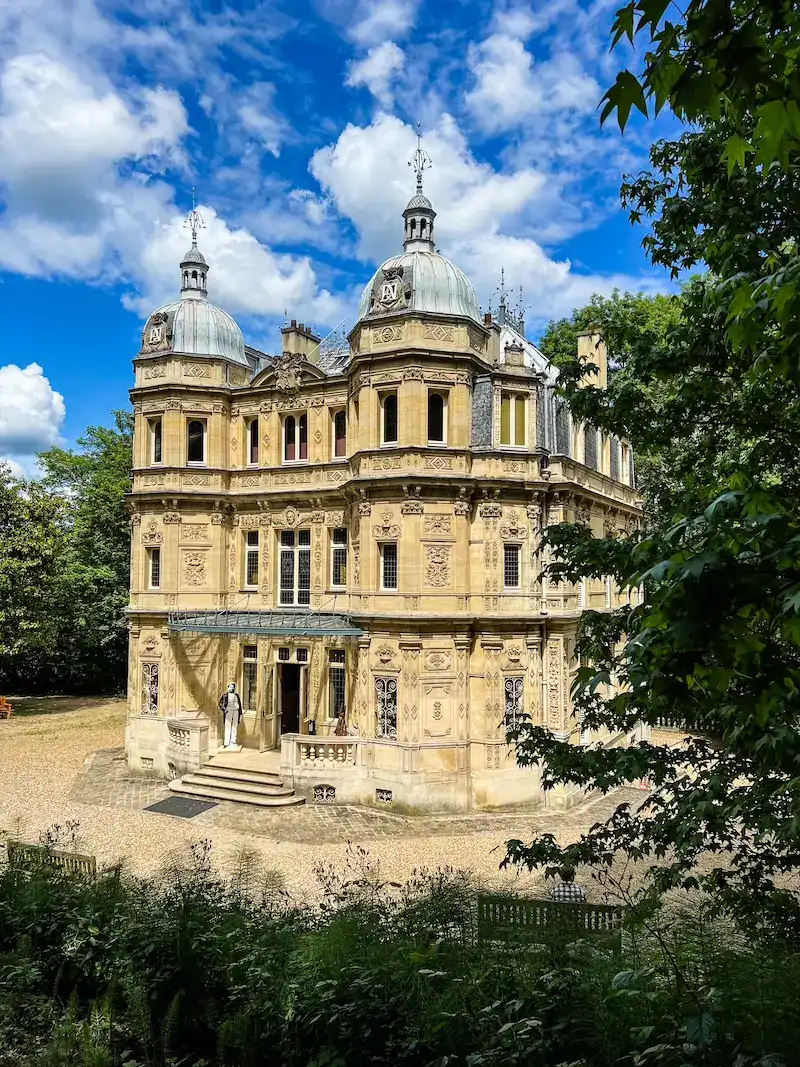
After Dumas, the château passed between owners and fell into steady decline. By 1969, the roof was leaking, and a private developer had plans to demolish the estate, replacing it with 400 new homes.
The rescue that followed was a community campaign story. The historian Alain Decaux founded the Société des Amis d’Alexandre Dumas. The neighbouring towns of Marly-le-Roi, Le Port-Marly, and Le Pecq pooled resources to buy back the property.
Perhaps most intriguingly, King Hassan II of Morocco funded the restoration of the Moorish salon. The château reopened as a museum in 1994 and was officially classified as a historic monument in 2016.
What to See at the Château de Monte Cristo
There’s quite a bit to see on the property. Give yourself two to three hours to see the main château, Château d’If, and to wander the park comfortably. If you’re attending a guided or dramatised tour or having a picnic, you might want to add some time.
The Main Château
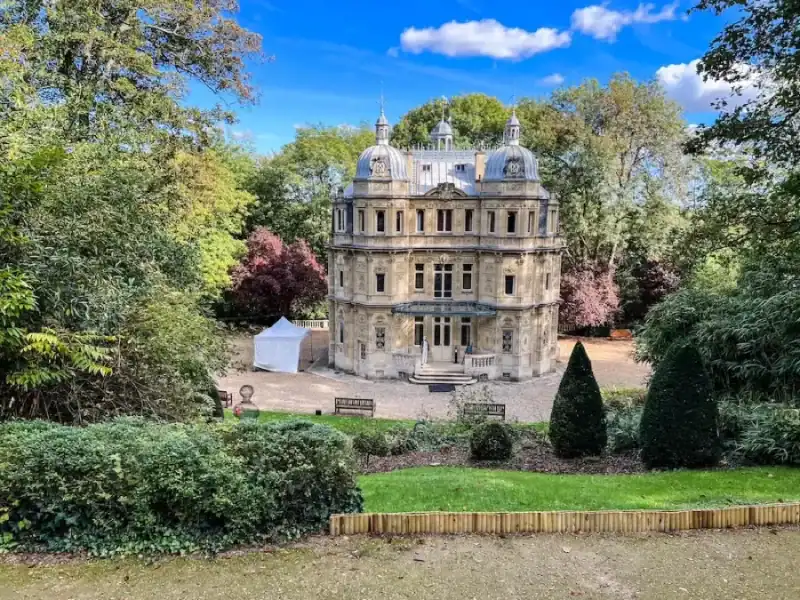
The château itself is a three-storey Renaissance villa with façades featuring all kinds of things, like cherubs, weapons, musical instruments, and literary medallions. Above each ground-floor window, Dumas placed a portrait of a great writer from history.
Fun fact: Above the entrance door, you’ll see the family motto: “J’aime qui m’aime,” or “I love those who love me.”
Inside, the rooms are filled with his manuscripts, letters, first editions, portraits, and personal objects from the author’s life. The most elaborate room is the Moorish salon on the first floor with its hand-carved cedar and stained-glass windows.
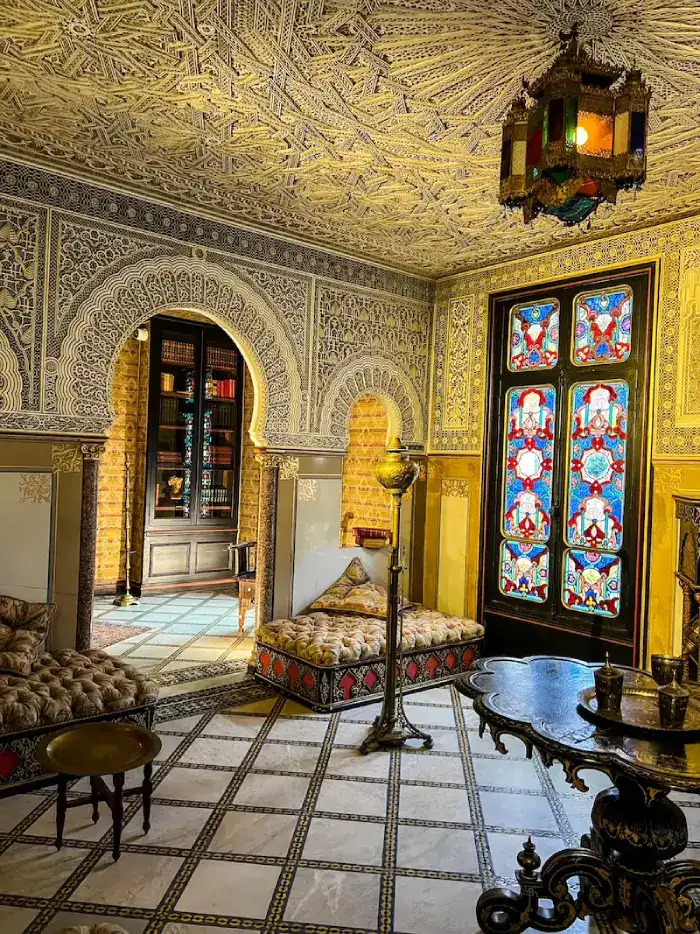
This room was created by two Tunisian artisans, Hadji Younis and his son Mohammed, whom Dumas personally brought back from his travels in the service of the Bey of Tunis.
This was also Dumas’s private study, where he would retreat to write and, reportedly, entertain his mistresses.
The top floor is usually reserved for a temporary exhibition. It’s been different every time we’ve visited, but we’ve seen exhibits on artists and filmmakers in some way connected to Dumas. The most interesting parts are on the first and second floors.
The Château d’If Writing Studio
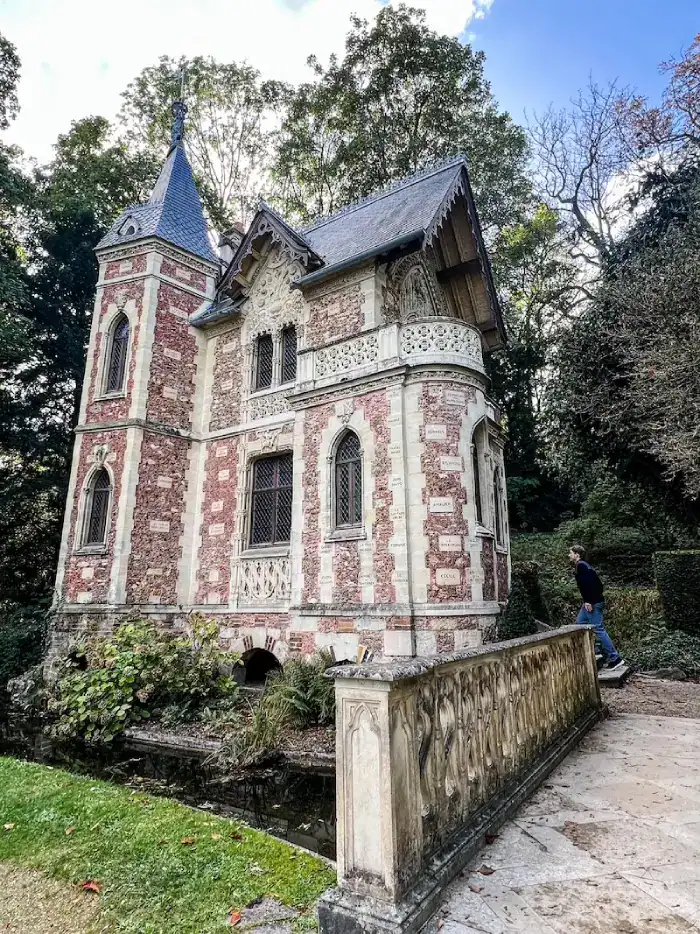
The Château d’If is my favorite part of the property. It’s essentially a mini-castle in a neo-Gothic pavilion that served as Dumas’s private writing studio. The story goes that he needed it because his main house was getting a little rowdy with the constant visitors.
This mini-château’s stone walls are carved with the names of 88 novels and plays he had written at the time of his construction. You can’t go inside, but there’s a small viewing area set up with his writing desk and a few additional artifacts.
The English Park
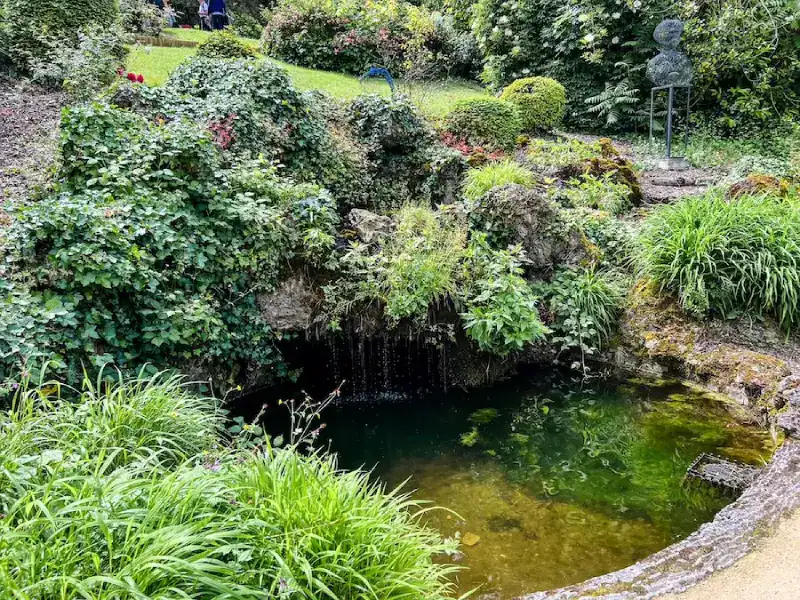
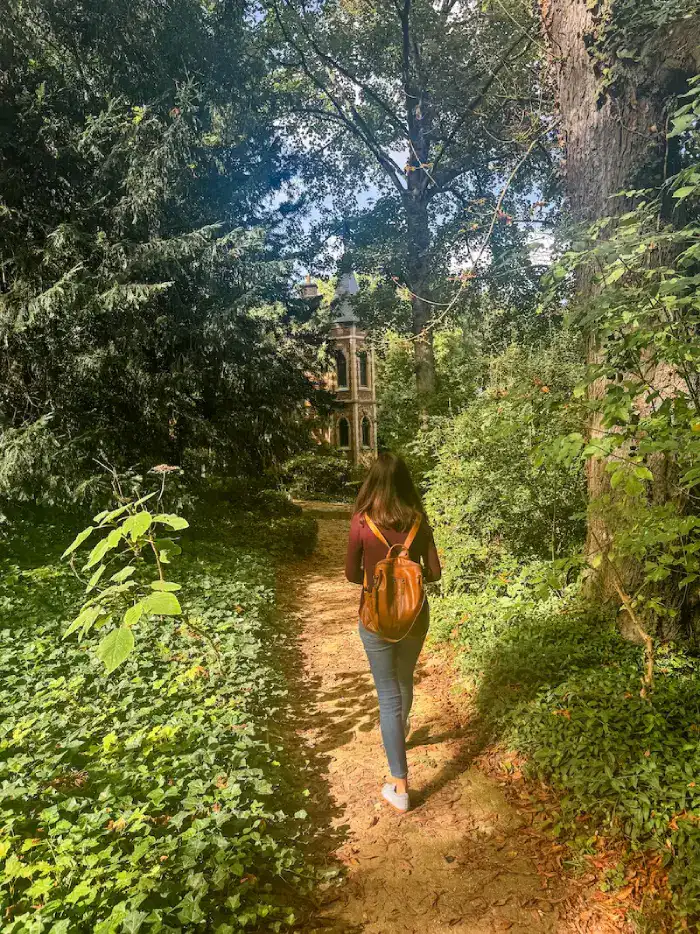
The nine-acre park that surrounds the property is styled in the English way, with winding paths, artificial grottos, a spring-fed waterfall, weeping willows, and stone benches. It’s easily one of the more atmospheric green spaces in the Île-de-France.
Note: Keep an eye out for the Bassin du dragon, a dragon fountain pool that’s easy to miss if you’re distracted by the two châteaux.
The park also has a few modern sculptures along the trails, including one named after those famous Musketeers. On warm weekends, this is a popular spot to relax and picnic. The French love that sort of thing, and so do I.
How to Get to the Château de Monte Cristo from Paris
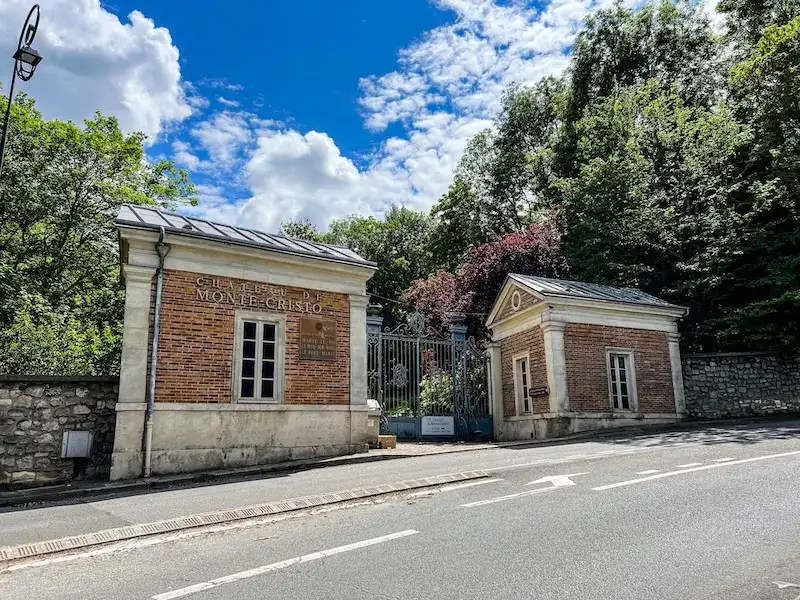
The château is in Le Port-Marly, in the Yvelines department, about 15 miles (25km) west of central Paris. That’s well within a comfortable range for a day trip.
From central Paris, I’d suggest taking the RER A from stops like Châtelet-Les Halles, Auber, or Nation toward Saint-Germain-en-Laye. That should take you about 35-40 minutes, depending on where you’re starting.
Once you’re in Saint-Germain-en-Laye, you have two options:
- Walk: If it’s a nice day, this is what I’d recommend. It’s about 35-40 minutes on foot through a well-manicured terrain. There are some steep sections, particularly on the return journey uphill, so wear comfortable shoes and take your time.
- Bus: Take bus 10 from Saint-Germain-en-Laye to the Avenue Kennedy stop. It’s a short walk from there to the château entrance.
If you’re driving, follow the signs to Marly-le-Roi from the A13 or A86. The entrance is shared with the Clinique de l’Europe on Rue des Ormes, so you’ll need to ring a bell for access to the parking area.
READ MORE: Nervous about driving in France? Check out our guide to help you feel less intimidated!
Practical Information

Address: Avenue du Président-Kennedy, 78560 Le Port-Marly
Opening hours:
- April to October: Tuesday-Friday 10am-12:30pm and 2-6pm; Saturday-Sunday 10am-6pm
- November to March: Sundays only, 2-5pm
- Annual closure mid-December to early January
Entry to the château and park costs €9 for adults. If you just want to see the park, you can pay €5 per person, but I’d only suggest this if you’ve already been inside the chateau.
Guided tours of the property are available, but they’re only in French. They last 45 minutes, cost €10 per person, and require reservations.
An audioguide is available if you bring headphones. (It’s one of those things where you scan a QR code with your phone.) Many of the explanatory panels are in English.
On the last Sunday of the month, costumed actors dressed as characters from Dumas’s novels wander the rooms and gardens, offering commentary on life there in his time.
These theatrical visits run continuously from 2pm (1pm in low season) and cost €11 per person.
Note: You don’t need to reserve tickets on the official website for these performances. They’re just happening on the grounds during these days.
Tips for Visiting the Château de Monte Cristo
We never plan ahead when it comes to our decision to visit this place. Tickets won’t sell out. The only tricky part is watching those opening hours.
The French are serious about their lunch break, so if you arrive on a day when it’s relevant, don’t expect them to let you in.
Here are a few more quick tips:
- Weekday visits are quieter than weekends, especially if the weather’s nice, but this place never gets too busy.
- The dramatised tour on the last Sunday of the month is recommended, especially if you speak some French. It’s a little cheesy, but very theatrical.
- There is no restaurant on site. The nearest options are in Le Port-Marly village or back in Saint-Germain-en-Laye. You can also pack a picnic if you like.
- Parts of the château are not fully wheelchair accessible. The grounds are rocky with uneven terrain.
- Leave the pooch at home. Unless they’re a service animal, pets aren’t welcome in the gardens or any of the interiors.
- The château can be good for children who know Dumas’s stories. The gardens are free to explore, and the theatrical tours can be fun, even if you don’t speak French. Without some literary context, younger visitors may find the inside less exciting.
READ MORE: Visiting France in the summer? It can be done! Here are some tips.
Is the Château de Monte Cristo worth visiting?
The Château de Monte Cristo is definitely worth visiting, especially if you have any interest in French literature, 19th-century history, or unusual places near Paris.
It’s one of the most distinctive country estates near Paris, with a fraction of the crowds of Versailles.
The whimsical Château d’If writing studio, my favorite part, is worth the journey.
Your visit to Dumas’s château won’t feel as “big” as a trip to the opulent estates in the Loire Valley, Versailles, or even Fontainebleau, but that’s not what’s neat about it.
Whether you’re a fan of his or not, it’s fascinating to visit a property so woven into a sense of time and place. It’s very much a vibe of “the man, the myth, the legend” at this spot, and there’s a reason we’ve been so many times!
Planning more travel near Paris? Check these out:
- Pros and Cons of Visits to Paris
- Is Paris That Expensive to Visit?
- Plan a Golf Trip to This Paris-Area Course
- Why Giverny Is Best in the Spring
- The Ultimate Trip Planner for France
More France destination guides to peruse:
- Plan a Christmas Market Trip to Colmar
- How to Spend Your Day in Marseille
- Things to Do on a Rainy Day in Nice
- A Guide to Brittany’s Most Beautiful Spots
- Why the Dordogne Is Worth a Trip

Want to see more?
Subscribe to my biweekly newsletter for hot travel tips I come across, weird stories you won’t see elsewhere and perhaps lifelong friendship.
Too much, or just enough?
